



You might think putting a house or a government bond on the blockchain solves all the headaches of traditional finance. It doesn’t. But it does change how you buy, sell, and hold those things. Real-world asset (RWA) tokenization is simply creating a digital record of a physical or financial asset on a blockchain. Think of it as a digital twin for a Treasury bill, an unpaid invoice, or a rental apartment in Detroit. The goal isn't magic; it's efficiency. As of late 2026, this sector has moved from experimental hype to a $24 billion market, driven largely by institutional players like BlackRock and Ondo Finance. If you're looking to understand where your money actually goes when you click "buy" on a tokenized bond, you need to look past the smart contract code and at the legal paperwork behind it.
What Actually Gets Tokenized?
Not every asset works well on a chain. The technology shines when the underlying asset has clear, standardized legal claims and cash flows. Right now, three categories dominate the landscape: short-term debt, private credit, and real estate.
Tokenized Bonds are the heavy hitters here. Products like BlackRock’s BUIDL fund allow investors to hold shares in a fund that buys U.S. Treasuries. These aren't just digital IOUs; they represent actual claims on cash and Treasury bills held in custody. The benefit? You can trade these shares 24/7, unlike traditional mutual funds that only settle during business hours. According to the Bank for International Settlements, over 60 tokenized bonds have been issued, totaling about $8 billion. This suggests big institutions trust the infrastructure enough to park significant capital there.
Invoice Financing offers a different value proposition. Platforms like Centrifuge let businesses turn unpaid invoices into NFTs. A logistics company with a $50,000 invoice due in 90 days can mint an NFT representing that claim and use it as collateral to borrow stablecoins immediately. This helps small businesses get working capital faster than waiting for bank loans. However, the risk here is high. A blockchain proves the token exists; it doesn't prove the invoice is real or that the customer will pay. Fraud and duplicate pledging remain serious threats if off-chain verification fails.
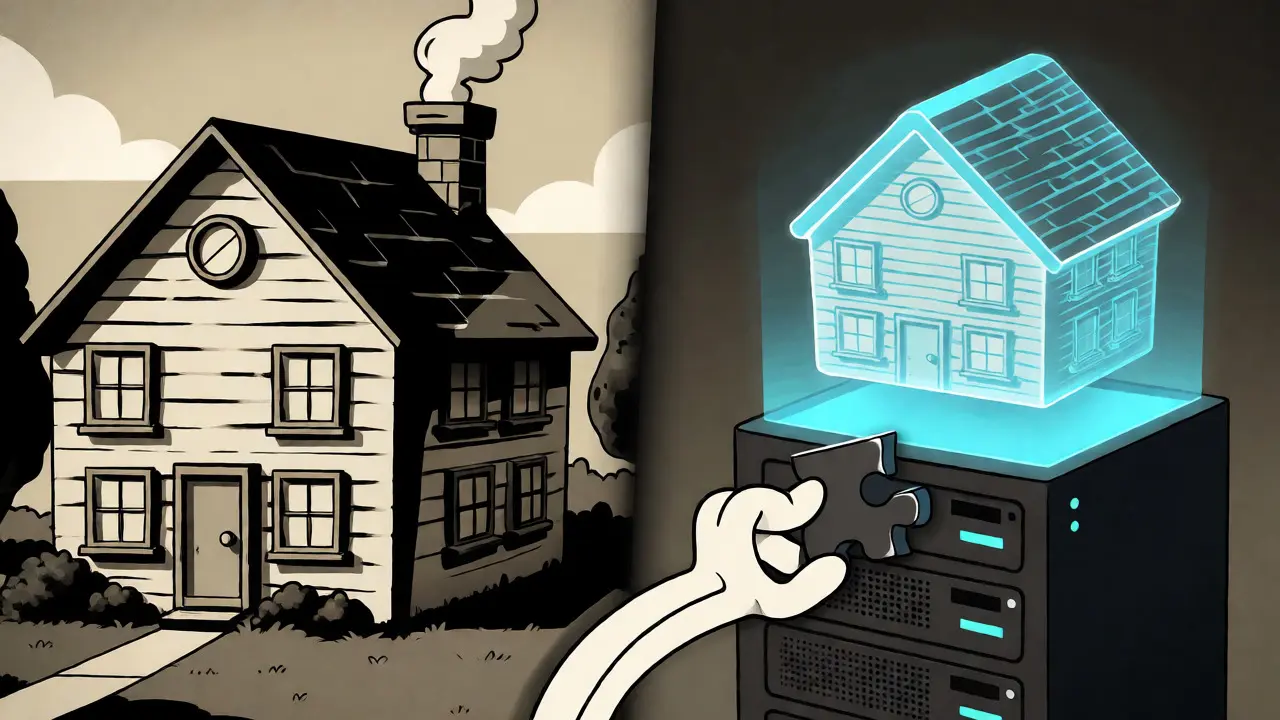
Property Tokens are the most complex. Companies like Lofty place a single-family home in a special-purpose LLC and tokenize the membership shares. You buy a fraction of the LLC, not the deed itself. This lowers the barrier to entry-you don't need $300,000 to start investing in real estate. But remember, you still deal with broken toilets, vacant months, and local property taxes. The blockchain handles the ownership record, but humans still manage the building.
| Asset Class | Primary Benefit | Key Risk | Market Status (2026) |
|---|---|---|---|
| Tokenized Treasuries | Instant settlement, 24/7 liquidity | Custody failure, regulatory changes | $5.5B+ deployed, led by BUIDL |
| Private Credit/Invoices | Faster working capital for SMEs | Default risk, invoice fraud | Growing, fragmented platforms |
| Real Estate | Fractional ownership, lower entry cost | Illiquidity, maintenance costs, legal title issues | Niche, ~$0.3B market |
The Legal Reality Check
Here is the part most crypto enthusiasts skip: owning a token rarely means owning the asset directly. When you buy BUIDL, you own a share in a fund. That fund owns the Treasuries. If the fund manager fails, your recovery depends on bankruptcy law, not just the smart contract. Similarly, with property tokens, you usually own equity in an LLC. If the LLC loses a lawsuit or gets hit with a massive tax lien, your token value drops regardless of what the blockchain says.
In the United States, many of these tokens are classified as securities. This triggers strict regulations. Issuers often use exemptions like Regulation D or Regulation S to limit who can buy them. For example, Ondo’s USDY token is sold primarily to non-U.S. persons under Regulation S. This means you can’t just grab any token and trade it freely on a decentralized exchange like Uniswap without checking if you’re allowed to hold it. Whitelists are common. Your wallet address must be approved before you can transfer the token. This friction is intentional-it keeps regulators happy but reduces the "permissionless" appeal of crypto.
Why Liquidity Is Still a Bottleneck
Proponents promise instant liquidity, but the data tells a more nuanced story. While you can technically trade a tokenized bond at 3 AM on a Sunday, finding a buyer at a fair price is another matter. Secondary markets for RWAs are thin compared to stocks or major cryptocurrencies. An academic study noted that while issuance is booming, trading volume lags significantly. If you need to exit a position quickly in a downturn, you might face wide bid-ask spreads or no buyers at all.
Consider the case of RealT, a major player in property tokenization. In mid-2026, they faced operational crises involving unpaid property taxes and deferred maintenance across hundreds of properties in Detroit. Investors holding their tokens found that self-custody didn't protect them from bad management. The blockchain recorded their ownership perfectly, but the underlying asset was deteriorating. This highlights a critical lesson: tokenization improves record-keeping, not asset quality. Garbage in, garbage out still applies.
How to Evaluate an RWA Project
Don't just look at the yield APY. Dig deeper. Here is a quick checklist to separate solid projects from vaporware:
- Legal Structure: Is the asset held in a bankruptcy-remote entity? Can you read the offering memorandum?
- Audits: Has the smart contract been audited by reputable firms like CertiK or OpenZeppelin? More importantly, are the off-chain reserves audited by a recognized accounting firm?
- Custody: Who holds the actual asset? Are they a regulated institution like Coinbase Custody or a specialized traditional custodian?
- Redemption Terms: How easy is it to get your money back? Are there lock-up periods? What happens if the platform shuts down?
- Servicing: Who manages the property or collects the invoices? Do they have a track record?
If a project can't answer these questions clearly, walk away. High yields often compensate for hidden risks, not just technological innovation.
The Future Outlook
By 2035, forecasts suggest tokenized real estate could reach $4 trillion, though skeptics argue this assumes perfect regulatory harmonization and widespread adoption. What we see today is selective expansion. Institutional money is flowing into short-duration, low-risk assets like Treasuries because the legal framework is clearer. Complex assets like art or unique commercial properties lag behind because valuation is subjective and legal enforcement is messy.
The technology won't replace banks entirely. Instead, it will likely integrate with them. We are already seeing traditional custodians offer blockchain-based settlement services. The winners will be platforms that bridge the gap between on-chain speed and off-chain legal certainty. For now, treat RWA tokens as a new asset class with its own set of rules, not just a faster way to buy stocks.
Do I own the actual house or bond when I buy an RWA token?
Usually, no. You typically own a claim against a Special Purpose Vehicle (SPV) or LLC that holds the asset. For bonds, you might own a share in a fund that holds the bonds. Direct ownership of the physical deed or security certificate is rare due to legal complexities.
Are tokenized assets safe from hacking?
No. While the blockchain itself is secure, the smart contracts governing the tokens can have bugs. Additionally, if the private keys managing the off-chain asset (like the bank account holding the cash) are compromised, the token holders lose value. Security audits help but don't guarantee safety.
Can anyone buy tokenized US Treasuries?
Not necessarily. Many products like OUSG require accredited investor status and KYC verification. Others like USDY may restrict sales to non-US persons. Always check the eligibility requirements before attempting to purchase.
What happens if the RWA platform goes bankrupt?
It depends on the legal structure. If the assets are held in a bankruptcy-remote SPV, they should be protected from the platform's creditors. Investors would then work with a trustee or liquidator to recover their share of the underlying assets. If the structure is weak, you might become an unsecured creditor.
Is liquidity really better than traditional finance?
Technically, yes, because you can trade 24/7. Practically, it depends on the specific token. Popular assets like BUIDL have decent secondary markets. Niche property tokens often suffer from thin liquidity, meaning you might have to accept a discount to sell quickly.


Write a comment