

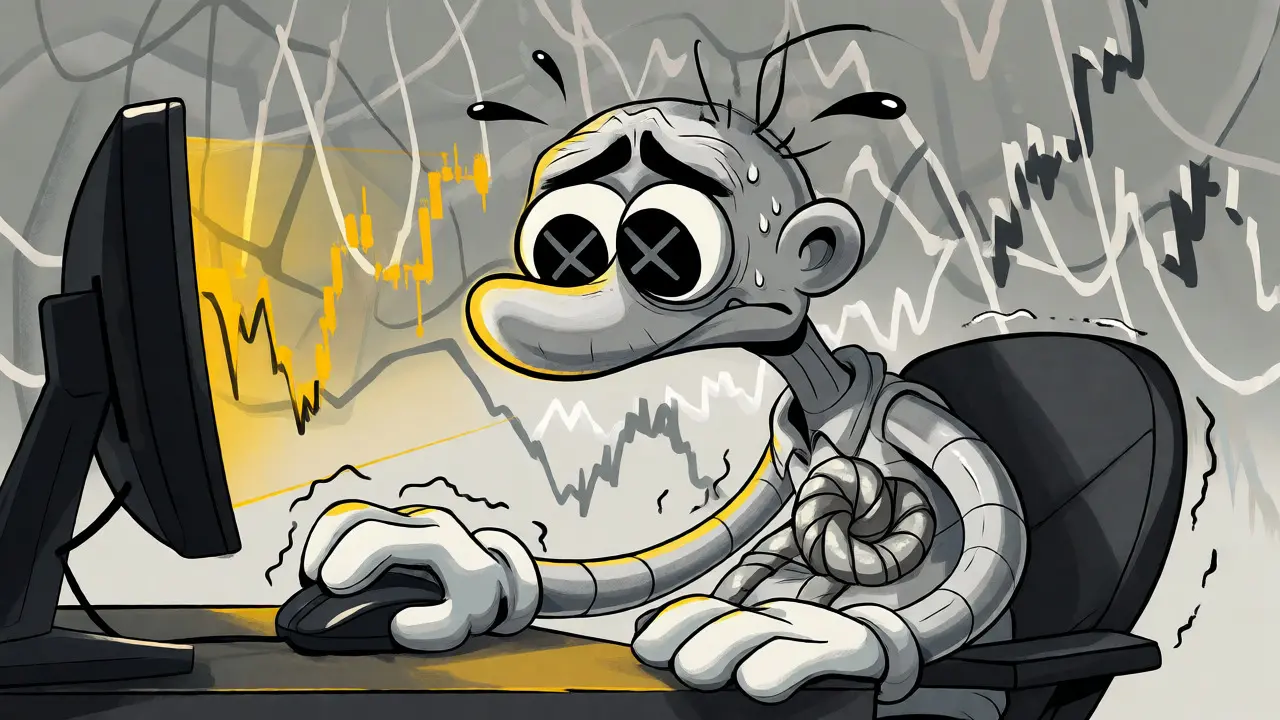

You stare at the screen. The market is moving, but you are frozen. You remember the last three trades that wiped out your weekly gains, and a heavy knot forms in your stomach. You hesitate, miss the entry, or worse, jump in late because the fear of missing out overrides your strategy. This isn't just bad luck; it's a broken feedback loop in your trading psychology. Most traders believe confidence comes from big profits. They think if they hit a home run, they’ll feel like a winner. But that’s backward. Real confidence-the kind that keeps you disciplined during a drawdown-is built through small wins and a focus on process rather than outcome.
Think about how you learned to ride a bike. You didn’t start by riding across the city. You started by balancing for ten seconds. Then twenty. Each tiny success gave your brain a chemical nudge to try again. Trading works the same way. If you only celebrate when you make $1,000, you’re starving your brain of motivation during the grind. But if you celebrate sticking to your plan on a losing trade, you build a resilient mindset that survives volatility.
The Neuroscience of Small Wins
Your brain doesn’t care about your bank account balance in the moment. It cares about immediate feedback. When you achieve a goal-even a tiny one-your brain releases dopamine. This neurotransmitter is often called the "motivation molecule," but its real job is reinforcement. It tells your nervous system, "That felt good. Do it again."
Here is the problem most traders face: they tie their dopamine release solely to profit. If you lose money, your brain gets no reward signal, even if you executed the perfect setup. Over time, this creates anxiety. Your subconscious starts associating trading with pain and uncertainty. By shifting your focus to process over outcome, you hack this system. You get a dopamine hit every time you follow your rules, regardless of whether the trade makes money. This turns trading from a high-stakes gamble into a series of manageable, rewarding actions.
Why Process Beats Outcome Every Time
In trading, outcomes are noisy. You can have a great day where you break all your rules and still make money. That’s dangerous because it reinforces bad habits. Conversely, you can execute flawlessly and take a stop-loss. That feels terrible, but it’s actually a win. When you judge yourself by the outcome, you’re judging things you can’t control. Market conditions, news events, and other participants’ behavior are outside your hands.
Focusing on the process gives you something you *can* control. Did you identify the setup correctly? Did you calculate your position size properly? Did you exit according to your plan? These are binary questions. Yes or no. Answering "yes" to these questions is a small win. It proves competence. Competence builds confidence. And confidence allows you to pull the trigger without hesitation next time.
| Focus Area | Outcome-Oriented Trader | Process-Oriented Trader |
|---|---|---|
| Reaction to Loss | Feels failure; doubts strategy; revenge trades. | Reviews execution; learns from data; stays calm. |
| Source of Confidence | Bank balance (volatile). | Discipline and rule adherence (stable). |
| Dopamine Trigger | Profit only. | Correct execution, journaling, risk management. |
| Long-term Result | Burnout, emotional rollercoaster. | Consistency, compounding growth, resilience. |
Defining Your Micro-Wins
So, what counts as a small win? It’s not just about clicking buttons. It’s about mastering the behaviors that lead to long-term success. You need to define these clearly so your brain knows what to look for. Here are specific examples of micro-wins you should track:
- The Perfect Entry: You spotted the setup, waited for confirmation, and entered exactly where you planned. Even if it hits stop-loss, this is a win.
- Risk Management: You calculated your position size before entering and stuck to your 1% risk rule. No impulsive oversizing.
- Emotional Control: You felt the urge to chase a candle but sat on your hands instead. That restraint is a victory.
- Journaling: You logged the trade immediately after closing it, noting your emotional state and technical reasons.
- Pre-Market Prep: You marked your levels and reviewed the economic calendar before the open, avoiding surprise entries.
Notice none of these depend on the price going up or down. They depend entirely on you. This shifts the power dynamic back to your side of the desk.

How to Implement the Small Wins Strategy
You can’t just think about this concept; you have to practice it. Start by creating a "Win Log." This isn’t your P&L statement. It’s a checklist of process goals. Before you trade, write down three process goals for the session. For example: "I will wait for the close of the H1 candle," "I will not move my stop-loss," and "I will take a five-minute break after two losses."
At the end of the day, review these goals. Did you do them? Check the box. Celebrate it. Seriously, say out loud, "I did it." Or share it with a trading partner. This simple act of acknowledgment triggers that dopamine release we talked about. It wires your brain to associate discipline with pleasure.
Another powerful tool is reframing failure. When you take a loss, don’t ask, "Why did I lose money?" Ask, "What did I learn?" If you followed your plan, the loss was just tuition. It was the cost of doing business. If you broke your plan, identify the trigger. Was it boredom? Greed? Fear? Naming the emotion reduces its power over you. This turns every trade, win or lose, into data for improvement.
Overcoming Analysis Paralysis
Big goals paralyze us. "Make $50,000 this year" is scary. It’s abstract and distant. It creates pressure. "Execute five clean trades today" is manageable. It’s concrete and immediate. When you break your trading journey into these bite-sized chunks, you reduce anxiety. You’re not trying to conquer the market; you’re just trying to execute one setup well.
This approach also helps with imposter syndrome. Many new traders feel like frauds because they don’t understand why they win or lose. By focusing on process, you build evidence of your capability. Each small win is proof that you know what you’re doing. Over time, this accumulates into genuine self-belief. You stop guessing and start trusting your skills.

Sustaining Momentum Through Drawdowns
Every trader faces drawdowns. Periods where nothing goes right. If your confidence is tied to outcomes, a drawdown crushes you. You start doubting your edge, your strategy, maybe even your career choice. But if your confidence is tied to process, a drawdown is just a period where the market hasn’t rewarded your correct behavior yet.
During these times, double down on small wins. Maybe the market is choppy, and there are no A+ setups. Your win for the day might be "I didn’t force a trade." That’s huge. Protecting capital is a skill. Recognizing that skill maintains your momentum. You stay engaged, disciplined, and ready for when the tide turns. You don’t burn out because you’re still getting positive feedback from your own discipline.
Practical Checklist for Daily Practice
To make this stick, integrate these steps into your routine:
- Set Process Goals: Write down 3 non-monetary goals before the session.
- Execute: Trade your plan. Ignore the P&L fluctuation during the trade.
- Review: After closing positions, check off your process goals.
- Acknowledge: Verbally or mentally affirm your successes. "I managed my risk well."
- Reframe: Analyze losses for behavioral errors, not monetary value.
It feels silly at first. Talking to yourself or checking boxes feels trivial compared to making money. But give it thirty days. You’ll notice a shift. Your heart rate will slow down during volatile moves. Your decisions will become faster and clearer. You’ll feel less desperate to recover losses quickly. That calmness is the hallmark of true trading confidence.
Does focusing on process really help with profitability?
Yes. While it seems counterintuitive, profitable trading requires consistency. Focusing on process ensures you repeat winning behaviors and eliminate losing ones. Over thousands of trades, this statistical edge translates directly to profitability, whereas chasing outcomes leads to erratic decision-making.
What if I have a losing streak despite following my rules?
This is normal variance. In probability, streaks happen. If your process is sound, the law of large numbers suggests your results will normalize. Treat the streak as data collection. Keep executing. Your "wins" are the adherence to rules, which preserves your mental capital until the market rewards your strategy.
How do I celebrate small wins without getting arrogant?
Keep celebrations private and proportional. A mental nod, a note in your journal, or a favorite coffee is enough. Arrogance comes from attributing luck to skill. Since you’re celebrating skill (execution), not luck (profit), you remain grounded. You acknowledge effort, not just result.
Can this method work for scalping and day trading?
Absolutely. Scalpers face even higher pressure and faster decisions. Micro-wins like "waiting for the exact tick" or "not over-leveraging" are critical. The rapid feedback loop of day trading makes dopamine reinforcement even more potent for habit formation.
What if I forget to track my process goals?
Use visual cues. Put a sticky note on your monitor with your top process rule. Set alarms for breaks. Make tracking part of your shutdown ritual. If you forget, don’t beat yourself up. Just restart the next day. Consistency matters more than perfection.






Write a comment