


Imagine you just spent hours grinding for a legendary sword in your favorite online game. Then comes the day the servers shut down, or you simply get bored and move to the next big title. That sword vanishes forever. Your investment is gone. This is the reality for millions of gamers today, but it doesn't have to be. Blockchain technology is changing the landscape entirely by making Gaming Assets digital items, skins, and currencies stored on a decentralized ledger allowing true ownership and transfer across different platforms. Now, that rare sword isn't just trapped in one server; it lives on a blockchain where you own it outright.
This shift isn't just about hype; it's about practical utility. When we talk about Blockchain Interoperability the capability for digital assets to move seamlessly between distinct ecosystems, applications, or platforms without intermediaries., we mean taking a character skin earned in one universe and wearing it in another. This concept transforms digital goods from disposable licenses into persistent property. For players, this means safety against server shutdowns. For developers, it opens up new monetization models. Today, let's break down exactly how this works, what technologies power it, and why it matters for your wallet.
The Problem with Traditional In-Game Items
In standard gaming, everything you buy or earn exists solely on a company's private server database. You never really own the "DLC" (Downloadable Content). You pay for a temporary license to use it within that specific software environment. If the company goes bankrupt, updates the game aggressively, or decides to ban your account, your assets disappear. This lack of control frustrates users who spend significant time and money building their collections.
Consider a scenario where you upgrade a character avatar in Game A. Later, you want to play a sequel, Game B, published by the same studio. Often, you have to start from scratch. Even worse, if you switch to a competitor's game, Game C, that investment is useless. Traditional databases are silos. They are closed loops designed to keep you within a single ecosystem. Blockchain breaks these walls by using a public ledger that any compliant game can read.
How Blockchain Standards Enable Portability
For interoperability to work, the internet needs a common language for defining digital objects. This is where token standards come into play. Without agreed-upon rules, every developer would build their own storage format, leading to chaos similar to having incompatible file formats for photos. Fortunately, the Ethereum Network a decentralized platform that executes smart contracts and supports various token standards including ERC-721 and ERC-1155. pioneered frameworks that set the foundation for this portability.
One critical standard is ERC-721 is a technical specification for non-fungible tokens ensuring uniqueness ERC-721. Each item minted under this standard gets a unique ID, like a serial number on a luxury watch. This guarantees that a specific skin isn't copied perfectly when moved to another game. Another vital protocol is ERC-1155, which allows developers to bundle multiple types of assets in one transaction. This efficiency is crucial when you are trying to move dozens of items at once during a trade.
| Standard | Best Used For | Key Feature | Limitations |
|---|---|---|---|
| ERC-721 | Unique Collectibles | Single Token per Asset | Higher Gas Costs for Bulk |
| ERC-1155 | Bundles & Mixed Bags | Batch Transfers Supported | Complex Implementation Logic |
Smart Contracts: The Unseen Guardians
Moving an asset isn't just a data copy-paste operation. It requires verification that the transfer is legitimate. Smart Contracts self-executing contracts with the terms of the agreement directly written into code. handle this logic automatically. When you initiate a transfer of a weapon from Game A to Game B, the smart contract checks your ownership balance first. If the conditions are met, it executes the move instantly without a middleman verifying the paperwork.
This automation is vital for preventing fraud. Imagine a scenario where someone tries to duplicate a rare skin. On a traditional server, hackers might exploit vulnerabilities to clone files. On a blockchain, the ledger records every history change. If a weapon is moved to a new address, the old address is marked as empty immediately. There is no way to spend the same asset twice. This security layer gives players confidence that their collection is real and secure regardless of where they play.
Understanding Levels of Interoperability
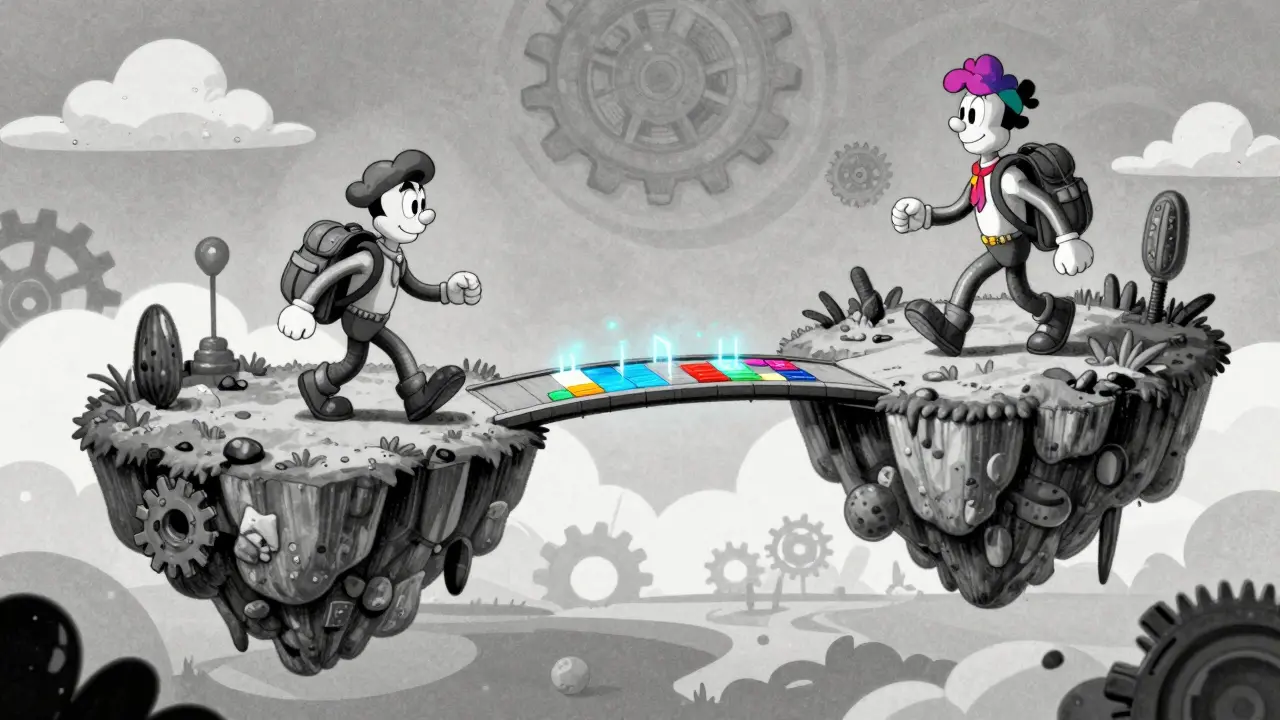
Not all asset sharing is created equal. There are two distinct levels you will encounter as you explore these platforms. The first is Partial Interoperability. This happens within specific ecosystems or families of games. For example, a group of studios might agree that avatars bought in one title can appear in their other titles, but not anywhere else. It creates a walled garden with slightly lower fences.
The second level is Total Interoperability. This is the ultimate goal where an asset is recognized universally across different engines and networks. To achieve this, games often utilize Metaverse Platforms virtual shared spaces that integrate web-based services and allow for cross-platform asset interaction.. These platforms act as hubs where metadata-like stats, textures, and animations-is standardized. While total compatibility is still maturing, progress is rapid due to community-driven efforts to align these universal formats.
The Role of Cross-Chain Bridges
A major hurdle is that blockchains themselves are separate. An item on Polygon might not natively speak to an item on Solana. This is where bridges step in. Blockchain Bridges infrastructure protocols that enable the transfer of tokens and data between two different blockchains. function much like currency exchanges at a border crossing. They lock your asset on Chain A and mint a wrapped version on Chain B.
However, speed and cost matter. Layer 2 solutions help solve the fee issue. Transactions on a base chain like Ethereum can be expensive. Layer 2 scaling technologies process transactions off the main network while keeping security intact. This reduces the friction of trading, making a $5 skin trade actually economical rather than costing $20 in fees. As adoption grows, we see tools improving to make these transfers seamless, requiring fewer clicks and less manual verification from the user.
Why This Matters for Developers
It isn't just players who benefit. Creators gain massive advantages from this architecture. Traditionally, a developer invests millions creating content only for it to rot when a franchise ends. With interoperable assets, they create valuable intellectual property that retains value post-launch. They can design items that are compatible with partner games, expanding the market reach of their art.
This model also fosters collaboration. Instead of competing solely for player retention through exclusive content traps, studios can compete on quality and experience. They share revenue streams. If you create a skin used in three different games, you might receive royalties whenever that skin is traded or equipped, regardless of which game generates the activity. This recurring revenue model stabilizes the volatile nature of game development income.
Risks and Challenges to Consider
Despite the promise, the technology isn't perfect yet. Volatility is a concern. If the underlying cryptocurrency used for gas fees crashes or spikes, the usability of the system fluctuates. Furthermore, legal frameworks around digital ownership vary by region. Some countries have strict regulations regarding digital assets that could impact how these items are sold or taxed.
Security remains paramount. Wallets holding your high-value inventory require protection. Unlike a password, losing your private keys means losing your entire collection permanently. There is no customer support email to recover lost funds. Users must exercise discipline in managing their security credentials. Phishing attempts targeting gamers are common, so vigilance is essential when connecting wallets to game portals.
What the Future Holds
Looking ahead, the vision involves a truly connected digital identity. Your reputation and gear will travel with you everywhere, not just between games but potentially into virtual workspaces or social environments. We expect stricter standardization in metadata management to solve the visual glitch issues seen early on. More importantly, user interfaces are simplifying. In 2026, interacting with blockchain shouldn't feel like hacking-it should feel as natural as logging into Steam.
As technology matures, the distinction between 'in-game' and 'real-world' value blurs. High-quality digital craftsmanship becomes an asset class in its own right. For now, the transition is ongoing, offering a glimpse into a gaming economy where you hold the deed to your own fun.




ujjwal fouzdar
31 Mar 2026 at 07:58It feels strange owning something intangible. We trade hours for digital nothingness daily without a thought. Servers inevitably shut down while data rots silently. Blockchain offers permanence against that chaotic entropy. Is the risk actually worth the potential reward here.
Some might call it just another speculative bubble. But the core concept of ownership is genuinely seductive. Think about your best sword living forever. Even if you get bored with the original game. The underlying metadata persists regardless of player attention. This shifts our relationship with digital labor significantly.
Players work harder knowing effort yields lasting assets. Market volatility scares me regarding value retention. High gas fees often eat up small transaction profits. Still I dream of a unified gaming economy constantly. Eventually walls will come down completely between platforms.
We might stop playing solely for corporate profit motives. Instead we could build ecosystems for our own benefit. That transition would be absolutely monumental for culture. It truly changes how humans interact with fun forever.