



You probably signed up for a VoIP mobile app is software that allows users to make voice and video calls over internet connections instead of traditional phone lines because the price tag looked great. Plans from providers like Nextiva or RingCentral often advertise rates between $15 and $40 per user per month. It sounds like a no-brainer compared to legacy PBX systems with their hefty line rentals. But here is the catch: that subscription fee is just the tip of the iceberg.
If you are managing a team of remote workers or sales reps on the go, you are likely bleeding money in ways your finance department isn’t tracking. The real cost of mobile VoIP hides in two specific areas: cellular data consumption and the operational overhead of device management. These aren't minor footnotes; they can double your effective cost per user if you don't plan for them.
The Real Cost of Cellular Data
When you evaluate VoIP, you usually think about the service provider's bill. You rarely think about the bill from Verizon, AT&T, or T-Mobile. This is where the first major hidden cost lives. VoIP doesn't use the traditional circuit-switched network; it uses your mobile data connection. And depending on how your team uses the app, that data adds up fast.
Let’s look at the numbers. A standard voice call using the G.711 codec consumes about 1 MB of data per minute. If your sales team makes an hour of calls every day, that’s roughly 600 MB per week, or around 2.4 GB per month per person. That might fit comfortably into a 3 GB plan. But what happens when you introduce video?
| Call Type | Bandwidth Requirement | Data Used Per Minute | Data Used Per Hour |
|---|---|---|---|
| Voice Only (G.711) | ~80 kbps | ~1 MB | ~60 MB |
| Voice Only (G.729 Compressed) | ~30 kbps | ~0.5 MB | ~30 MB |
| Video Call (720p HD) | 1.2 - 1.5 Mbps | ~9 MB | ~540 MB |
| Background Signaling | Variable | Minimal | 10-50 MB/month |
A single 720p video meeting can burn through nearly 500 MB of data in just one hour. If a manager joins four one-hour video meetings a week, they are consuming 2 GB of data weekly, or 8 GB monthly, just for meetings. For employees on capped plans, this triggers throttling speeds or expensive overage fees, which can run $10 to $15 per extra gigabyte. In international roaming scenarios, these costs skyrocket, potentially exceeding $5 to $10 per GB, completely negating the savings from the VoIP subscription itself.
There is also the issue of background data. To ensure your phone rings instantly, VoIP apps send constant "keep-alive" signals to servers. While small individually, these packets add up across a fleet of devices. Misconfigured apps can leak tens of megabytes per month per device in background traffic, complicating network management and eating into bandwidth budgets without any obvious benefit to the user.
Device Management Overhead
The second bucket of hidden costs involves getting the app to work securely and reliably on employee devices. You can't just tell everyone to download the app from the App Store and hope for the best. You need control.
This requires Mobile Device Management (MDM) or Enterprise Mobility Management (EMM) solutions like Microsoft Intune or VMware Workspace ONE. According to Gartner, basic MDM licensing runs between $3 and $8 per device per month, with advanced security features pushing that to $10-$15. Many companies assume this cost is covered by their Microsoft 365 bundle, but the portion attributable specifically to VoIP configuration and security enforcement is often overlooked in total cost of ownership calculations.
Licensing is only half the battle. The operational labor required to manage these deployments is significant. IT teams spend dozens of hours configuring app policies, distributing certificates for secure authentication, and testing compatibility across different operating system versions. A rollout for just 100 users can consume 40 to 120 hours of IT labor during the initial setup phase alone. This includes troubleshooting push notification failures, which are notoriously difficult on Android devices due to aggressive battery optimization settings implemented by manufacturers like Samsung, Xiaomi, and Huawei.
These manufacturer-specific behaviors often kill background processes to save battery, causing VoIP calls to fail silently. Administrators end up spending time creating vendor-specific exceptions and fielding helpdesk tickets from frustrated employees who missed important calls. This support burden translates directly into lost productivity and increased IT headcount requirements.
Battery Drain and Hardware Lifecycle
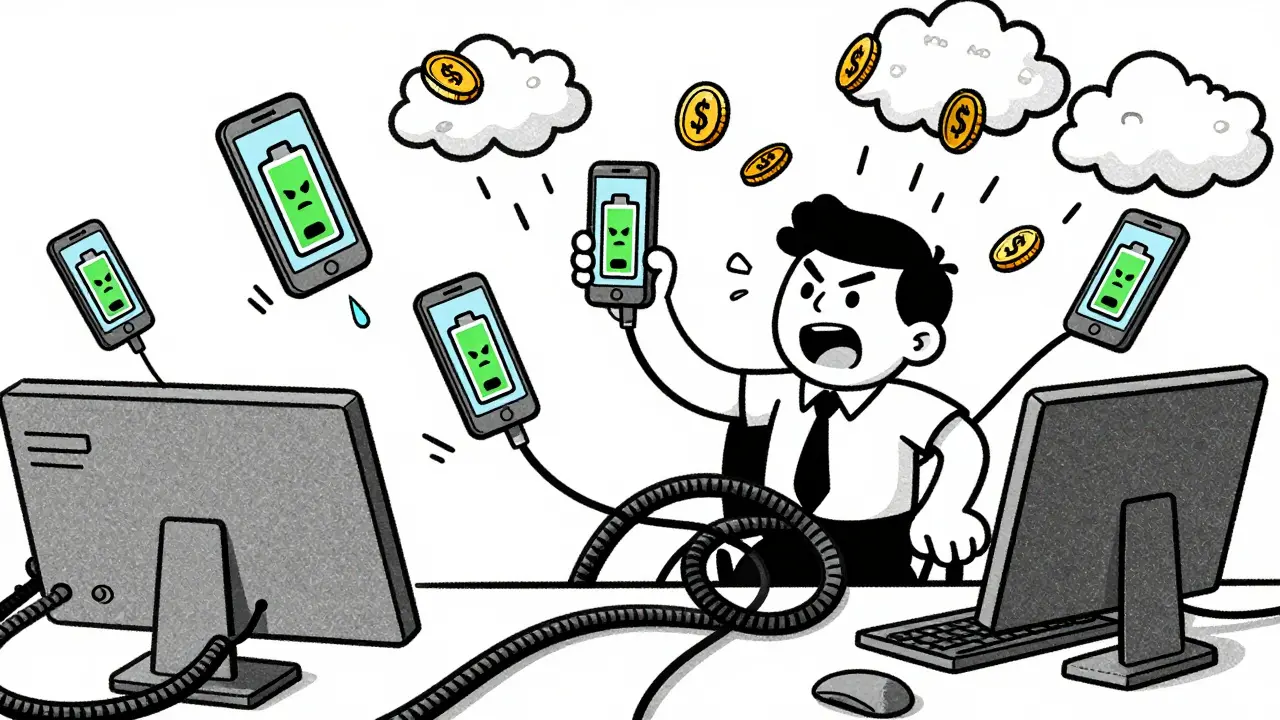
There is a physical cost to running VoIP apps constantly. Keeping the radio awake for instant ringing drains battery life significantly. Users report battery degradation of 10% to 30% faster than normal when persistent VoIP registration is active. This leads to more frequent charging cycles and, eventually, earlier hardware replacement. When you factor in the cost of replacing corporate-owned devices a year or two sooner than planned, the "free" VoIP app starts looking much more expensive.
Security and Compliance Risks
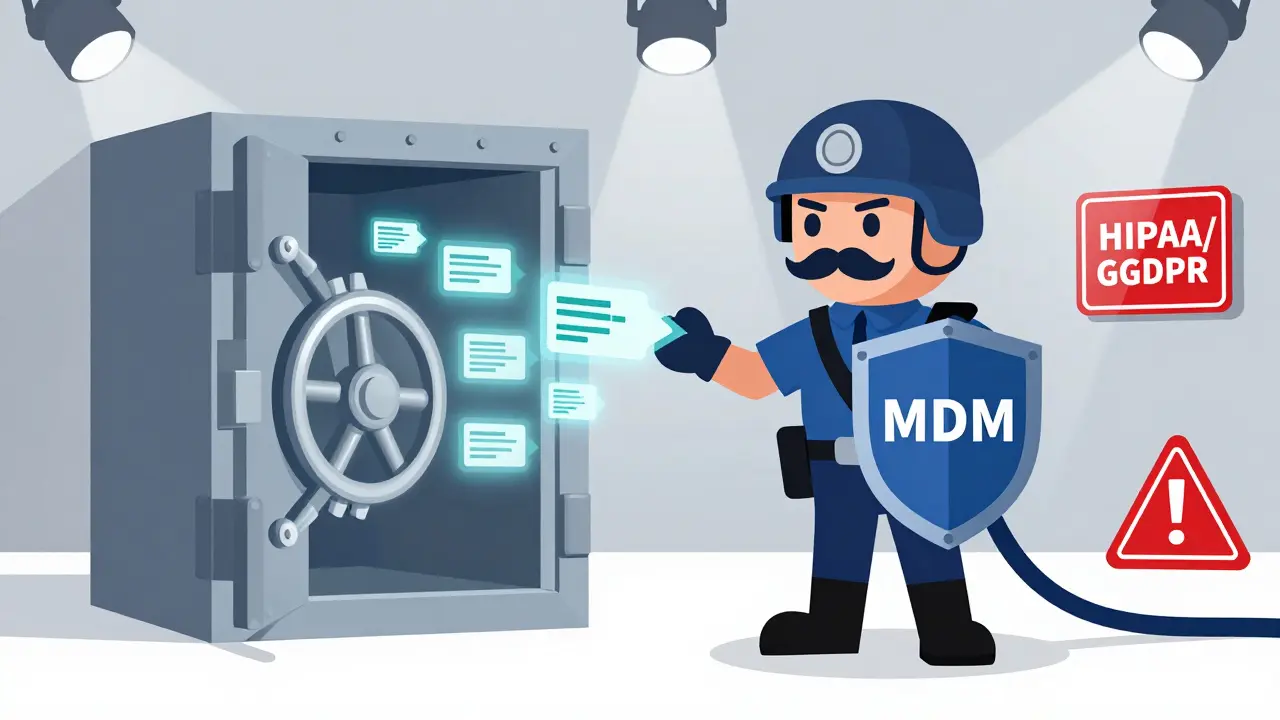
Finally, consider the risk cost. VoIP apps handle sensitive data: call recordings, voicemail transcripts, and contact lists. For industries regulated by HIPAA, GDPR, or PCI-DSS, ensuring this data is encrypted in transit and at rest on personal devices is critical. Implementing containerization or strict app protection policies adds another layer of complexity and potential licensing fees. Failure to secure these endpoints can result in massive regulatory fines, ranging from $50,000 to millions of dollars in severe cases. The cost of prevention via proper device management is negligible compared to the cost of a breach.
How to Calculate Your True VoIP Cost
To avoid surprises, you need to model your total cost accurately. Don't just look at the seat price. Use this simple framework:
- Estimate Data Usage: Calculate average minutes of voice and video per user. Multiply by the data rates above (1 MB/min for voice, 9 MB/min for HD video).
- Add Data Plan Costs: Determine if current employee plans cover this usage. If not, budget for upgrades or overages.
- Include MDM Licensing: Add $3-$10 per device per month for management tools.
- Factor in IT Labor: Estimate hours for deployment, training, and ongoing support. Multiply by your IT hourly rate.
- Account for Roaming: If travel is involved, budget for high-cost international data packages.
By bringing these hidden costs into the light, you can make informed decisions. You might choose to enforce Wi-Fi-only calling for video, switch to compressed codecs like G.729 to save data, or invest in better MDM tools to reduce support tickets. Understanding the full picture ensures your VoIP investment actually delivers the savings it promises.
How much data does a VoIP call use per minute?
A standard voice call typically uses about 1 MB of data per minute using the G.711 codec. Compressed codecs like G.729 can reduce this to approximately 0.5 MB per minute. Video calls consume significantly more, often 9 MB per minute for 720p HD quality.
Does VoIP drain battery life on smartphones?
Yes, VoIP apps can reduce battery life by 10% to 30%. This is because the app must keep the cellular radio awake to receive incoming calls instantly, preventing the phone from entering deep sleep modes.
What is the cost of Mobile Device Management (MDM) for VoIP?
MDM licensing generally ranges from $3 to $8 per device per month for basic features, and up to $10-$15 for advanced security and analytics. This cost is separate from the VoIP subscription fee.
Why do VoIP calls sometimes fail to ring on Android phones?
Many Android manufacturers implement aggressive battery optimizations that kill background apps. If the VoIP app is not whitelisted in the system settings, the OS may stop the app from receiving push notifications, causing calls to go unanswered.
Are there hidden costs associated with international roaming for VoIP?
Yes, while the VoIP call itself may be free within your plan, the data used to transmit that call is billed by your mobile carrier. International data rates can range from $5 to $10 per GB or higher, making unmanaged VoIP usage abroad very expensive.






Write a comment