

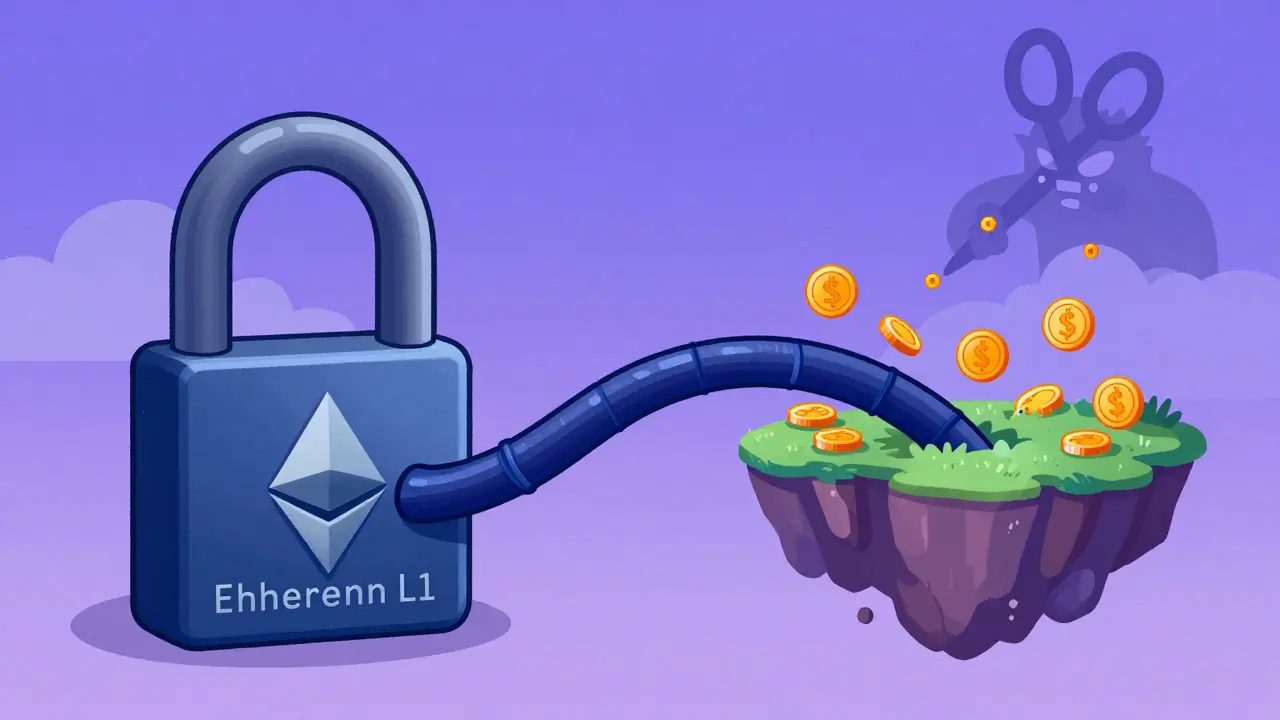

When you move assets from Ethereum mainnet to a Layer 2 (L2) network, you aren't just changing locations; you're swapping one set of security guarantees for another. The promise of L2s is speed and low fees, but the reality is that bridge risks remain the primary threat vector for users holding significant value on these networks. Between 2022 and 2026, billions of dollars have been lost not because Ethereum failed, but because the mechanisms connecting it to L2s had hidden weaknesses.
This isn't about whether L2s work-they do. It's about understanding exactly where the safety net can tear. Whether you are using an optimistic rollup like Arbitrum or a zk-rollup like Starknet, your funds depend on a complex web of cryptographic proofs, validator honesty, and smart contract logic. If any single link in this chain breaks, your assets are at risk. Here is what actually protects your money, and where the cracks show.
The Core Trust Model: What You Are Actually Relying On
To understand the risk, you first need to strip away the marketing language. When an L2 project says it is "secured by Ethereum," they mean that the final state of the L2 is posted to Ethereum. But getting there requires intermediate steps that introduce new trust assumptions.
There are two main types of L2s, and they handle trust differently:
- Optimistic Rollups (e.g., Arbitrum, Optimism): These assume transactions are valid until proven otherwise. A challenge window (usually 7 days) allows anyone to submit a fraud proof if a bad batch is submitted. Your trust here lies in the existence of at least one honest watcher who will monitor the chain and act within that window. If all watchers go offline or collude, invalid states can pass.
- ZK-Rollups (e.g., Starknet, Polygon zkEVM): These use cryptographic validity proofs (like SNARKs) to verify every transaction instantly. Your trust shifts to the mathematical soundness of the proof system and the integrity of the prover. If the math holds, the state is correct, regardless of who runs the nodes.
In both cases, the canonical bridge is the choke point. It locks your ETH or ERC-20 tokens on L1 and mints a representation on L2. This creates a 1:1 peg, but only as long as the bridge logic remains consistent. If the bridge contract has a bug, or if the validators controlling it are compromised, the peg can break instantly, leading to arbitrary minting or frozen withdrawals.
Security Stages: Who Holds the Keys?
A critical part of L2 security is governance. Vitalik Buterin formalized this into three stages, which define how much power a small group of developers or council members holds over the protocol.
| Stage | Governance Structure | Risk Level | Typical Examples (Mid-2026) |
|---|---|---|---|
| Stage 0 | Small multisig (e.g., 4-of-7) with full override power | High | Newer experimental chains |
| Stage 1 | Larger multisig (e.g., 6-of-8) with restricted overrides | Moderate | Most major production rollups |
| Stage 2 | Decentralized governance; upgrades require provable bugs | Low | Few mature ecosystems |
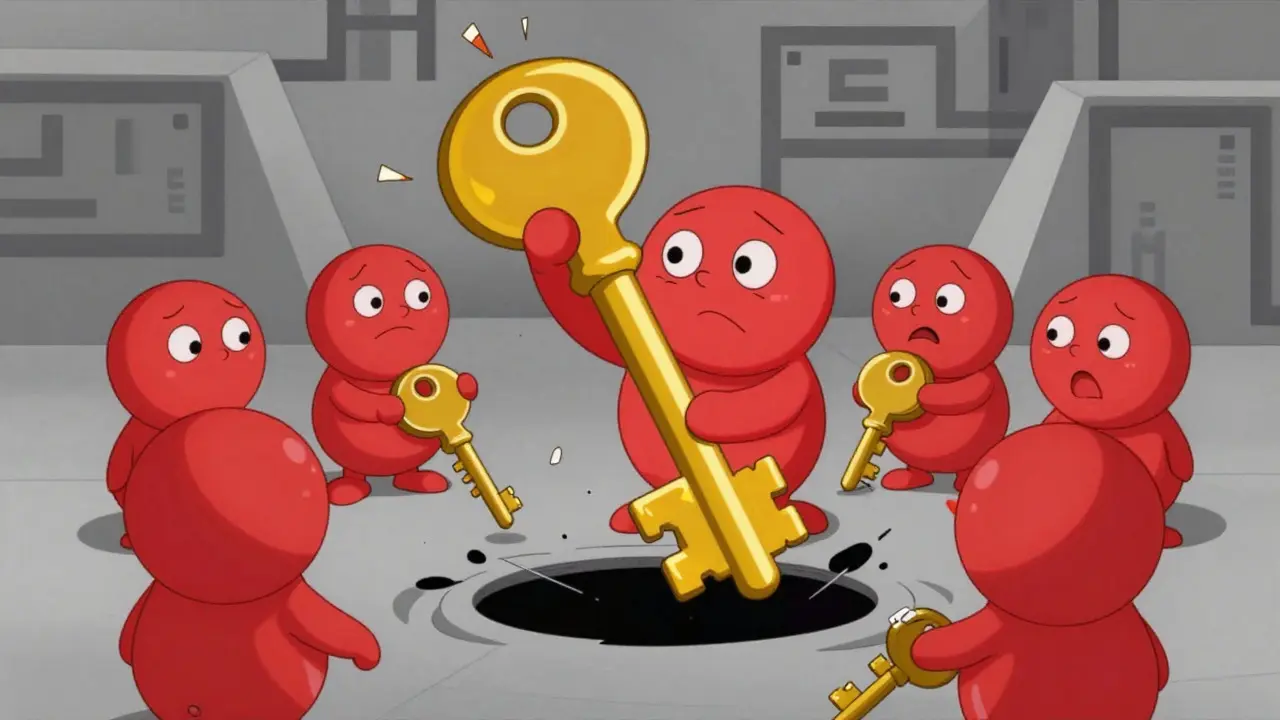
As of mid-2026, very few rollups have reached Stage 2. Most major ecosystems still rely on Stage 1 multisigs. This means that if a social engineering attack compromises enough signers in a 6-of-8 setup, they could theoretically force an upgrade that drains the bridge. The probability of failure depends on the independence of each signer. If multiple keys are held by the same company, the effective security drops dramatically, as seen in past incidents.
How Bridges Get Hacked: Real-World Attack Vectors
Theoretical risks become real when attackers find specific weaknesses. Based on post-mortems from 2022 to 2026, most bridge exploits fall into four categories:
- Validator Key Compromise: The most common vector. In the Ronin Bridge hack (March 2022), attackers stole 5 of 9 private keys. Because 5 of those keys were controlled by one entity, compromising that single organization gave them majority control, draining ~$624 million. Similarly, Harmony Horizon lost ~$100 million due to relayer key issues.
- Smart Contract Logic Bugs: Sometimes the code itself is flawed. The Wormhole exploit (February 2022) involved a missing signature check in the guardian network. Attackers forged a message to mint 120,000 wrapped ETH on Solana without collateral, costing ~$320 million. One line of missing validation negated the security of the entire multisig.
- Initialization and Replay Flaws: The Nomad bridge incident (2022) stemmed from a broken initialization that set a trusted root to a default zero value. This allowed anyone to replay a past valid message and drain ~$190 million. It wasn't a cryptographic failure; it was a configuration error.
- Message Routing Errors: More recently, KelpDAO suffered ~$292 million in losses in 2026 due to a misconfiguration in its Omnichain messaging. A 1-of-1 verification node on an L2 route allowed forged messages via a poisoned RPC endpoint. This shows that even if the core contracts are safe, the infrastructure routing the messages can be the weak link.
These examples highlight a pattern: private key leakage accounts for nearly 50% of observed bridge exploits. The rest are split between logic bugs, event manipulation, and front-end phishing. Even if the code is perfect, if a user clicks a fake bridge link, their funds are gone.
The Taiko Precedent: Systemic Risk in State Verification
On June 22, 2026, the Taiko L2 team confirmed a compromise in its state verification mechanism. They warned that "the security assumptions of all bridges deployed on Taiko can no longer be relied upon." This incident is a crucial data point because it demonstrates that bridge security is only as strong as the L2's underlying state verification.
If the L2 posts an incorrect state root to Ethereum, and no one catches it (due to lack of independent verifiers or a buggy proof system), then every bridge relying on that state root is compromised. This creates a systemic risk: a single bug in the L2 verification pipeline can invalidate the security of dozens of third-party bridges simultaneously. It reinforces the idea that you must evaluate the L2's core technology, not just the bridge interface you use to deposit.
Practical Steps to Mitigate Bridge Risks
You don't need to be a cryptographer to reduce your exposure. However, you do need to be informed. Here is how to approach bridging in 2026:
- Check the Security Stage: Prefer L2s that are moving toward Stage 2 or have robust Stage 1 governance with distributed signers. Avoid chains where a single company controls more than 40% of the multisig keys.
- Use Canonical Bridges First: Third-party bridges often add extra layers of complexity and trust. While they may offer faster withdrawals, the canonical bridge is usually the most audited and integrated path. If you must use a third party, ensure it has a large TVL and a history of successful audits.
- Diversify Across Chains: Don't keep 100% of your portfolio on one L2. If that specific L2 suffers a state verification failure or a bridge exploit, your entire position is at risk. Splitting assets across different L2 architectures (e.g., one optimistic, one ZK) reduces correlated risk.
- Verify URLs and Contracts: Front-end phishing is a top-tier risk. Always copy-paste contract addresses from official documentation rather than clicking links in tweets or Discord messages. Use browser extensions that flag unverified contracts.
- Understand Withdrawal Times: Optimistic rollups typically have a 7-day withdrawal period. This delay is a feature, not a bug-it’s the challenge window. If you need instant liquidity, consider keeping some funds on L1 or using a liquid staking derivative that supports fast exits, but weigh the trade-offs.
For institutional investors, the bar is higher. Look for projects with formal verification of their proof systems, multi-region key storage using Hardware Security Modules (HSMs), and automated circuit breakers that halt withdrawals if anomalies are detected. A bridge managing over $100 million in TVL should have undergone multi-month audit engagements by reputable firms.
Future Outlook: Moving Toward Trustlessness
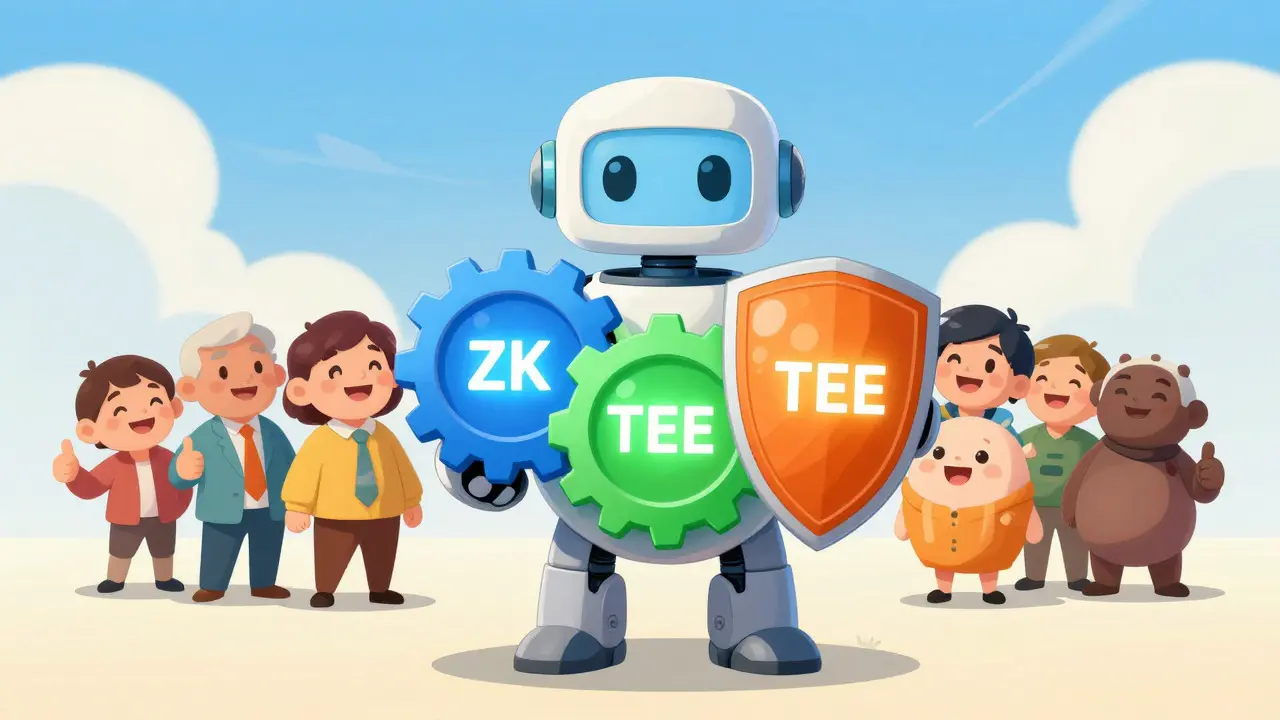
The industry is moving away from small multisigs and toward hybrid-proof models. Vitalik Buterin’s proposed roadmap includes a three-prover architecture combining ZK proofs, optimistic fraud proofs, and Trusted Execution Environments (TEEs). In this model, state roots are finalized only when at least two of the three mechanisms agree. This redundancy significantly lowers the probability that a single bug or key compromise can propagate unchecked.
Additionally, we are seeing more decentralized governance structures emerge, where upgrade powers are vested in DAOs with thousands of token holders rather than a handful of individuals. While this adds complexity, it distributes the risk. As these technologies mature, the "trust assumption" gap between L1 and L2 will narrow. Until then, however, the bridge remains the Achilles' heel of the ecosystem. Treat it with the caution it deserves.
Are L2 bridges safer than cross-chain bridges?
Generally, yes, because L2 bridges settle on Ethereum, inheriting some of its security. However, they are not immune to bugs. Cross-chain bridges often involve more complex consensus mechanisms between unrelated blockchains, which can introduce additional points of failure. Both carry significant risk, but L2 bridges benefit from the finality of the L1 settlement layer.
What happens if an L2 bridge gets hacked?
It depends on the type of hack. If it's a contract bug allowing arbitrary minting, the L2 might freeze withdrawals and issue a hard fork to revert the state. If it's a validator key compromise, the protocol might pause operations while new keys are generated. In many historical cases, recovery rates averaged only 35%, meaning most users lost a portion of their funds permanently.
How long does it take to withdraw from an optimistic rollup?
Standard withdrawals from optimistic rollups like Arbitrum or Optimism take approximately 7 days. This is the fraud proof challenge window. During this time, anyone can dispute the validity of the state transition. Once the window closes, the funds are released on L1. Some third-party bridges offer faster exits by taking on the risk themselves, but this introduces counterparty risk.
Is it safe to bridge large amounts of capital?
It is safer if you choose established L2s with high TVL, robust audit histories, and transparent governance. For very large sums, consider splitting deposits across multiple L2s or using insured vaults if available. Always remember that the bridge contract is a honeypot; the larger the TVL, the more attractive the target for attackers.
What is the difference between a canonical bridge and a third-party bridge?
A canonical bridge is built and maintained by the L2 protocol team itself (e.g., the official Arbitrum bridge). It is deeply integrated with the protocol's state management. A third-party bridge (e.g., Hop, Across) is an external service that facilitates transfers, often using liquidity pools for instant swaps. Canonical bridges generally have lower trust assumptions regarding intermediaries, while third-party bridges may offer better UX and speed at the cost of added counterparty risk.


Write a comment