



Imagine holding a single token that lets you steer the ship of five different major crypto protocols at once. Sounds like a power trip? That is exactly what Meta-Governance is: a mechanism where one decentralized autonomous organization (DAO) uses its governance tokens to vote on proposals within other DAOs. It sounds complex, but it’s actually reshaping how Decentralized Finance (DeFi) coordinates. If you’ve ever felt overwhelmed by tracking votes across Aave, Uniswap, and Compound separately, meta-governance offers a streamlined alternative. But does concentrating voting power in one index really help decentralization, or does it just create new bottlenecks?
The Core Concept: One Token, Many Votes
At its heart, meta-governance is about delegation. Instead of every individual holder needing to log into six different dashboards to vote on protocol upgrades, they vote once on their own token. This decision then dictates how a large block of external tokens votes in those underlying protocols. The most prominent example today is Index Coop, which allows holders of its $INDEX token to direct how the DeFi Pulse Index (DPI) votes.
DPI isn’t just an investment basket; it’s a governance aggregator. It holds significant positions in tokens like UNI, COMP, YFI, AAVE, MKR, and BADGER. When a proposal comes up in the Uniswap DAO, for instance, $INDEX holders don’t need to hold UNI directly. They vote on Snapshot using their $INDEX tokens. If the majority says "yes," DPI casts its entire UNI holding as a "yes" vote. It’s efficient, sure, but it also means a relatively small group of active voters can sway massive amounts of capital.
How the Voting Pipeline Actually Works
You might wonder, how does this happen without chaos? Index Coop has codified a strict four-step process to keep things orderly. First, when an external protocol like Aave launches a proposal, a mirror proposal appears on Index Coop’s Snapshot page. Second, $INDEX holders have a window to vote-usually closing 24 hours before the actual Aave vote ends. This buffer is crucial for execution.
Third, quorum matters. If less than 5% of the circulating $INDEX supply participates, the vote doesn’t trigger automatically. This prevents a tiny faction from hijacking the vote. If quorum is met and a simple majority decides, DPI executes that choice on-chain. Fourth, if quorum fails, a Meta Governance Committee-a five-person group serving five-month terms-steps in to decide. This backstop ensures that low participation doesn’t lead to apathy, though it introduces a layer of human judgment into a system designed to be algorithmic.
| Feature | Direct Governance | Meta-Governance (e.g., Index Coop) |
|---|---|---|
| Voting Power Source | Individual holdings in Protocol X | $INDEX holdings controlling DPI’s stake in Protocol X |
| User Effort | High (track multiple DAOs) | Low (vote on one platform) |
| Execution | Individual transactions | Single block vote via multisig |
| Quorum Risk | Fragile (many small holders) | Stable (aggregated power) |
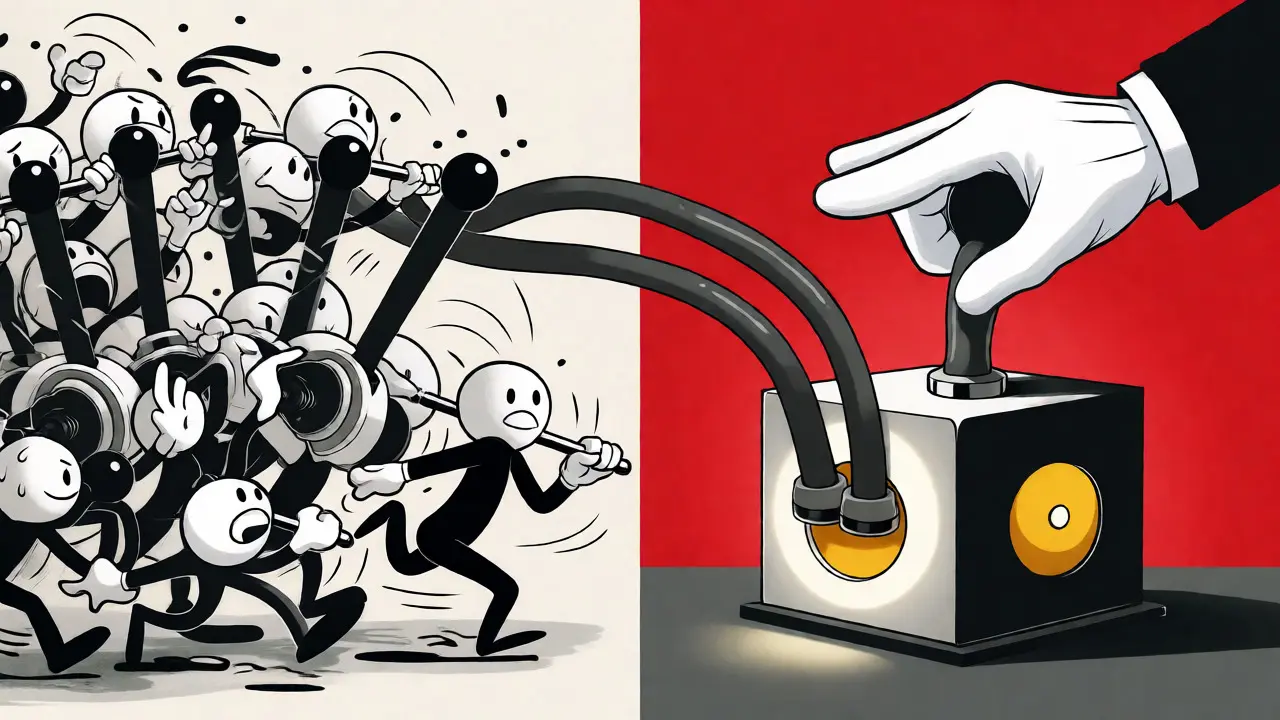
The Aggregation Effect: Power Concentration
This model creates a powerful aggregation effect. In traditional governance, voting power is fragmented. Thousands of small UNI holders might ignore a minor proposal because the gas fees outweigh their potential impact. In meta-governance, DPI acts as a whale. Because it holds a large position, its vote counts. By letting $INDEX holders direct that whale, Index Coop effectively amplifies the voice of its community.
However, this concentration raises eyebrows among purists. If 100 people control the direction of millions of dollars in UNI votes, are we truly decentralized? Critics argue that meta-governance can override the preferences of direct token holders who didn’t participate. If the $INDEX voter base has a different risk profile than the average UNI holder, misalignment occurs. For example, Index Coop might push for integrations that benefit its index products, even if those changes slightly disadvantage other UNI users.
Technical Mechanics: Snapshot and Multisigs
Technically, the system relies on a two-layer architecture. Layer one is off-chain voting via Snapshot. This keeps costs near zero for users, as signing a message is free compared to on-chain transactions. Layer two is on-chain execution. Once the Snapshot vote concludes, the Index Coop multisig wallet executes the transaction in the underlying protocol.
It’s important to note that this works best with protocols using snapshot-based governance modules, like Aave, Compound, and Uniswap. These systems take a snapshot of balances at a specific block height, preventing flash-loan attacks where someone borrows tokens just to vote. Since DPI’s balance is fixed during the voting period, the meta-governance vote reflects the true economic weight of the index at that moment.
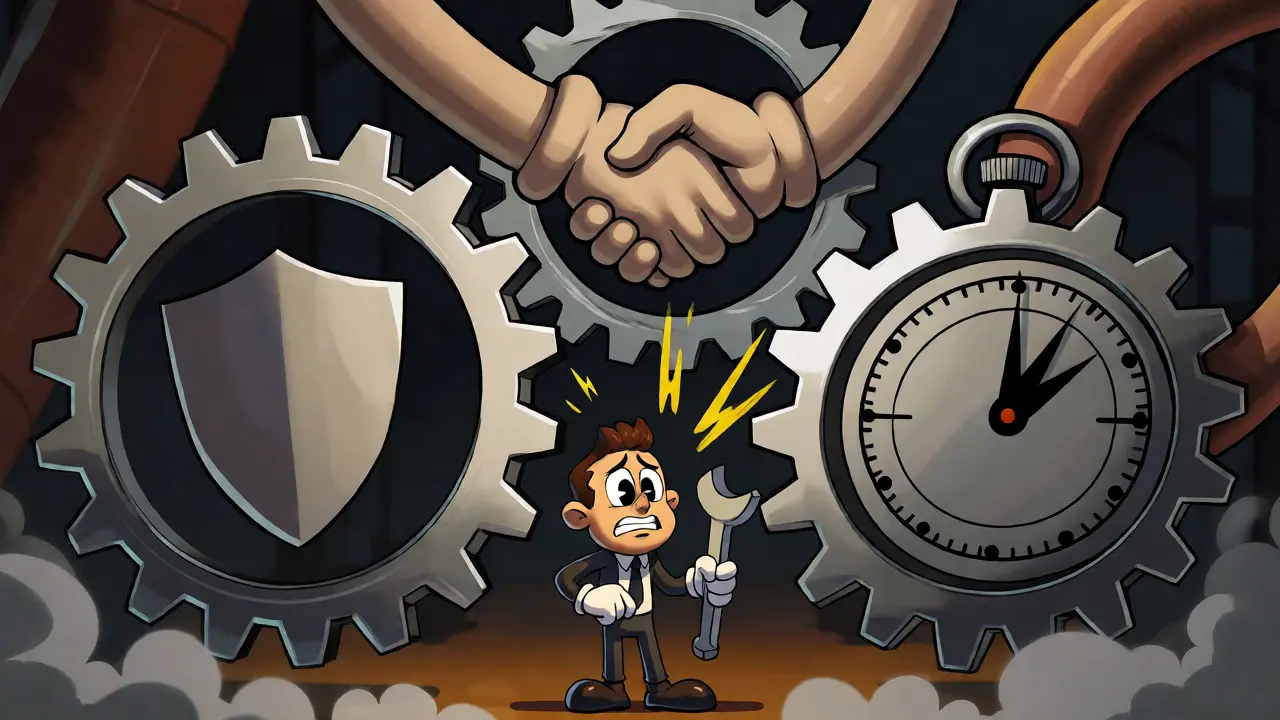
Risks and the Metagovernance Trilemma
Academics have formalized the tensions here into the "metagovernance trilemma." You generally cannot maximize three things at once: DAO autonomy, ecosystem coordination, and decision efficiency. Index Coop leans heavily into coordination and efficiency. By bundling votes, it speeds up decision-making and aligns incentives across DeFi. But it sacrifices some autonomy. The underlying protocols lose the ability to react independently to their specific communities if the meta-governor makes a unilateral call.
There’s also the risk of capture. If a coordinated group acquires enough $INDEX tokens cheaply, they could theoretically swing votes in multiple major protocols simultaneously. While the 5% quorum requirement mitigates this, it doesn’t eliminate it. Vigilant monitoring and committee checks remain essential safeguards.
Getting Started: What You Need to Know
If you’re looking to participate, you don’t need to be a developer. You do need to understand three things: index composition, external protocol issues, and Snapshot mechanics. Start by reading the Index Coop resource center. Monitor the Snapshot page for mirrored proposals. Remember, your vote on $INDEX doesn’t just affect your portfolio; it signals intent to the broader DeFi ecosystem.
Be aware of the timelines. Missing the Snapshot deadline by a few hours means your vote doesn’t count for that cycle. And if you’re passive, the committee decides for you. Some users prefer this hands-off approach; others feel it dilutes their agency. There is no right answer, only trade-offs between convenience and control.
What is the difference between DPI and $INDEX?
DPI (DeFi Pulse Index) is an ERC-20 token representing a basket of DeFi assets. It holds the actual governance tokens (like UNI, AAVE). $INDEX is the governance token of Index Coop. Holding $INDEX gives you voting rights over how DPI’s assets are managed and voted, but holding DPI itself does not grant governance rights.
Do I need to hold UNI to vote on Uniswap proposals via meta-governance?
No. You need to hold $INDEX. Your $INDEX votes determine how the DPI treasury’s UNI holdings will vote in the Uniswap DAO. You do not need to own any UNI directly.
What happens if quorum is not reached?
If fewer than 5% of eligible $INDEX tokens participate in a Snapshot vote, the automatic execution rule is bypassed. Instead, the Index Coop Meta Governance Committee reviews the proposal and decides how DPI should vote on-chain.
Can meta-governance votes be split?
Currently, Index Coop’s system uses a winner-takes-all approach. If the majority of participating $INDEX holders vote "for," DPI casts 100% of its relevant token balance as "for." Minority votes do not result in proportional splitting of the on-chain vote.
Is meta-governance safe from manipulation?
It reduces flash-loan attack risks because voting power is determined by a snapshot taken before the vote. However, it introduces centralization risks if a small group accumulates enough $INDEX to consistently win quorum and dictate outcomes across multiple protocols.



Write a comment