

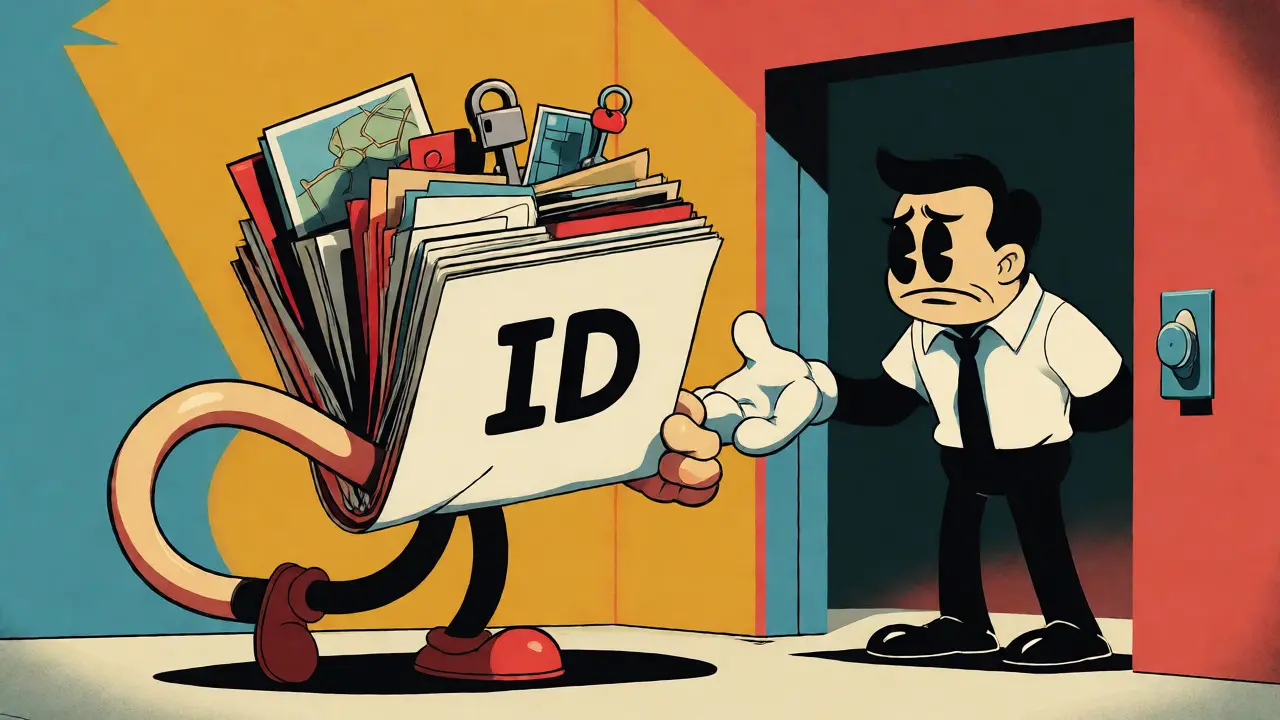

You hand over your driver’s license to a bouncer. They see your name, address, photo, and the fact that you’re over 21. But do they need your home address? Do they care about your eye color? Probably not. Yet, traditional ID systems force you to reveal everything just to prove one thing. This data leakage is why Verifiable Credentials and Decentralized Identifiers (DIDs) are gaining traction as the backbone of modern digital identity. These aren’t just buzzwords for crypto enthusiasts; they are open web standards designed to let you prove who you are without handing over your entire life history to every website or service you touch.
As of late 2026, these technologies have moved from theoretical whitepapers to practical implementations. The W3C has finalized the core specifications, making them stable enough for enterprises and governments to build upon. If you’ve ever wondered how a blockchain can help you log in to a hospital portal or apply for a loan without uploading scanned PDFs of your passport, this guide breaks down exactly how it works and where it’s actually being used today.
The Core Problem with Traditional Digital Identity
Think about how you verify yourself online right now. You use an email address and password, or maybe you hit "Sign in with Google." In both cases, you are relying on a central authority. If Google goes down, you can’t log into half the internet. If your email provider gets hacked, your identity is compromised. Worse, when you sign up for a new app, you often give away more personal data than necessary because there’s no standard way to say, "Here is proof I am over 18," without also giving your birthdate, name, and address.
This is where the old model fails. It’s centralized, fragile, and privacy-invasive. Blockchain-based identity, powered by VCs and DIDs, flips this script. Instead of trusting a middleman, you trust cryptography. Your identity isn’t stored in a company’s database; it’s controlled by you via private keys. When you share information, you share only what’s needed, verified instantly by math rather than by a human checking a document.
What Are Decentralized Identifiers (DIDs)?
A Decentralized Identifier is a new type of identifier that enables verifiable, decentralized digital identity. Unlike an email address (which depends on a mail server) or a phone number (which depends on a carrier), a DID does not require a central registration authority. It’s a simple text string, like did:example:123456789abcdefghi, that points to a record on a distributed ledger or other trusted infrastructure.
When you create a DID, you generate a pair of cryptographic keys: a public key and a private key. The public part is registered on the blockchain (or another registry), while the private key stays on your device. This setup allows anyone to resolve the DID-meaning they can look up the public key associated with it-to verify signatures you make. But crucially, no one can change that record without your permission. It’s persistent, meaning it survives even if the organization that issued your initial credential disappears.
How Verifiable Credentials Work
If a DID is your username, a Verifiable Credential is your diploma, license, or employee badge-but in digital form. A VC is a set of claims made by an issuer, such as "John Doe graduated from State University in 2020," signed cryptographically by the university. Because it’s signed, any verifier can check two things instantly: first, that the university actually issued it, and second, that the data hasn’t been tampered with since.
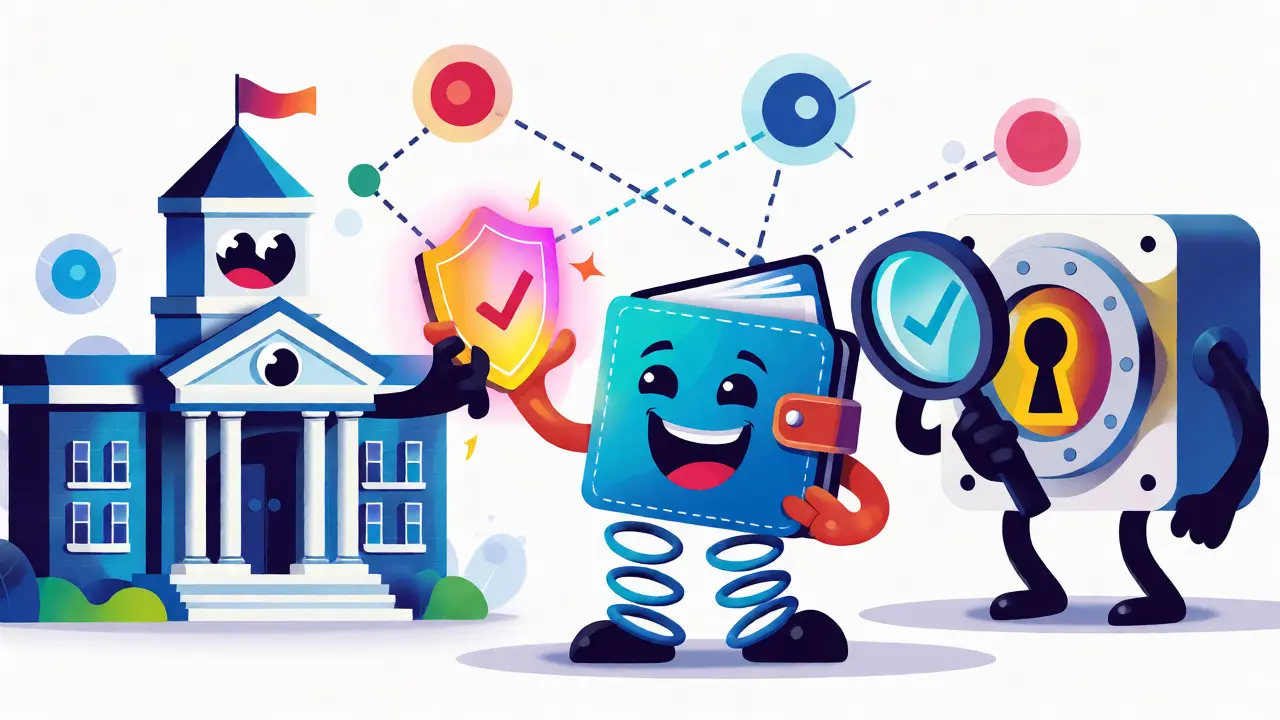
The magic lies in the three-party interaction model defined by the W3C:
- Issuer: Creates and signs the credential (e.g., a government issuing a driver’s license).
- Holder: Stores the credential in a digital wallet and presents it when needed.
- Verifier: Checks the presentation against its own trust policies (e.g., a bank verifying income).
Unlike a PDF scan, which can be photoshopped, a VC uses cryptographic proofs. If you try to change the date on your degree, the signature breaks, and the verification fails immediately. This eliminates the need for background checks that take weeks.
Real-World Use Cases Beyond Crypto
While blockchain started with money, VCs and DIDs are finding their strongest footing in identity management. Here are concrete scenarios where these technologies are solving real problems right now.
Healthcare Records Portability
Moving between doctors is a nightmare of fax machines and paper forms. With VCs, your medical history, vaccination records, or insurance status can be stored as verifiable credentials. When you visit a new specialist, you can present a "Verified Patient" credential. The doctor sees that your insurance is active and valid, but they don’t necessarily need to see your full financial history unless you grant access. This reduces administrative overhead and ensures that critical health data follows you securely across different healthcare providers.
Cross-Border Education and Employment
Imagine applying for a job in another country. Currently, you might spend months getting your degree authenticated by embassies. With a Verifiable Degree, your university issues a credential directly to your wallet. The employer’s HR software resolves the university’s DID, checks the public key, and confirms the degree is genuine in seconds. No notarization, no waiting periods. This is particularly powerful for remote work, where trust needs to be established quickly across borders.
Supply Chain Provenance
It’s not just people. Things can have identities too. A luxury handbag manufacturer can issue a Verifiable Credential for each bag, containing its serial number, materials, and manufacturing date. As the bag moves through retailers, each transfer updates the ownership chain on the blockchain. When you buy it, you can scan a QR code to verify its authenticity. This combats counterfeiting in high-value goods markets, providing consumers with irrefutable proof of origin.
Selective Disclosure: Privacy by Design
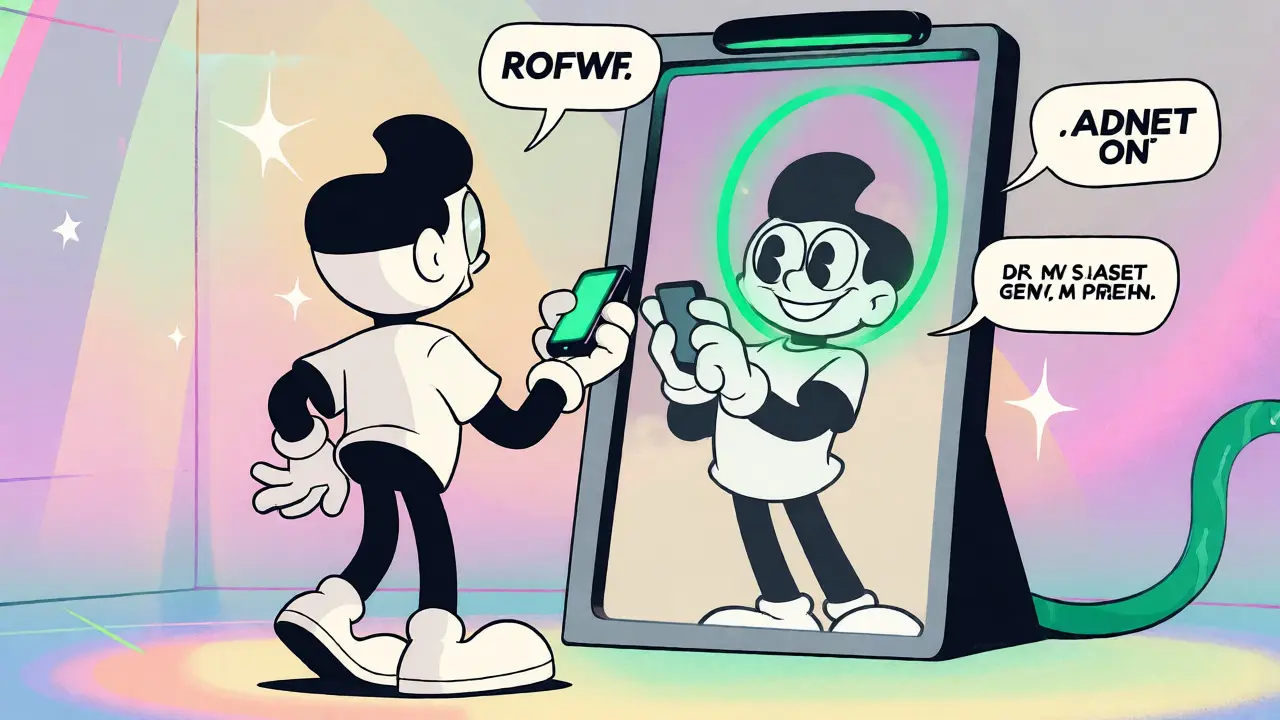
One of the biggest fears with digital identity is surveillance. "If I use a digital ID, will Big Brother track everywhere I go?" The answer with VCs is no, thanks to selective disclosure. This feature allows holders to reveal only specific parts of a credential.
For example, if you have a Verifiable Driver’s License that contains your name, address, date of birth, and license number, you can present a "proof of age" presentation. This presentation proves you are over 21, but it doesn’t reveal your actual date of birth, your name, or your address. The verifier knows the statement is true because the cryptographic proof holds, but they learn nothing else about you. This minimizes data exposure and aligns with regulations like GDPR, which mandate data minimization.
Technical Underpinnings: JSON-LD and Data Integrity
Under the hood, these standards rely on JSON-LD, a linked data format that allows computers to understand the context of the data. This interoperability is key. A credential issued by a European government can be read by a US bank because both systems speak the same semantic language.
Recently, the Data Integrity 1.1 specification was updated to provide a consistent way to attach cryptographic proofs to these documents. It supports various algorithms, allowing implementers to choose the security level that fits their needs without breaking compatibility. Whether the underlying ledger is Ethereum, Hyperledger, or a non-blockchain database, the VC structure remains the same, ensuring that applications don’t need to rewrite their logic every time the backend changes.
Challenges and Adoption Barriers
Despite the technical elegance, adoption faces hurdles. User experience is still clunky. Managing private keys is scary for average users; lose your key, and you might lose access to your credentials. Wallet apps are improving, but they aren’t yet as seamless as logging in with Facebook. Additionally, regulatory acceptance varies. While the EU is pushing hard with its eIDAS 2.0 framework, other regions are slower to recognize cryptographic proofs as legally binding equivalents to wet-ink signatures.
Interoperability between different DID methods is another challenge. There are dozens of ways to register a DID on different blockchains. While the W3C standard defines the core, specific implementations sometimes struggle to talk to each other smoothly. However, as major players like Microsoft, IBM, and various national governments commit to these standards, fragmentation is decreasing.
| Feature | Traditional Centralized ID | VC/DID Model |
|---|---|---|
| Control | Held by issuer/provider | Held by user (self-sovereign) |
| Verification Time | Minutes to Weeks | Seconds (automated) |
| Data Sharing | All-or-nothing | Selective disclosure |
| Portability | Siloed by platform | Interoperable across platforms |
| Tamper Resistance | Vulnerable to fraud/forgery | Cryptographically secure |
The Future: Self-Sovereign Identity in Practice
We are moving toward a world where your digital identity is as portable as your physical wallet. You won’t need separate accounts for every service. Instead, you’ll have a universal digital wallet holding your VCs. When a new service asks for proof of residency, you tap your phone, select the relevant credential, and approve the transaction. The service verifies it, grants access, and deletes the temporary data.
This shift isn’t just convenient; it’s economically vital. Reducing friction in identity verification saves billions in operational costs for banks, insurers, and governments. As standards mature and wallets become more user-friendly, the question isn’t whether VCs and DIDs will replace passwords and paper IDs, but how fast the transition will happen. For developers and businesses, the time to experiment is now, before the ecosystem fully consolidates around a few dominant players.
Are Verifiable Credentials only for blockchain?
No. While blockchain is a common substrate for storing DIDs and anchoring proofs due to its immutability and decentralization, VCs and DIDs are agnostic to the underlying technology. They can work with traditional databases, federated registries, or other distributed ledgers. The W3C standards define the data model and resolution process, not the specific storage mechanism.
What happens if I lose my private key?
Losing your private key means losing control over your DIDs and the ability to sign presentations of your credentials. Recovery mechanisms vary by implementation. Some wallets offer social recovery or multi-signature setups where trusted friends or institutions can help restore access. Others allow you to update the DID Document on the ledger to point to a new public key, provided you have a backup method to authenticate the change.
Do Verifiable Credentials store my data on the blockchain?
Generally, no. Best practices dictate that sensitive personal data stays off-chain, typically in the holder’s local wallet. The blockchain usually stores only the DID, the public key, and potentially a hash of the credential to prove it exists and hasn’t been revoked. This keeps the ledger lightweight and protects privacy by keeping detailed claims under the user’s control.
How do verifiers know who to trust?
Verifiers maintain a list of trusted issuers, often referred to as a trust framework. When they receive a Verifiable Presentation, they check if the issuer’s DID is in their trusted list. They then resolve the DID to get the public key and verify the signature. If the signature is valid and the issuer is trusted, the claim is accepted. Revocation lists or status registries are checked to ensure the credential hasn’t been invalidated.
Is this technology ready for enterprise use?
Yes, many enterprises are piloting or deploying VC solutions. Major tech companies and consortiums are actively building tools and libraries. However, widespread consumer adoption is still growing. Enterprises benefit most now from internal credentialing and supply chain tracking, while consumer-facing applications are ramping up as digital wallet UX improves.






Write a comment