



Imagine a customer calls your flagship store in Chicago to check inventory. The line is busy because the cashier is helping someone at the register. In the old days, that call would ring forever or go to voicemail. With modern multi-location VoIP, that call instantly overflows to a regional hub or even another nearby store with stock. This isn't just a convenience; it's the difference between losing a sale and closing one.
For retail chains operating anywhere from a handful of shops to hundreds of locations, managing separate legacy phone systems is an operational nightmare. You are buying duplicate hardware, paying for long-distance calls between stores, and struggling to keep staff connected. By 2026, cloud-based Voice over Internet Protocol (VoIP) has become the standard for unifying these disparate sites into a single, cohesive communication network. Whether you are a regional grocery chain or a national apparel brand, choosing the right provider means balancing cost, scalability, and specific retail features like location-based routing.
Why Retail Chains Need More Than Just a Dial Tone
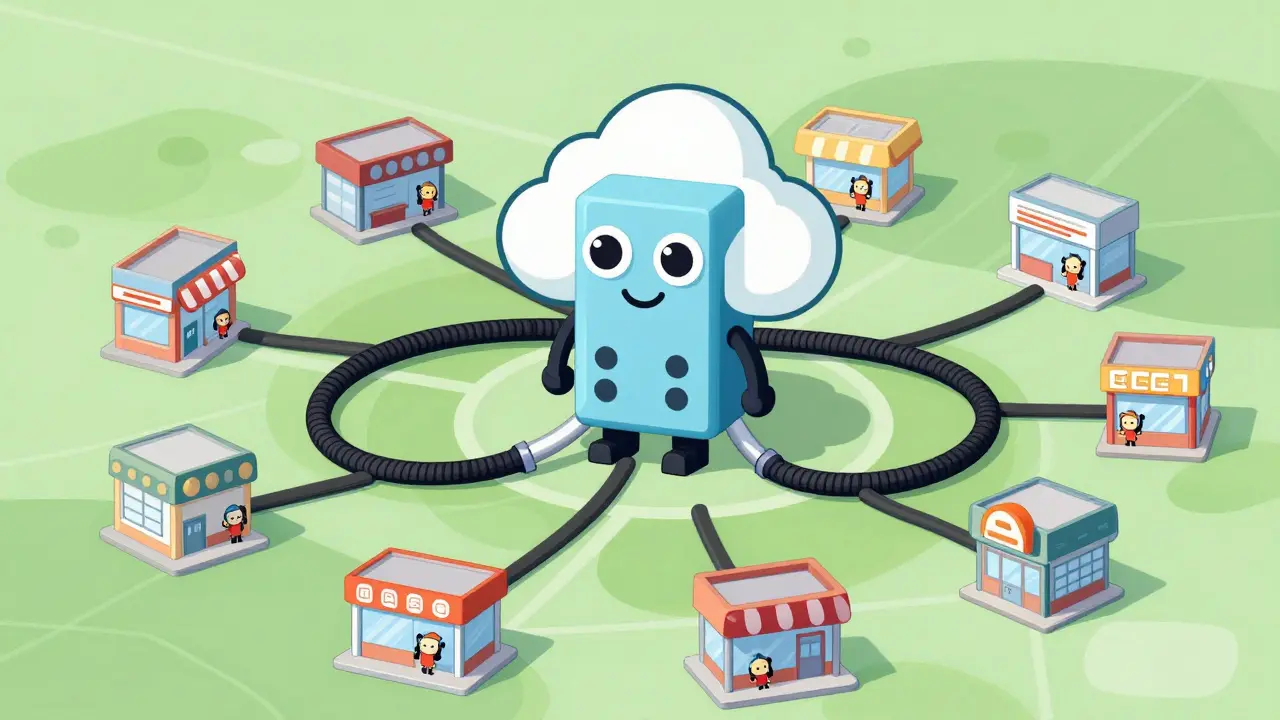
Running a retail chain involves complex logistics. Your headquarters needs to talk to district managers, who need to coordinate with store associates, all while handling customer inquiries. A traditional PBX setup treats every store as an island. If Store A wants to reach Warehouse B, they often have to dial out and back in, incurring long-distance fees and wasting time.
A unified communications platform changes this dynamic entirely. It creates a virtual office where every employee, regardless of physical location, shares the same directory. A cashier in Store 17 can transfer a call to a remote manager working from home without the caller hearing any disconnection. This seamless handoff is critical during high-pressure periods like Black Friday or holiday rushes, where call volumes can triple overnight.
Beyond simple calling, modern systems integrate messaging, video conferencing, and file sharing. This allows a team spread across ten states to collaborate on a new marketing campaign in real-time, using the same app they use to take customer orders. The goal is not just to make calls cheaper, but to make your entire organization more agile and responsive to customer needs.
Key Features That Define Retail-Ready VoIP
Not all VoIP providers are created equal, especially when scaling across dozens or hundreds of locations. When evaluating options for your chain, look for these specific capabilities that address unique retail pain points:
- Centralized Call Handling: All stores should connect to a single cloud PBX. This eliminates the need to maintain physical servers at each site. Administrators can update greetings, hours, and routing rules from one dashboard, ensuring consistency across the brand.
- Location-Based Routing: Calls to a national 1-800 number should automatically route to the nearest store based on the caller’s ZIP code. This reduces wait times and connects customers with local staff who understand regional nuances.
- Overflow and Queueing: During peak seasons, some stores will be busier than others. Overflow rules ensure that if a store’s lines are full, the call shifts to a less busy location or a central support team, preventing abandoned calls.
- Store-to-Store Extension Dialing: Employees should be able to dial short internal extensions (e.g., 3 digits) to reach colleagues in other branches instantly. This simplifies communication and keeps inter-company calls free.
- Mobile and Softphone Apps: Managers and sales reps are rarely tied to a desk. Robust mobile apps allow them to make and receive calls on their personal devices using the company’s business number, maintaining professionalism while offering flexibility.
Top Provider Options for Multi-Location Retailers
The market offers several strong contenders, each with different strengths depending on your chain’s size and technical maturity. Here is how the leading providers stack up in 2026.
| Provider | Best For | Key Retail Feature | Deployment Model |
|---|---|---|---|
| Nextiva | Mid-to-large US chains needing deep collaboration | All-in-one UC app with video and messaging | Cloud UCaaS |
| RingCentral | Large enterprises requiring global scale and support | Trusted by 600k+ companies; robust API integrations | Cloud UCaaS |
| Vonage | Chains expanding internationally or needing CRM links | Strong mobile apps and contact center capabilities | Cloud/Hybrid |
| MyVoIP | Retail-specific workflows and e-commerce integration | Pre-built retail routing rules and centralized admin | Cloud VoIP |
| Mitel | Enterprise chains with complex legacy requirements | Highly customizable SIP trunking and hybrid setups | Hybrid/On-Premise |
Nextiva positions itself as a preferred choice for US-based multi-site businesses. Its strength lies in its unified app, which consolidates voice, video meetings, and team messaging. For a retail chain running time-sensitive promotions, this means store managers can hop on a quick video call with HQ to clarify instructions without leaving the floor.
RingCentral brings massive scale to the table. With over 600,000 companies relying on its platform, it offers simplified billing and 24/7 support, which is crucial when you are onboarding hundreds of users across fifty stores. Their infrastructure is built to handle high concurrency, making it ideal for large national brands.
Vonage is a strong contender for chains looking to bridge the gap between basic telephony and advanced contact centers. Its mobile-first approach ensures that field agents and remote workers stay connected. Additionally, Vonage’s integration capabilities allow it to sync with popular CRMs, giving store staff immediate access to customer history when a call comes in.
For retailers who want a solution tailored specifically to their industry, MyVoIP offers distinct advantages. They provide pre-configured workflows for retail and e-commerce, such as consistent greetings across all locations and overflow routing to shared support teams. This reduces the implementation burden for IT departments that lack deep telecom expertise.
If your chain has significant existing infrastructure or requires granular control over call processing, Mitel remains a powerhouse. Case studies, such as Festival Foods’ deployment across all locations in under a year, show that Mitel can handle complex hybrid environments where some sites need local PSTN access while participating in a central UC environment.
Technical Considerations for Deployment
Moving to VoIP is not just about picking a vendor; it requires careful technical planning. One of the most critical factors is bandwidth. High-quality VoIP calls require approximately 100 Kbps of stable bandwidth per simultaneous call. If a store expects ten concurrent calls, you need at least 1 Mbps dedicated to voice traffic. Without proper Quality of Service (QoS) settings on your routers, video streaming or large file downloads could degrade call quality, leading to choppy audio and frustrated customers.
Number porting is another logistical hurdle. Moving existing local numbers from legacy carriers to a VoIP provider typically takes two to four weeks. For a chain opening new stores or refreshing old ones before the holiday season, timing is everything. Initiate porting requests early to avoid missed calls during the transition period.
Training cannot be overlooked. Frontline associates need to know how to use extensions, transfer calls, and utilize mobile apps. In a chain with thirty stores and ten phone-using staff per store, that’s three hundred brief training sessions to coordinate. Providers like RingCentral offer free onboarding services, which can significantly reduce the load on your internal IT team.

Cost Savings and ROI
The financial argument for VoIP is compelling. Legacy systems require purchasing and maintaining physical PBX hardware at every location. VoIP eliminates this capital expenditure, shifting costs to a predictable monthly subscription. Furthermore, inter-store calls become free, and long-distance charges drop to local internet rates. For a chain with hundreds of daily internal calls, these savings compound quickly.
Operational efficiency also drives ROI. Reduced missed calls mean higher conversion rates. Faster internal communication speeds up decision-making. And the ability to route calls intelligently ensures that customers always reach a human, boosting satisfaction scores. While initial setup costs exist, the long-term reduction in maintenance and telecommunications bills usually results in a rapid return on investment.
Frequently Asked Questions
How many locations can a cloud VoIP system support?
Cloud VoIP systems are highly scalable and can support anywhere from a few dozen to thousands of locations. Providers like RingCentral and Nextiva handle enterprise-level deployments with hundreds of sites seamlessly, as the infrastructure resides in the provider’s data centers rather than on-premise hardware.
Do I need special phones for VoIP in my stores?
You do not necessarily need expensive IP handsets. Many providers offer softphone apps that work on smartphones and computers. However, for front-desk or checkout counter use, dedicated IP phones (like Yealink models) or Analog Telephone Adapters (ATAs) that connect traditional cordless phones are common and cost-effective choices.
What happens if the internet goes down at a store?
Most cloud VoIP providers offer failover options. If the primary internet connection fails, calls can automatically reroute to a backup cellular connection, a mobile app on a manager’s phone, or a designated backup location. Some enterprise solutions also include Survivable Remote Site Telephony (SRST) to keep basic calling functional locally during outages.
Can I keep my existing local phone numbers?
Yes, through a process called number porting. You can move your existing local, toll-free, or vanity numbers to your new VoIP provider. This process typically takes 2 to 4 weeks, so plan accordingly to avoid service interruptions during the switch.
Is VoIP secure for retail transactions?
Reputable VoIP providers use encryption standards like TLS and SRTP to secure voice data. While VoIP handles voice and messaging, it does not process credit card payments directly. Always ensure your payment terminals are PCI-compliant and separate from your voice network to maintain security best practices.






Write a comment