



Most people look at the price chart when they think about investing in cryptocurrency. They see the green candles, hear the hype on social media, and jump in. Then the market dips, panic sets in, and they sell at a loss. If you want to build wealth over the next decade, not just make a quick buck this month, you need to stop looking at the ticker and start looking at the fundamentals. A strong long-term crypto thesis is an investment framework based on measurable user growth, legal clarity, and real-world usage rather than short-term price speculation. In 2026, the landscape has shifted dramatically from the wild west of the early days. We are no longer asking if crypto will survive; we are asking how it will integrate into the global financial system. To answer that, you need to track three specific pillars: adoption metrics, regulatory signals, and utility. This approach strips away the noise and focuses on data that actually predicts long-term value.
The First Pillar: Decoding Adoption Metrics
Adoption is the lifeblood of any new technology. For crypto, this means tracking who is using it, where they are located, and how their behavior is changing. The numbers here are staggering, but they also require careful interpretation because different firms count users differently.
According to Triple-A's 2024 Crypto Ownership Report, approximately 562 million people owned digital currencies in 2024. That is a 34% year-over-year increase from 2019, representing about 6.8% of the global population. However, Crypto.com's annual market sizing report puts the number even higher at 659 million owners by December 2024. Why the discrepancy? Triple-A tends to focus on active wallets with recent transaction history, while Crypto.com may include passive holders or multi-wallet users. For your thesis, don't get hung up on the exact number. Look at the trajectory. The compound annual growth rate (CAGR) of ownership between 2018 and 2023 was nearly 99%. That is exponential growth, regardless of which dataset you trust.
Geography matters more than you might think. High inflation and capital controls drive adoption faster than any marketing campaign. In emerging markets like Nigeria, wallet ownership hits an astonishing 84%, according to Consensys's 2024 Web3 Global Survey. South Africa follows at 66%, Vietnam at 60%, and India at 50%. Compare that to the United States, where ownership sits around 30-43% depending on the survey source. This tells us that for many people in developing nations, crypto isn't a speculative toy; it's a survival tool for preserving savings against currency devaluation. Your thesis should overweight assets that serve these high-demand regions, particularly stablecoins and low-fee payment networks.
Demographics also reveal stickiness. The largest cohort of crypto owners is aged 24-35, making up 34% of all users. These are mobile-native users who grew up with digital payments. As this group ages and accumulates wealth, their crypto holdings are likely to grow alongside their traditional portfolios. Furthermore, sentiment data shows persistence. Over 63% of current owners plan to buy more, indicating that once people enter the ecosystem, they tend to stay engaged rather than cashing out completely.
The Second Pillar: Tracking Regulatory Signals
Regulation used to be seen as the enemy of crypto. Today, it is the foundation of institutional adoption. Without clear rules, big money stays on the sidelines. Your thesis must monitor how governments are treating digital assets, because policy shifts can create massive tailwinds or sudden headwinds.
By mid-2026, 68 countries had enacted or proposed cryptocurrency-specific legislation, up from just 42 in 2024. This 61.9% increase in regulatory activity within two years signals a global move toward normalization. TRM Labs' Global Crypto Policy Review examined 24 major jurisdictions representing 70% of global exposure and found that 70% made progress on implementation in 2024. More importantly, nearly half of these jurisdictions took explicit steps to support innovation, not just enforce compliance.
The European Union leads the pack with its Markets in Crypto-Assets Regulation (MiCAR). MiCAR provides a comprehensive framework for licensing exchanges, custodians, and stablecoin issuers across more than 20 member states. Stablecoin rules took effect in June 2024, setting strict reserve requirements and transparency standards. This clarity allows European institutions to invest with confidence, knowing their consumer protection rights are defined. Non-EU countries are now referencing MiCAR principles when designing their own regimes, creating a ripple effect of regulatory convergence.
In the United States, the picture is more fragmented but equally critical. The U.S. remains the only advanced economy consistently ranking in the top ten for crypto adoption despite unclear federal laws. This creates a unique risk-reward dynamic. Any breakthrough in U.S. legislation-such as stablecoin bills or clear securities classifications-could unlock billions in institutional capital. Your thesis should treat U.S. policy developments as high-impact catalysts. Conversely, if a jurisdiction introduces restrictive bans or punitive taxes, discount the expected growth for assets heavily concentrated there.
The Third Pillar: Measuring Real-World Utility
Price follows utility. If a blockchain has no use case beyond trading, its value is purely speculative. You need to identify where crypto is solving actual problems. The main categories are payments, decentralized finance (DeFi), and digital ownership.
Payments and remittances are the killer app for emerging markets. People in Argentina, Turkey, and the Philippines use stablecoins to send money home cheaper and faster than traditional banks allow. These transactions are censorship-resistant and settle in minutes, not days. Track the volume of stablecoin transfers on chains like Ethereum, Solana, and Tron. Rising volumes indicate that people are relying on crypto for daily economic activity.
Decentralized Finance (DeFi) offers an alternative to traditional banking services. Users can lend, borrow, and earn yield without a middleman. While precise user counts vary, participation in DeFi protocols has grown steadily. Consensys reports increased engagement in staking, lending, and automated market making. This shows that users are moving beyond simple holding to actively managing their assets on-chain. Look for platforms with deep liquidity and robust security audits, as these attract long-term capital.
Digital ownership includes non-fungible tokens (NFTs) and gaming assets. While the NFT hype cycle cooled after 2021, underlying utility persists. Gaming studios are integrating blockchain for true asset ownership, allowing players to trade in-game items freely. Wallet downloads hit 100 million in 2023 alone, signaling infrastructure expansion for consumer-facing apps. Your thesis should favor projects that enhance user experience, such as abstracting away complex private key management, making crypto accessible to mainstream users.
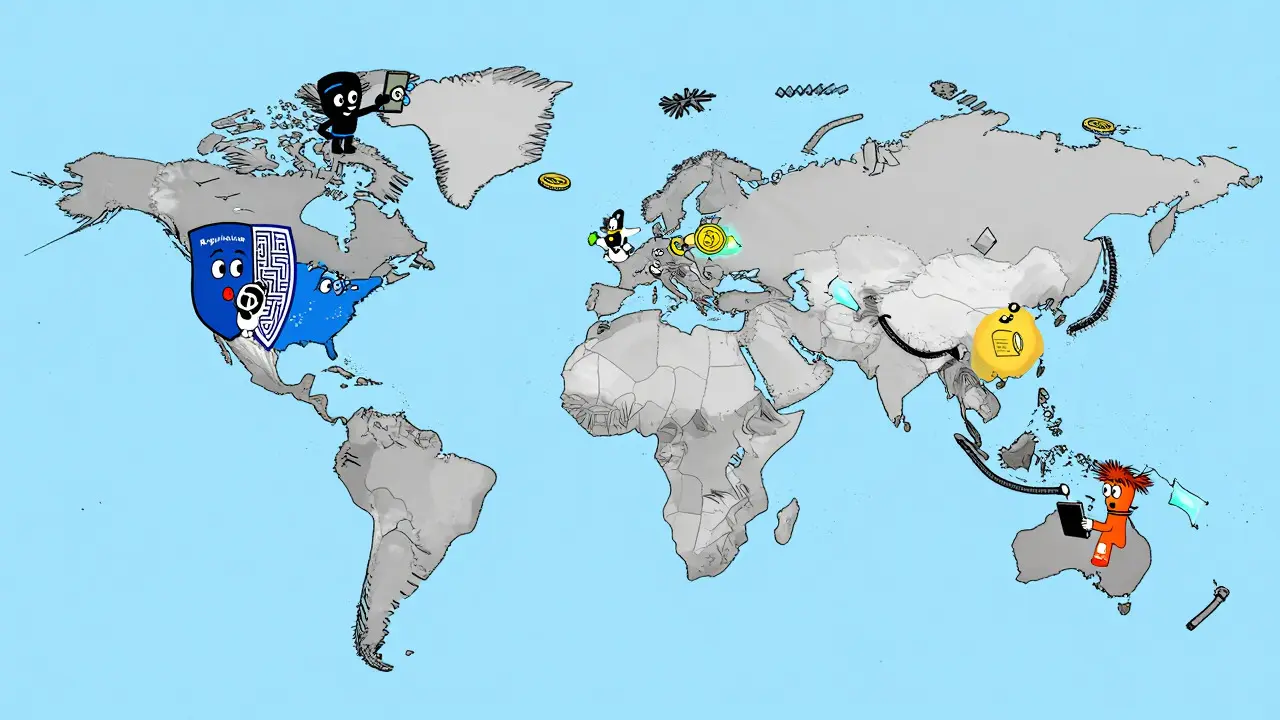
Comparing Crypto to Traditional Assets
To understand where crypto fits in a diversified portfolio, compare it to traditional asset classes. In 2024, the total crypto market cap ranged from $2.2 trillion to $2.74 trillion. This places it in the same ballpark as global high-yield bonds or certain national equity markets, but still far below global equities and bonds combined, which measure in tens of trillions. This size difference means crypto still has significant room for growth, but it also implies higher volatility.
| Feature | Cryptocurrency | Traditional Equities | Gold |
|---|---|---|---|
| Market Cap (2024) | $2.2 - $2.74 Trillion | >$100 Trillion~$14 Trillion | |
| Volatility | High (Daily swings common) | Low to Moderate | Low |
| Accessibility | Global, 24/7, Borderless | Regional, Market Hours | Physical/Brokered |
| Primary Use Case | Payments, Savings, Speculation | Ownership, Income | Store of Value |
| Regulatory Status | Evolving, Fragmented | Mature, Established | Commodity Standard |
Crypto’s advantage is accessibility and programmability. It operates 24/7 across borders, enabling instant settlement. Gold is a proven store of value but lacks yield and divisibility. Equities offer income through dividends but are tied to corporate performance and regional regulations. A balanced thesis recognizes that crypto complements, rather than replaces, these assets. It serves as a hedge against fiat debasement in unstable economies and a gateway to new financial primitives like tokenized real estate or art.
Building Your Personal Dashboard
How do you put this together in practice? Start by building a simple dashboard that tracks the three pillars quarterly. You don’t need expensive software; a spreadsheet works fine.
- Adoption Metrics: Pull data from Triple-A, Crypto.com, and Chainalysis. Watch for sustained growth in user counts, especially in emerging markets. Set a threshold, such as >20% ownership in key countries, to signal mass adoption.
- Regulatory Signals: Monitor TRM Labs’ policy reviews and PwC’s outlooks. Note the number of jurisdictions with clear licensing regimes. Flag any new bans or restrictive tax laws. Prioritize regions with pro-innovation stances.
- Utility Indicators: Track stablecoin transaction volumes, DeFi total value locked (TVL), and wallet download rates. Look for increasing participation in staking and lending. Favor projects with demonstrable real-world use cases over those promising vague future benefits.
Update your allocations based on trends. If adoption slows in a specific region due to regulation, reduce exposure to assets concentrated there. If utility expands in a new sector, like gaming or identity verification, consider adding relevant tokens. Remember, this is a long-term game. Ignore daily price noise. Focus on whether the underlying fundamentals are strengthening or weakening.

Navigating Risks and Sentiment
No thesis is complete without addressing risks. Volatility remains the biggest barrier for mainstream adoption. Security.org’s 2026 survey found that 30% of U.S. adults own crypto, but many non-owners cite price instability and lack of understanding as key reasons for staying away. Security breaches and scams also erode trust. Always use reputable exchanges and hardware wallets. Diversify across multiple assets to mitigate project-specific failures.
Sentiment plays a role too. Social media communities like Reddit and Twitter reflect retail mood. When fear dominates, prices drop, creating buying opportunities for long-term holders. When greed peaks, caution is warranted. Use sentiment as a contrarian indicator. If everyone is euphoric, check your exit strategy. If despair prevails, assess whether the fundamentals have changed. Often, they haven’t.
Conclusion: Anchoring in Fundamentals
Building a long-term crypto thesis requires discipline. It means ignoring the headlines and focusing on data. Adoption metrics show you who is using the technology. Regulatory signals tell you where it is legally viable. Utility proves why it matters. By combining these three pillars, you create a robust framework for navigating the evolving crypto landscape. Whether you are a retail investor or an institution, this approach helps you separate lasting value from fleeting hype. Stay curious, update your knowledge regularly, and let the data guide your decisions.
What is a long-term crypto thesis?
A long-term crypto thesis is an investment strategy focused on fundamental drivers like user adoption, regulatory clarity, and real-world utility, rather than short-term price movements. It aims to capture value over 5-10 years by identifying assets with sustainable growth potential.
Why are adoption metrics important for crypto investing?
Adoption metrics, such as user counts and geographic penetration, indicate the network effect strength. Higher adoption suggests greater demand, resilience, and potential for future price appreciation. Tracking growth in emerging markets is particularly insightful.
How does regulation impact crypto valuations?
Clear regulation reduces uncertainty, attracting institutional investors and enabling broader integration with traditional finance. Frameworks like MiCAR provide legal certainty, boosting confidence. Conversely, restrictive policies can suppress local adoption and depress asset values.
What constitutes real-world utility in crypto?
Real-world utility includes practical applications like cross-border payments, decentralized lending, savings accounts, and digital asset ownership. Projects solving genuine problems for users demonstrate sticky demand and long-term viability.
Which regions lead in crypto adoption?
Emerging markets often lead in adoption due to economic instability. Countries like Nigeria, Vietnam, India, and the Philippines show high wallet ownership rates. Advanced economies like the U.S. and EU members follow closely, driven by investment interest.
How often should I update my crypto thesis?
Review your thesis quarterly. Check for changes in adoption trends, new regulatory announcements, and shifts in utility metrics. Regular updates ensure your strategy aligns with current market realities and emerging opportunities.









Mark Harvey
15 Aug 2026 at 12:07finally someone said it loud and clear. most people just gamble and cry when they lose but this is how you actually build wealth over time. the part about emerging markets is so true because thats where the real need is not just speculation. keep writing these helpful guides