


Imagine building an application that no single company can shut down. Imagine a platform where users own their data and assets directly, without handing over control to a central server. This is the promise of dApps, or decentralized applications running on Web3 networks. Unlike traditional apps hosted on centralized servers, dApps operate on distributed blockchain networks, ensuring transparency, security, and resistance to censorship.
The concept didn't appear overnight. It evolved from Bitcoin’s creation in 2009 by Satoshi Nakamoto, which introduced peer-to-peer digital currency. However, it was Ethereum, launched in July 2015 by Vitalik Buterin and the Ethereum Foundation, that truly generalized this idea. Ethereum allowed developers to write arbitrary smart contracts, turning the blockchain into a programmable global computer. Today, as of 2026, dApps span finance, gaming, social media, supply chain, and healthcare, forming a market projected to reach between USD 42.13 billion and USD 81.9 billion in the late 2020s.
What Exactly Is a dApp?
To build one, you first need to understand what makes a dApp different from a standard web app. A dApp is software whose backend logic runs as smart contracts on a blockchain rather than centralized servers. According to Fireblocks, a leading digital asset infrastructure provider, dApps rely on three core pillars: smart contracts for execution, cryptographic verification for security, and distributed consensus protocols for integrity. This means no single entity controls the application state.
Trust Wallet’s 2024 glossary adds another layer: dApps typically feature open-source code and token-based governance. This allows users to collectively decide on upgrades and parameters, shifting power from corporations to communities. IdeaSoft’s 2025 analysis emphasizes that these applications run on a global network of computers with no central node, using peer-to-peer networking to make data immutable and tamper-resistant.
In practice, a dApp looks like any other website or mobile app. The difference lies under the hood. While a traditional app sends your data to a company’s database, a dApp records transactions on a public ledger. You interact with it using a blockchain wallet like MetaMask or Phantom, not a username and password. This non-custodial approach ensures you maintain ownership of your assets and identity.
Core Architecture of Web3 dApps
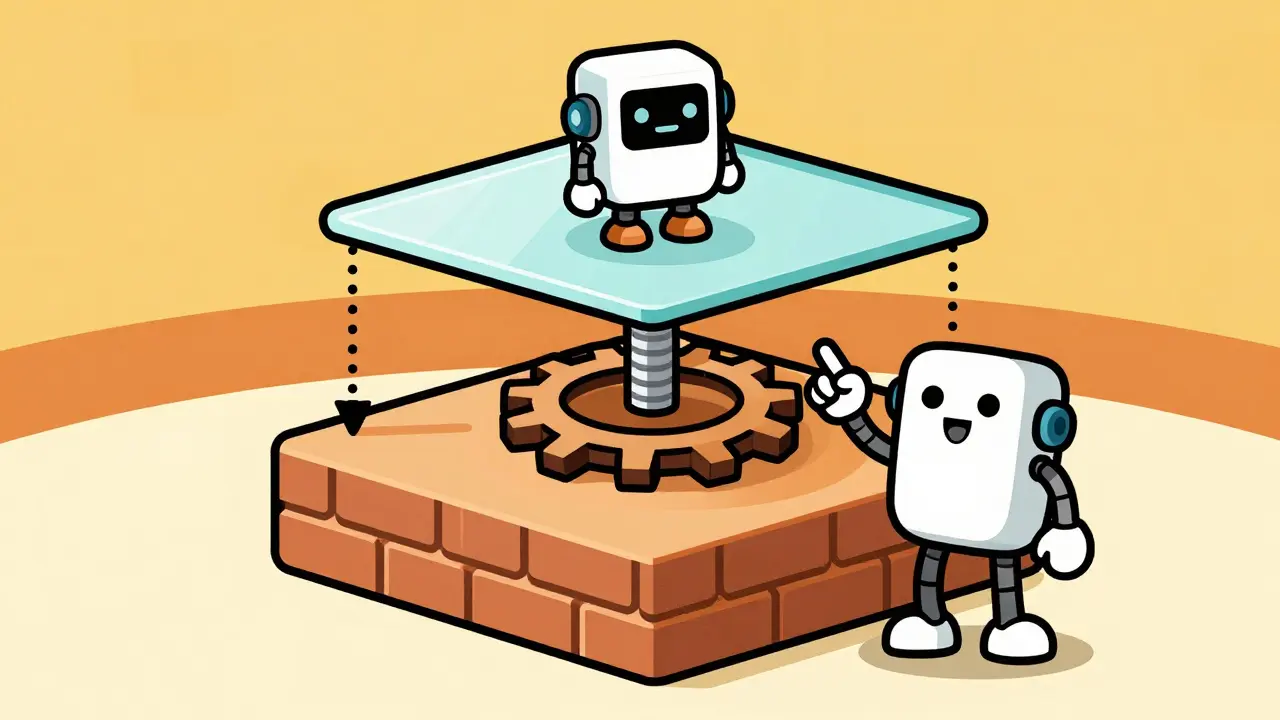
Building a dApp requires understanding its three-layer architecture. Each layer plays a distinct role in ensuring the application functions correctly and securely.
- Blockchain Layer: This is the foundation. It provides consensus mechanisms (like Proof of Stake) and data storage. Networks such as Ethereum, Solana, and Polygon serve as the underlying infrastructure. They ensure that all nodes agree on the state of the application.
- Smart Contract Layer: These are self-executing programs stored on the blockchain. They contain the business logic of the dApp. When specific conditions are met, the contract automatically executes predefined actions. For example, a lending protocol’s smart contract might release collateral if a loan isn’t repaid.
- Client Interface Layer: This is the frontend-the part users see and interact with. It can be a web page, mobile app, or desktop software. It communicates with the smart contracts via RPC endpoints and wallet APIs, translating user actions into blockchain transactions.
Cypherock’s 2025 article explains that this structure distributes information across nodes worldwide, eliminating single points of failure. Brave’s 2023 overview notes that because there is no universal off-switch, regulators or platform owners cannot easily freeze accounts or delete user data without changing the protocol itself-a significant shift from Web2 platforms.
Choosing the Right Blockchain Platform
Not all blockchains are created equal. Your choice depends on your dApp’s requirements for speed, cost, and security. As of 2026, developers increasingly leverage multiple chains to balance these factors.
| Platform | Consensus Mechanism | Key Strength | Best For |
|---|---|---|---|
| Ethereum | Proof of Stake (PoS) | Highest decentralization, largest developer ecosystem, composability | DeFi, governance, high-value assets |
| Solana | Proof of History (PoH) + PoS | High throughput (thousands of TPS), low latency, low fees | Gaming, real-time trading, consumer apps |
| Polygon | Proof of Stake (Sidechain) | Ethereum compatibility, lower gas fees, faster transactions | Cost-sensitive Ethereum projects, NFTs |
| Avalanche | Avalanche Consensus | Fast finality, subnets for custom chains | Enterprise solutions, regulated DeFi |
Ledger’s 2026 comparison highlights that Ethereum historically processed tens of transactions per second with variable gas fees. In contrast, Solana’s monolithic architecture aims for thousands of TPS, making it attractive for high-throughput applications. Polygon offers a middle ground, scaling Ethereum dApps with substantially lower fees while maintaining compatibility. A 2026 note.com article observes that developers choose platforms based on transaction speed, finality, fee structure, and available tooling.
Development Tools and Languages
Once you’ve chosen a blockchain, you need the right tools. Smart contract programming languages vary by platform.
- Solidity: The dominant language for Ethereum and EVM-compatible chains like Polygon and Avalanche. It resembles JavaScript and C++, making it accessible to many web developers.
- Vyper: A Pythonic alternative to Solidity, designed for simplicity and security. It removes complex features that could lead to bugs.
- Rust: Used primarily on Solana and Polkadot. Known for memory safety and performance, it’s ideal for high-speed applications but has a steeper learning curve.
- Move: Developed by Facebook’s Diem project, now used on Aptos and Sui. Focuses on resource-oriented programming to enhance asset security.
For Ethereum-based dApps, frameworks like Hardhat and Truffle streamline development. They allow you to compile contracts, run unit tests, and deploy bytecode to the chain. On Solana, developers use Rust-based programs and client SDKs to optimize for concurrency and account-based state handling. Integration also requires wallet support (MetaMask, Phantom), indexing services like The Graph for querying data, and sometimes off-chain oracles for real-world data feeds.
Security Best Practices
Security is paramount in dApp development. Because smart contracts are immutable once deployed, bugs can lead to irreversible loss of funds. Fireblocks stresses that rigorous testing and review are mandatory. Trust Wallet’s educational materials warn that users cannot easily recover assets if a contract behaves unexpectedly.
IdeaSoft recommends designing dApps to be open-source and community-audited. Peer review builds trust and helps identify vulnerabilities early. Common pitfalls include reentrancy attacks, integer overflows, and access control failures. Hiring specialized auditors and adopting formal verification methods can mitigate these risks. Ledger’s guide implies that optimization strategies must also consider security: on Ethereum, gas-efficient patterns reduce attack surfaces; on Solana, understanding parallelization prevents bottlenecks.
Market Trends and Future Outlook
The dApp market is growing rapidly, though estimates vary. DataHorizzonResearch valued the market at approximately USD 13.2 billion in 2024, projecting growth to USD 81.9 billion. WiseGuyReports cited USD 16.4 billion in 2024, highlighting expansion in gaming and finance. BusinessResearchInsights reported USD 42.13 billion in 2026, expecting it to reach USD 199.70 billion by 2035. These discrepancies stem from differing definitions-whether NFT marketplaces or enterprise solutions are included-but all agree on strong double-digit annual growth.
DeFi remains the largest segment, with platforms like Uniswap and PancakeSwap enabling peer-to-peer trading without intermediaries. Gaming and social dApps are gaining traction, offering verifiable digital collectibles and play-to-earn mechanics. Supply-chain dApps record product provenance immutably, enhancing transparency. Cypherock argues that Web3 represents the future of applications by giving users more control over data and assets, though mainstream adoption will require better user experience and clearer regulation.
Looking ahead, hybrid models combining decentralized infrastructure with familiar interfaces may gain traction. Cross-chain interoperability will become crucial, allowing dApps to function seamlessly across multiple blockchains. As regulators establish predictable frameworks for decentralized finance and digital assets, we can expect broader institutional and consumer adoption through the 2030s.
What is the main difference between a dApp and a traditional app?
A traditional app runs on centralized servers controlled by a single company, whereas a dApp runs on a decentralized blockchain network. This means dApps are permissionless, censorship-resistant, and give users direct ownership of their data and assets via wallets, rather than relying on usernames and passwords.
Which blockchain is best for building a dApp in 2026?
It depends on your needs. Ethereum is best for security and composability, especially for DeFi. Solana excels in speed and low costs, ideal for gaming. Polygon offers a balance of Ethereum compatibility with lower fees. Avalanche provides fast finality and customizable subnets for enterprise use.
How do I start developing a dApp?
Start by choosing a blockchain and learning its smart contract language (e.g., Solidity for Ethereum). Use development frameworks like Hardhat or Foundry to write, test, and deploy contracts. Then, build a frontend interface that connects to the blockchain via wallet providers like MetaMask. Always prioritize security audits before launch.
Are dApps secure?
dApps inherit the security of their underlying blockchain, which is cryptographically secured and decentralized. However, smart contracts can have bugs. Since they are immutable, errors can lead to fund loss. Rigorous testing, open-source code, and professional security audits are essential to minimize risks.
What are the biggest challenges facing dApps today?
Key challenges include scalability limits on some chains, high gas fees during peak times, complex user experiences (managing private keys), and regulatory uncertainty. Improving usability, reducing costs through layer-2 solutions, and establishing clear legal frameworks are critical for mainstream adoption.


Write a comment