


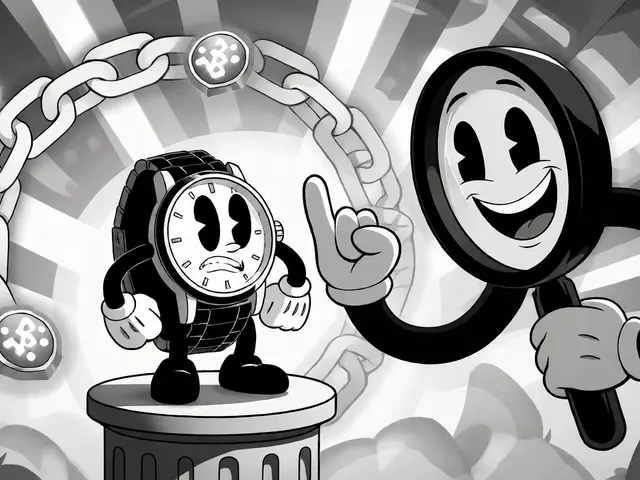
You bought a luxury watch for $15,000. How do you know it’s real? You check the serial number, sure. But what if that serial number was cloned from a genuine piece sold in another country? What if the warranty card is fake? In the old world, trust was a paper trail. In the new world, trust is code. Enterprise NFTs are not about profile pictures of cartoon monkeys. They are digital twins for physical goods, tamper-proof certificates, and programmable loyalty assets that solve the messy reality of global supply chains.
If you’re still thinking of NFTs as speculative art tokens, you’re missing the biggest shift in enterprise tech since the cloud. By 2026, major brands aren’t minting JPEGs for hype; they’re minting provenance records for fish, wine, pharmaceuticals, and handbags. These tokens live on blockchains like Ethereum or private consortiums like the Aura Blockchain Consortium, acting as immutable ledgers that track an item’s entire life. This article breaks down how companies are using this tech to kill counterfeits, verify credentials instantly, and turn boring points systems into dynamic customer experiences.
The Digital Twin: Why Supply Chains Need Tokens
Traditional supply chain tracking is fragmented. A manufacturer uses one ERP system, a logistics provider uses another, and the retailer uses a third. When data doesn’t match, disputes happen. Who lost the shipment? Was the product stored at the wrong temperature? Enterprise NFTs fix this by creating a single, shared source of truth.
Think of an Enterprise NFT as a digital passport for a physical object. It isn’t just a receipt; it’s a container for metadata. When a batch of sustainable tuna is caught, a token is minted. It records the GPS coordinates of the catch, the vessel ID, and the date. As the fish moves to a processing plant, the token updates with inspection results. Then it goes to distribution, then retail. Every step is timestamped and signed by authorized parties. Because the blockchain is append-only, no one can delete a bad inspection report later to hide a quality issue.
| Feature | Traditional Barcodes/RFID | Enterprise NFTs |
|---|---|---|
| Data Integrity | Can be altered in central DB | Cryptographically immutable |
| Interoperability | Siloed within company systems | Shared ledger across partners |
| Consumer Access | Limited (usually internal) | Public verification via QR/NFC |
| Programmability | None | Smart contracts automate rules |
This transparency has real value. For example, wineries now encode bottling data-vintage year, grape origin, batch numbers-into NFTs. Collectors can scan a bottle with their phone to see its full history. If a rare Bordeaux claims to be from a specific vineyard but lacks the corresponding on-chain proof, it’s flagged as suspicious. This reduces fraud in secondary markets where prices exceed $1,000 per bottle. Platforms like Koinearth specialize in this kind of tangible asset tracking, helping businesses monitor shipments and prevent diversion.
Digital Certificates That Can’t Be Faked
Paper certificates are fragile. They get lost, forged, or damaged. Imagine trying to prove you completed a professional certification or that your diamond is conflict-free. With traditional methods, you rely on the issuer’s database staying online and honest. With enterprise NFTs, the certificate itself is the proof.
A digital certificate as an NFT contains verifiable attributes: the issuer’s public key, the issuance date, the subject’s identity, and any revocation status. If a university issues a degree as an NFT, employers don’t need to call the registrar. They just check the blockchain. The token proves the degree exists and hasn’t been revoked. This portability is huge for professionals who change jobs often. Your credentials travel with you, independent of any single platform.
In luxury fashion, brands link each designer handbag to an NFT-based authenticity certificate. When you resell the bag, the new owner scans the NFC chip embedded in the leather. Their app queries the blockchain and confirms the bag’s creation date, initial sale price, and ownership chain. If the NFT shows a gap in ownership or a mismatch in serial numbers, the deal falls through. This cuts out the middleman authenticator, saving time and reducing transaction friction. Companies like LVMH, through the Aura Blockchain Consortium, have pioneered this model for diamonds and watches, anchoring brand-issued certificates to a shared ledger.
Reinventing Brand Loyalty with Programmable Assets
Let’s be honest: most loyalty programs are broken. You earn points, forget about them, and let them expire. The engagement loop is weak because the rewards feel static. Enterprise NFTs change the game by making loyalty assets dynamic and tradeable.
Instead of a generic "Gold Member" status in a database, you hold an NFT that represents your membership tier. This NFT can evolve. Smart contracts can automatically upgrade your status when you hit spending thresholds. Did you spend over $5,000 in a rolling 12-month period? Your NFT metadata updates, unlocking VIP access to events or exclusive drops. Because it’s a token, you might even sell your high-tier status to someone else if you stop buying from the brand. This creates a secondary market for loyalty benefits, adding perceived value to the program.
Platforms like SoonTech integrate these NFTs directly with CRM systems. Customer behavior-purchases, referrals, social shares-feeds into point engines. Those points convert into NFTs that represent specific benefits. This isn’t just marketing fluff; it’s data-rich profiling. Brands can see exactly which customers engage with which perks, allowing for hyper-personalized marketing. A customer who frequently uses event-access NFTs gets different offers than one who prefers discount codes.
Technical Architecture: On-Chain vs. Off-Chain
Don’t let the buzzwords fool you: you don’t store high-res images or massive sensor logs directly on the blockchain. That would be too expensive and slow. Enterprise NFT deployments use a hybrid architecture. The NFT lives on-chain, holding a unique Token ID and a content hash (a cryptographic fingerprint) pointing to off-chain storage.
Here’s how it works in practice:
- Minting: A smart contract creates the token when a product is manufactured. It assigns a unique ID.
- Metadata Storage: Detailed specs, photos, and compliance docs are stored in IPFS or a secure SQL database. The NFT stores the hash of this data.
- Linking Physical to Digital: QR codes, NFC chips, or RFID tags connect the physical item to the digital token. Scanning the code triggers a lookup on the blockchain.
- Integration: APIs bridge the blockchain with existing ERP, WMS (Warehouse Management Systems), and CRM tools. When a warehouse worker scans a pallet, the backend system updates the NFT state automatically.
Cost matters here. In 2021, minting on Ethereum mainnet could cost several dollars per transaction. By 2026, enterprises use Layer-2 rollups or permissioned chains like those operated by the Aura Consortium, bringing costs down to sub-cent levels. This makes mass adoption feasible for industries moving millions of units annually.
Implementation Challenges and Best Practices
Rolling out enterprise NFTs isn’t plug-and-play. It requires cross-functional teams. You need blockchain developers, yes, but also supply chain experts and legal counsel. One major pitfall is poor governance. Who has the right to mint tokens? Who can update metadata? If a logistics partner accidentally marks a shipment as "delivered" before it arrives, can they revert the transaction? Clear rules must be encoded in smart contracts.
User experience is another hurdle. Your average consumer doesn’t want to manage private keys or understand gas fees. Successful implementations abstract this away. The user sees a simple "Verify Authenticity" button in a brand app. Behind the scenes, the app handles the wallet connection and blockchain query. If the interface feels clunky, adoption stalls.
Start small. Don’t try to tokenize your entire inventory overnight. Pick a high-value product line with clear counterfeit risks or strong customer engagement potential. Pilot the solution, measure the reduction in fraud or increase in customer retention, then scale. Remember, the goal is utility, not speculation. If the NFT doesn’t solve a real business problem, it’s just digital clutter.
Are Enterprise NFTs the same as crypto collectibles?
No. Crypto collectibles are typically traded for speculation and held in personal wallets. Enterprise NFTs are utility tokens issued by organizations to track physical goods, certify documents, or manage loyalty. They are often managed on behalf of users by the brand or integrated into existing apps, removing the need for users to manage complex crypto wallets.
How do physical products link to their NFTs?
Physical-digital linking is achieved through identifiers like QR codes, NFC chips, or RFID tags attached to the product. Scanning these identifiers allows consumers or auditors to query the blockchain and retrieve the NFT’s metadata, verifying the item’s authenticity and history without needing technical knowledge of blockchain.
What happens if a product is recalled?
Recall management becomes faster and more precise. Since every unit has a unique NFT with recorded manufacturing and distribution data, brands can identify exactly which batches are affected. Smart contracts can even trigger automatic notifications to owners of affected items, streamlining the recall process compared to broad, manual searches.
Do customers need to buy cryptocurrency to use these services?
Generally, no. Most enterprise NFT solutions abstract the underlying technology. Customers interact with familiar interfaces like mobile apps or web portals. The brand handles the blockchain transactions and gas fees behind the scenes, so the user experience remains seamless and similar to traditional e-commerce or loyalty platforms.
Which industries benefit most from Enterprise NFTs?
Industries with high counterfeit risk or strict regulatory requirements benefit most. This includes luxury goods (watches, handbags), pharmaceuticals (drug traceability), food and beverage (wine, seafood), and electronics. Additionally, sectors relying on credential verification, such as education and professional licensing, are rapidly adopting NFT-based certificates.



Write a comment