


Imagine you own a powerful gaming rig or an industrial ASIC miner sitting idle for half the day. You’re paying for electricity, but your hardware isn’t earning anything. Now imagine someone else wants to mine Bitcoin but doesn’t want to buy $5,000 worth of equipment that might be obsolete in two years. Hashrate marketplaces solve this exact mismatch by creating a liquid spot market for computational power. Instead of locking into rigid cloud mining contracts, you can rent out your excess capacity or buy raw computing power on demand, often settling transactions in Bitcoin within minutes.
How Hashrate Marketplaces Actually Work
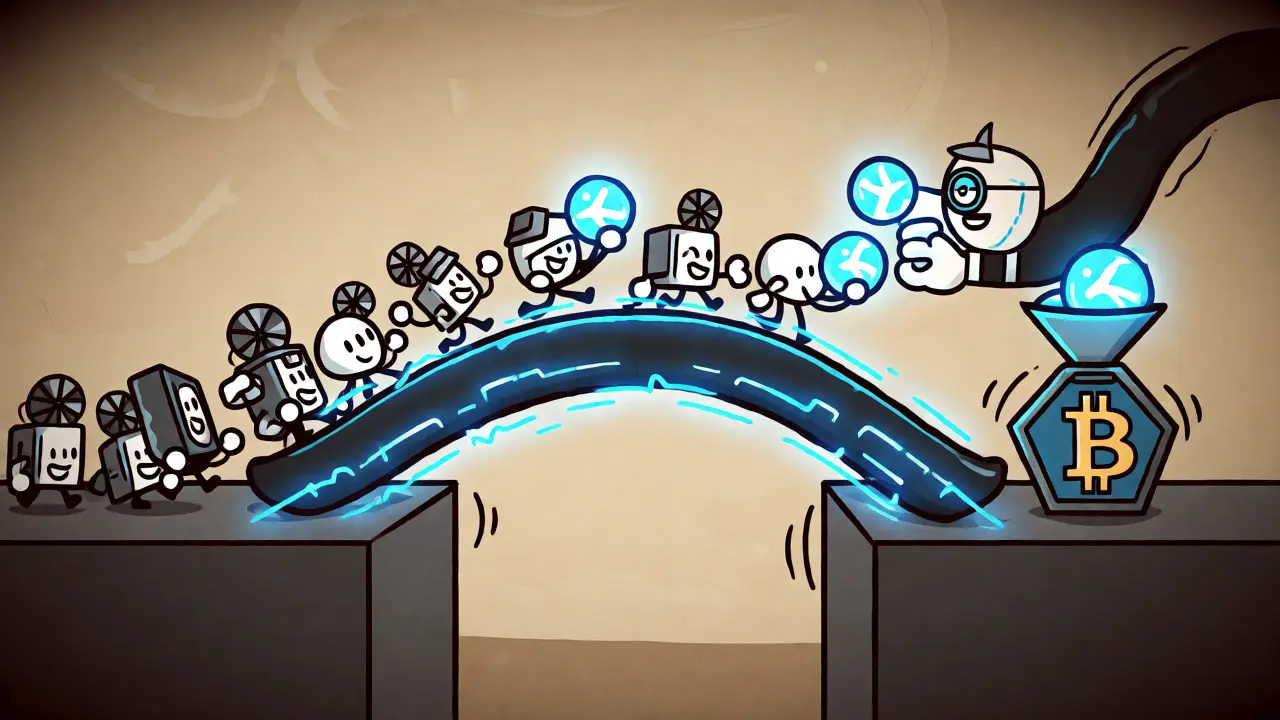
At their core, these platforms are intermediaries connecting hardware owners (sellers) with miners who need power (buyers). The most prominent example is NiceHash, founded in 2014 by Matjaž Škorjanc, which currently holds about 75% of the global market share. When you install their software, it connects your rig to a pool that automatically switches between algorithms like SHA-256 for Bitcoin or RandomX for Monero based on current profitability. You aren’t just selling "mining"; you are selling specific units of work, measured in terahashes per second (TH/s), to whoever bids highest at that moment.
The technical infrastructure requires minimal setup. Sellers need hardware capable of at least 10 GH/s for ASICs or 100 MH/s for GPUs, running on Windows 10+, Linux, or macOS. The platform handles the complex part: directing your hashrate to the most profitable coin, then paying you in Bitcoin every 24 hours. For buyers, it’s equally simple-they place an order specifying how many TH/s they want and for how long. The marketplace matches them with available sellers instantly. This peer-to-peer architecture removes the need for buyers to own physical machines, while giving sellers consistent revenue streams even when crypto prices dip.
Renting vs. Buying: The Financial Reality
Why would anyone rent mining power instead of buying a rig? Flexibility. Traditional cloud mining services like Genesis Mining often require 2-3 year commitments with fixed pricing. If Bitcoin crashes or difficulty spikes, you’re stuck with a losing contract. In contrast, spot hashrate markets allow you to enter and exit positions within minutes. During periods of high volatility, such as the 2022 crash, SHA-256 hashrate prices fluctuated wildly between $0.08 and $0.35 per TH/s per day. A buyer could wait for a price drop, purchase cheap hashrate, and mine during a low-difficulty window, potentially capturing profits that fixed contracts miss.
However, renting isn’t always cheaper. According to data from Hashrate.no, while NiceHash delivers 15-20% higher effective hashrate than equivalent cloud contracts due to lower overhead, the costs can spike during bull runs. If you live in an area with expensive electricity, self-mining might still beat renting if you can time the market well. But for those without capital for hardware, or those testing new coins without investing in specialized ASICs, renting is the only viable entry point. It democratizes access-you don’t need a warehouse in Texas to participate in Bitcoin mining anymore.
| Feature | Hashrate Marketplace (e.g., NiceHash) | Cloud Mining Contract | Self-Mining Rig |
|---|---|---|---|
| Initial Cost | $0 (Hardware owner) / Pay-per-use (Buyer) | High upfront contract fee | $2,000 - $10,000+ for hardware |
| Commitment | Spot market (minutes to days) | 1-3 years typically | Indefinite until hardware fails |
| Algorithm Flexibility | Automatic switching between multiple algos | Limited to contracted algorithm | Depends on hardware type (ASIC vs GPU) |
| Maintenance | None for buyer; seller handles hardware | Provider handles everything | User handles cooling, repairs, noise |
| Profitability Risk | High volatility exposure | Fixed risk, often negative ROI | Direct exposure to electricity & difficulty |
Who Is Using These Platforms?
The user base is surprisingly diverse. On one side, you have hobbyists with gaming PCs who want to monetize their idle graphics cards. On the other, professional miners with warehouses full of ASICs use marketplaces to smooth out income during unprofitable mining periods. Data shows that individual users account for 95% of activity, with enterprise adoption remaining under 5%. Interestingly, usage correlates strongly with Bitcoin’s price-a 2023 Fidelity study found that marketplace activity jumps 23% for every 10% rise in BTC value.
Geographically, there’s a clear divide. European users tend to rate platforms higher (averaging 4.1/5 stars) because lower energy costs make self-mining less attractive compared to renting. North American users report lower satisfaction (3.6/5 stars), largely due to higher electricity bills eating into margins. Regulatory environments also play a role; China, Iran, and North Korea remain excluded from major platforms due to compliance restrictions, shifting significant volume to regions like Scandinavia, Canada, and the US.
Pitfalls and Hidden Costs
Don’t let the simplicity fool you. The biggest mistake newcomers make is ignoring electricity costs. A 2023 study revealed that 58% of new users underestimate their power consumption by over 20%, leading to net losses. If you’re selling hashrate, remember that platform fees take 3-5% off the top. During bear markets, this margin can wipe out all profits. One Reddit user documented earning $1.27 over three days against $2.85 in electricity costs-a common scenario when difficulty rises unexpectedly.
Another issue is latency and connectivity. While platforms claim 99.5% uptime, Asian users often experience 200ms latency compared to under 100ms for Western users, which can affect real-time bidding strategies. Security is another concern; following a $60 million hack in 2017, NiceHash moved 95% of funds to cold storage and implemented multi-sig wallets, but the risk of exchange-style hacks never disappears entirely. Always keep large balances off-platform when not actively trading.
Getting Started: A Practical Checklist
If you’re ready to try renting or selling hashrate, follow these steps to avoid common headaches:
- Calculate Your Break-Even Point: Before selling, know your exact electricity cost per kilowatt-hour. Use online calculators to determine what hash price covers your power bill plus a small profit.
- Verify Hardware Compatibility: Ensure your GPU or ASIC supports the algorithms listed on the marketplace. Not all miners work for all coins.
- Complete KYC Early: Most platforms now require identity verification, especially for transactions over €1,000/month due to EU MiCA regulations. This can take 24-72 hours, so do it before you plan to start.
- Monitor Profitability Switches: Understand that your earnings depend on the platform’s automatic switching logic. You aren’t choosing the coin directly; you’re trusting the algorithm to pick the best one.
- Withdraw Frequently: Don’t leave large amounts of Bitcoin on the exchange. Move profits to a personal wallet regularly to mitigate counterparty risk.
The Future of Computational Liquidity
The sector is maturing rapidly. NiceHash launched an Enterprise API in 2023, allowing institutional traders to integrate hashrate purchasing into automated systems. They’ve also introduced futures contracts, letting users lock in prices for up to 30 days to hedge against volatility. Analysts predict continued growth, with Delphi Digital forecasting 35% annual increases through 2025 as mining becomes more professionalized. However, regulatory scrutiny remains a wildcard. If global KYC requirements tighten further, smaller competitors might struggle, consolidating power among giants like NiceHash, ECOS, and MiningStore.
For now, hashrate marketplaces offer the closest thing we have to a stock market for raw computing power. Whether you’re looking to turn a spare gaming PC into a passive income stream or test-mine a new altcoin without buying hardware, these platforms provide the liquidity and flexibility that traditional mining lacks. Just remember: in crypto, nothing is guaranteed, and electricity is always the silent killer of profits.
Is it profitable to sell hashrate on NiceHash in 2026?
It depends heavily on your electricity costs. Users with rates below $0.10/kWh often see positive returns, while those above $0.15/kWh frequently operate at a loss during bear markets. Platform fees of 3-5% also reduce net profits, so accurate calculation is essential before starting.
Can I mine any cryptocurrency using a hashrate marketplace?
No, you are limited to the algorithms supported by the platform and your hardware. Common options include SHA-256 (Bitcoin), Ethash (Ethereum Classic), and RandomX (Monero). You cannot mine coins that require proprietary algorithms not supported by the marketplace's software.
What happens if my internet connection drops while selling hashrate?
You stop earning immediately. Since payments are based on shares submitted to the pool, downtime means zero rewards for that period. Most platforms pay daily, so short interruptions won't hurt much, but prolonged outages will significantly impact monthly earnings.
Do I need to pay taxes on hashrate marketplace earnings?
Yes, in most jurisdictions including the US, mining rewards are considered taxable income at the fair market value when received. Additionally, selling those rewards later may trigger capital gains tax. Consult a tax professional familiar with crypto regulations in your region.
Is renting hashrate safer than buying a mining rig?
Renting avoids hardware depreciation and maintenance risks, making it safer for short-term speculation. However, it exposes you to price volatility in the spot market. Buying a rig offers control and potential long-term asset value, but carries higher upfront financial risk and operational complexity.


Write a comment