

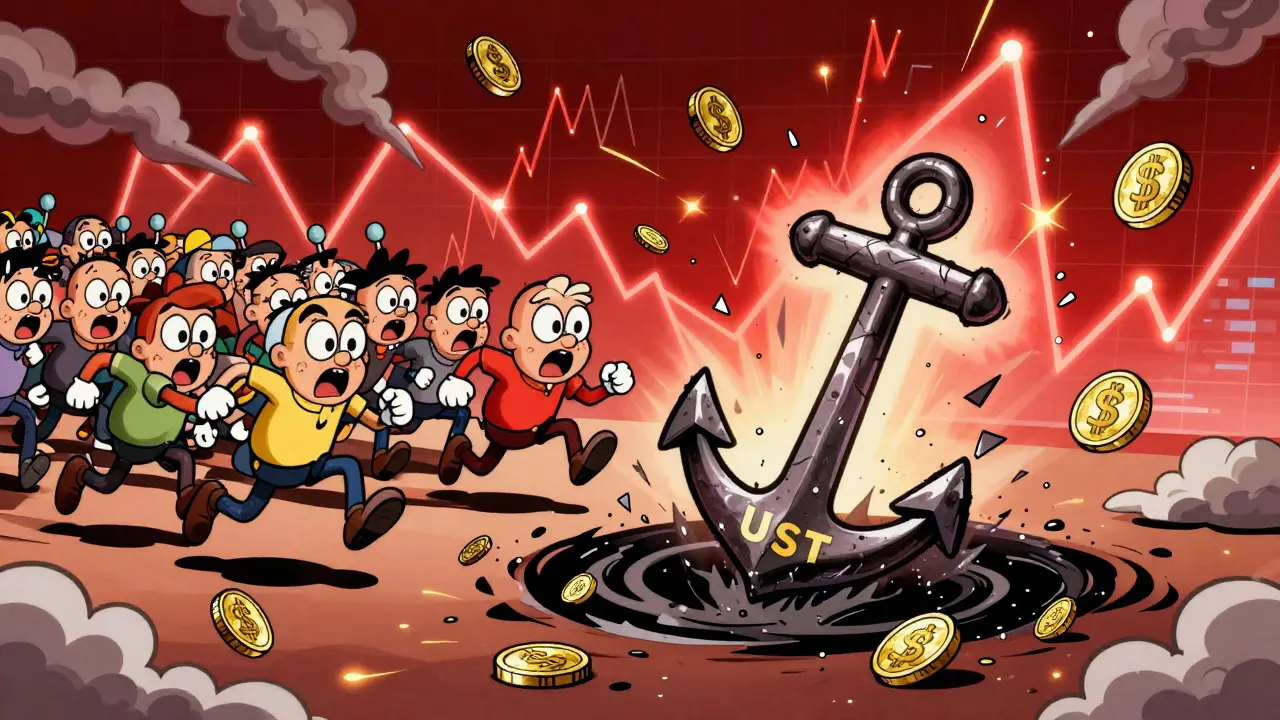

When a stablecoin stops being worth exactly $1, something serious is happening. It’s not a glitch. It’s not a rumor. It’s a depegging event - and it can wipe out millions in seconds. Stablecoins were built to be the anchor in crypto’s wild seas. But when they break free, the whole system shakes. This isn’t theory. It’s happened. And it’s happening again.
What Exactly Is a Depeg?
A depeg happens when a stablecoin’s price moves more than 1% away from its target - usually $1 - and stays there for over 15 minutes. Normal trading noise? That’s a 0.2% dip for 30 seconds. A depeg is a sustained break. It means people have lost confidence. They’re rushing to sell. Or worse, they can’t redeem their tokens for real dollars anymore. The first major depeg hit in October 2018. Tether (USDT), the biggest stablecoin at the time, dropped to $0.95. The reason? Rumors swirled that Bitfinex, its issuer, was running low on cash. Traders panicked. Prices stayed low for days. It wasn’t the first time a stablecoin slipped, but it was the first time the world noticed.How Stablecoins Are Supposed to Work
Not all stablecoins are made the same. There are three main types, and each has its own way of staying pegged - and its own way of breaking.- Fiat-collateralized (like USDC and USDT): Each token is backed by real dollars held in bank accounts. If you own $100 in USDC, Circle (the issuer) should have $100 in cash or equivalents somewhere. You can even redeem it - if you have $100,000 or more, you can swap your USDC for actual USD through Circle’s portal.
- Crypto-collateralized (like DAI): These are backed by other cryptocurrencies, like ETH or BTC, but over-collateralized. For every $1 of DAI, you might need $1.50 worth of ETH locked up. If ETH crashes, the system automatically sells collateral to keep DAI at $1.
- Algorithmic (like TerraUSD/UST): No real assets. Just code. When UST dropped below $1, users could burn 1 UST and get $1 worth of LUNA (the parent token). The idea? More demand for UST = more LUNA burned = less supply = price goes up. Simple in theory. Catastrophic in practice.
The Biggest Depeg Events in History
The most devastating depeg in history wasn’t a glitch. It was a death spiral. In May 2022, TerraUSD (UST) collapsed. It dropped from $1 to $0.30 in 36 hours. Why? A large holder withdrew $300 million worth of UST. That triggered mass redemptions. The algorithm couldn’t handle the volume. LUNA’s price cratered. More LUNA meant less value backing UST. The spiral kept spinning. The Luna Foundation Guard threw $150 million in Bitcoin at the problem. It didn’t matter. UST never recovered. The fallout? Over $40 billion in crypto market value wiped out. DeFi protocols flooded with liquidations. Exchanges froze withdrawals. Compare that to USDC’s depeg in March 2023. Silicon Valley Bank collapsed. USDC was tied to SVB’s deposits. Overnight, $3.3 billion of its reserves were frozen. USDC plunged to $0.87. Panic spread. But this time, Circle acted. They paused new USDC minting. They didn’t panic. They waited. Within 72 hours, the U.S. government guaranteed SVB’s deposits. USDC climbed back to $1.01. Recovery: complete. USDT’s depeg in May 2022 - same week as UST - dropped to $0.95. But because Tether had real dollar reserves (even if murky), and because traders trusted its liquidity, it bounced back in 47 hours.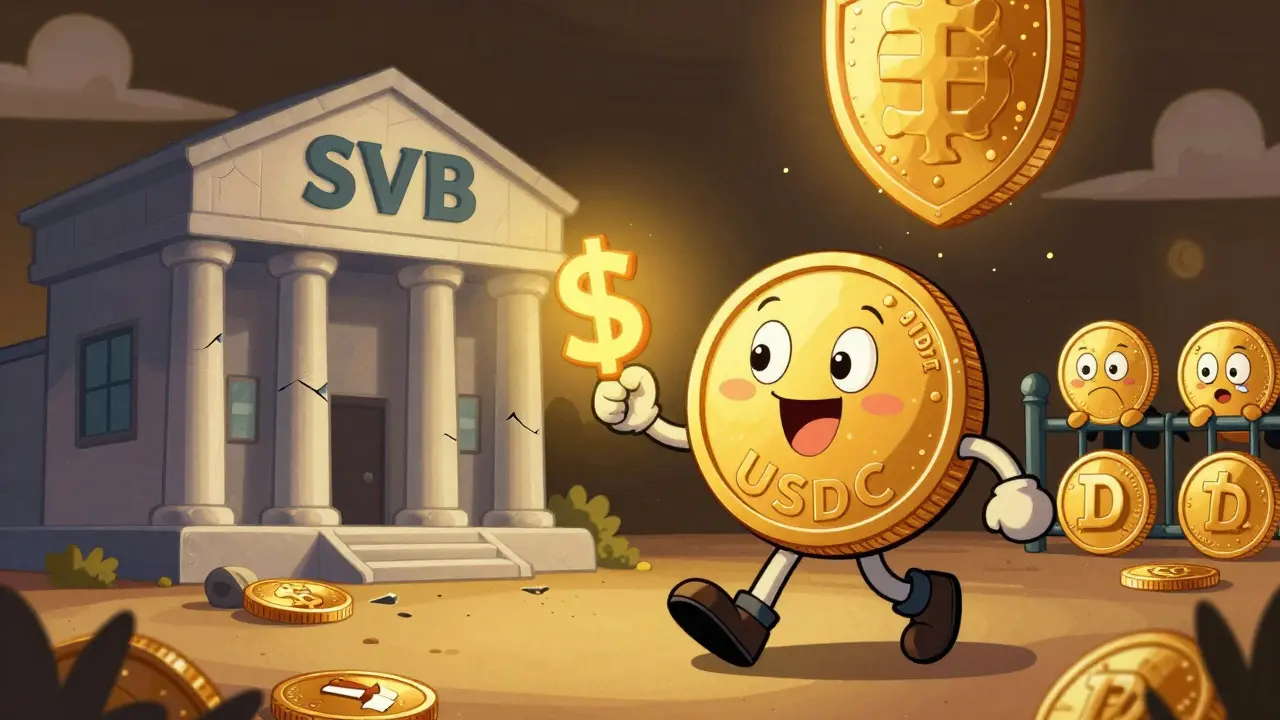
Why Some Recover and Others Don’t
Fiat-backed stablecoins recover because they have real assets. Even if banks freeze funds, governments can step in. That’s what happened with USDC. Algorithmic stablecoins fail because they rely on math, not money. No bank. No reserve. No safety net. When trust vanishes, the code can’t create value out of thin air. UST’s design was a house of cards. One push - and the whole thing fell. Crypto-collateralized stablecoins like DAI sit in the middle. They’re not backed by cash, but by volatile assets. During the June 2022 crash, DAI briefly hit $1.045. Why? Traders rushed to buy it as a safe haven. That pushed its price above $1. The system corrected itself by incentivizing users to mint more DAI and sell it, bringing the price back down. No government help needed. Just smart contracts.How Traders Profit From Depegs
Depegs aren’t just disasters. For some, they’re payday. Professional traders watch price feeds like hawks. When USDC dropped to $0.87 in March 2023, one trader - known online as CryptoArbMaster - made $87,300 in 12 hours. How? He bought USDC on Coinbase at $0.87, sold it on Kraken at $0.99, and repeated it 37 times. The spread was wide. The volume was high. He didn’t bet on a recovery. He bet on the gap. Another trader, ‘DepegHunter,’ made 2.05% profit per trade on USDT during the May 2022 drop. He bought at $0.975, sold at $0.995, and did it 14 times. That’s not gambling. That’s arbitrage. It only works if you have fast execution, low fees, and access to multiple exchanges. But for the average user? It’s terrifying. One Reddit user lost $12,450 because their automated bot didn’t trigger a stop-loss until USDC hit $0.95 - too late. The bot assumed the peg would hold. It didn’t.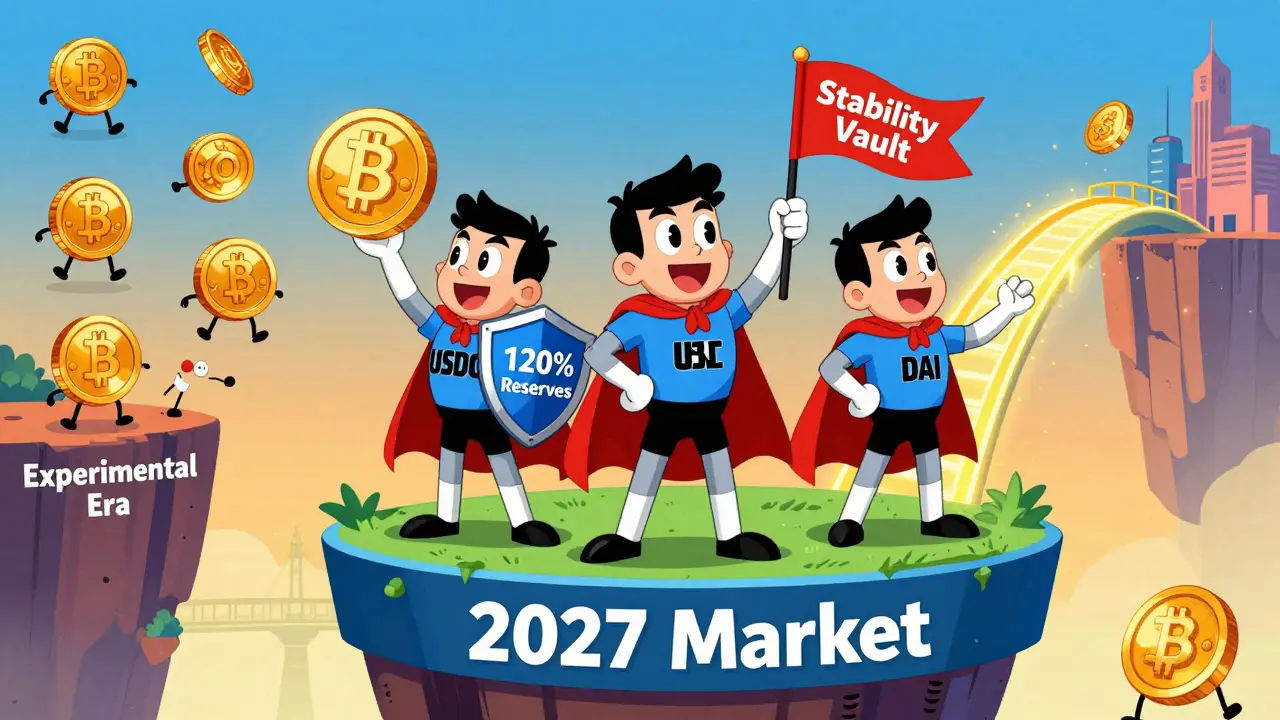
What’s Changed Since the UST Crash
After UST died, the industry woke up. Regulators stepped in. The EU’s MiCA rules, effective June 2024, now require fiat-backed stablecoins to hold 120% reserves. That’s more than $1 for every $1 issued. It’s a buffer. It’s insurance. Circle launched its ‘Stability Vault’ in early 2025 - $5 billion in FDIC-insured cash, locked away just for depeg emergencies. No more relying on shaky banks. MakerDAO, the team behind DAI, added an emergency shutdown feature. When DAI dipped to $0.987 in October 2025 after Grayscale sold $500 million in ETH, the system froze minting, stabilized prices, and reopened within 11 hours. No panic. No collapse. Even Chainlink, the oracle network, now lets stablecoins automatically move liquidity between ecosystems during stress. If USDC tanks, DAI can temporarily absorb demand - and vice versa.What You Need to Do Now
If you’re holding stablecoins, here’s what you need to know:- Don’t keep more than $5,000 in any single stablecoin on one exchange. Spread it out.
- Use real-time monitoring tools like Amberdata’s API. Set alerts at 0.75% deviation. Don’t wait for $0.90.
- Avoid algorithmic stablecoins unless you fully understand their collapse mechanics. UST’s failure wasn’t a fluke - it was predictable.
- Stick with regulated, fiat-backed stablecoins: USDC and USDT. They’ve proven they can recover. And they’re getting safer.
- Know redemption times. Circle takes 2-4 business days to send USD back. If you need cash fast, don’t rely on USDC during a crisis.
The Future of Stablecoins
By 2027, the top three stablecoins - USDT, USDC, DAI - will control 93% of the market. The rest? They’ll vanish. Investors are fleeing risk. Regulators are cracking down. The days of experimental stablecoins are over. The Bank for International Settlements predicts that by 2030, only 25% of algorithmic stablecoins will survive. The rest? They’ll be relics of a reckless era. But here’s the truth: stablecoins aren’t going away. They’re becoming essential. They power DeFi. They move money across borders. They’re the bridge between crypto and the real world. The question isn’t whether stablecoins will survive. It’s whether you’ll survive the next depeg.Depegging isn’t a bug. It’s a feature of the system - one that’s now being fixed. The winners will be those who understand how they work… and how they break.






Daniel Kennedy
17 Dec 2025 at 14:19Let me tell you something - USDC dropping to $0.87 wasn’t a crisis, it was a stress test. And guess what? It passed. Circle didn’t panic, they didn’t spin lies, they just paused and waited for the government to do its job. That’s how you handle a depeg: transparency, not theatrics. Algorithmic stablecoins? They’re digital pyramids. You think math can replace cash? Nah. That’s like building a bridge out of spaghetti and wondering why it collapses when a truck drives over it. Real money doesn’t need a whitepaper to be trusted - it needs reserves, regulators, and accountability. USDT’s still messy, but at least it’s got liquidity. DAI? Smart contracts can’t save you when the whole market is on fire. Stick with USDC. It’s the only one that plays nice with the real world.