

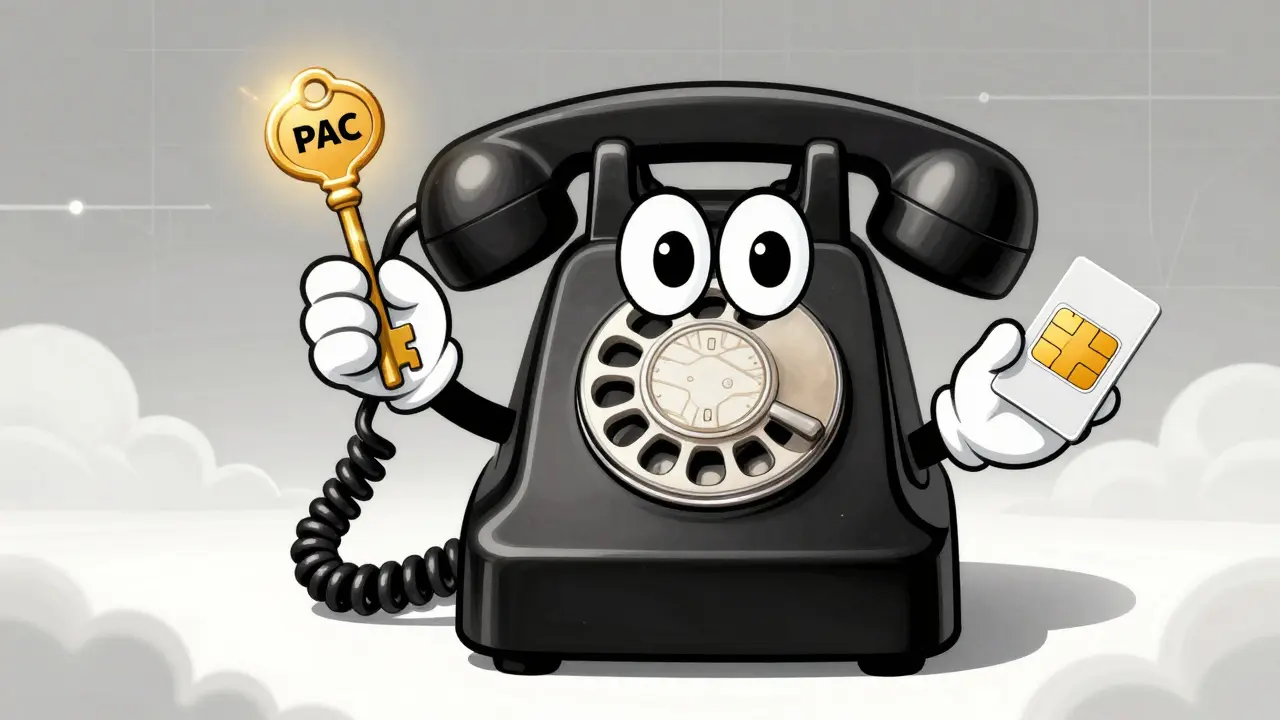

Imagine you just found a cheaper, better phone plan. You’re ready to switch. But there’s one tiny problem: your friends, family, and clients all know your current number. Changing it feels like starting over from scratch. You’d have to update every contact list, re-print business cards, and worry about missing important calls during the transition.
Fortunately, you don’t have to do that. Thanks to phone number porting, you can keep your exact same digits while moving to a new service provider. It sounds like magic, but it’s actually a regulated, standardized process that happens behind the scenes every day for millions of people. Understanding how it works can save you from delays, extra fees, and the panic of a disconnected line.
What Is Phone Number Porting?
At its core, phone number porting is the technical and administrative process of transferring your telephone number from one carrier (the "losing" or "donor" provider) to another (the "gaining" or "recipient" provider). When this process completes, your old account with the first company is closed regarding that specific number, and your new company takes over responsibility for routing your calls and texts.
This isn’t just call forwarding. If you use call forwarding, your old bill keeps coming in, and your number still belongs to the original company. With porting, ownership of the number itself changes hands. This distinction matters because it affects who charges you, how your calls are routed, and what happens if something goes wrong.
Regulators around the world mandate this ability to ensure competition. In the US, the Federal Communications Commission (FCC) requires local number portability. In the UK, Ofcom enforces strict rules to make switching easy. The goal is simple: let customers choose the best service without being locked in by their phone number.
The Two Main Models: Who Starts the Process?
Depending on where you live, the mechanics of starting a port vary slightly. There are two primary models used globally:
- Recipient-Led Model: Common in much of Europe and parts of Asia. You simply sign up with the new provider. They handle all the communication with your old provider to request the number. You don’t need special codes; your authorization to the new company is enough.
- Donor-Led Model: Used in the US, UK, and India. Here, you must actively get permission from your current provider before the new one can take the number. This usually involves generating a unique security code.
In the UK, for example, you text "PAC" to 65075 to get a Porting Authorisation Code. In the US, you often need an Account PIN or a signed Letter of Authorization (LOA). The donor-led model adds a step, but it also acts as a safeguard against fraud, ensuring you didn’t accidentally-or maliciously-let someone else steal your number.
Step-by-Step: How the Transfer Actually Happens
Whether you are moving a mobile number or a business landline, the workflow follows a predictable pattern. Here is what happens behind the curtain:
- You Initiate the Request: You contact your new provider and tell them you want to port your number. You provide your current account details, including the account number, billing name, and address exactly as they appear on your latest bill.
- Verification: The new provider checks your information. If you are in a donor-led system, they may ask for your PAC code or LOA. They verify that you are the authorized user of the number.
- The Pull Request: The new provider sends a formal request to your old provider. This is called a "pull" because the new carrier is pulling the number away from the old one. Your old provider reviews the request. If everything matches, they approve it. If there is a mismatch (like a typo in your address), they reject it, causing delays.
- Scheduling the Cutover: Once approved, both carriers agree on a date and time for the transfer. For individuals, this might be automatic. For businesses, you can often schedule it for a weekend or late night to minimize downtime.
- Routing Update: On the scheduled date, network operators update their routing tables. This means that when someone dials your number, the global telephone network now directs the signal to the new provider’s infrastructure instead of the old one.
- Activation: Your new SIM card or VoIP device becomes active with your old number. The old service is terminated.
Mobile vs. Business Landline: What’s Different?
While the core concept is the same, the experience differs significantly between personal mobile phones and business lines.
| Feature | Mobile Number Porting | Business/Landline Porting |
|---|---|---|
| Speed | Fast. Often within 1 working day (UK) or 48 hours (US). | Slower. Typically 5-14 business days due to manual verification. |
| Complexity | Low. Usually just a PAC code or online form. | High. Requires Letters of Authorization, invoices, and sometimes legal docs. |
| Downtime | Minimal. A few minutes of service loss during SIM swap. | Variable. Can be seconds to hours depending on cutover complexity. |
| Fraud Protection | Strict. Carriers often call/text to confirm identity. | Very Strict. Verifies account holder identity and billing address rigorously. |
For mobile users, the process is streamlined. In many markets, once you insert the new SIM and activate it, the port happens almost instantly. For businesses, especially those porting blocks of numbers or complex VoIP setups, the process is more cautious. Providers need to ensure that the person requesting the port has the legal right to move the company’s assets. This is why business ports often require a recent invoice and a signed letter on company letterhead.
Common Pitfalls That Delay Your Port
Even though porting is standard, it fails frequently due to human error. If your port gets stuck, it’s usually for one of these reasons:
- Mismatched Information: The most common cause. If your name is "John A. Smith" on your bill but you submit "J. Smith" to the new provider, the old carrier will reject the request. Every character must match.
- Cancelling Too Early: Never cancel your old service before the port is complete. If you cancel, the number is deactivated and returned to the pool of available numbers. You can’t port a dead number. Wait until the new provider confirms the port is successful, then cancel the old account.
- Outstanding Balances: Some providers block ports if you owe money. Check your final bill status before initiating the transfer.
- Ignoring Verification Calls: During the port, your old carrier might call or text your number to verify you authorized the change. If you don’t answer, they may pause the process to prevent fraud.
Costs and Contracts: Watch Out for Fees
Porting itself is usually free. However, switching providers often triggers other costs. If you are still under contract with your old provider, you may face early termination fees. These are not porting fees; they are penalties for breaking your agreement early.
In regulated markets like the UK, your old provider must disclose any such fees when you request your PAC code. In the US, check your contract terms before signing up with the new guy. Sometimes, new providers offer "bill credits" to help offset these early termination fees, making the switch financially neutral or even positive.
Also, consider the type of number you hold. Standard geographic numbers (like area code 608 in Madison, WI) are easy to port. Vanity numbers, toll-free numbers, or non-geographic numbers (like 0800 numbers in the UK) can sometimes have restrictions. Always ask your new provider: "Can you port this specific type of number?" before you commit.
Why Porting Matters for Your Digital Life
Phone number porting transforms your phone number from a tether to a specific company into a portable asset that belongs to you. For individuals, it means you can chase the best coverage and price without losing touch with your social circle. For businesses, it protects brand equity. Your phone number is often the first thing customers see on your website or business card. Losing it means losing trust and potentially revenue.
As technology evolves, porting is becoming faster and more seamless. We are seeing a shift toward centralized databases that allow near-instant switching. Until then, patience and precision are key. Gather your documents, double-check your spelling, and never hang up your old phone until the new one rings with your familiar number.
How long does phone number porting take?
It depends on the type of number and location. Mobile number porting often takes 1 to 3 business days. Business landline or VoIP porting typically takes 5 to 14 business days due to additional verification steps. Complex transfers involving multiple numbers can take longer.
Can I port my number if I have an outstanding balance?
Usually, yes. Most regulators require carriers to allow porting regardless of unpaid bills. However, the old carrier will still send you a final bill for any owed amounts. Failure to pay that debt may affect your credit score or lead to collections, but it rarely blocks the port itself.
Do I need to keep my old SIM card active during porting?
Yes. Keep your old SIM card inserted and active until the port is confirmed complete. Your old carrier may send verification texts or calls to that number. If you remove the SIM or cancel the service early, the number may become inactive and un-portable.
Will I lose my text messages during the port?
You might lose messages stored only on the SIM card or locally on the phone if you switch devices. However, cloud-based backups (like iCloud or Google Messages) should preserve your history. The porting process itself moves the number, not the data stored on the previous device.
Is there a fee to port my number?
In most countries, including the US and UK, porting your number is free. However, you may incur early termination fees from your old provider if you are breaking a contract. Always check with both your old and new providers for any potential charges.
What is a PAC code?
A PAC (Porting Authorisation Code) is a unique code used primarily in the UK and some other regions to authorize the transfer of a mobile number. You obtain it by texting your current provider. It is valid for a short period (usually 30 days) and must be given to your new provider to initiate the port.
Can I port a VoIP number to a mobile carrier?
It depends on the number type and local regulations. Generally, you can port a VoIP number to a mobile carrier if the number is registered as a mobile-compatible type. However, geographic landline numbers cannot always be moved to a mobile SIM. Check with your new mobile provider first.
What happens if the port fails?
If the port fails, your number remains with the old provider. The new provider will notify you of the reason (e.g., incorrect account info). You must correct the issue and resubmit the request. This will delay the switch but does not permanently block future attempts.






Write a comment