

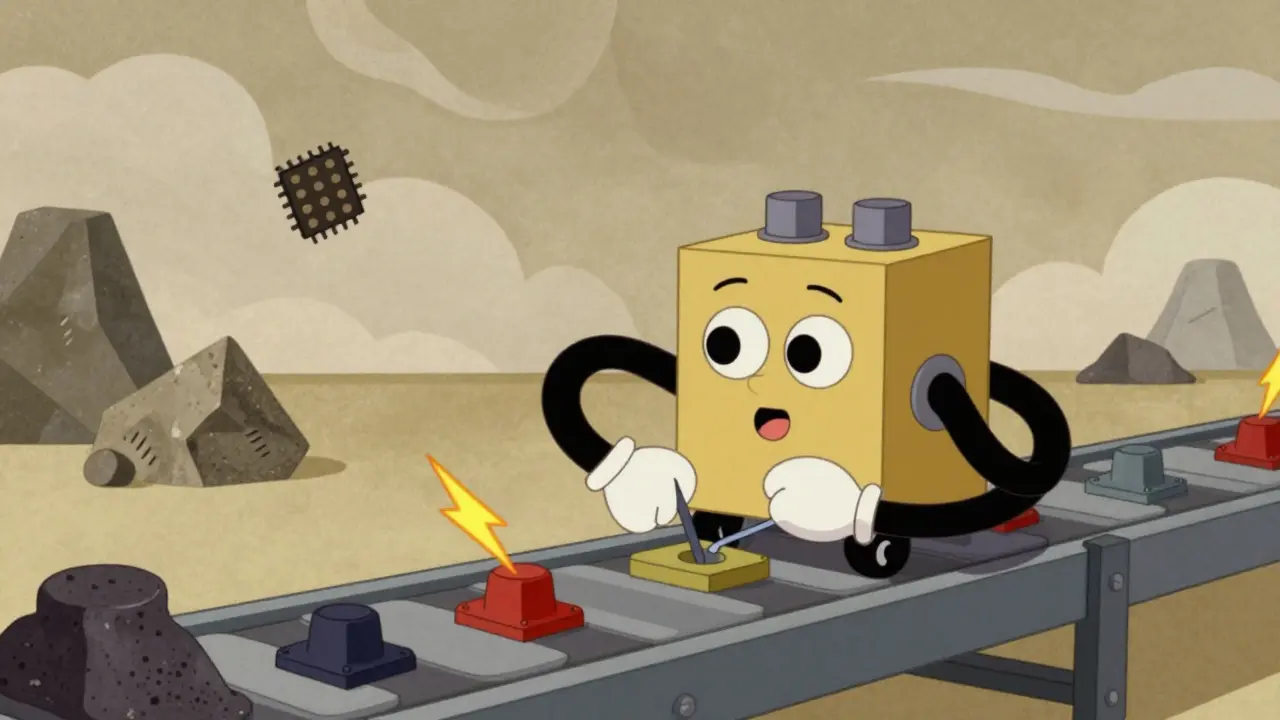

When you look at a Bitcoin miner is a specialized computer device designed to perform cryptographic calculations for blockchain networks., you see a box that hums and gets hot. But behind that metal casing lies a complex environmental story. It starts with raw ore dug from the earth, moves through high-tech factories in China, travels across oceans, runs on electricity for years, and eventually ends up as electronic waste. This journey is what experts call a Life-Cycle Analysis (LCA) is a methodological framework for assessing environmental impacts associated with all stages of a product's life.. Understanding this cycle isn't just about guilt or praise; it’s about figuring out how to make the industry cleaner and more efficient.
The Hidden Cost of Making Miners
We often talk about how much electricity mining uses, but we rarely discuss the energy packed into making the machines themselves. This is called embodied energy. A 2024 cradle-to-gate study focused on modern ASIC miners are Application-Specific Integrated Circuit devices built solely for cryptocurrency mining tasks. like the Bitmain Antminer S19 series. The researchers found that while the metal case and fans weigh the most, they don’t create the biggest environmental burden. Aluminum and steel are relatively easy to produce compared to semiconductors.
The real heavy lifters are the chips and printed circuit boards (PCBs). These components require intense chemical processes and massive amounts of clean water and energy in semiconductor fabs. If you break down the emissions per kilogram, the silicon chips account for the majority of the carbon footprint during manufacturing. Shipping these units from Shenzhen to data centers in Texas or Iceland adds another layer of emissions, especially if air freight is used. However, when you zoom out to the entire life of the machine, manufacturing usually accounts for less than 5 percent of total greenhouse gas emissions. The use phase dominates.
The Use Phase: Where the Real Impact Lies
Let’s be clear: running the machine matters more than building it. According to the Cambridge Blockchain Network Sustainability Index (CBNSI), Bitcoin mining consumed roughly 138 terawatt-hours (TWh) of electricity annually in recent estimates. That’s about 0.5 percent of global electricity demand. To put that in perspective, that’s comparable to the annual electricity consumption of countries like the Netherlands or Argentina.
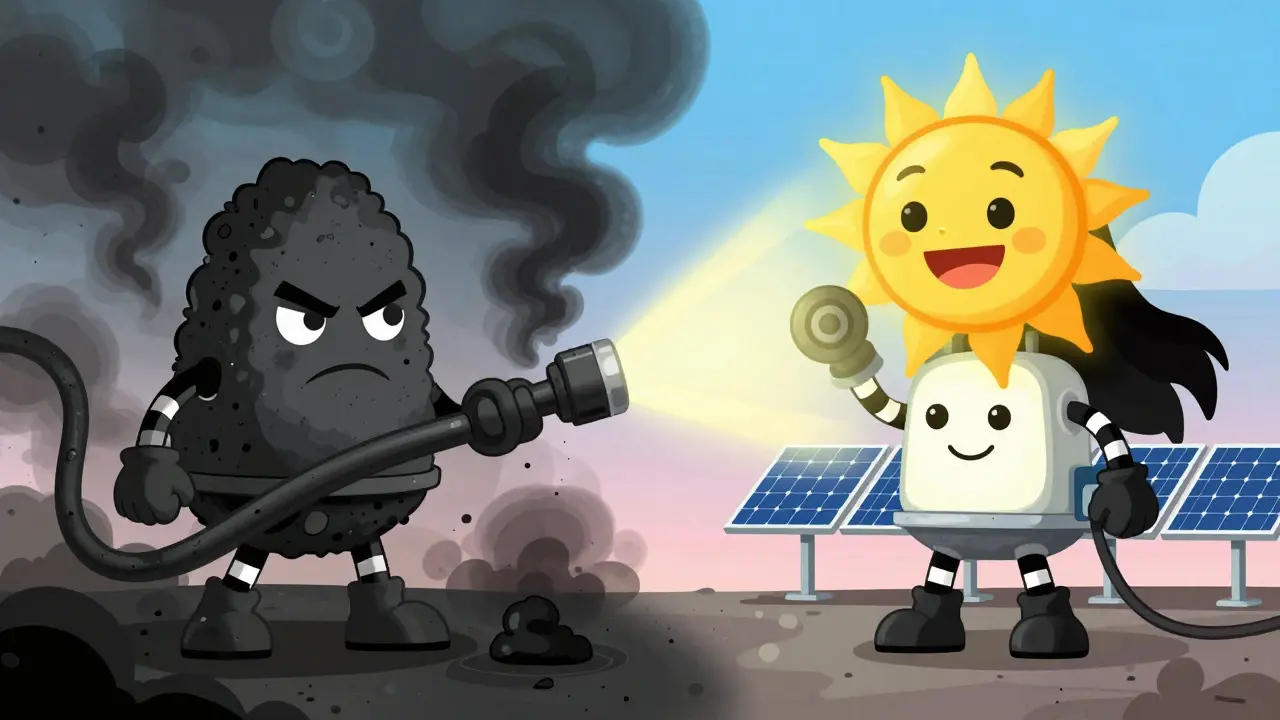
Why does this matter for life-cycle analysis? Because the source of that electricity changes everything. A 2025 report by the MiCA Crypto Alliance noted that around 42.6 percent of Bitcoin mining power came from renewable sources, with an additional 9.8 percent from nuclear and other low-carbon options, bringing the sustainable share to over 52 percent. If your miner runs on coal, its climate impact is huge. If it runs on stranded hydroelectric power or solar farms, the impact drops significantly. The hardware itself is just the tool; the energy mix is the fuel that determines the environmental cost.
The E-Waste Debate: Myth vs. Reality
This is where things get heated. In 2021, economists Alex de Vries and Christian Stoll published a study estimating that Bitcoin mining generated 30.7 kilotons of e-waste per year. They assumed an average lifespan of just 1.29 years for ASIC miners. That number grabbed headlines. Critics argued that each Bitcoin transaction effectively discarded more electronics than an iPhone 12 weighs. Greenpeace USA echoed these concerns in 2024, highlighting that tens of thousands of tons of specialized hardware end up in landfills or informal recycling streams.
But the industry pushes back hard. Proponents argue that the 1.29-year figure is misleading because it assumes miners throw away old rigs the moment newer, faster ones arrive. In reality, older models like the Antminer S9 (released in 2016) are still running in regions with cheap electricity, such as parts of Africa or Central Asia. Some are even repurposed as space heaters in cold climates. A 2025 analysis titled "Trashing the Bitcoin E-Waste Myth" pointed out that secondary markets keep these devices alive far longer than academic models predict. When a rig stops being profitable for mining, it doesn’t always become trash-it becomes a heater, a educational tool, or scrap metal worth recycling.
| Metric | Critical View (De Vries/Stoll) | Industry View (Reuse Focus) |
|---|---|---|
| Average Lifespan Assumption | 1.29 years | 3-5+ years via resale/reuse |
| Annual E-Waste Estimate | 30.7 kilotons | Significantly lower due to circularity |
| Fate of Obsolete Units | Landfill/Informal dumping | Resale, heating, certified recycling |
| Key Concern | Rapid obsolescence drives waste | Secondary markets extend utility |
Recycling and Circular Economy Strategies
So, what happens when a miner truly dies? You can’t just toss it in the bin. ASICs contain valuable materials: copper, gold, tin, and aluminum. The challenge is that these materials are locked inside complex assemblies. Standard municipal recycling facilities aren’t equipped to handle them. This is where specialized e-waste recyclers come in.
In 2025, companies like The Mining Shop and various refurbishment firms began promoting circular economy models. One effective strategy is board-level repair. Instead of replacing the whole unit when a hash board fails, technicians swap out the defective board. This can extend the life of an ASIC by one to two years at a fraction of the cost of a new machine. Another approach is repurposing. Older GPUs and ASICs generate significant heat. In colder climates, mining farms have integrated idle rigs into district heating systems, providing warmth to homes while recovering some value from otherwise useless hardware.
For units that are beyond repair, certified shredding and smelting recover the metals. Aluminum heatsinks are easily recycled. The PCBs require more intensive processing to extract precious metals, but this prevents toxic substances from leaching into soil and groundwater. The key is ensuring that obsolete hardware reaches formal recycling channels rather than being exported to developing nations as low-value scrap.

Efficiency Gains vs. Hardware Churn
There’s a trade-off in the mining world. Newer ASICs are vastly more efficient. Moving from a device that uses 90 joules per terahash (J/TH) in 2016 to one using under 30 J/TH today cuts operational emissions by two-thirds. This is good for the planet-less electricity means fewer emissions, assuming the grid mix stays the same. But this efficiency gain encourages rapid turnover. Miners upgrade to stay profitable, creating a stream of older, less efficient hardware.
A 2024 comparative analysis from Liverpool John Moores University (LJMU) highlighted this dilemma. While newer machines reduce the carbon intensity of each calculation, the increased frequency of manufacturing and disposal can offset some of those gains if end-of-life management is poor. The solution isn’t to stop upgrading; it’s to ensure that every retired miner is either reused, repaired, or properly recycled. The goal is to decouple network growth from linear resource consumption.
Policy and Future Outlook
Regulators are watching closely. The European Union’s Markets in Crypto-Assets (MiCA) regulation sparked debates about proof-of-work mechanisms, though it didn’t ban them outright. Policymakers in Sweden and Norway raised concerns about both energy use and hardware waste. As the industry matures, expect stricter reporting requirements on energy sources and e-waste handling. Miners who can prove they use renewable energy and participate in circular recycling programs will have a competitive advantage.
Future life-cycle analyses will likely include more detailed bills of materials and real-time energy data. The focus is shifting from just counting tons of waste to understanding the full flow of resources. By treating mining hardware as part of a circular system rather than a disposable commodity, the crypto industry can mitigate its environmental footprint while continuing to secure decentralized networks.
What is the biggest environmental impact of crypto mining hardware?
The operational phase, specifically electricity consumption, accounts for over 90 percent of the total climate impact. Manufacturing contributes less than 5 percent, and e-waste disposal has a smaller direct climate effect, though it raises concerns about resource depletion and toxicity.
How long do ASIC miners typically last?
Academic studies often cite an average lifespan of 1.29 years based on replacement cycles. However, industry data suggests many units are resold or reused for 3 to 5 years or more, especially in regions with low electricity costs or for alternative uses like heating.
Is Bitcoin mining e-waste really 30.7 kilotons per year?
That figure comes from a 2021 study by De Vries and Stoll, which assumed short lifespans and limited reuse. Industry advocates argue this overstates waste by ignoring secondary markets and refurbishment, suggesting the actual volume of landfill-bound waste is significantly lower.
Can old mining rigs be recycled?
Yes. Specialized e-waste recyclers can recover aluminum, copper, gold, and other metals from ASICs. Refurbishment shops also replace failed hash boards to extend device life. Proper recycling prevents toxic leakage and recovers valuable resources.
How does hardware efficiency affect environmental impact?
More efficient ASICs (lower J/TH) reduce electricity use per transaction, lowering emissions. However, rapid upgrades can increase manufacturing impacts and e-waste flows if old units are not reused or recycled responsibly.






Write a comment