

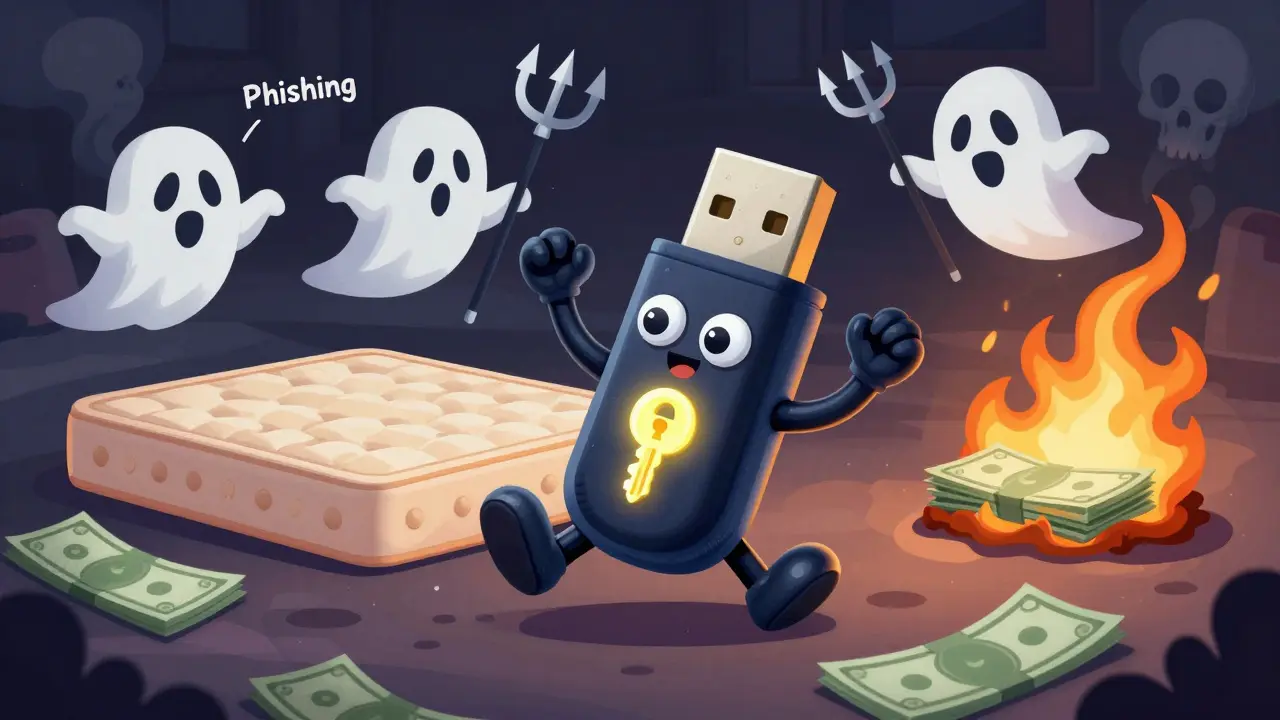

If you own any significant amount of cryptocurrency, storing it on an exchange or a phone app is like keeping cash under your mattress-except someone can steal it without ever stepping into your house. Hardware wallets fix that. They’re physical devices, about the size of a USB stick, designed to keep your private keys completely offline. No internet connection. No hackers. Just your keys, locked in a tamper-proof chip, ready to sign transactions when you need them.
How Hardware Wallets Actually Work
At the core of every hardware wallet is a secure element chip-same type used in credit cards and passports. This chip generates and stores your private keys. It never lets them leave the device. When you want to send Bitcoin, Ethereum, or any other crypto, the wallet signs the transaction inside that chip. Then it sends the signed message out to the network. Your keys? Still locked inside. No one else can touch them.
Devices like the Ledger Nano X and Trezor Model T use custom operating systems built just for crypto. They run on ARM Cortex-M processors, optimized to handle encryption without exposing anything to your computer or phone. Even if your laptop gets infected with malware, it can’t steal your keys because the hardware wallet never shares them. The transaction is confirmed only after you physically press a button on the device. No remote access. No automatic approvals.
Why They’re Safer Than Anything Else
Most crypto thefts happen online. Coinbase’s 2023 report says 95% of losses come from exchanges and software wallets. Hardware wallets? Only three successful breaches since 2014-and all of them required someone to physically steal the device and crack it open. That’s not easy. Most wallets wipe themselves after 16 wrong PIN attempts. Some let you set a 50-digit PIN. Others add a passphrase on top of the recovery seed. That means even if someone finds your 12-word backup, they still can’t access your funds without the extra secret word you created.
According to Ledger’s 2022 security whitepaper, hardware wallets reduce your attack surface by 99.8% compared to leaving crypto on an exchange. Andreas Antonopoulos, author of Mastering Bitcoin, calls them the only reasonable way to hold meaningful crypto. Dr. Gavin Andresen, former lead developer of Bitcoin Core, says the security level matches national defense standards.
Market Leaders: Ledger vs. Trezor vs. Others
Two brands dominate the market: Ledger and Trezor. Together, they control over 85% of hardware wallet sales. Ledger, founded in 2014, leads with 64% market share. Their Nano X ($149) supports over 5,500 cryptocurrencies and has Bluetooth connectivity. The Nano S+ ($79) is cheaper and simpler, great for beginners.
Trezor, started in 2013, is known for open-source software. Their Model T ($219) has a color touchscreen and supports advanced features like passphrases and multi-signature wallets. The Trezor One ($69) is the budget option-no screen, but still fully secure. Both brands update firmware monthly. Ledger released 14 updates in 2023 alone, fixing vulnerabilities before they could be exploited.
Other players like BitBox, Ellipal, and SafePal are gaining ground, especially in Asia. But Ledger and Trezor still have the biggest user bases, longest track records, and most active communities. Reddit’s r/CryptoCurrency community gave hardware wallets an 87% approval rating in their 2023 survey. Trustpilot scores: Ledger at 4.7/5, Trezor at 4.5/5.
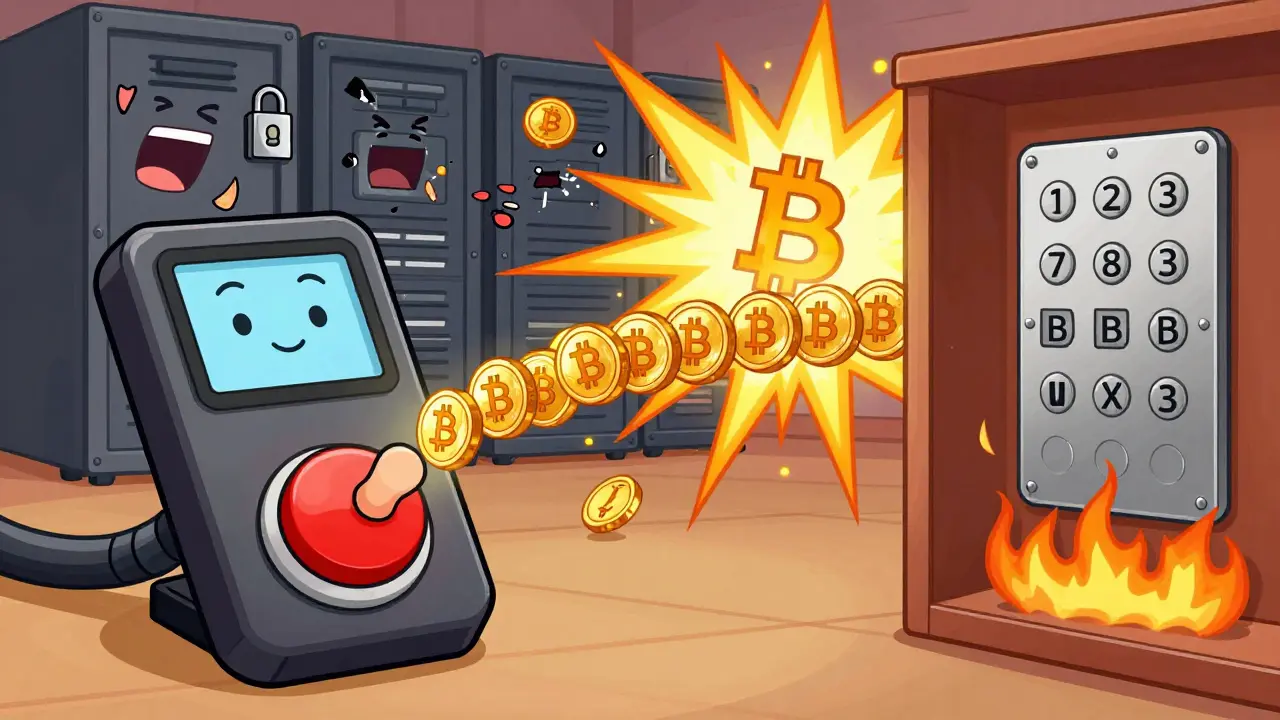
What You Need to Know Before Buying
Hardware wallets aren’t free. Prices range from $69 to $219. That’s a lot more than a free app. But if you hold $10,000 or more in crypto, the cost is tiny compared to the risk. Chainalysis found that 67% of people with over $10,000 in crypto use hardware wallets. Only 29% of those with under $1,000 do.
They’re not perfect. You need to physically connect them to your computer or phone. That means slower transactions. Not ideal if you trade every day. But if you’re holding long-term? Perfect. They’re also small. Easy to lose. Easy to burn in a fire. That’s why experts recommend storing your recovery seed on a metal backup plate-not paper. Paper fades. Metal lasts.
And don’t forget the passphrase. It’s optional on most wallets, but 68% of experienced users use it. It turns your 12-word seed into something only you know. Even if someone gets your seed, they’re locked out without it.
Setup Is Simple-If You Do It Right
First-time users take 2 to 5 hours to get comfortable. The process is straightforward:
- Connect the wallet to your computer via USB.
- Follow the on-screen instructions to set a PIN.
- Write down your 12- or 24-word recovery seed. Do this by hand. No screenshots. No cloud backups.
- Verify the seed by re-entering it on the device.
- Install the official software (Ledger Live or Trezor Suite) and start managing your assets.
Trezor reports a 92% success rate for first-time users who follow their guide. Common mistakes? Writing the seed on a phone. Taking a photo. Storing it in a Google Doc. Those are all security disasters. Your seed is the master key to everything. If it’s compromised, your crypto is gone-no recovery, no help desk, no refunds.
Real Problems Users Face
Most issues aren’t about hacking. They’re about user error. Ledger’s support tickets show 18% of problems come from failed firmware updates. Trezor users on Mac sometimes have trouble with older models. But these are fixable. Both companies have huge knowledge bases-Ledger has over 387 articles, updated weekly. Their Telegram group has 90,000 members. Trezor’s forum has 45,000 users posting daily.
Support response times are fast: 14 hours for email, 22 minutes for live chat. You’re not alone if you get stuck.
One big scare happened in 2020 when Ledger’s customer database was breached. 272,000 email addresses and shipping details were exposed. But no wallets were hacked. No funds stolen. Why? Because the hardware wallets themselves never stored that data. The breach was on their website, not the devices. That’s the power of cold storage.
What’s Coming Next
Hardware wallets aren’t standing still. Ledger just launched Ledger Recover ($99/year), a service that splits your seed into three encrypted parts held by trusted parties. If you lose your seed, you can recover it-but only with approval from two of the three parties. It’s like a safety net, not a backdoor.
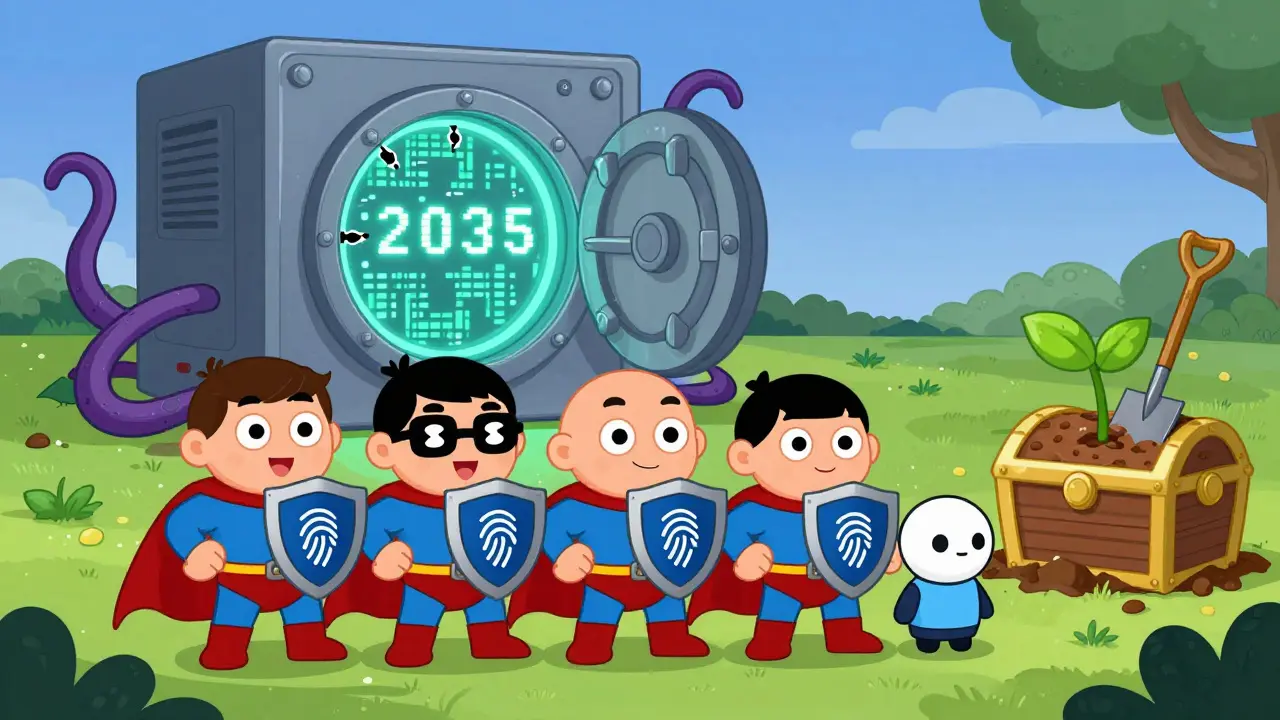
Trezor’s Model R, coming in Q2 2024, will have a touchscreen and better app integration. Both companies are working on quantum-resistant cryptography. That’s code that won’t break when quantum computers get powerful enough-expected around 2035.
Biometric authentication (fingerprint or face ID) is also in development. Right now, PINs are the norm. But fingerprints could make access faster and harder to guess.
Final Advice: Don’t Skip the Basics
Hardware wallets are the gold standard. But they’re only as good as the person using them. Gartner’s 2023 report says 41% of lost crypto comes from misplaced recovery seeds-not hacks. That’s the real danger.
Do this right:
- Buy from the official website. Avoid Amazon or eBay-counterfeit devices exist.
- Write your seed on metal. Not paper.
- Use a passphrase. Even if it’s just one extra word.
- Store the device in a fireproof safe. Or bury it in a metal box in your backyard.
- Never plug it into a public computer. Or one you don’t trust.
If you’re holding crypto for the long haul, this isn’t optional. It’s the difference between sleeping well and losing everything.
Are hardware wallets really safer than exchanges?
Yes. Exchanges are online targets. Hackers breach them constantly. Hardware wallets stay offline. Your private keys never touch the internet. Since 2014, there have been only three confirmed successful attacks on hardware wallets-and all required physical access to the device. Exchanges have lost billions in thefts over the same period.
Can I use a hardware wallet for all my cryptocurrencies?
Most support over 1,000 cryptocurrencies, including Bitcoin, Ethereum, Solana, Dogecoin, and thousands of tokens. Ledger Nano X and Trezor Model T support up to 5,500. Check the manufacturer’s website for full lists. If you hold niche altcoins, verify compatibility before buying.
What happens if I lose my hardware wallet?
If you still have your 12- or 24-word recovery seed, you can restore your wallet on a new device. That’s why writing it down correctly is critical. Without the seed, your crypto is gone forever. Hardware wallets don’t store your keys in the cloud. There’s no reset button. No customer service can recover your funds.
Do I need to update the firmware regularly?
Yes. Firmware updates fix security holes. Ledger and Trezor release updates monthly. The process takes under 5 minutes and is done through the official software (Ledger Live or Trezor Suite). Never ignore these updates. Outdated firmware is one of the top reasons users get hacked.
Is a hardware wallet worth it if I only have $1,000 in crypto?
It depends. If you’re just experimenting, a software wallet might be fine. But if you believe your crypto will grow, or you’re holding it long-term, it’s still smart to use a hardware wallet. The cost is low compared to the risk. And if you ever decide to buy more, you won’t have to move everything later.
Can I use one hardware wallet for multiple people?
Technically yes, but it’s not recommended. Each person should have their own wallet. Sharing a device means sharing access to funds, which creates trust issues. Also, if one person loses the PIN or seed, everyone loses access. Better to keep wallets separate for clarity and security.
What’s the difference between Ledger Nano S+ and Nano X?
The Nano S+ is cheaper ($79), has a smaller screen, and no Bluetooth. The Nano X ($149) has Bluetooth, more storage for apps, and supports more cryptocurrencies simultaneously. If you’re holding dozens of tokens or use DeFi apps often, the Nano X is better. If you just want to hold Bitcoin and Ethereum, the S+ is perfectly secure and more affordable.
Can hardware wallets be hacked remotely?
No. Not if you use them correctly. The device must be physically connected to a computer or phone to sign transactions. Even then, it only sends signed data-not keys. The only real remote threat is if you download fake software from a phishing site. Always use the official apps from Ledger.com or trezor.io. Never click links in emails.









Abert Canada
15 Dec 2025 at 19:40Man, I got my Trezor One last year after nearly losing everything to a phishing scam. Best decision ever. I don’t even check my portfolio anymore-just let it sit. The other day I tried to send a tiny amount to a friend and spent 20 minutes just staring at the screen like it was a sacred artifact. Then I pressed the button. Felt like a wizard. No malware, no drama. Just cold, silent, unbreakable security. I don’t trust clouds. I trust metal and buttons.