



Switching VoIP providers shouldn’t mean losing your business phone number. But how long does it actually take to move your number from one VoIP carrier to another? If you’re planning a switch, you’ve probably heard conflicting answers-some say it’s done in a day, others warn it could take weeks. The truth? It depends. And if you don’t know what factors control the clock, you could be stuck without service, missing calls, or losing customers.
What Happens When You Port a VoIP Number?
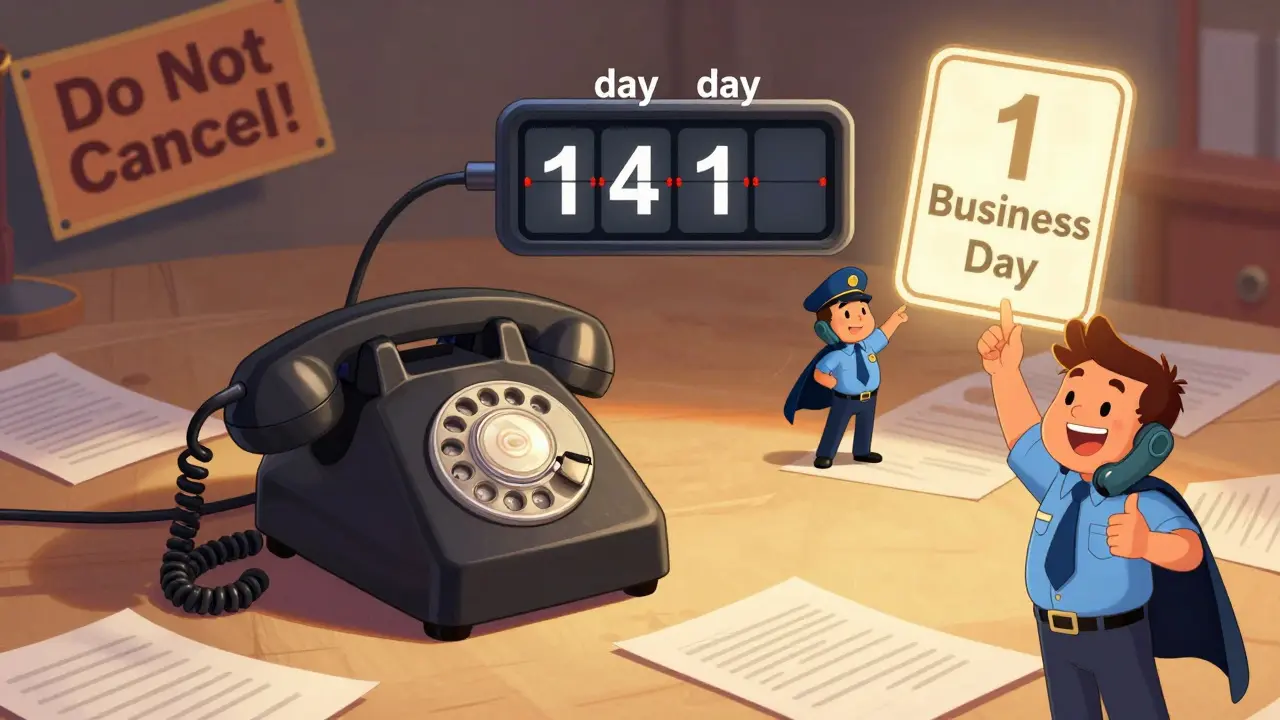
Porting your number isn’t just a simple request. It’s a technical handoff between two telecom systems, governed by federal rules and carried out through a network of databases and carrier systems. The FCC requires all U.S. providers to allow number porting, and they’ve set strict timelines: once your paperwork is approved, the actual transfer must complete within one business day. But here’s the catch-most of the delay happens before that point. You’re not just asking a company to move your number. You’re triggering a chain reaction: your old provider must verify your identity, your new provider must submit correct documentation, and both must sync with Somos Inc., the official Number Portability Administrator. If any step fails-like a mismatched billing address or an expired PIN-the whole process stops. And it doesn’t restart until you fix it.Standard Porting Timelines: What You Can Actually Expect
Most providers advertise “1 to 7 business days” for porting. That’s technically accurate-but it’s misleading if you don’t know what’s included. That window covers only the carrier-to-carrier transfer phase. The real timeline starts when you first decide to switch. Here’s the breakdown most people miss:- Days 1-5: Gathering documents. You need your current account number, billing address (exactly as it appears on your bill), and a valid PIN or password. Many users delay this step, thinking they can do it last-minute.
- Days 6-8: Submitting your Letter of Authorization (LOA). If you mail a paper form, expect 2-3 extra days for processing. Electronic LOAs cut this to under 24 hours.
- Days 9-11: Provider validation. Your new carrier checks your info against your old provider’s records. If your address says “123 Main St.” but your old bill says “123 Main Street,” the system rejects it. This is the #1 reason for delays.
- Day 12: Transfer window. Once approved, the actual number move happens within 24 hours. But if your request hits on a Friday, you won’t see the change until Monday.
Why Some Ports Take Weeks-And How to Avoid Them
Not all numbers are created equal. A single residential line ports faster than a business account with 50 extensions. Here’s where delays get serious:- Toll-free numbers (800, 888, etc.): These require approval from the SMS/800 database, a separate system managed by Somos. Every provider-whether it’s Nextiva, Telnyx, or RingCentral-takes 4 to 6 weeks. There’s no shortcut. Plan accordingly.
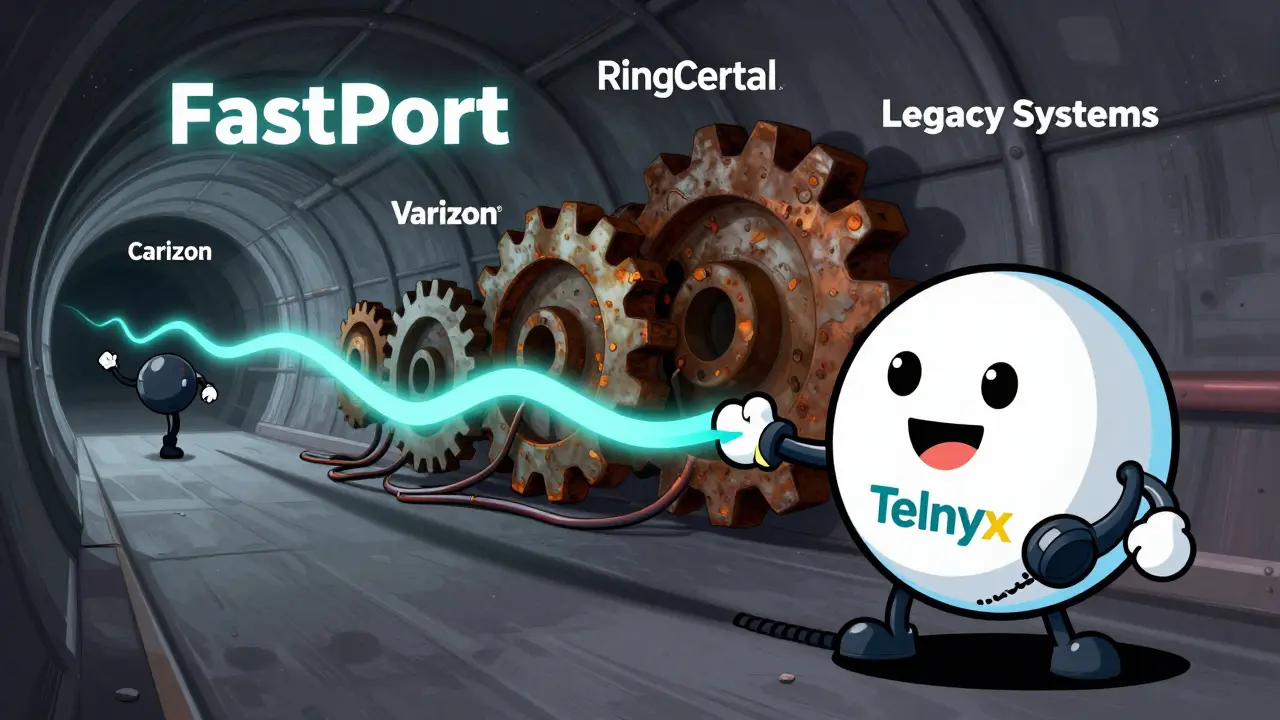
- Legacy carriers (AT&T, Verizon, Comcast): These companies still use outdated internal systems. Porting out of them adds 5-10 extra days, even if your new provider is fast. One user reported a 22-day port from Verizon Business, while switching from RingCentral took just 3 days.
- Multiple lines or complex setups: If you’re moving 10+ numbers, or using features like call routing, IVR, or fax-to-email, each line must be validated individually. Enterprise ports (50+ lines) average 14.7 business days, according to G2 Crowd data.
- International numbers: Porting a number from Germany? Expect 10-14 days. Ireland? As little as 2 days. France? Minimum 8 business days. Rules vary by country, and many require additional paperwork.
Who’s Fastest? Comparing Top VoIP Providers
Not all VoIP providers are equal when it comes to speed. Here’s how the top players stack up based on 2024 user data and technical reports:| Provider | Standard Port (Single Line) | Toll-Free Port | Enterprise Port (10+ Lines) | Special Feature |
|---|---|---|---|---|
| Phone.com | 1-3 business days | 4-6 weeks | 10-14 business days | Automated electronic LOA system |
| Telnyx | 1-4 business days (FastPort) | 4-6 weeks | 12-16 business days | AI-powered document validation |
| Nextiva | 5-7 business days | 4-6 weeks | 14-18 business days | Strong customer support during port |
| Bandwidth | 3-7 business days | 4-6 weeks | 10-15 business days | Direct integration with Somos |
| RingCentral | 5-9 business days | 4-6 weeks | 15-20 business days | Slowest with legacy carriers |
How to Speed Up Your Porting Process
You can’t control everything-but you can control your preparation. Here’s what works:- Get your PIN or password now. Call your current provider and ask for your account’s porting authorization code. Don’t wait until you’re ready to switch.
- Match your billing address exactly. Copy it letter-for-letter from your latest bill. Even a missing hyphen or extra space can cause a rejection.
- Use electronic LOA. Avoid paper. Most providers now offer online forms. Submit it during business hours on a Tuesday or Wednesday-avoid Fridays.
- Don’t cancel your old service. Keep it active until you see the number working on your new system. This is non-negotiable.
- Track your port status. Your new provider should give you a tracking ID. Check it daily. If it’s stuck for more than 3 days, call their support team.
What If Your Port Gets Stuck?
Delays happen. But you’re not powerless. Here’s what to do:- If your port is stuck for over 5 business days, ask your new provider for the Firm Order Commitment (FOC) date. That’s the official deadline they agreed to with your old carrier.
- If the FOC date passed and your number still hasn’t moved, file a complaint with the FCC through their online portal. You don’t need a lawyer-just your porting ID and dates.
- Keep records: screenshots of your LOA submission, emails from both providers, and call logs. These matter if you need to escalate.
What’s Coming Next? The Future of VoIP Porting
The industry is changing fast. Telnyx launched FastPort 2.0 in October 2024, using AI to auto-detect document errors and reduce rejections by 76%. The FCC is pushing for mandatory electronic LOAs by Q2 2025. Once that happens, average porting times could drop by 35-40%. By 2026, Gartner predicts 85% of simple ports will finish in under 48 hours. But enterprise ports? They’ll still take 10-15 days. Why? Because big companies have multiple departments, legacy systems, and compliance checks that can’t be automated overnight. The real win isn’t speed-it’s predictability. When you know exactly what’s holding up your port, you can plan around it. No more surprises. No more missed calls. Just a smooth, controlled transition.Can I port my VoIP number if I still owe money to my current provider?
No. Most providers require your account to be in good standing before they’ll release your number. If you have an outstanding balance, you’ll need to pay it first. Some providers will hold your port request until the balance clears, which can add days to your timeline. Always check your final bill before starting the process.
Do I need to notify my current VoIP provider that I’m switching?
No, you don’t need to notify them. The porting request is initiated by your new provider. Your old provider will be notified automatically through the official porting system. However, you should keep your service active until the port completes-otherwise, you risk losing your number.
What happens if my port fails?
If your port fails, your number stays with your current provider. You won’t lose it. Your new provider will notify you with the reason-usually an address mismatch, invalid PIN, or billing dispute. Fix the issue, resubmit the paperwork, and try again. Most failures are fixable within a day or two.
Can I port my number to a VoIP provider outside the U.S.?
Yes, but it’s more complex. International ports require coordination with foreign telecom regulators and may need additional documentation. For example, porting a U.S. number to a provider in Germany takes 10-14 days. Porting a German number to a U.S. provider may not be possible at all, depending on the number type. Always check with your new provider before starting.
Will my phone service go down during the port?
Typically, your service will be down for a few hours during the final cutover, usually overnight. Most providers schedule this between midnight and 6 a.m. local time to minimize disruption. If you’re on a business line, ask your new provider for the exact time window so you can plan around it.









Daniel Kennedy
16 Dec 2025 at 05:04Yo, this is the most accurate breakdown I’ve seen in years. I ported from RingCentral to Telnyx last year and thought I was gonna lose my number-ended up taking 11 days because my billing address had a typo. One space. ONE SPACE. RingCentral’s system rejected it like it was a crime. Don’t even think about copying your address from your email or portal-go dig up the actual PDF bill. Also, never, ever cancel your old service early. I learned that the hard way when my fax line went dark for 36 hours during a client pitch. Total nightmare.