



For years, the narrative around cryptocurrency mining was simple: it was either profitable or it was environmentally destructive. You couldn’t have one without sacrificing the other. But that binary thinking is dead. In 2026, we are witnessing a structural shift where sustainable crypto mining isn’t just an ethical choice-it’s the only way to stay in business. The intersection of plummeting renewable energy costs and rising grid prices has created a scenario where green operations out-earn their fossil-fuel counterparts. If you are looking at mining today, whether as an investor, an operator, or a curious observer, understanding this convergence is critical.
The Economics of Electricity: The Single Biggest Variable
Let’s strip away the hype about blockchain technology and look at the raw math. Mining is an industrial process. It consumes electricity to secure a network, and in return, it receives a block reward. For Bitcoin miners, electricity accounts for roughly 70% to 80% of total operational expenditures (OpEx). This means your profit margin is almost entirely dictated by the price per kilowatt-hour (kWh) you pay.
Historically, miners sought cheap power anywhere they could find it, often leading to conflicts with local grids during peak demand. Today, the threshold for viability has tightened. Industry data suggests that miners operating below 5 cents per kWh maintain healthy margins. Those paying above 10 cents per kWh are effectively burning cash unless the market price of Bitcoin spikes dramatically. To put that in perspective, each Bitcoin transaction consumes approximately 707 kWh of electricity. A mere 1-cent increase in your electricity rate can wipe out your entire profit buffer if the asset price doesn’t move up to compensate.
This sensitivity to cost explains why geographic location has become the primary strategic asset for large-scale operators. Regions like Kazakhstan or specific zones in Texas with abundant wind resources offer rates between $0.03 and $0.045 per kWh. Compare that to traditional grid electricity in parts of Europe or the Northeastern US, which can exceed $0.12 per kWh. That difference isn’t just a slight edge; it’s the difference between survival and bankruptcy. Large firms like Core Scientific, managing gigawatts of capacity, thrive specifically because they lock in these ultra-low rates, often through direct power purchase agreements (PPAs) with renewable developers.
When Green Becomes Cheap: The Renewable Advantage
Here is where the old narrative breaks down. We used to think renewable energy was expensive. That changed over a decade ago. Solar, wind, and hydroelectric power are now among the cheapest sources of new generation globally. For a mining operation, switching from the traditional grid to renewables isn’t just about reducing carbon emissions; it’s a massive cost-cutting measure.
Consider the numbers. Traditional grid power might cost you $0.12/kWh. A well-sited solar or wind farm can provide power for as low as $0.045/kWh. That represents a potential 62.5% reduction in your biggest expense. This creates a powerful feedback loop: miners seek out stranded renewable energy-power generated in remote areas that can’t reach the main grid-and use it to mine. This solves two problems at once. The renewable developer gets revenue for otherwise wasted energy, and the miner gets rock-bottom power costs. It’s a symbiotic relationship that aligns economic incentives with environmental goals.
We saw the fragility of non-renewable strategies in February 2025. A severe cold snap in the United States caused electricity prices to spike above 10 cents per kWh due to high demand for heating. Miners relying on volatile spot markets were forced to shut down rigs to avoid losses. This event triggered a 2% drop in network difficulty as unprofitable hash rate disappeared. Meanwhile, operations powered by stable, long-term renewable contracts continued running uninterrupted. They didn’t just survive; they captured a larger share of the block rewards while their competitors idled. This volatility proves that sustainability is also a hedge against market risk.
Hardware Efficiency: Squeezing More Hashes Per Watt
Lowering your electricity bill is half the battle. The other half is getting more work done with every watt you consume. This is where hardware efficiency comes into play. The metric that matters here is Joules per Terahash (J/TH). Lower is better.
Modern Application-Specific Integrated Circuit (ASIC) miners are incredibly efficient compared to models from just three years ago. However, simply buying the newest rig isn’t enough. You need to manage how that hardware interacts with its environment. Heat is the enemy of efficiency. Traditional air cooling systems consume significant amounts of additional electricity to keep rigs from overheating. This wasted energy directly eats into your profitability.
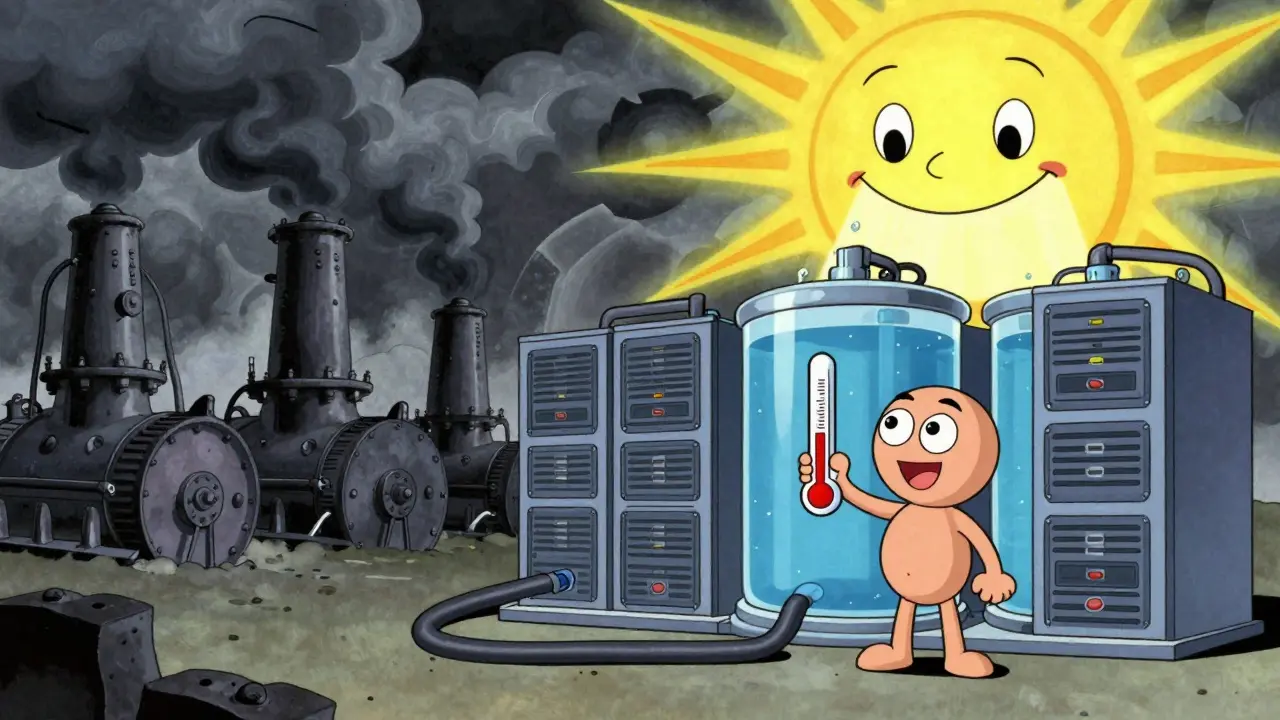
This is why immersion cooling has become the standard for serious operations. By submerging mining rigs in dielectric fluid, heat is transferred away from the components much more efficiently than air ever could. This allows miners to overclock their hardware safely, increasing hash rate without proportional increases in power consumption. Furthermore, companies like Canaan are integrating AI-driven management systems into their rigs. These systems dynamically adjust electrical loads based on real-time energy pricing and temperature data, shutting down inefficient circuits automatically. It’s not just about having good hardware; it’s about intelligent power management.
| Strategy | Avg. Cost (USD/kWh) | Profitability Risk | Sustainability Impact |
|---|---|---|---|
| Traditional Grid (Peak) | $0.12 - $0.15 | High | Negative (Fossil Fuels) |
| Traditional Grid (Off-Peak) | $0.06 - $0.08 | Medium | Mixed |
| Renewable PPA (Wind/Solar) | $0.03 - $0.05 | Low | Positive (Carbon Neutral) |
| Hydroelectric Direct | $0.02 - $0.04 | Very Low | Positive (Low Emission) |

ESG Standards and Institutional Pressure
You can’t ignore the financial side of sustainability anymore. Environmental, Social, and Governance (ESG) criteria are no longer optional for publicly traded mining companies. Investors are increasingly wary of backing operations that rely heavily on coal or natural gas, especially in regions with strict regulatory frameworks. Access to capital is becoming tied to your energy mix.
If you want institutional investment, you need a green story. Companies that can prove their operations run on 100% renewable energy command higher valuations and lower borrowing costs. This pressure is driving a pivot even among legacy players. Core Scientific, for instance, has expanded beyond pure Bitcoin mining into AI computing via CoreWeave, leveraging waste-to-energy initiatives and solar projects to stabilize costs and meet ESG mandates. This diversification shows that the industry is maturing. It’s no longer just about digging for digital gold; it’s about building resilient, compliant energy infrastructure.
The "stranded assets" risk is real. As governments worldwide tighten carbon regulations, mining farms dependent on subsidized fossil fuels face the threat of sudden tax hikes or operational bans. By aligning with green goals early, operators future-proof their businesses. They aren’t just being nice to the planet; they are insulating themselves from regulatory shock.
Strategic Moves for Operators and Investors
So, what does this mean for you? If you are considering entering the space or evaluating existing plays, here is the practical playbook.
- Locate Near Stranded Renewables: Don’t just look for cheap power; look for *wasted* power. Remote wind farms and hydro plants that can’t feed the main grid are ideal partners. Negotiate direct PPAs to lock in rates below 5 cents/kWh.
- Invest in Immersion Cooling: Air cooling is outdated for large-scale ops. The upfront cost of liquid cooling systems pays for itself through reduced electricity usage and extended hardware lifespan.
- Monitor Difficulty Adjustments: Network difficulty adjusts every two weeks based on total hashing power. When high-cost miners shut down (due to price spikes or regulation), difficulty drops, making remaining efficient miners more profitable. Understand this cycle.
- Diversify Revenue Streams: Consider hybrid models. Some miners are exploring using excess heat for district heating or combining mining with AI inference tasks, maximizing the utility of every watt consumed.
- Track Real-Time Energy Markets: Use automated software to toggle rigs on and off based on spot prices. If you’re on a variable rate plan, never mine during peak demand hours unless absolutely necessary.
The era of "move fast and break things" is over. The future belongs to those who optimize for efficiency and sustainability simultaneously. The miners who will dominate the next cycle are those who treat energy procurement as their core competency, not an afterthought. When energy costs align with green goals, profitability follows naturally.
What is the most profitable electricity rate for Bitcoin mining?
Generally, miners aim for electricity costs below 5 cents per kWh to maintain strong profitability margins. Rates between 3 and 5 cents are considered highly competitive, allowing operations to remain profitable even during periods of lower Bitcoin prices or increased network difficulty.
How does renewable energy reduce mining costs?
Renewable energy sources like wind and solar often have near-zero marginal costs once installed. By securing Power Purchase Agreements (PPAs) directly with renewable developers, miners can bypass expensive retail grid rates, potentially lowering costs by 50-60% compared to traditional electricity providers.
Why is immersion cooling important for sustainable mining?
Immersion cooling significantly improves thermal efficiency, reducing the amount of extra electricity needed for air conditioning. It also allows for safer overclocking, meaning more hashing power per watt, which lowers the overall carbon footprint per unit of computational work performed.
What happened to miners during the 2025 US cold snap?
During the February 2025 cold snap, electricity prices spiked above 10 cents per kWh in many US regions. Miners reliant on volatile spot markets were forced to shut down operations to avoid losses, leading to a temporary drop in network difficulty. Those with fixed-rate renewable contracts remained operational and profitable.
How do ESG standards affect crypto mining companies?
ESG standards influence access to capital and regulatory compliance. Publicly traded mining firms with poor environmental records may face higher borrowing costs, divestment by institutional investors, and stricter government regulations. Adopting green energy practices helps mitigate these risks and attracts responsible investment.







Write a comment