



Imagine getting a $1,500 fine for every single phone call your team makes. That is the reality for many contact centers that treat call recording as just a nice-to-have feature rather than a critical compliance backbone. In 2026, recording customer interactions isn't just about checking if an agent smiled on the phone. It is a high-stakes balancing act between protecting sensitive data, satisfying regulators like the FCC and GDPR authorities, and actually improving your service quality. With 92% of contact centers now recording 100% of calls, the volume of data is massive, but so are the risks. One slip-up in consent or redaction can lead to millions in penalties.
The Dual Purpose: Why You Record Calls
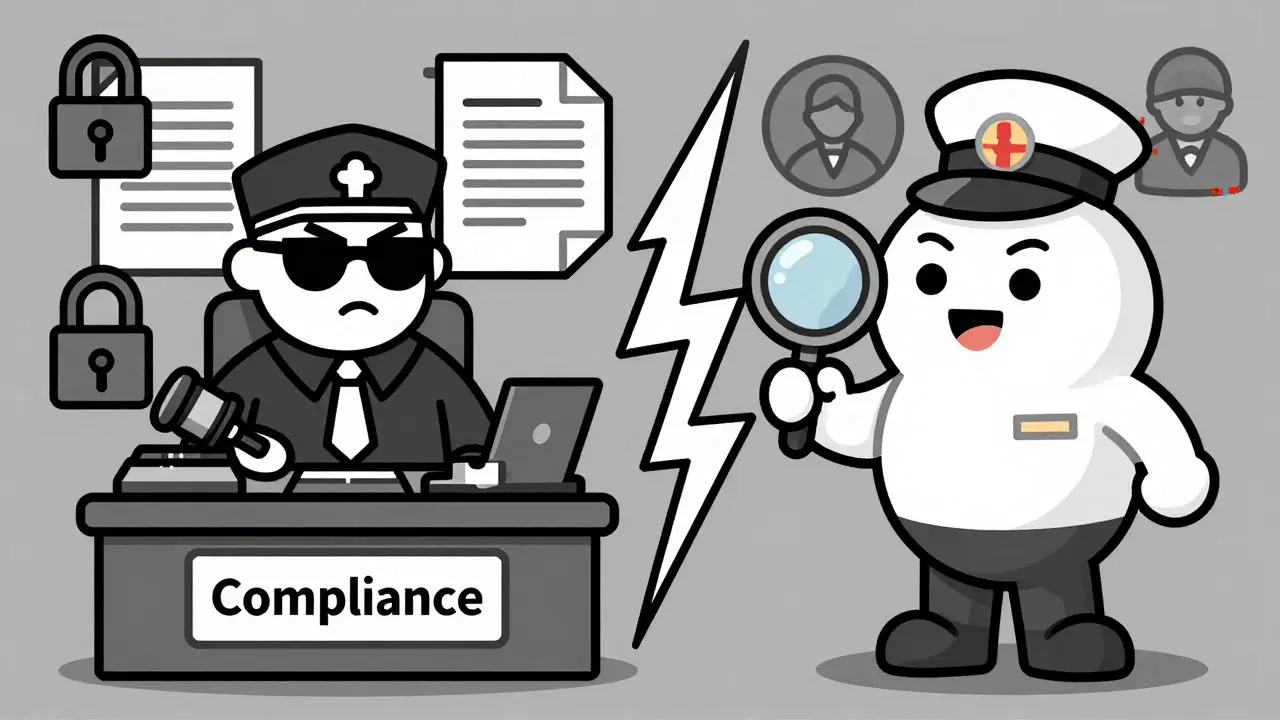
Most people think call recording is only for legal protection. While that is true, it serves two distinct masters: regulatory compliance and quality assurance. On the compliance side, you are proving you followed the law. On the quality side, you are using those recordings to train agents, spot trends, and improve customer experience. The problem? These two goals often clash. Compliance wants to lock down data; quality assurance wants to analyze it deeply. If your system doesn't bridge this gap, you end up with either too much risk or too little insight.
Navigating the Consent Maze
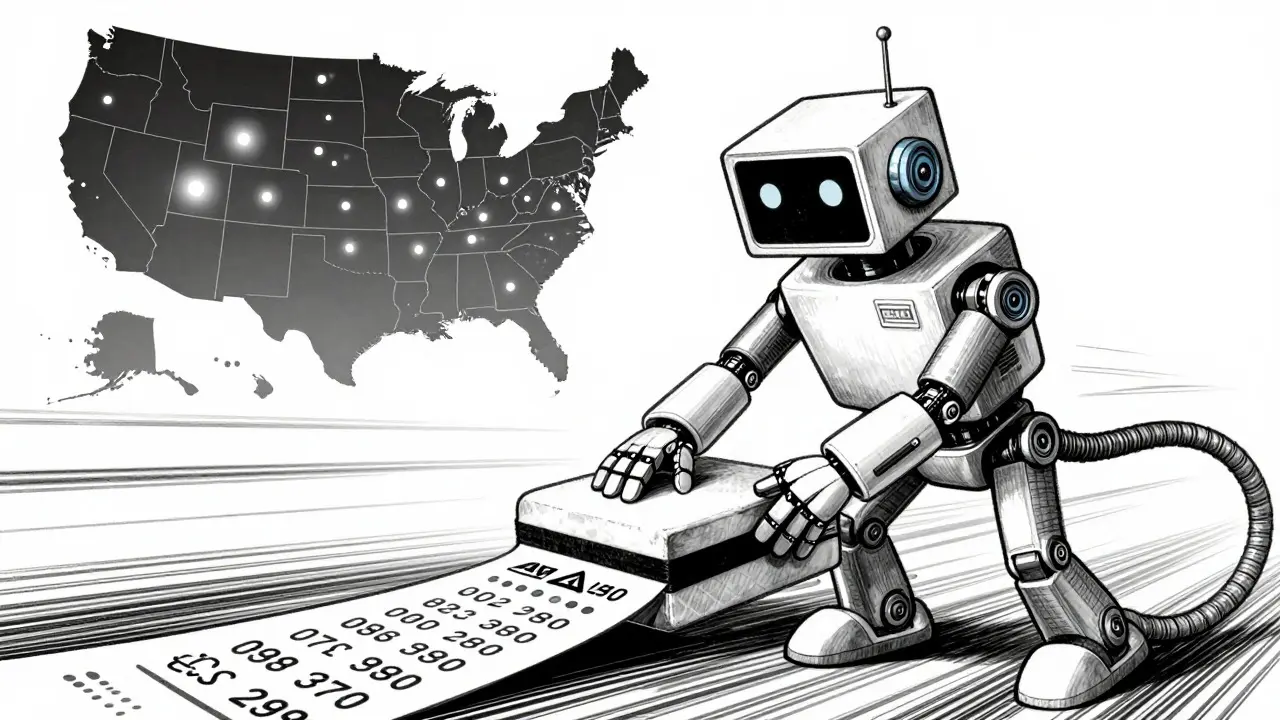
The biggest hurdle in call recording is consent. The United States does not have a single federal rule for this; instead, it varies by state. This creates a nightmare for national contact centers. Currently, 12 states-including California, Washington, and Illinois-require two-party consent, meaning everyone on the line must agree before recording starts. The other 38 states follow one-party consent, where only one person (usually the caller or the agent) needs to agree.
If you record a California resident without explicit two-party consent, you open yourself up to lawsuits. A notable case involved a regional bank that settled for $1.8 million after failing to get proper consent from California callers. To avoid this, modern systems use dynamic consent management. Instead of a static "You are being recorded" message, the system detects the caller's location in real-time and plays the appropriate script. Advanced platforms like NICE CXone achieve 99.8% accuracy in capturing this consent using AI voice biometrics, compared to just 76% in older legacy systems.
| Consent Type | States Requiring | Key Requirement | Risk Level |
|---|---|---|---|
| Two-Party (All-Party) | 12 (e.g., CA, WA, IL) | All parties must explicitly agree | High (Lawsuits common) |
| One-Party | 38 | At least one party agrees | Medium |
| AI Interaction | Proposed Federal (2025) | Explicit verbal consent for AI voices | Evolving |
Data Redaction: Protecting Sensitive Information
Once you have consent, you face the next challenge: what do you do with the data? Regulations like PCI DSS (Payment Card Industry Data Security Standard) and HIPAA (Health Insurance Portability and Accountability Act) demand strict handling of sensitive information. Under PCI DSS section 3.3, you are prohibited from storing full credit card numbers, especially the CVV code. HIPAA requires the protection of Protected Health Information (PHI).
Manual redaction is impossible at scale. You need automated systems that identify and scrub sensitive data in real-time. Modern AI-driven platforms can detect and redact over 16 categories of sensitive data, including Social Security numbers, medical record identifiers, and credit card details. However, technology isn't perfect yet. MIT’s 2023 study found a 37% false positive rate in automatic redaction systems, meaning some non-sensitive data gets wiped out unnecessarily, or worse, some sensitive data slips through. This is why human oversight remains crucial, even with advanced AI.
Storage and Retention Rules
How long should you keep these recordings? There is no one-size-fits-all answer. Different regulations dictate different timelines:
- TCPA: Requires retaining consent records for 24 months.
- HIPAA: Mandates keeping healthcare-related interactions for six years.
- GDPR: Follows the principle of storage limitation. You should only keep data as long as necessary for the specific purpose, then delete it.
Integrating with Your Tech Stack
Your call recording system cannot live in isolation. It must integrate seamlessly with your Customer Relationship Management (CRM) and telephony platforms. According to Sprinklr’s 2024 analysis, Salesforce Service Cloud is used by 47% of enterprise contact centers, Amazon Connect by 28%, and Genesys Cloud by 15%. Your recording platform needs to tag recordings with customer context from these CRMs so agents and supervisors can easily find relevant interactions.
Performance matters too. Vonage’s 2024 infrastructure report states that modern platforms must handle 1,200+ concurrent recordings with latency under 200ms. If your recording system lags, it degrades call quality, which hurts customer satisfaction. Aim for systems offering 99.995% uptime, especially if you are in the financial sector where downtime is costly.
Implementation Strategy: Avoiding Pitfalls
Rolling out a compliant call recording system takes time. Convoso’s 2024 benchmark study suggests an 8-12 week deployment cycle for enterprises. Don’t rush this process. Follow a four-phase approach:
- Jurisdictional Mapping: Identify all applicable laws based on where your callers are located.
- Consent Workflow Design: Create dynamic scripts that adapt to the caller’s location automatically.
- Technical Integration: Connect the recording system to your telephony and CRM tools.
- Continuous Monitoring: Use AI to detect compliance gaps and audit recordings regularly.
The Future: AI and New Regulations
The landscape is shifting rapidly. The FCC proposed a March 2025 rule requiring explicit verbal consent for all AI voice interactions. Since 41% of contact centers now use conversational AI, this could change how you deploy bots. Additionally, the European Commission’s AI Act, effective January 2025, introduces new requirements for documenting AI decision points in customer interactions. As you plan for 2026 and beyond, ensure your vendor roadmap includes support for these emerging standards. Consolidating compliance and quality assurance into a single platform is becoming the industry norm, with 89% of leaders planning to make this shift by 2026.
What is the difference between one-party and two-party consent?
One-party consent means only one person on the call (usually the agent or the caller) needs to agree to be recorded. Two-party (or all-party) consent requires every participant on the call to explicitly agree. Twelve U.S. states, including California and Illinois, require two-party consent.
How long must I keep call recordings under HIPAA?
Under HIPAA, you must retain documentation related to healthcare interactions for six years. This includes any recordings that contain Protected Health Information (PHI). Ensure your system has automated retention policies to meet this requirement.
Does PCI DSS allow storing credit card numbers on call recordings?
No. PCI DSS section 3.3 prohibits storing full primary account numbers (PANs), especially the CVV codes. You must use automated redaction tools to scrub this data from recordings in real-time to remain compliant.
What are the penalties for violating TCPA recording rules?
The Telephone Consumer Protection Act (TCPA) allows for statutory damages of up to $1,500 per violation. If a court finds the violation was willful, this can double to $3,000. For high-volume contact centers, this adds up quickly.
How does AI help with call recording compliance?
AI helps by automating consent detection, identifying sensitive data for redaction, and monitoring calls in real-time for compliance breaches. It can also adapt scripts dynamically based on the caller's location, ensuring the correct consent language is used.
Is manual redaction of call recordings sufficient?
For most contact centers, no. Manual redaction is slow and error-prone. With hundreds of calls daily, human oversight alone cannot guarantee 100% compliance. Automated redaction combined with periodic human audits is the recommended best practice.
What happens if I record a call in a two-party consent state without permission?
You risk civil lawsuits from the other party. In states like California, residents can sue for statutory damages plus actual damages. Companies have faced settlements ranging from hundreds of thousands to millions of dollars for such violations.
How do GDPR storage limitations affect call recordings?
GDPR requires data minimization and purpose limitation. You should only store recordings as long as necessary for the stated purpose (e.g., quality assurance or dispute resolution). Once that period ends, the data must be securely deleted unless another legal basis exists.









Brenna Gonedrman
4 Aug 2026 at 23:34Oh my god, this is literally a nightmare scenario for anyone running a business right now!
I mean, think about it. You are just trying to help people, and suddenly you are getting sued because you forgot to say the magic words in California? It is absolutely insane that the laws are so different from state to state. It feels like they are trying to trick us on purpose. And don't even get me started on the AI part. The idea that we need to ask permission every time a robot talks to us is just too much drama for my daily life. We are drowning in rules and fines. It is exhausting just reading about it. I feel like one wrong move and boom, your company is gone. Just terrible.