



Imagine you deposit $10,000 into a Layer 2 rollup. You trust the math, but who holds the keys? If the code has a bug or needs an upgrade, can someone move your funds without asking? This isn't hypothetical; it's the core question of rollup governance. It determines who can change the rules, how fast they can do it, and whether you have time to escape.
Governance in Layer 2 networks isn't just about voting on proposals. It's about safety mechanics like timelocks and security councils. These tools balance two competing needs: the ability to fix critical bugs quickly (upgrade agility) and the promise that users won't get rug-pulled by admins (credible exit). As of October 2026, the landscape is shifting. Networks like Arbitrum and Optimism are maturing, but their approaches differ wildly. Understanding these differences helps you decide where to park your capital.
The Core Trade-Off: Agility vs. Safety
Every rollup faces a dilemma. If upgrades require a 30-day delay, fixing a critical vulnerability takes a month-too long if hackers are draining funds. But if upgrades are instant, a malicious admin could theoretically steal everything before you react. Most networks use a hybrid model: routine changes go through a slow, transparent process, while emergencies allow for faster action by a trusted group.
This is where the concept of "stages" of decentralization comes in. Organizations like L2BEAT track this progress. They don't rank products by price but by technical maturity. Key questions include: Are fraud proofs permissionless? Do users have at least 30 days to exit after an unwanted upgrade? Is the security council limited to fixing bugs, or can it change business logic? Currently, no major rollup hits every mark perfectly. Arbitrum is closer to Stage 1, while others remain at Stage 0, meaning higher trust requirements.
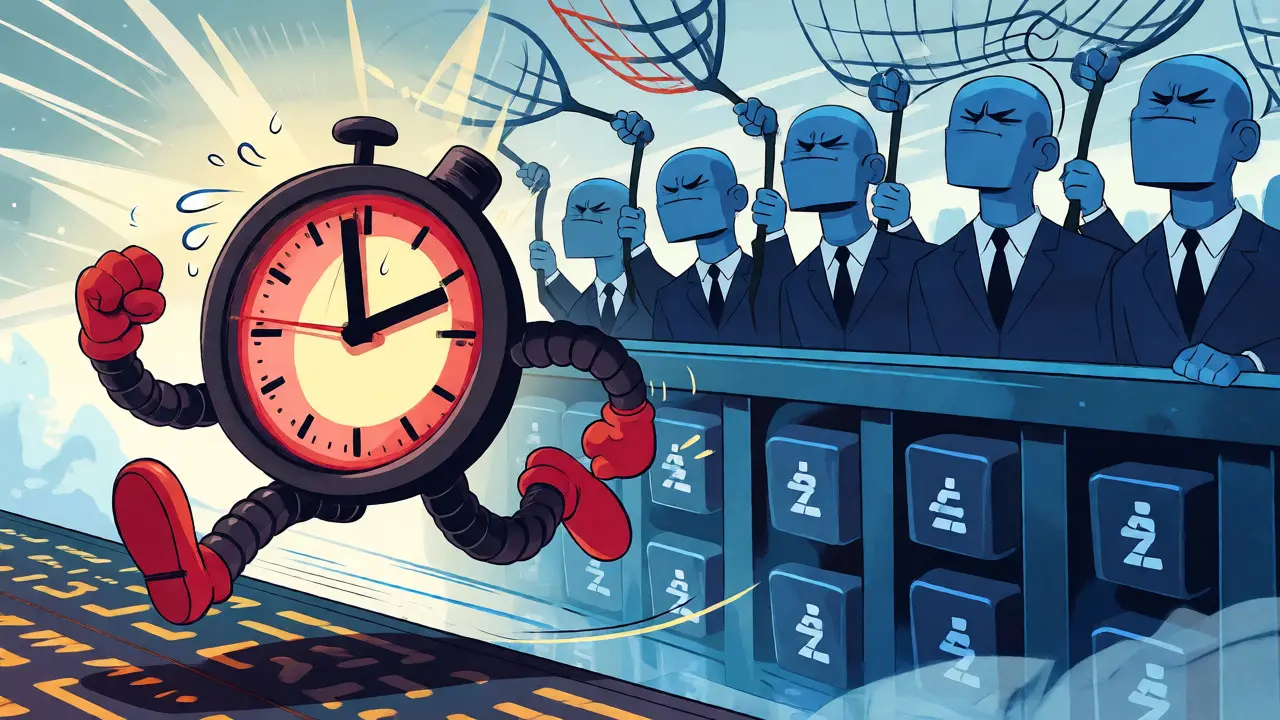
Timelocks: The Illusion of Time?
A timelock delays the execution of a proposed change. It sounds simple: wait X days, then execute. But here’s the catch: does that delay actually give you enough time to withdraw your funds? A 7-day timelock might be useless if your withdrawal route is congested or broken during an emergency.
Arbitrum uses a multi-step delay system. Routine upgrades take about 17 days total. This includes an 8-day L2 timelock, a ~6.4-day challenge period for messages moving from L2 to L1, and a 3-day L1 timelock. While 17 days seems safe, L2BEAT notes this falls short of the 30-day benchmark often cited for high-stage decentralization. More importantly, if the Security Council invokes emergency powers, these delays vanish entirely.
Optimism handles this differently. Their charter historically mentioned a 14-day period for upgrades, but current enforcement relies heavily on the Security Council and OP Foundation cooperation. If the Council acts, the timeline compresses. The critical insight? A timelock only protects you if the exit mechanism remains functional. If an attacker freezes withdrawals, a 30-day timer doesn't help if you can't initiate the transaction.
Security Councils: Who Holds the Keys?
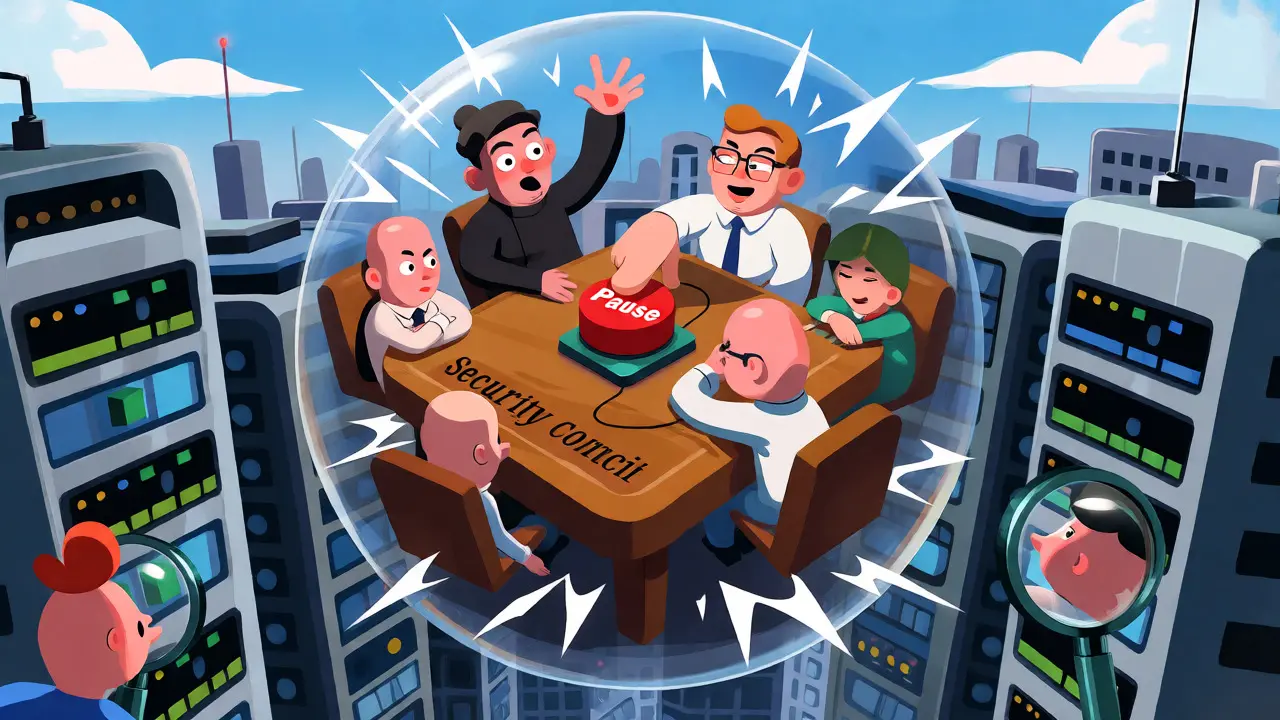
When things go wrong, someone has to sign the transaction. That’s the role of the Security Council. Think of them as a multisignature wallet with superpowers. They can pause the chain, veto upgrades, or deploy emergency fixes.
Let's look at how different networks structure these councils:
| Network | Council Size & Quorum | Emergency Powers | Routine Upgrade Path |
|---|---|---|---|
| Arbitrum | 12 members (9-of-12) | Immediate upgrade/pause without DAO vote | ~17 days (L2 + L1 delays) |
| Optimism | 13 members (10-of-13) | Pause chain, disable proof system | Requires Council + Foundation (2-of-2) |
| ZKsync | Multi-body (Council + Guardians) | Freeze protocol parts | Token Assembly + Council approval |
| Taiko | 9 members (7-of-9) | Instant encrypted upgrades | 5-of-9 approval + delay |
| Celo | 8 members (6-of-8) | Upgrade contracts with cLabs | No fixed rotation/elections |
Arbitrum’s dual-path model is notable. It splits the council into two cohorts. One path allows immediate emergency actions (like pausing a hack), requiring 9 signatures. The other follows regular governance, taking weeks. This separation aims to prevent hasty decisions from becoming permanent, though critics worry about the concentration of power in those 9 signers.
ZKsync takes a more complex approach involving three bodies: the Token Assembly, the Security Council, and the ZKsync Guardians. Emergency upgrades need approval from both the Guardians and the Foundation. This adds layers of checks but also potential bottlenecks. If one body disagrees, nothing happens.
Vulnerabilities and Real-World Risks
Governance isn't just theory; it breaks in practice. In 2026, we've seen issues across the board. For instance, Scroll recently dissolved its council, revealing gaps in monitoring. An incident involved gas fee multipliers being raised unilaterally, causing excess user fees. Because the council didn't oversee those specific operational parameters, users had little recourse until the issue was noticed.
Another risk is "capture." If council members are selected by the founding team rather than elected by the community, they may align too closely with corporate interests. Taiko’s council members were initially chosen by the team, including employees. While encryption hides emergency transactions until execution, verifying who signed what can be difficult for outsiders.
Also, consider the human element. Multisigs require coordination. If key members are offline, travel, or disagree, responses slow down. L2BEAT warns that adversaries might manufacture urgency to force quick, poorly reviewed approvals. A "pause" button operated by staked operators is sometimes recommended to buy time for proper review, separating immediate safety from long-term policy changes.
How to Evaluate a Rollup's Governance
Don't just read marketing claims like "DAO-governed." Dig into the technical docs. Here’s a checklist for your next due diligence session:
- Who proposes? Is it open to anyone, or restricted to token holders/delegates?
- Who executes? Does the DAO vote automatically trigger execution, or does a council still need to sign?
- What is the exit window? Calculate the *total* time from proposal announcement to your ability to withdraw. Include message relay times.
- Are emergency powers bounded? Can the council change economic parameters, or only fix bugs?
- Is membership rotating? Fixed terms reduce capture risk. Look for public identities and election processes.
If a network cannot answer these clearly, assume higher trust requirements. Check recent updates too. Documentation changes frequently. For example, Arbitrum’s FAQ was updated in early October 2026, reflecting recent pauses on Stylus contract activations. Always verify against live on-chain data if possible.
Frequently Asked Questions
What is a security council in blockchain rollups?
A security council is a multisignature group entrusted with powerful permissions, such as upgrading contracts, pausing the chain, or vetoing proposals. Unlike regular governance, which moves slowly, the council can act quickly in emergencies to protect user funds from hacks or bugs.
How long is the timelock on Arbitrum?
Routine upgrades on Arbitrum typically take about 17 days. This includes an 8-day delay on Layer 2, a roughly 6.4-day challenge period for cross-chain messages, and a 3-day delay on Layer 1. However, emergency actions by the Security Council can bypass these delays entirely.
Can I always withdraw my funds during an upgrade?
Not necessarily. While most rollups aim to keep withdrawal routes open, congestion, interface issues, or specific emergency measures could temporarily hinder exits. A timelock only protects you if the withdrawal mechanism remains functional throughout the delay period.
What is the difference between Stage 0 and Stage 1 rollups?
Stage 0 rollups rely heavily on trusted administrators for security and upgrades. Stage 1 rollups have made significant progress toward decentralization, such as having permissionless fraud proofs and longer user exit windows, though they may still retain some centralized control mechanisms like a security council.
Why do some rollups have multiple governance bodies?
Multiple bodies, like ZKsync’s Token Assembly, Security Council, and Guardians, create checks and balances. This reduces the risk of any single group acting maliciously or making errors, though it can also slow down decision-making and complicate accountability.





Write a comment