

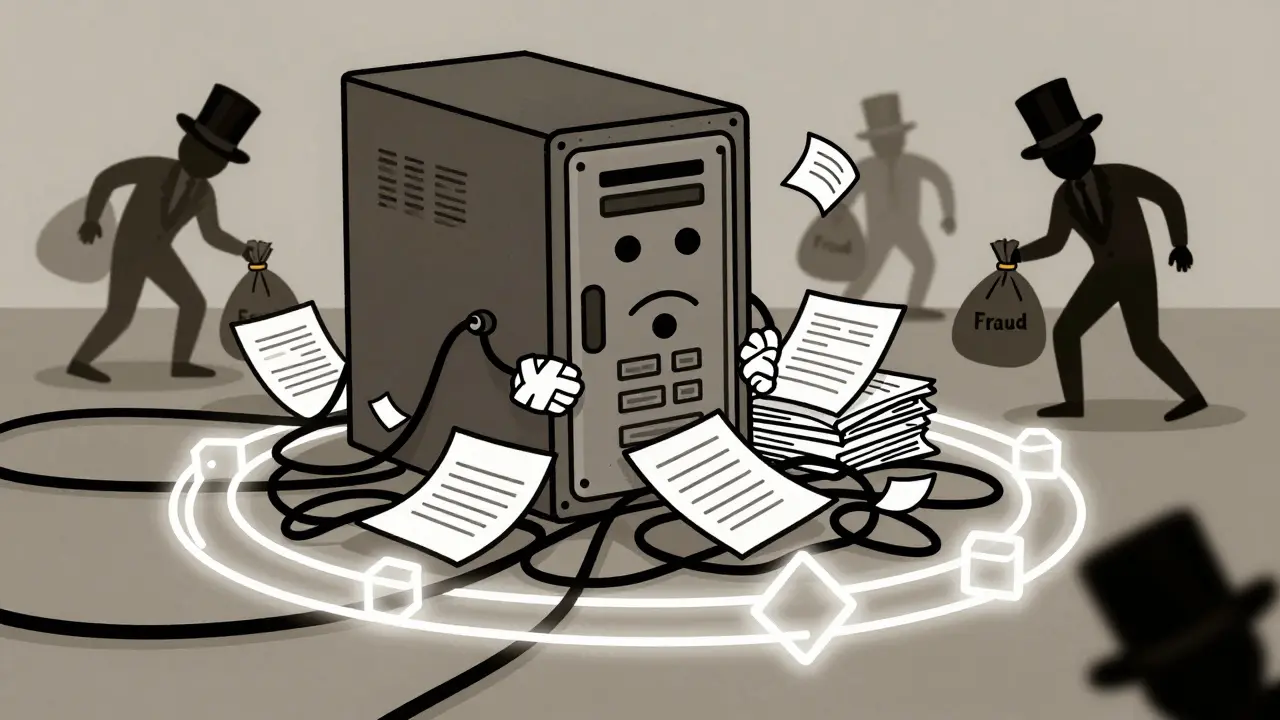

For years, the idea of putting telecommunications on blockchain is a distributed ledger technology that provides decentralized trust and security for digital transactions felt like science fiction. It sounded like buzzwords thrown together to impress investors. But as we move through mid-2026, that narrative has shifted dramatically. The conversation is no longer about whether blockchain can work in telecom; it’s about how fast operators can scale their existing pilots into revenue-generating infrastructure.
The stakes have never been higher. With the number of connected devices skyrocketing from 16.6 billion in 2023 toward an estimated 40 billion by 2030, traditional centralized databases are buckling under the weight of data management and security threats. Attacks on telecom infrastructure jumped 74% year-over-year recently, and the industry loses roughly $40 billion annually to fraud. Enter blockchain-not as a speculative crypto asset, but as a critical utility for identity verification, automated settlements, and secure device authentication.
From Proof-of-Concept to Production Reality
If you look at the landscape just two years ago, most efforts were stuck in the 'Trough of Disillusionment,' according to Gartner’s 2025 Hype Cycle. Many pilots failed because they couldn’t integrate with legacy Business Support Systems (BSS). But by early 2026, the tide turned. We are seeing real-world deployments that generate actual revenue rather than just internal efficiency gains.
Take Deutsche Telekom, for example. They aren't just testing the waters; they are generating multi-million-euro revenues from blockchain-based validation services. Similarly, Vodafone has embedded blockchain technology into 5.6 billion SIM cards, a move verified by GSMA Intelligence in late 2025. This isn't theoretical anymore. Binary Holdings is processing 950 million monthly transactions for 169 million users using these decentralized protocols. These numbers prove that the technology has matured enough to handle enterprise-grade loads.
The shift is driven by necessity. Traditional methods of verifying roaming partners or authenticating IoT devices involve manual checks that can take up to 72 hours. In contrast, blockchain-authenticated transactions process in approximately 1.2 seconds on permissioned enterprise chains. That speed difference changes everything for customer experience and operational costs.
Three Pillars of Telco-IoT Blockchain Integration
To understand why this expansion is happening now, you need to look at the three main architectural frameworks driving adoption. These aren't just technical upgrades; they represent fundamental changes in how telecom networks operate.
- Decentralized Identity Management: Using self-sovereign identity systems with zero-knowledge proofs, operators can verify user identities without storing sensitive personal data. Telefónica’s joint pilot with GSMA showed a 99% reduction in fraud during roaming scenarios. This means when you travel abroad, your phone connects securely without exposing your full credit history or personal details to foreign carriers.
- Decentralized Storage Networks: Instead of relying on centralized servers that are vulnerable to massive breaches, data is stored across distributed nodes. This setup ensures GDPR compliance by giving users granular control over who accesses their data. It transforms data sharing from a liability into a controlled asset.
- Tokenized Infrastructure Markets (DePIN): Decentralized Physical Infrastructure Networks allow operators to trade bandwidth dynamically. If one carrier has excess capacity in a stadium while another is overloaded, smart contracts automatically facilitate the exchange. This dynamic resource allocation has led to a 25% improvement in network efficiency in tested environments.

The Rise of DePIN and New Revenue Streams
One of the most exciting developments is the emergence of DePIN is Decentralized Physical Infrastructure Networks that tokenize physical assets like cell towers and Wi-Fi hotspots. The World Economic Forum valued the current DePIN market at $30-50 billion, with projections hitting $3.5 trillion by 2028. This model turns traditional telecom business models upside down.
Consider Helium, which demonstrates the viability of this approach by charging carriers $0.50 per gigabyte for community Wi-Fi offloading while offering consumers unlimited plans for $20 a month. By incentivizing individuals to host hardware, operators reduce capital expenditure on new tower builds. For IoT specifically, this means sensors in remote locations can connect via local node owners rather than waiting for expensive cellular backhaul installation.
Sateliot announced five new Low Earth Orbit (LEO) satellites launching in Q3 2026 to provide blockchain-secured narrowband 5G connectivity for IoT devices. This combination of satellite coverage and blockchain security opens up global logistics and agriculture monitoring in ways that were previously too costly or insecure.
Implementation Challenges and Real-World Friction
Despite the success stories, don't let the hype blind you to the difficulties. Implementing blockchain in telecom is not plug-and-play. The initial implementation costs are 37% higher than traditional system upgrades. You also face a severe talent shortage. According to IEEE’s 2025 workforce report, there are only 12,000 qualified blockchain telecom engineers globally. These specialists command salary premiums of up to 37%, particularly those skilled in Hyperledger Fabric.
Integration complexity remains the biggest hurdle. A typical enterprise identity verification deployment takes 9-12 months and requires a team of 15-20 specialists, including blockchain developers, telecom protocol experts (knowledgeable in SS7 and Diameter), and security auditors. Full DePIN tokenization can take 18-24 months.
Failure cases exist. Light Reading documented a major European telco’s abandoned 2024 blockchain billing pilot after 11 months. The system simply couldn’t process 1.2 billion daily transactions at the required throughput. AT&T’s 2025 technical assessment noted that blockchain underperforms in low-value, high-volume transactions due to consensus latency. It is unsuitable for real-time billing of sub-second voice calls. Knowing where *not* to use blockchain is just as important as knowing where to use it.
| Metric | Traditional System | Blockchain Implementation |
|---|---|---|
| Fraud Reduction | Baseline | 40% reduction in identity fraud |
| Network Efficiency | Static allocation | 25% improvement via dynamic trading |
| Roaming Verification Time | Up to 72 hours (manual) | ~1.2 seconds (automated) |
| Initial Cost | Standard | 37% higher |
| Talent Availability | Abundant | Critical shortage (12k global experts) |

Regulatory Landscape and Standards
Regulation is accelerating adoption rather than hindering it. The EU’s Digital Identity Wallet regulation, effective July 2025, mandates blockchain-based identity solutions for cross-border roaming. This forced many European operators to act quickly, resulting in 68% having active blockchain pilots-the highest rate globally.
In North America, the FCC’s 2025 Framework for Distributed Ledger Applications in Telecom created certification requirements for blockchain implementations handling subscriber data. Meanwhile, the GSMA’s Blockchain Roaming Settlement Standard v1.0 has a June 30, 2026 implementation deadline. As of January 2026, 87% of operators reported readiness for this standard.
Security standards are also tightening. ETSI released TS 103 619 in Q2 2025, mandating quantum-resistant cryptographic algorithms for future-proofing these networks. This ensures that today’s blockchain implementations won’t be obsolete tomorrow when quantum computing advances further.
What Comes Next?
We are standing at an inflection point. McKinsey’s January 2026 report concluded that operators integrating blockchain now will define the industry's future, while laggards will essentially fund their competitors' innovations. The convergence of AI-driven fraud detection with blockchain ledgers is projected to reduce false positives by 63%, combining the best of both technologies.
For enterprises looking to expand their IoT footprint, the message is clear: start small but think big. Focus on high-value scenarios like international roaming authentication or critical infrastructure device management. Avoid using blockchain for low-value, high-speed billing tasks where latency matters more than immutability. The tools are ready, the standards are set, and the economic case is proven. The question is no longer if you should adopt, but how quickly you can build the team to do it right.
Is blockchain suitable for all telecom operations?
No. Blockchain excels in high-value, trust-critical scenarios like roaming authentication, identity verification, and IoT device management. However, it underperforms in low-value, high-volume transactions such as real-time billing for sub-second voice calls due to consensus latency issues.
How much does implementing blockchain in telecom cost?
Initial implementation costs are approximately 37% higher than traditional system upgrades. Additionally, companies must account for specialized talent, with blockchain telecom engineers commanding up to a 37% salary premium due to a global shortage of only 12,000 qualified professionals.
What is DePIN in the context of telecom?
DePIN stands for Decentralized Physical Infrastructure Networks. It involves tokenizing physical assets like cell towers and Wi-Fi hotspots, allowing operators to trade bandwidth dynamically and incentivize community members to host hardware, potentially creating a $3.5 trillion market by 2028.
Which regulations are driving blockchain adoption in telecom?
Key regulations include the EU’s Digital Identity Wallet regulation (effective July 2025), which mandates blockchain-based identity for cross-border roaming, and the FCC’s 2025 Framework for Distributed Ledger Applications in the US. The GSMA’s Blockchain Roaming Settlement Standard v1.0 also has a June 2026 deadline.
How long does it take to deploy a blockchain solution in telecom?
Enterprise identity verification deployments typically require 9-12 months with a team of 15-20 specialists. Full DePIN infrastructure tokenization is more complex, taking 18-24 months to complete, involving integration with existing OSS/BSS systems.






Write a comment