

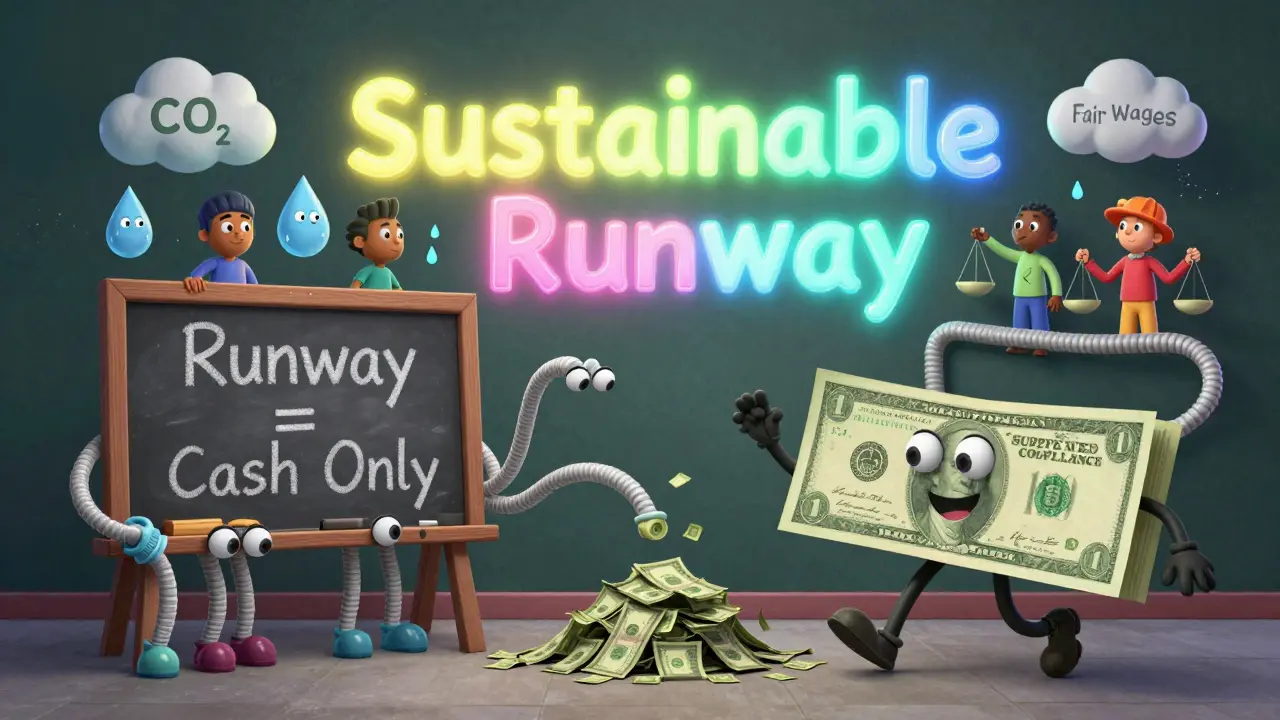

Most companies track how long their cash will last. That’s called treasury runway. But what if your runway isn’t just about money-it’s about carbon, water, and fairness too? If your treasury team is still only watching cash reserves and monthly burn rate, you’re missing half the picture. In 2026, sustainability isn’t a side project. It’s a financial requirement. And the companies that survive next decade will be the ones that tie their runway directly to their environmental and social performance.
What Treasury Runway Really Means Today
Runway used to be simple: cash on hand divided by monthly spending. If you have $1 million and spend $100,000 a month, you’ve got 10 months. Easy. But that math doesn’t work anymore if your next loan payment jumps 2% because you missed your emissions target. Or if your biggest supplier cuts you off because you didn’t meet their diversity standards. Runway today isn’t just about how long you can last-it’s about how long you’re allowed to last.
Take Smurfit Kappa. In 2020, they turned a $1.35 billion credit line into a sustainability-linked loan. Their interest rate dropped every year they hit targets on forest use, water waste, and worker safety. Miss a target? Rate goes up. That’s not a PR move. That’s finance. And it changed how their treasury team thinks. They stopped asking, “How much cash do we have?” and started asking, “How many sustainability points did we earn this quarter?”
The Three Pillars of Sustainable Treasury
Modern treasury doesn’t just manage cash. It manages three things:
- Environmental - How much CO2, water, and waste are you using per dollar of revenue?
- Social - Are your suppliers paying fair wages? Is your workforce diverse? Are you helping communities, not just extracting from them?
- Governance - Is your treasury strategy transparent? Are your ESG targets real, or just window dressing?
These aren’t soft goals. They’re financial levers. A 2023 study of 400 public companies showed firms with verified ESG-linked treasury metrics had a 17% lower cost of capital than those without. Investors don’t just want sustainability-they want proof it affects the bottom line.
How ESG Metrics Turn Into Financial Consequences
Here’s how it works in practice:
- Your treasury team sets a Sustainability Performance Target (SPT)-say, reducing Scope 1 and 2 emissions by 30% in three years.
- You tie that target to a loan or bond. If you hit it, your interest rate drops. Miss it? You pay more.
- Your treasury team now works with procurement, logistics, and HR to make sure every decision moves the needle.
- Quarterly, you report progress to investors. Not just revenue numbers. Carbon tons saved. Women in leadership. Supplier audits passed.
Tesco did this with a $1.2 billion sustainability-linked bond. They didn’t just say “we’re going green.” They said, “If we don’t cut emissions by 2027, we’ll pay 0.3% more on our debt.” That’s not marketing. That’s accountability.
Why Cash Runway Alone Is Dangerous
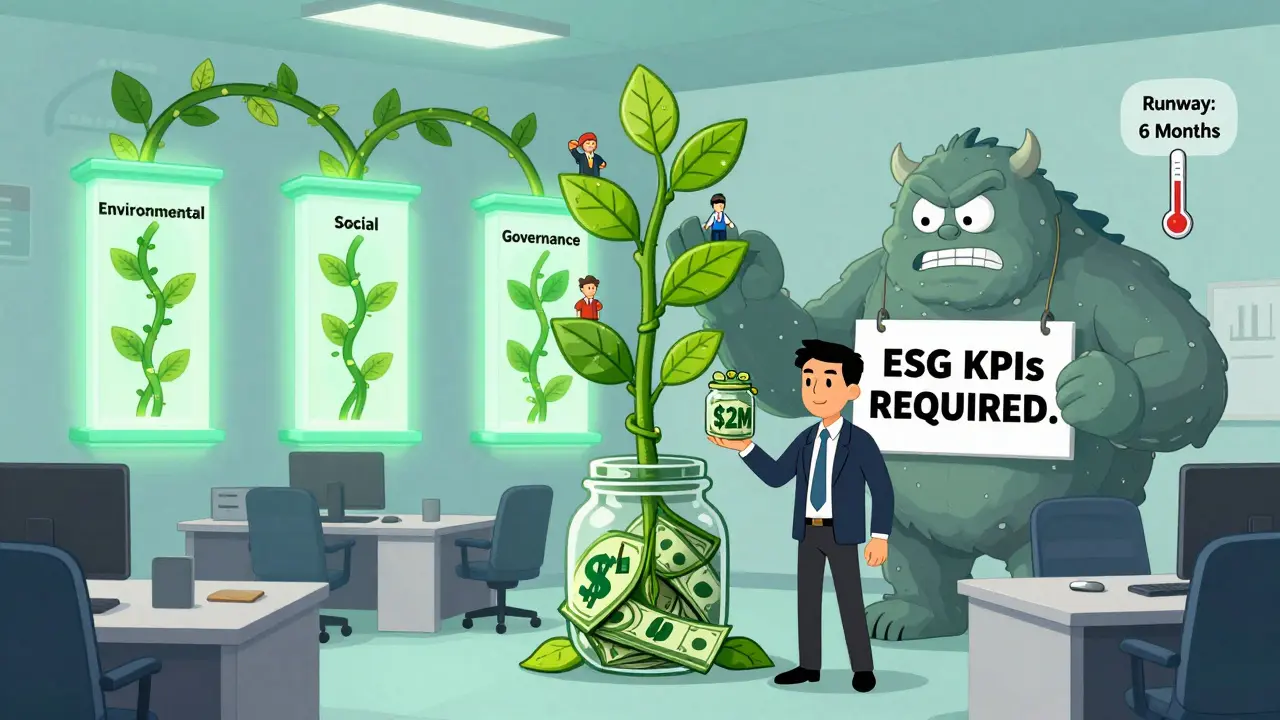
Imagine a startup with $2 million in cash, spending $200,000 a month. Runway: 10 months. Perfect. But what if 70% of that spending goes to a supplier that’s been fined for illegal deforestation? Or if their data center uses coal-powered electricity? Banks are now scanning supply chains before lending. Customers are walking away. Regulators are tightening rules. That 10-month runway? It could vanish in 3 months if your partners get blacklisted.
Traditional runway ignores external risk. Sustainable runway doesn’t. It asks: “Can we keep operating if our suppliers get cut off? If our energy costs spike because of carbon taxes? If our customers boycott us for poor labor practices?”
Companies that only track burn rate are flying blind. The ones that track both cash and compliance are building resilience.
The Metrics That Matter Now
Forget vague ESG reports. Here are the 5 metrics treasury teams are actually using in 2026:
- Carbon Cost per Dollar of Revenue - How much CO2 does each $1 of sales produce? Lower is better. Tesco cut this by 22% in two years.
- Energy Intensity - Energy used per unit of output. A factory that makes 100 boxes using 10 kWh? That’s better than 15 kWh.
- Supplier ESG Compliance Rate - What % of key suppliers meet your environmental and labor standards? Below 80%? You’re at risk.
- Runway Adjusted for ESG Risk - If you lose your green loan discount or face a $5M fine for non-compliance, how many months of runway do you actually have?
- Green Capital Ratio - What % of your total financing is tied to sustainability outcomes? Smurfit Kappa hit 65% in 2024.
These aren’t theoretical. They’re in loan agreements. They’re in investor presentations. They’re in audit reports.
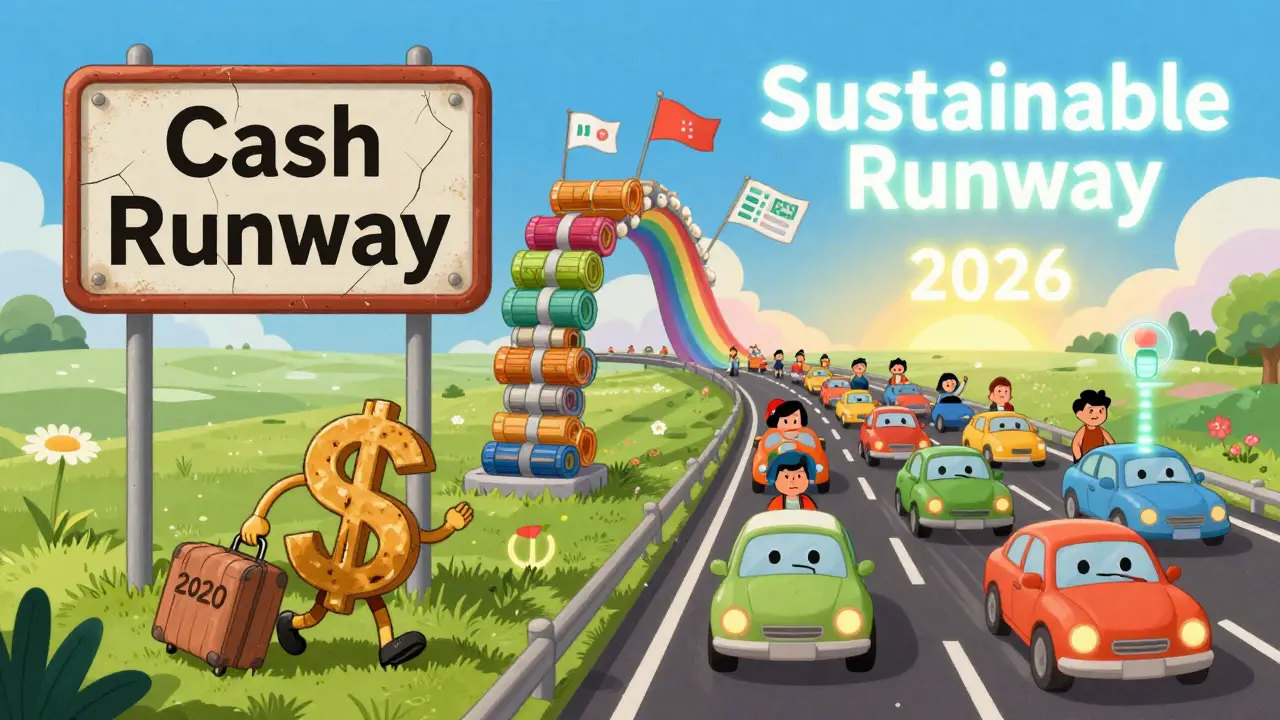
Greenwashing Is a Real Threat
Too many companies claim they’re sustainable while their treasury team still uses the same old spreadsheets. That’s greenwashing. And it’s getting caught.
Regulators in the EU and U.S. now require third-party verification of ESG-linked financial instruments. If you say you’re cutting emissions but can’t prove it with real-time data? You could face fines, lawsuits, or even loss of banking privileges.
The fix? Use verifiable data. Install smart meters. Track supplier emissions with blockchain logs. Partner with platforms like CDP or SASB. Don’t guess. Measure.
What Happens If You Ignore This?
Two things.
First, you’ll lose access to capital. Banks are pulling back from companies without clear ESG-linked treasury strategies. In 2025, 72% of new corporate loans required ESG KPIs. If you don’t have them, you’re not getting funded.
Second, you’ll lose customers. A 2025 survey found 68% of B2B buyers refused to sign contracts with vendors who couldn’t prove their treasury operations aligned with sustainability goals. Not because they’re “woke.” Because they’re afraid of supply chain disruption.
Ignoring sustainable runway isn’t lazy. It’s financially reckless.
Where to Start
You don’t need a $1 billion bond to begin. Start here:
- Map your top 3 spending areas: energy, logistics, payroll.
- Find one measurable ESG target for each-like reducing energy use by 15% in 18 months.
- Link one small loan or line of credit to that target. Even $500K works.
- Track progress monthly. Report it internally. Then to investors.
- Build the habit. Then scale.
Don’t wait for a mandate. Don’t wait for a crisis. The companies that survive the next five years aren’t the ones with the most cash. They’re the ones with the most transparent, accountable, and sustainable treasury operations.
What’s the difference between cash runway and sustainable runway?
Cash runway is how long your money lasts based on spending. Sustainable runway adds environmental and social risks: What if your supplier gets banned? What if your carbon tax doubles? What if your investors pull out because you missed an ESG target? Sustainable runway factors in those financial consequences. A company might have 12 months of cash-but only 6 months of sustainable runway if it’s at risk of losing its green financing.
Do small businesses need to worry about ESG treasury metrics?
Yes-even more than big companies. Smaller firms often rely on one bank for funding. If that bank starts requiring ESG KPIs (and most are by 2026), you’ll be cut off if you don’t comply. Plus, suppliers and customers are now screening small vendors for sustainability. A local manufacturer that can’t prove its materials are responsibly sourced won’t get orders from major retailers. ESG isn’t just for Fortune 500s anymore.
Can treasury teams create their own ESG targets?
They can, but they shouldn’t do it alone. Treasury should lead the financial side-setting measurable targets tied to cost-but must work with procurement, operations, and legal to ensure targets are realistic and verifiable. A target like “reduce emissions” is too vague. A target like “cut Scope 1 emissions by 20% by Q3 2027 using verified utility data” is actionable. The best targets are specific, time-bound, and auditable.
What’s the easiest way to start linking treasury to sustainability?
Start with your next financing decision. If you’re renewing a line of credit, ask your bank: “Can we make this a sustainability-linked loan?” Even if you only tie one metric-like energy use per unit produced-you’ll start building the infrastructure. Many banks now offer simple, low-cost SLLs for companies with as little as $5 million in revenue. The goal isn’t perfection. It’s momentum.
Are there tools to track sustainable treasury metrics?
Yes. Platforms like SAP Sustainability Control Tower, Workiva, and ESGIQ integrate with treasury systems to track cash flow alongside ESG KPIs. Some even auto-generate reports for investors. But you don’t need fancy software. Start with Excel: one tab for cash, one for emissions, one for supplier compliance. Update it weekly. Share it with your CFO. Build the habit before you buy the tool.






Write a comment