

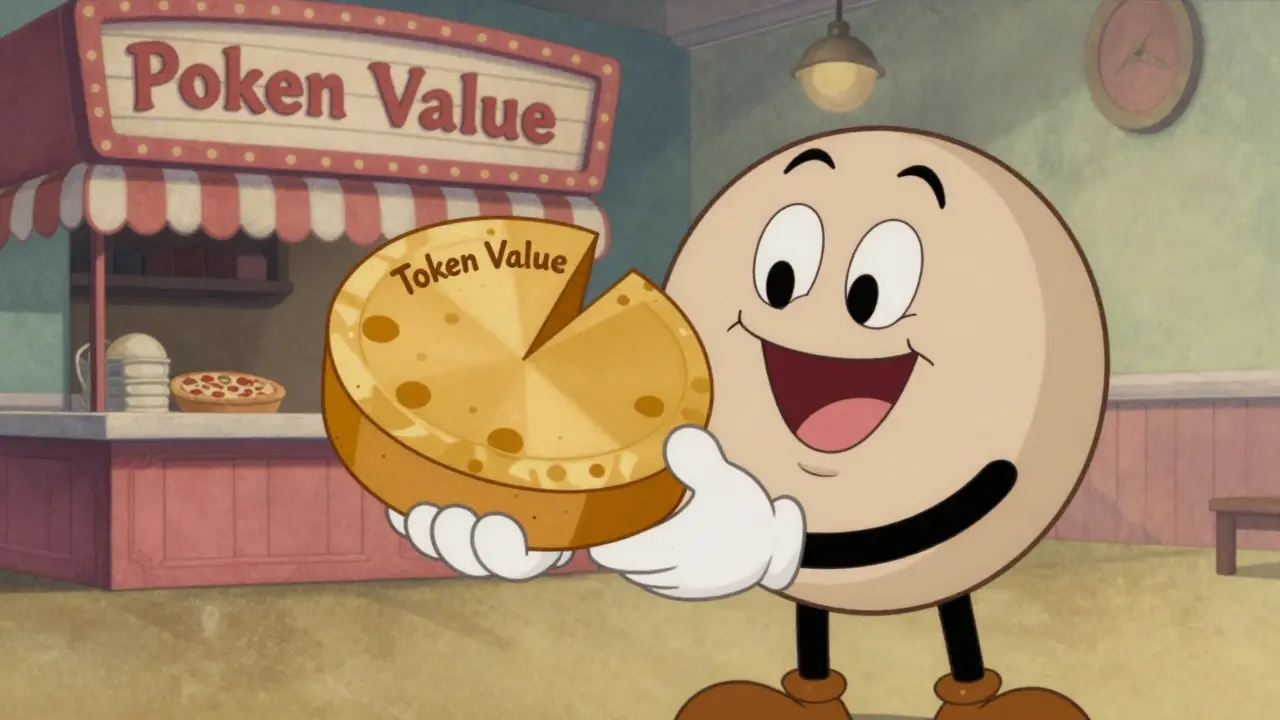

Imagine you own a slice of a pizza shop. If the shop makes money, you want that profit to somehow increase the value of your slice. In traditional business, this happens through dividends or stock buybacks. In the world of cryptocurrency, the rules are different, but the goal is the same: making sure the people holding the token a digital asset that represents ownership, utility, or governance rights within a blockchain protocol actually benefit when the network grows. This concept is called value accrual the economic mechanism by which a protocol's revenue or usage translates into increased value for its token holders.
For years, many crypto projects struggled with a simple problem: they generated massive fees, but those fees went nowhere useful. They stayed in a foundation wallet or were distributed as cash, which often triggered regulatory red flags. Today, designers use three main tools to fix this: burns the permanent destruction of tokens to reduce supply, buybacks the repurchase of tokens from the open market using protocol revenue, and fee distributions direct payouts of revenue to token holders, often via staking rewards. Each method works differently, carries distinct risks, and appeals to different types of investors.
The Mechanics of Token Burns
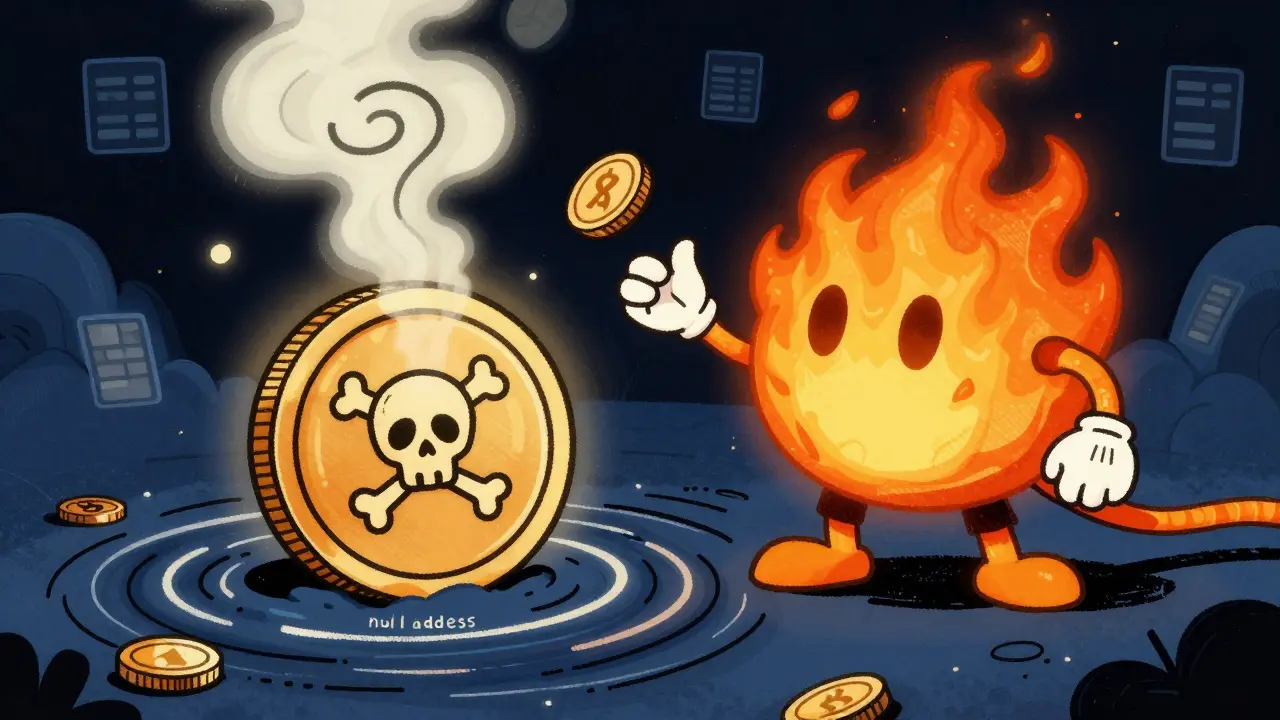
A token burn is the most direct way to create scarcity. When a protocol burns tokens, it sends them to an address that no one can access-often called a "dead" or "null" address. Once there, those tokens are gone forever. They cannot be sold, traded, or used. This reduces the total supply. If demand stays the same while supply drops, basic economics suggests the price should rise.
Ethereum the second-largest cryptocurrency platform by market capitalization, known for smart contracts and decentralized applications provides the clearest example of this at scale. Before August 2021, every transaction fee on Ethereum went to miners who secured the network. Then came EIP-1559 a protocol upgrade that changed how Ethereum handles transaction fees, introducing a base fee that is burned rather than paid to validators. This update introduced a "base fee" for every transaction. Instead of paying this fee to validators, the protocol automatically destroys it. By early 2023, over 3 million ETH had been burned. During periods of high network activity, the amount of ETH burned daily exceeded the new ETH created, making the asset temporarily deflationary. This isn't just theory; it’s visible on-chain data that anyone can check.
Exchanges also use burns aggressively. BNB the native token of the Binance ecosystem, originally launched as a utility token for fee discounts, the token behind the Binance exchange, committed to burning 50% of its initial supply. They do this quarterly, using a portion of their profits. As of 2023, more than 40 million BNB had been destroyed. The key difference here is intent: Ethereum’s burn is automatic and tied directly to usage (more transactions = more burns), while BNB’s burn is discretionary and tied to corporate profitability. Both reduce supply, but they signal different things about the project’s health.
Buybacks: The Corporate Playbook
If burns are about destroying supply, buybacks are about controlling it. A buyback occurs when a protocol uses its treasury or revenue to purchase its own token from the open market. Unlike a burn, the tokens aren’t necessarily destroyed immediately. They might be held in a treasury, used for future incentives, or eventually burned later.
This mirrors what companies like Apple or Amazon do with their stock. They buy back shares to reduce the number of shares circulating, which boosts earnings per share and supports the stock price. In crypto, this is often called "buyback and hold." However, the trend is shifting toward "buyback and burn," where the protocol buys the token and then instantly destroys it. This combines the market support of a buyback with the permanent supply reduction of a burn.
Jupiter a leading DEX aggregator on the Solana blockchain that routes trades across multiple liquidity pools, a major aggregator on the Solana network, offers a stark example of aggressive buybacks. In 2024, Jupiter committed 50% of its fee revenue to buying back its JUP token. At current volumes, this amounted to roughly $750 million annually. That’s not pocket change; it represents a significant chunk of the token’s circulating supply. By committing such a large percentage of revenue to buybacks, Jupiter signals to investors that the token has real economic backing. It turns the token from a speculative bet into an asset with a defined cash flow mechanism.
Another example is Hyperliquid a high-performance derivatives exchange built on its own Layer 1 blockchain. Instead of distributing fees to insiders, Hyperliquid directs revenue into buyback-and-burn operations. This creates a feedback loop: higher trading volume leads to higher fees, which leads to more buybacks, which reduces supply and potentially increases price, which attracts more traders. This "reflexive" loop is powerful, but it also means the token price becomes tightly coupled with short-term volume spikes.
Fee Distributions: The Dividend Model
Before burns and buybacks became dominant, many protocols tried direct fee distributions. This model pays holders directly, usually in stablecoins or the native token, based on how much they stake. Think of it like a dividend. You hold the token, you lock it up, and you get paid.
SushiSwap a decentralized exchange protocol that pioneered community-owned governance and fee sharing models famously used this approach with its xSUSHI token. Holders received a share of the trading fees generated on the platform. During peak DeFi seasons, annual percentage rates (APRs) soared into triple digits. It felt like free money. But there was a catch. Direct fee distributions raise serious regulatory concerns. In the United States, the Securities and Exchange Commission (SEC) views regular payments derived from the efforts of others as potential securities offerings. If a token acts too much like a stock paying dividends, regulators may step in.
Similarly, GMX a decentralized perpetual exchange on Arbitrum and Avalanche that distributes fees to stakers allocates 30% of its protocol fees to GMX stakers. While this attracted a loyal community seeking "real yield," it also exposed holders to volatility. When trading volumes dropped, so did the yields. More importantly, this model encourages "mercenary capital"-investors who only care about the immediate payout and will sell the moment yields dip elsewhere. This doesn’t build long-term alignment; it builds short-term dependency.
Comparing the Mechanisms
| Mechanism | Primary Effect | Regulatory Risk | Best For |
|---|---|---|---|
| Burns | Permanent supply reduction | Low | Projects wanting to emphasize scarcity and long-term holding |
| Buybacks | Market support and float reduction | Medium | Protocols with consistent revenue needing price stability |
| Fee Distribution | Direct income for holders | High | Established protocols in jurisdictions with clear legal frameworks |
The choice between these mechanisms depends on what the protocol wants to achieve. Burns are great for signaling confidence and creating scarcity without triggering security laws. Buybacks provide active market support and can be adjusted based on treasury health. Fee distributions offer immediate gratification but come with legal baggage and potential misalignment.
Interestingly, the industry is moving away from pure fee distributions. Research from Four Pillars Capital in 2024 argued that "revenue sharing is dead" because it leaks value out of the ecosystem. When you pay out cash, that money leaves the protocol. When you burn or buy back, that value stays within the token’s economy, benefiting all holders proportionally. This democratizes the upside. You don’t need to claim rewards or reinvest them manually; the price appreciation happens automatically for everyone holding the bag.
Implementation Challenges
Designing these systems sounds simple, but executing them is tricky. Protocols must decide how much revenue to allocate. Ten percent? Fifty percent? Too little, and investors ignore it. Too much, and the protocol can’t fund development or security audits.
Execution strategy matters too. If a protocol announces it will buy back $1 million worth of tokens tomorrow, traders might front-run the trade, driving up the price before the buyback happens. To avoid this, sophisticated protocols use algorithmic execution. They spread purchases over time, use randomized intervals, or employ Time-Weighted Average Price (TWAP) strategies. Virtuals an AI agent launchpad that implemented aggressive buyback programs for its partner tokens, for instance, used TWAP buybacks over 30-day periods to minimize market impact. This ensures the buyback supports the price steadily rather than causing a spike and crash.
Governance is another hurdle. Who decides when to burn? Should it be automated, like Ethereum’s EIP-1559, or voted on by token holders? Automated systems are transparent and trustless but inflexible. Governance-based systems allow adaptation but risk centralization if a small group of whales controls the vote. MakerDAO a decentralized autonomous organization that issues the DAI stablecoin and manages the MKR token has experimented with both, initially burning MKR tokens with surplus revenue and later using auctions to distribute value. Each shift required careful community coordination.
The Future of Token Economics
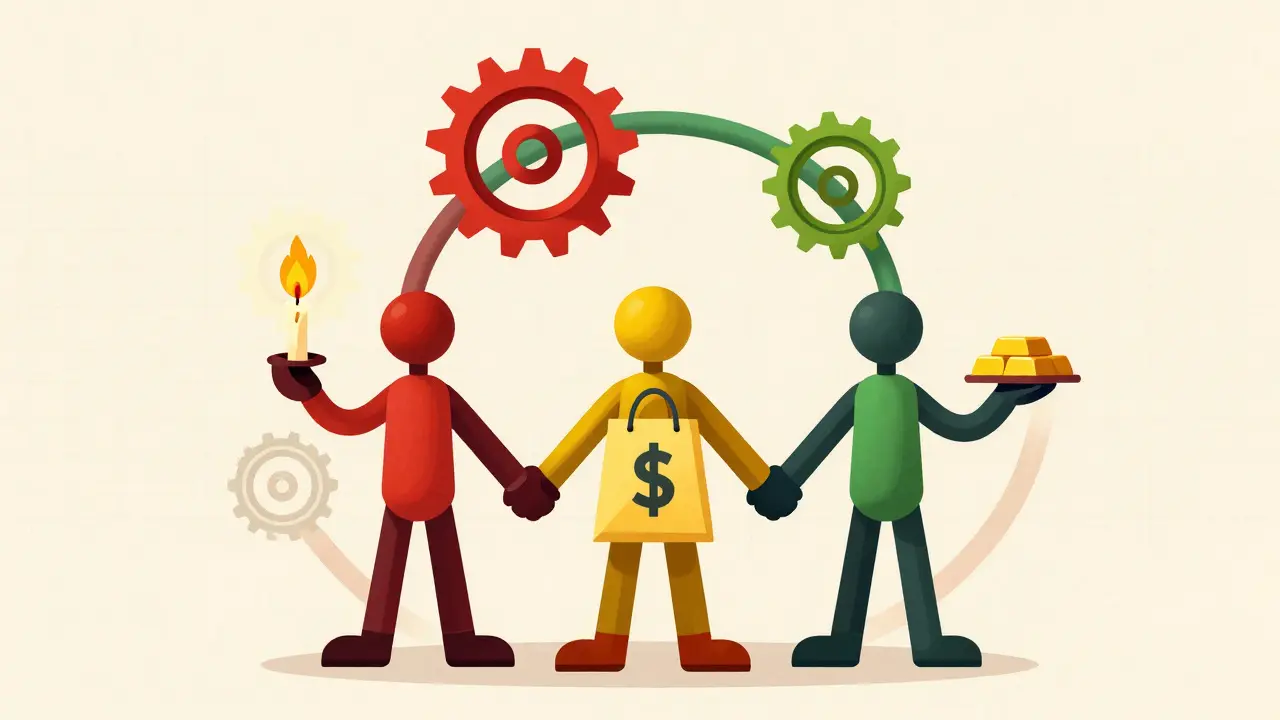
We are seeing a convergence of these models. Fewer projects rely on just one mechanism. Instead, they combine them. A typical modern design might include a small automatic burn on every transaction (like Ethereum), a periodic buyback funded by protocol fees (like Jupiter), and perhaps a modest staking reward for liquidity providers (like GMX). This hybrid approach balances scarcity, market support, and user incentives.
Regulation will play a huge role in shaping this evolution. As governments clarify their stance on digital assets, we may see more protocols adopt explicit fee distributions if they are deemed safe. Until then, burns and buybacks remain the safer, more politically neutral options. They focus on the asset’s intrinsic value rather than its income-generating capability, which tends to sit better with regulators wary of unregistered securities.
Ultimately, value accrual is about alignment. It answers the question: "Why should I hold this token instead of selling it?" If the answer is just "because it might go up," that’s speculation. If the answer is "because every trade on this network makes my slice of the pie larger," that’s investment. Burns, buybacks, and fees are the tools that turn speculation into structured economic participation.
What is the difference between a token burn and a buyback?
A token burn permanently destroys tokens, removing them from circulation forever. A buyback involves the protocol purchasing its own tokens from the market. These bought-back tokens can be held in a treasury, re-distributed, or eventually burned. Burns reduce total supply immediately; buybacks reduce circulating supply and can be reversed if the protocol sells the tokens again.
Why do some protocols prefer burns over fee distributions?
Burns are generally preferred because they carry lower regulatory risk. Direct fee distributions can be interpreted as dividends, potentially classifying the token as a security under laws like the Howey Test in the US. Burns keep value within the ecosystem by increasing scarcity, which benefits all holders without triggering the same legal scrutiny.
How does Ethereum's EIP-1559 work?
EIP-1559 introduced a base fee for every transaction on the Ethereum network. This base fee is automatically burned (destroyed) rather than paid to validators. The amount burned depends on network congestion. When usage is high, more ETH is burned, potentially making the asset deflationary if the burn rate exceeds the issuance rate.
Can buybacks manipulate the token price?
Yes, if not executed carefully. Large, sudden buybacks can cause artificial price spikes. To mitigate this, protocols often use algorithmic execution strategies like TWAP (Time-Weighted Average Price) or randomized intervals to spread purchases over time, minimizing market impact and preventing front-running by traders.
What is the "reflexive loop" in tokenomics?
A reflexive loop occurs when a token’s price increase drives more usage, which generates more revenue, which funds more buybacks or burns, further reducing supply and increasing the price. While this can accelerate growth, it also creates fragility. If usage drops, the loop reverses, leading to rapid devaluation.



Write a comment