

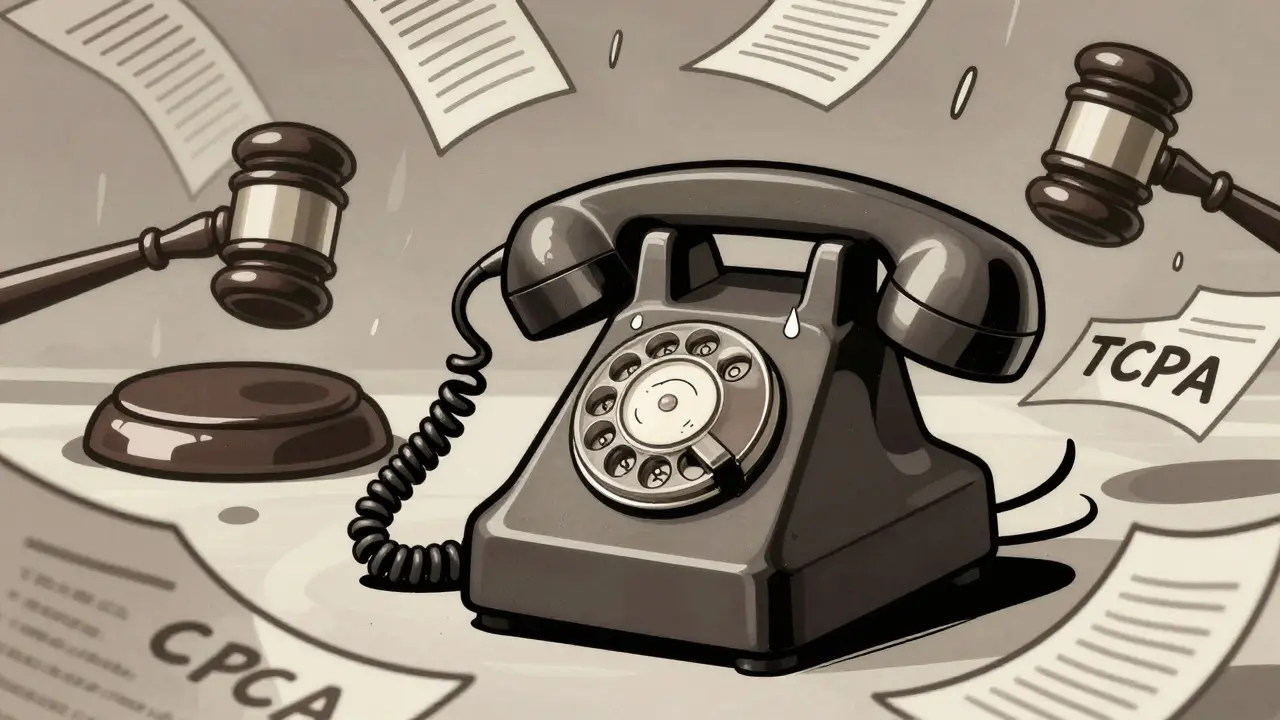

Running a telemarketing operation today isn't just about having the best script or the fastest callers. If you're using VoIP for telemarketing is a voice communication technology that allows firms to route calls over the internet rather than traditional phone lines , you're operating in one of the most heavily scrutinized industries in the world. Gone are the days of "light touch" regulation. Today, a single technical oversight in your dialer settings can lead to fines exceeding $240,000 per violation per day. Whether you are scaling a lead-gen engine or managing a large-scale outbound center, the intersection of technology and law is where your business lives or dies.
The Compliance Minefield: TCPA and Beyond
If you think the Telephone Consumer Protection Act (or TCPA) only applies to old-school landlines, you're in for a shock. Since a landmark 2019 ruling by the First Circuit Court of Appeals, VoIP services are treated exactly like cellular networks under the law. This means there is no longer a "loophole" for internet-based calling.
The most critical rule you need to know? Prior express written consent. As of late 2023, the FCC made it crystal clear: any prerecorded call or autodialed text is illegal unless the recipient has given you explicit, documented permission to call them from your specific company. You can't just buy a generic "opt-in" list and hope for the best. If your VoIP for telemarketing setup doesn't have a way to verify this consent before a call is triggered, you're essentially gambling with your company's bank account.
Then there is the Truth in Caller ID Act. This law stops you from spoofing numbers to trick people into picking up. While it might be tempting to rotate numbers to bypass filters, deceptive Caller ID practices are a fast track to an FTC investigation. In fact, the FTC has explicitly warned VoIP providers that "assisting and facilitating" these illegal calls makes them liable too, meaning your provider might drop you the moment they suspect you're playing fast and loose with the rules.
Managing Dialers in a Regulated Environment
Your dialer is the heart of your operation, but in 2026, it also needs to be your primary compliance officer. A modern dialer can't just be a tool that blasts numbers; it has to be an intelligent system that filters based on legal constraints.
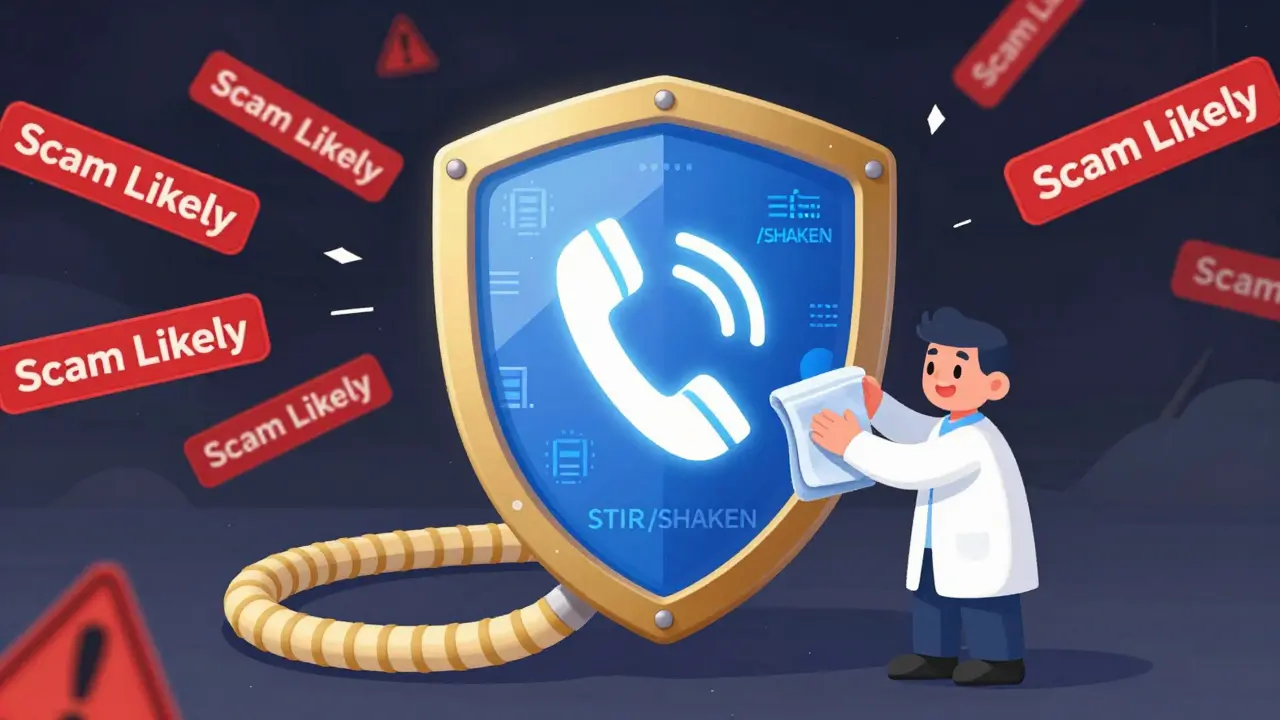
First, your system must integrate with the National Do Not Call Registry. There is no excuse for calling a number on this list. A compliant dialer should automatically scrub your lists against the registry in real-time. Second, you need to consider STIR/SHAKEN. This is a framework of protocols designed to authenticate caller ID. If your calls aren't "signed" and authenticated, they'll either be flagged as "Scam Likely" or blocked entirely by carriers. To keep your answer rates high, your VoIP infrastructure must support these authentication standards.
Moreover, if your business handles SMS, you have to deal with 10DLC (10-digit long code) registration. Sending bulk texts via an unregistered VoIP line is a great way to get your entire account banned. You need to register your brand and your campaign to ensure your messages actually reach the customer's handset.
Analytics and the CPNI Burden
Data is the secret sauce of telemarketing, but the way you collect and store it is strictly governed by CPNI (Customer Proprietary Network Information) rules. CPNI isn't just a name or a phone number; it's the data about who your customers call, how long they talk, and their general usage patterns.
The FCC requires annual CPNI certifications, usually due by March 1st. If you're collecting analytics on calling patterns to optimize your sales funnel, you must have a written data protection policy and a documented training program for your employees. If a breach occurs, you can't just send an email to your customers; you are legally required to report the breach to the FBI and the Secret Service. This turns a simple IT glitch into a federal matter very quickly.
| Regulation | What it Controls | Key Requirement | Risk of Non-Compliance |
|---|---|---|---|
| TCPA | Autodialing & Prerecordings | Prior Express Written Consent | Massive per-call fines |
| STIR/SHAKEN | Caller ID Trust | Digital Call Authentication | "Scam Likely" labels / Blocked calls |
| CPNI | Customer Call Data | Annual Certifications & Training | FCC enforcement & FBI reporting |
| Truth in Caller ID | Number Presentation | No deceptive spoofing | FTC injunctions & civil penalties |
The Technical Foundation: SIP Trunking and E911
Underneath all the dialers and dashboards is SIP Trunking. This is the technology that allows your VoIP system to connect to the global phone network. While it seems like a purely technical choice, SIP trunking is where many firms fail their audits. You must ensure your SIP provider is compliant with CALEA (Communications Assistance for Law Enforcement Act), which allows law enforcement to legally intercept calls. If your provider isn't CALEA-compliant, you're using a "shadow" network that could lead to your business being shut down during a federal sweep.
Then there is the often-overlooked requirement of E911. If an employee or a customer dials 911 through your VoIP system, that call must reach the correct Public Safety Answering Point (PSAP) with accurate location data. Thanks to Kari's Law and RAY BAUM's Act, you can't just have a generic office address; the system needs to provide precise location info. Failing to set this up doesn't just result in a fine-it can result in a loss of life, which is a liability no business can afford.
Avoiding the Federal Hammer: A Practical Strategy
How do you actually survive in this environment? You stop treating compliance as a "legal thing" and start treating it as a "technical thing." Your engineers and your lawyers need to be in the same room.
- Audit your consent flow: Map exactly how a customer says "Yes, you can call me" and ensure that timestamp is linked to the record in your dialer.
- Verify your provider: Ask your VoIP carrier for their FCC registration status and confirmation of STIR/SHAKEN support. If they can't provide a clear answer, switch providers.
- Automate the scrub: Don't rely on a weekly upload of the Do Not Call list. Use an API that scrubs numbers in real-time before the dialer even attempts the connection.
- Document everything: When the FCC asks for your CPNI training logs or your employee acknowledgments for E911 limitations, "we do it manually" is not an acceptable answer. Use a digital tracking system.
The current landscape is dominated by a 51-state Anti-Robocall Litigation Task Force. This means that even if you manage to dodge a federal fine, a state Attorney General might still come after you. The coordination between state and federal agencies is at an all-time high, making the "move fast and break things" approach a death sentence for telemarketing firms.
Does the TCPA apply to VoIP if I'm not using a traditional phone company?
Yes. A 2019 court ruling established that VoIP and hybrid services are subject to the same TCPA regulations as traditional cellular and landline networks. You cannot avoid TCPA compliance by switching to an internet-based calling system.
What happens if I miss the March 1st CPNI certification deadline?
Missing the CPNI filing deadline often triggers immediate FCC enforcement action. This can result in substantial fines and increased regulatory scrutiny of your entire operation.
Can I use a prerecorded message if the customer opted-in via a website form?
Only if the form explicitly authorized prerecorded calls or autodialed texts from your specific seller. General "consent to be contacted" is often not enough to satisfy the FCC's strict "prior express written agreement" standard for automated content.
What is the difference between STIR/SHAKEN and Caller ID spoofing?
Caller ID spoofing is the illegal act of transmitting a deceptive number. STIR/SHAKEN is the technical solution-a set of protocols that digitally "signs" a call to prove the number is legitimate. Implementing STIR/SHAKEN prevents your calls from being marked as spam.
Do I need to report a CPNI breach to the police?
Yes. According to FCC regulations, if Customer Proprietary Network Information (CPNI) is breached, you must report the incident to both the FBI and the Secret Service.






James Boggs
18 Apr 2026 at 09:51This is most helpful. I appreciate the clarity on STIR/SHAKEN.