

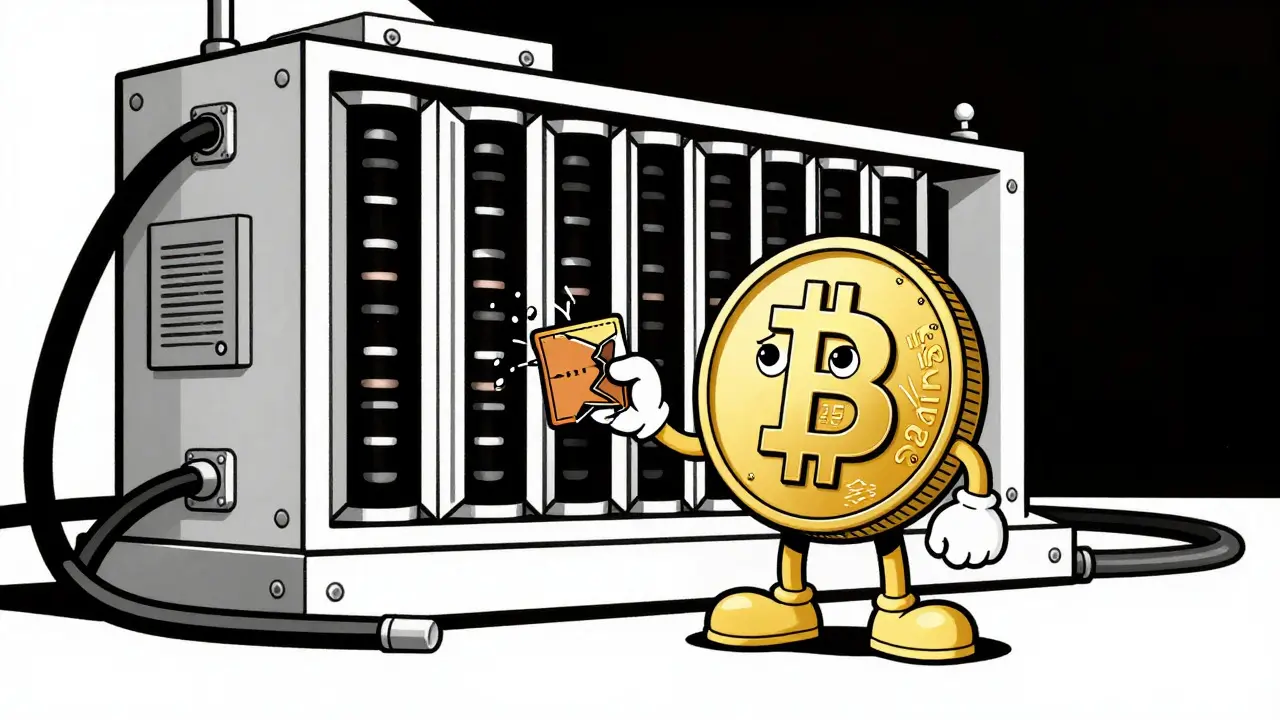

The April 19, 2024 Bitcoin halving cut block rewards in half. Overnight, miners saw their primary income source drop from 6.25 BTC to 3.125 BTC per block. For many operators, this wasn't just a dip in revenue; it was an existential crisis. The margin for error vanished. Those who relied on outdated hardware or expensive electricity found themselves underwater immediately. But for those who adapted, the landscape shifted from a gold rush to a sophisticated industrial operation. Today, in mid-2026, the industry has stabilized, but only after a brutal period of consolidation. If you are running a mining operation or investing in one, understanding the three pillars of survival-efficiency, fees, and hedging-is no longer optional. It is the baseline.
Efficiency Upgrades: The Race for Lower Joules
When the subsidy drops, your cost per coin becomes your lifeline. The most immediate response to the 2024 halving was a massive push toward energy efficiency, which refers to reducing the amount of electrical power required to generate a specific amount of hashing power. In the pre-halving era, buying the cheapest available ASICs often made sense. Post-halving, that strategy kills you. You need machines that deliver more hashes per watt.
Let’s look at the numbers. Before the halving, efficient operations could mine a bitcoin for roughly $10,000 to $15,000. As older, less efficient rigs were forced offline, the network difficulty adjusted, but the cost floor rose sharply. Estimates suggest that without upgrading, some miners faced production costs exceeding $40,000 per coin. That is unsustainable unless the price of Bitcoin skyrockets beyond all reasonable projections. So, what did successful miners do? They swapped out legacy hardware for the latest generation of Application-Specific Integrated Circuits (ASICs). These newer models aren't just faster; they are smarter about power consumption. Firmware optimization also played a huge role. Tweaking voltage settings and cooling systems can squeeze out an extra 5-10% in efficiency without buying new gear.
But hardware is only half the battle. Location matters more than ever. We saw major players like BigBlock Datacenter close operations in high-cost regions like France. Why pay premium European electricity rates when you can operate in Kazakhstan or Siberia where power is abundant and cheap? This geographic diversification isn't just about saving money; it's about securing long-term contracts with regional power providers. Large miners now negotiate lower tariffs by leveraging their massive energy consumption. If you are stuck in a region with volatile or high energy prices, your business model is broken. You either move, or you merge.
Capturing Transaction Fees: The New Revenue Stream
For years, transaction fees were a rounding error in miner revenue. Not anymore. With the block subsidy halved, fees represent a significantly larger percentage of total income. This shift forces miners to think like service providers rather than just number crunchers. Transaction fee capture involves strategically prioritizing transactions with higher fees during periods of network congestion to maximize revenue per block.
How does this work in practice? When the Bitcoin network gets congested-say, during a bull market surge or a spike in Layer-2 activity-users compete to get their transactions confirmed quickly. They bid up the fees. Miners who position their nodes to prioritize these high-fee transactions can earn substantial supplemental income. Historical data from the 2012 and 2016 halvings shows that while block rewards dropped, price increases eventually drove volume up, boosting fee revenue. However, relying solely on this is risky because it depends on user behavior.
Smart miners are preparing for this by managing their liquidity carefully. In the months leading up to previous halvings, we saw mining pools decrease their aggregate balances as operators built cash reserves. This allowed them to weather the initial revenue shock and invest in infrastructure that helps capture fees better. By 2024, established miners had learned this lesson. They held reserves longer, timing their sales to coincide with bull market phases rather than panic-selling immediately before the halving. This strategic patience allows them to fund the operational flexibility needed to chase fee revenue when it spikes.
Treasury Hedging: Managing the Asset, Not Just the Hashrate
Mining Bitcoin doesn't mean you have to sell it immediately. In fact, post-halving, treating your mined coins as a treasury asset is crucial. Treasury hedging refers to strategic management of Bitcoin holdings to protect against price volatility and ensure operational stability. Many smaller miners failed because they sold every coin they mined to cover daily expenses. When prices dipped, they couldn't afford to keep running. Larger, public companies adopted a different approach: hold and hedge.
This means accumulating Bitcoin during bearish or neutral periods and selling strategically during bullish runs. It turns the mining company into a dual-role entity: part operator, part investor. This requires sophisticated financial planning. You need to forecast your burn rate-the amount of cash you need for electricity, maintenance, and salaries-and only sell enough Bitcoin to cover that. The rest stays in the treasury, appreciating in value over time. This strategy protects you from short-term price swings. If Bitcoin drops 20% next month, you don't care if you've already secured your operating capital for the quarter and hold the majority of your output as an asset.
We also see the rise of lean operations. Companies are cutting non-essential spending and focusing purely on core efficiency. This includes optimizing capital expenditure. Instead of buying every new machine released, they wait for proven reliability and better pricing. They build cash buffers to survive periods of low profitability. This discipline separates the survivors from the casualties.
Consolidation and the End of the Wild West
The 2024 halving accelerated a trend that started earlier: consolidation. The era of the backyard miner is effectively over. We saw significant industry restructuring, with smaller players exiting or being acquired. Core Scientific, a major U.S. player, filed for bankruptcy post-halving. While this was a restructuring, it signaled deep financial stress across the sector. Estimates suggest up to 800,000 individual miners ceased activities due to falling prices and inability to cover costs.
Who won? Publicly traded mining firms. They control record percentages of Bitcoin's hash rate today. Why? Because they have access to cheaper capital. They can borrow money at lower rates to buy the best equipment and secure the best power deals. Smaller miners, often leveraged with debt at rates reaching 25%, couldn't compete. Their equipment became obsolete quickly, and lenders were left holding collateral that lost value rapidly. This bifurcation creates a more centralized industry. While decentralization is a core tenet of Bitcoin, the mining layer is becoming increasingly industrialized and concentrated among well-capitalized giants.
| Factor | Pre-2024 Halving | Post-2024 Halving (2026 Context) |
|---|---|---|
| Block Reward | 6.25 BTC | 3.125 BTC |
| Avg. Cost Per Coin | $10,000 - $15,000 | $25,000+ (for inefficient ops) |
| Fee Importance | Negligible | Critical Supplement |
| Industry Structure | Fragile, Distributed | Consolidated, Centralized |
| Key Survival Trait | Hashrate Volume | Energy Efficiency & Liquidity |
Financial Risks and Leverage Traps
One of the biggest killers post-halving was over-leverage. Many firms borrowed heavily to expand their fleets right before the reward cut. When revenues dropped, they couldn't service the debt. Interest rates on some mining loans hit 25%. Combine that with rising energy costs and a static or dropping Bitcoin price, and you have a recipe for disaster. Lenders are now wary. They face exposure to defaults and end up with piles of ASICs that lose value faster than smartphones. If you are considering financing for your mining operation, tread carefully. Cash flow must be robust enough to handle worst-case scenarios. Do not bet the farm on a price pump.

Network Security and Hashrate Implications
There is a broader concern here: network security. If too many miners go offline, the total hashrate drops. A lower hashrate makes the network potentially more vulnerable to attacks. Luxor's Hashrate Index Research Team projected that 3-7% of Bitcoin's hashrate could go offline if prices remained stagnant, rising to 16% if prices declined significantly. However, the consolidation we discussed earlier mitigates this risk. Large miners stay online because they can absorb losses better. They stabilize the hashrate even when margins are compressed. The network remains secure, but the participants are fewer and larger.
Looking Ahead: Strategic Requirements for 2026 and Beyond
So, what does this mean for you in 2026? The window for easy profits is closed. Success now requires a holistic strategy. You need to manage your ASICs like a fleet, optimizing firmware and replacing units before they become inefficient. You need aggressive cost reduction through energy negotiation and geographic placement. You need a treasury policy that hedges against volatility. And you need to participate in mining pools to smooth out revenue variance.
If you lack the capital for upgrades, the flexibility to relocate, or the reserves to weather storms, you are at high risk. The industry has reshaped itself into an industrial powerhouse dominated by players with superior access to capital, energy, and technology. Adapt or exit. There is no middle ground.
Is Bitcoin mining still profitable after the 2024 halving?
Yes, but only for highly efficient operations. Profitability now depends on having low-cost electricity, modern ASIC hardware, and effective treasury management. Small-scale miners with high energy costs or old equipment are likely unprofitable.
What is the average cost to mine one Bitcoin in 2026?
Costs vary widely based on location and hardware. Efficient large-scale miners may produce Bitcoin for under $20,000, while inefficient operations can face costs exceeding $40,000 per coin.
Why are transaction fees more important now?
With block rewards halved, transaction fees make up a larger portion of total miner revenue. During network congestion, fees can provide significant supplemental income, making fee capture a critical strategy.
Should I join a mining pool?
Yes, especially for smaller operations. Pools provide more predictable cash flow by distributing rewards based on contributed hash power, reducing the variance inherent in solo mining.
How does geographic location affect mining profitability?
Electricity cost is the largest operational expense. Locations with cheap, stable power like parts of North America, Kazakhstan, and Siberia offer a significant advantage over high-cost regions like Western Europe.







Write a comment