

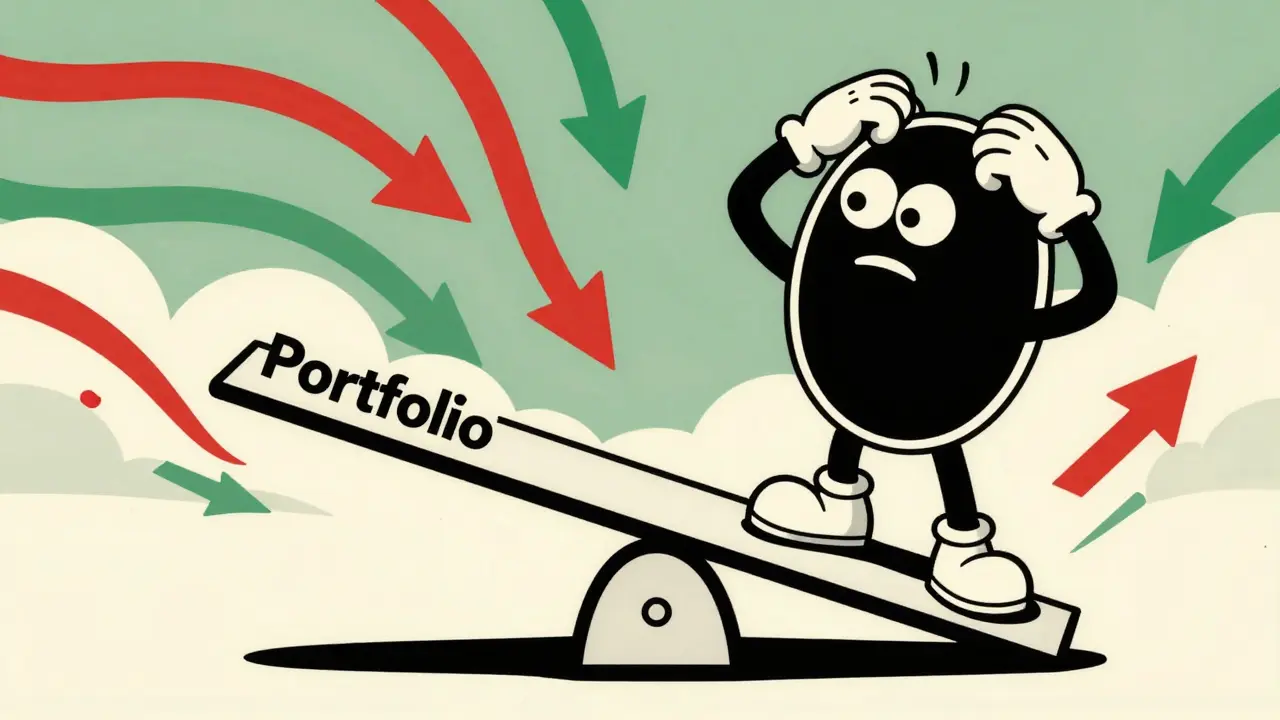

Have you ever felt like the cryptocurrency market is playing a cruel joke? One day, your portfolio looks promising, and the next, it’s bleeding red. It feels chaotic, right? But what if I told you that this chaos follows a script? The Cryptocurrency Market Cycles are not random walks; they are recurring patterns driven by human psychology and supply dynamics. Understanding these cycles isn't just about making money-it's about surviving the emotional rollercoaster without throwing in the towel.
In 2026, we are seeing mature markets, but the core mechanics remain unchanged since Bitcoin's early days. Whether you are holding spot positions or trading derivatives, knowing where you stand in the cycle is the difference between wealth creation and catastrophic loss. Let’s break down exactly how these cycles work, why they repeat, and how to spot the traps before they snap shut.
The Four-Phase Cycle: More Than Just Up and Down
Most people think of crypto as simply "up" or "down." That’s too simple. The market moves through four distinct phases, each with its own characteristics, risks, and opportunities. Recognizing which phase we are in helps you adjust your strategy accordingly.
- Accumulation: This happens after a crash. Prices stabilize, and the news is quiet or negative. "Smart money"-institutional investors and experienced traders-quietly buy up assets at low prices while retail investors are still traumatized from the previous bear market. Innovation continues under the radar, but public interest is low.
- Markup (Expansion): Prices start rising. News becomes positive. New users enter the market. You see consistent higher highs and higher lows on charts. This is the classic bull run phase where FOMO (Fear Of Missing Out) begins to set in.
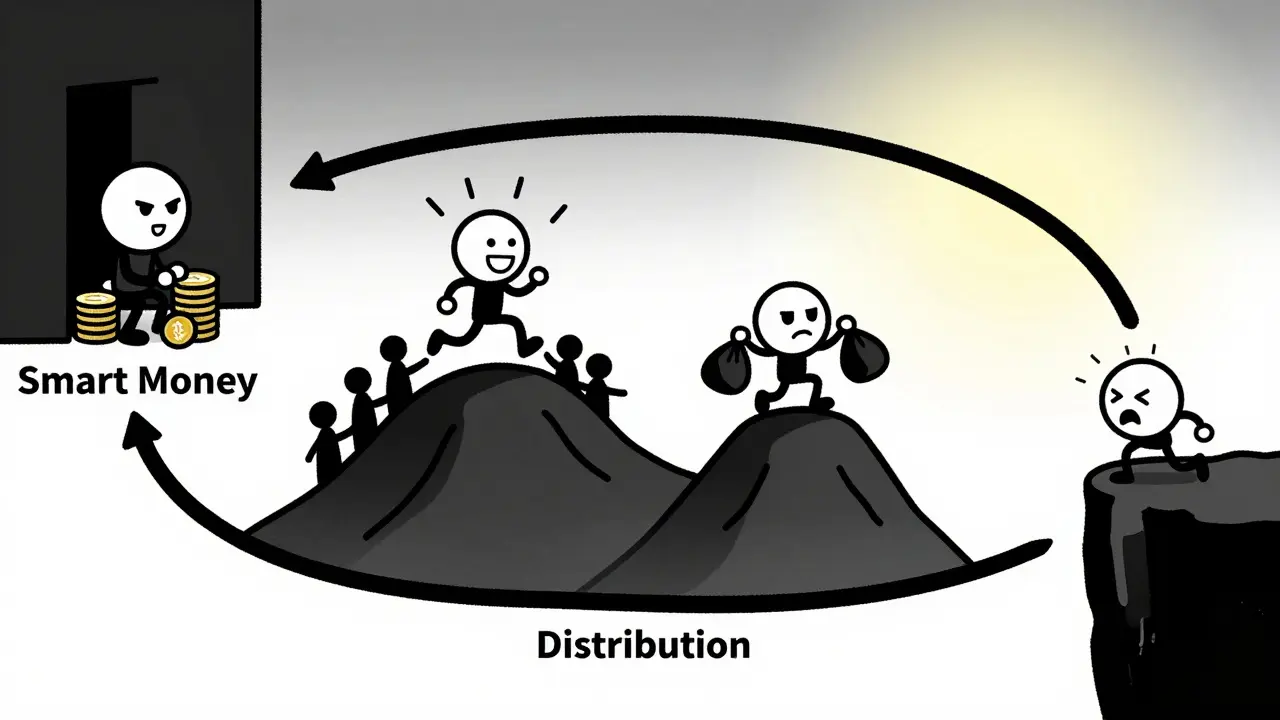
- Distribution: Growth slows down. Volatility spikes. Early investors start selling their profits to latecomers. The media is overwhelmingly bullish, and everyone seems to be talking about crypto. This is often the most dangerous time because greed overrides caution.
- Markdown (Correction): Selling pressure dominates. Prices drop sharply, often 60-80% from all-time highs. Panic sets in. Sentiment turns deeply negative. This phase clears out weak hands and eventually leads back to Accumulation.
The key takeaway here is timing. Buying during Accumulation requires patience. Buying during Distribution requires luck. Most losses happen when people mistake Distribution for Markup.
The Catalysts: Halvings, Liquidity, and Regulation
What triggers these massive swings? Two main factors dominate the narrative: Bitcoin’s halving events and global liquidity cycles.
Bitcoin’s Halving Event is a programmed reduction in the reward miners receive for securing the network, cutting issuance by 50% approximately every four years. Historically, this supply shock has preceded bull markets. However, don’t rely on halving alone. In 2026, we know that liquidity matters more. When central banks expand money supplies, risk assets like crypto benefit. When they tighten policy, crypto suffers. Always check the broader macroeconomic environment alongside the halving calendar.
Regulation also plays a huge role. Positive regulatory clarity can spark adoption, while bans or crackdowns can trigger bear markets. For instance, past events like China banning mining or the collapse of major exchanges like FTX created significant downturns. Conversely, institutional adoption, such as countries accepting Bitcoin as legal tender, has fueled rallies. Keep an eye on legislative news; it’s not just noise-it’s fuel.
Bull Traps and Bear Traps: The Silent Killers
If you’ve lost money recently, you might have fallen for a trap. These deceptive patterns are designed to shake out weak holders and lure in inexperienced buyers.
A Bull Trap occurs when price breaks above a resistance level, convincing traders the uptrend is resuming. They buy in, only for the price to quickly reverse and plummet. This often happens on low volume. Whales may push the price up slightly to attract liquidity, then dump their holdings. Look for bearish divergence: if the price makes a higher high but indicators like RSI or MACD make a lower high, momentum is fading. Also, watch out for ascending wedges-a pattern that looks bullish but breaks downward 70% of the time in crypto.
A Bear Trap is the opposite. Price drops below support, triggering panic sells and stop-losses. Then, it reverses sharply upward, leaving sellers holding the bag. This is common in strong bull markets. If you see price breaking support on low volume followed by a rapid reclaim, it’s likely a trap. Weekend dips are notorious for this because order books are thinner, and it takes less capital to move prices artificially.
Reading the Charts: Technical Signals That Matter
You don’t need to be a technical analyst genius, but understanding a few key signals can save you thousands.
- Volume Confirmation: Price moves without volume are suspect. A breakout needs high volume to be valid. Low-volume breakouts are often traps.
- RSI Divergence: As mentioned, if price goes up but Relative Strength Index (RSI) goes down, strength is waning. This is a warning sign of a potential reversal.
- Fibonacci Retracement: In healthy trends, pullbacks often find support at the 50% Fibonacci level. If price crashes through this level, the trend may be broken.
- Bull Flags: After a sharp rise (the flagpole), price consolidates in a tight range (the flag). A breakout from this consolidation usually continues the original trend. This is a reliable continuation pattern in bull markets.
Remember, no indicator is perfect. Use them together. Volume confirms price action, and oscillators like RSI confirm momentum.

Psychology: The Real Driver of Markets
Markets are not just numbers; they are emotions. Fear and greed drive price movements far more than fundamentals do in the short term.
In bear markets, fear causes irrational selling. People sell at the bottom because they believe the pain will never end. In bull markets, greed causes irrational buying. People buy at the top because they believe the gains will never stop. The cycle resets because human nature doesn’t change.
To succeed, you must act contrary to the crowd. Buy when others are fearful (during Accumulation). Sell when others are greedy (during Distribution). This sounds easy but is incredibly difficult emotionally. Developing a written plan and sticking to it removes emotion from the equation.
| Feature | Bull Market | Bear Market |
|---|---|---|
| Sentiment | Optimism, Greed, FOMO | Fear, Pessimism, Hopelessness |
| Price Action | Higher Highs, Higher Lows | Lower Highs, Lower Lows |
| Liquidity | High (Easy to trade large sizes) | Low (Slippage increases) |
| Volatility | Moderate to High (Upward bias) | Very High (Downward bias) |
| Best Strategy | Buy and Hold, Trend Following | Cash Preservation, Shorting, Dollar Cost Averaging |
Navigating the 2026 Landscape
As we move through 2026, the crypto market is maturing. Institutional players are more dominant, and regulations are clearer in many jurisdictions. This means cycles might be less extreme but still present. The compression of cycles means you have less time to react. Speed and accuracy matter more than ever.
Don’t get distracted by daily noise. Zoom out. Look at weekly and monthly charts. Short-term volatility is normal. Long-term trends tell the real story. If you are building wealth, focus on the multi-year horizon. If you are trading, respect the current phase and manage risk strictly.
The goal isn’t to predict the future perfectly. It’s to position yourself so that when the inevitable shifts occur, you are prepared rather than panicked. Stay informed, stay disciplined, and remember: the cycle always continues.
How long do typical cryptocurrency market cycles last?
Historically, crypto cycles have aligned closely with Bitcoin’s four-year halving schedule. However, individual phases vary. Accumulation can last 12-18 months, while bull runs (Markup) often peak within 12-24 months post-halving. Bear markets (Markdown) typically last 12-18 months. In 2026, with increased institutional involvement, cycles may become slightly shorter and less volatile, but the four-year rhythm remains a strong baseline.
What is the best strategy during a bear market?
The best strategy is preservation and preparation. Avoid panic selling. Instead, use dollar-cost averaging (DCA) to accumulate quality assets at discounted prices. Focus on projects with strong fundamentals and active development. Keep a portion of your portfolio in stablecoins or cash to maintain liquidity and reduce stress. Remember, bear markets create the cheapest entry points for the next bull run.
How can I identify a bull trap versus a real breakout?
Look for volume confirmation. A real breakout should have significantly higher trading volume than average. Check for bearish divergence on indicators like RSI or MACD-if price rises but momentum falls, it’s suspicious. Also, watch the speed of the move. Slow, steady breakouts are healthier than sudden, violent spikes on thin order books. Finally, wait for a retest of the broken resistance level; if it holds as support, the breakout is more likely genuine.
Does the Bitcoin halving guarantee a bull market?
No, it does not guarantee anything. While historical data shows a strong correlation between halvings and subsequent bull markets, correlation is not causation. Macro factors like global liquidity, interest rates, and regulatory changes play equally important roles. If liquidity conditions are tight globally, even a halving may not trigger a significant rally. Always consider the broader economic context.
Why do crypto cycles feel faster than traditional stock market cycles?
Crypto markets operate 24/7/365, unlike stock markets which close overnight and on weekends. This continuous trading allows sentiment to shift rapidly without pauses. Additionally, crypto is a younger, smaller market with lower liquidity relative to its size, meaning large trades have a bigger impact on price. Social media and news spread instantly, accelerating herd behavior and compressing cycle durations.






Write a comment