

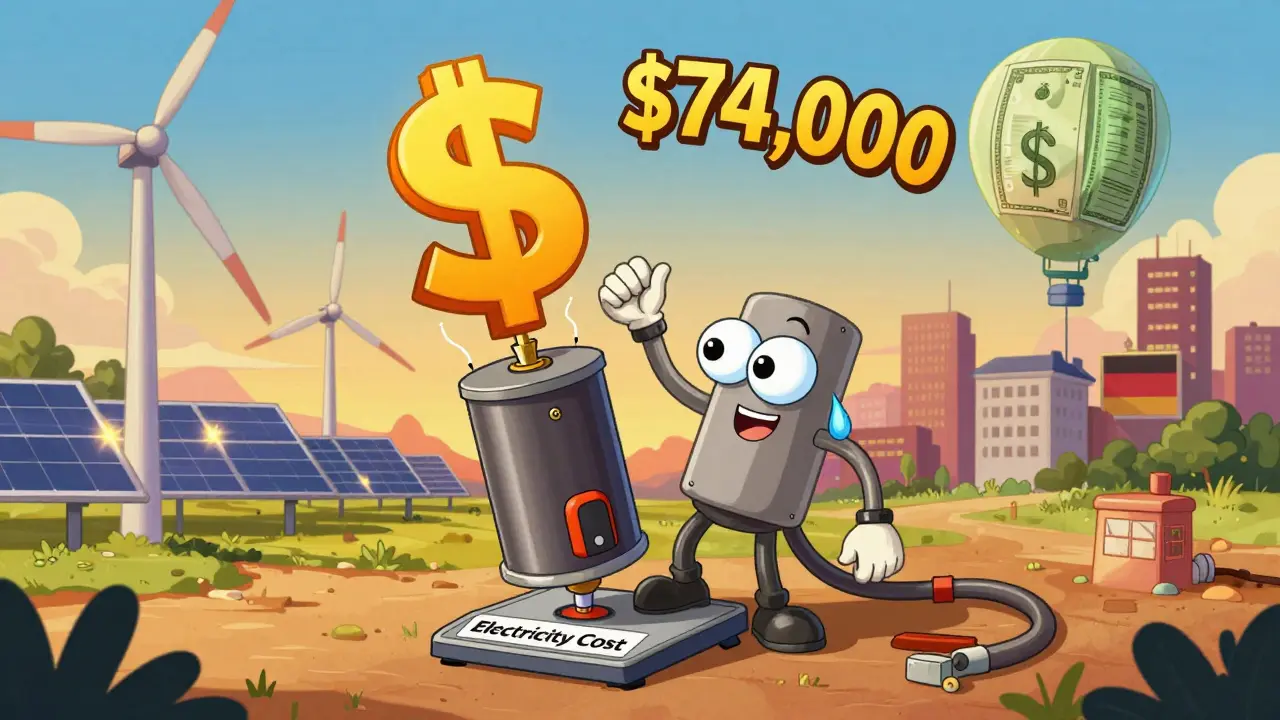

When you hear someone say mining Bitcoin is profitable, they’re usually talking about one thing: Bitcoin price. But that’s only the surface. The real story is hidden in the numbers behind the scenes - how much electricity you’re using, what you’re paying for it, and whether transaction fees are helping or hurting. In 2026, mining isn’t just about owning rigs. It’s about understanding the math that keeps them running - or shuts them down.
Electricity Costs Are the Make-or-Break Factor
For every Bitcoin mined, 70-80% of the cost comes from electricity. That’s not a guess. It’s backed by data from Cambridge and confirmed by operators like Core Scientific and Riot Platforms. If your power bill goes up 1 cent per kWh, your profit vanishes - unless Bitcoin’s price jumps to compensate.
Think about it this way: in Texas, a miner might pay 5 cents per kWh. In Germany? It’s 20 cents or more. That’s a 4x difference. One miner breaks even. The other loses money - even if they’re using the same hardware. That’s why mining operations have moved to places like Kazakhstan, parts of Canada, and rural Texas. Not because of regulations. Not because of politics. Because of watts.
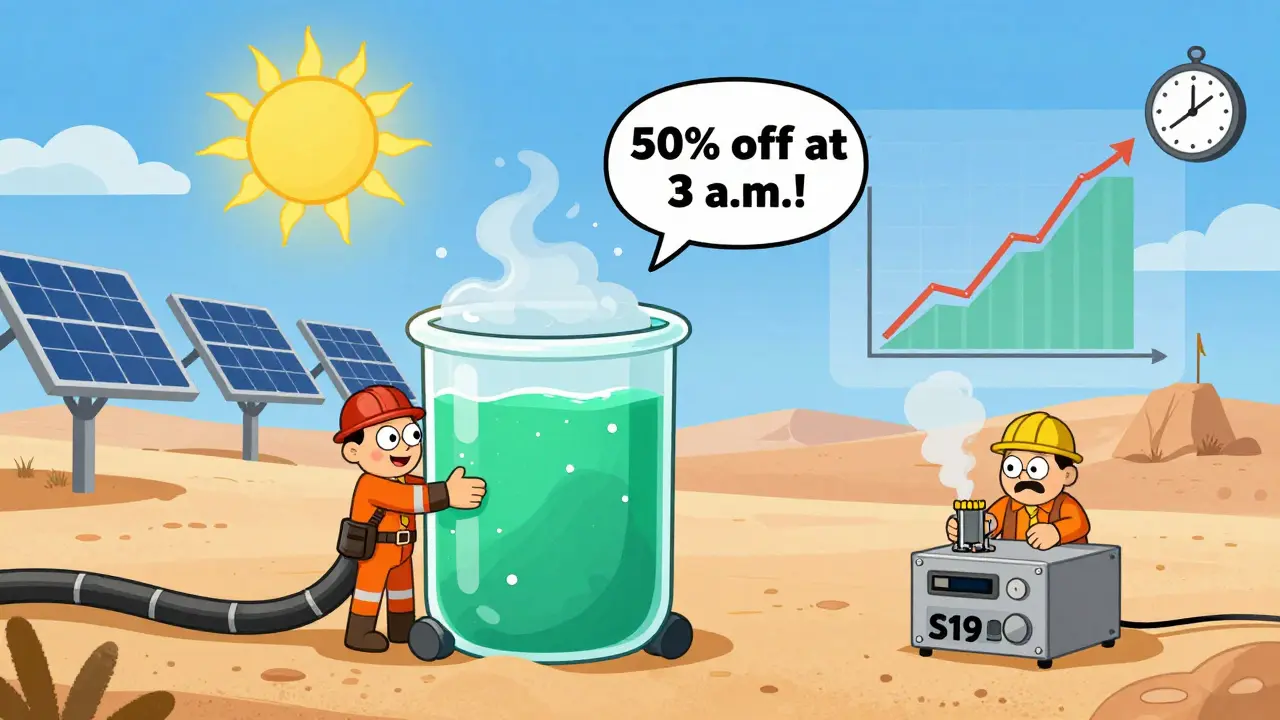
And it’s not just about the rate. It’s about timing. Some miners use smart automation to shift operations to off-peak hours. When demand drops overnight, electricity prices plummet. A miner paying 12 cents during the day can drop to 6 cents at 3 a.m. That’s 50% savings - just by running when no one else is.
Bitcoin Price Isn’t Just a Number - It’s a Threshold
Let’s say Bitcoin trades at $67,000. Sounds good? Maybe. But that’s not enough to cover everything.
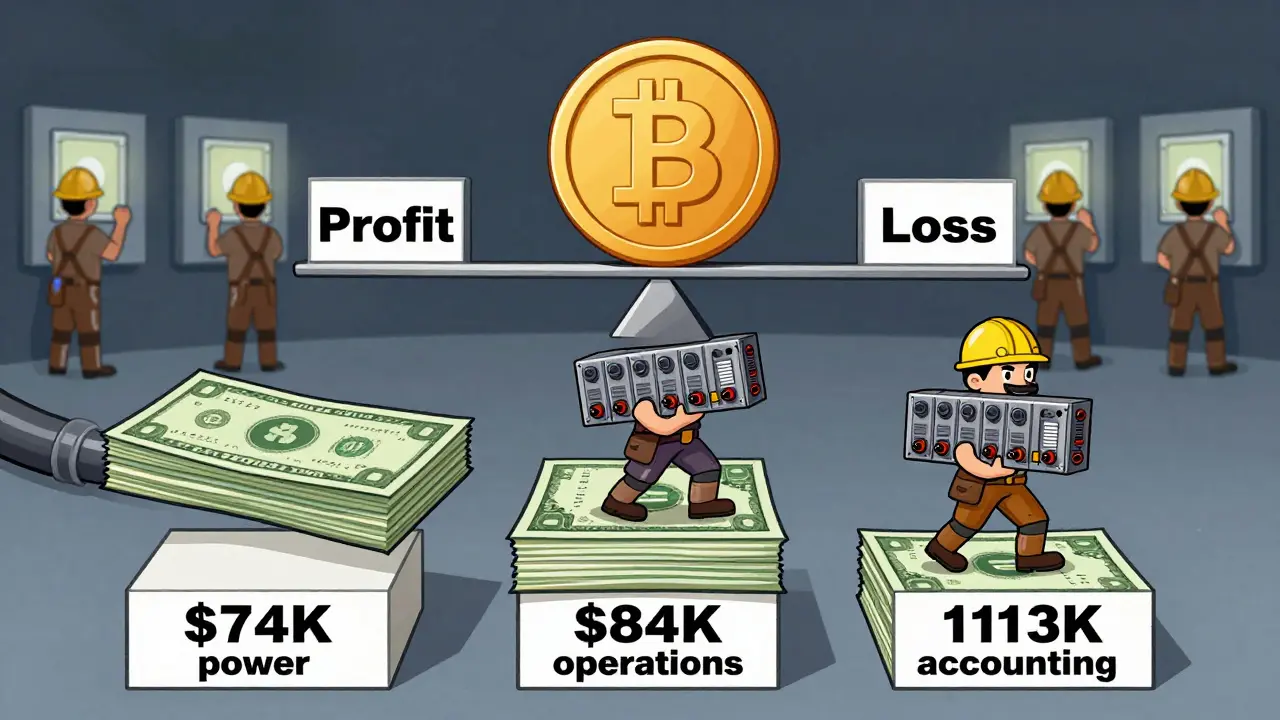
First layer: electricity. At current efficiency levels, you need Bitcoin above $74,000 just to cover the power used to mine one coin. If it’s below that, you’re burning cash every time you turn on a rig.
Second layer: operations. Even if you’re covering power, you still have facility rent, maintenance, insurance, payroll, cooling systems, and internet. Riot Platforms’ data shows this adds another $9,809 per Bitcoin. So now you need Bitcoin at $84,000 just to break even on daily operations.
Third layer: accounting. This is where depreciation, financing, and corporate overhead come in. Add $39,687 more per Bitcoin for hardware wear and tear and loan payments. Suddenly, you need Bitcoin above $113,000 just to show a profit on paper.
Here’s the kicker: you can have positive cash flow - meaning you’re not bleeding money day to day - and still be losing money on your balance sheet. That’s why some miners keep running even when they report losses. They’re not trying to make accounting profit. They’re trying to survive until the next price surge.
Network Difficulty Is the Hidden Enemy
Every two weeks, Bitcoin adjusts its mining difficulty. That’s the system’s way of keeping block times steady. More miners? Difficulty goes up. Fewer miners? It drops.
This isn’t just a technical detail. It’s a direct attack on your profitability. When the network difficulty rises, each hash you run earns less Bitcoin. Your hardware hasn’t changed. But your reward just got smaller.
That’s why the February 2025 electricity spike mattered so much. When power prices jumped to 10 cents per kWh in parts of the U.S., thousands of older rigs shut down overnight. The network hash rate dropped. Difficulty fell by 2%. Suddenly, the miners who stayed online got a temporary boost - not because they upgraded, but because their competitors quit.
This creates a brutal cycle. When Bitcoin price rises, more miners join. Difficulty climbs. Profitability drops again. When price falls, miners leave. Difficulty drops. Profitability rebounds. It’s a seesaw, and you’re on it.
Transaction Fees: The Wild Card
Block rewards are the main source of mining income. But they’re halving every four years. By 2026, they’re down to 3.125 BTC per block. That’s less than 10% of what they were in 2020.
That’s where transaction fees come in. When the network gets busy - like during a major NFT drop or a surge in DeFi trades - fees spike. Miners can earn 10-20% of their total block reward from fees alone.
But here’s the problem: you can’t control this. If Bitcoin usage slows, fees drop to pennies. You’re back to relying on block rewards alone. And with fewer coins being minted each year, the pressure on fees to carry the load is growing.
Some miners are starting to track fee trends like traders track stock volume. They watch mempools, monitor fee estimators, and even delay mining certain blocks if they expect fees to climb. It’s not science. It’s strategy.
Hardware Efficiency: The Only Real Upgrade That Matters
Not all ASIC miners are created equal. An Antminer S21 might use 30% less power than a used S19. That’s not a small difference. That’s hundreds of dollars in savings per month per rig.
And it’s not just about the chip. Cooling matters. Air cooling wastes energy. Immersion cooling - where rigs are submerged in non-conductive fluid - cuts cooling power by 60%. That’s another layer of savings. A miner in Arizona might spend 15% of their power just on fans and AC. A miner in Iceland? They’re using natural cold air. Same hardware. Half the cost.
Upgrading hardware isn’t about being flashy. It’s survival. If you’re running 2022-era rigs in 2026, you’re already behind. The market doesn’t reward nostalgia. It rewards efficiency.
Renewables and Location: The Long-Term Game
Miners using solar, hydro, or geothermal power don’t just save money - they insulate themselves from price spikes. Core Scientific runs 50-70% of its fleet on renewables. That means when natural gas prices surge or a cold snap hits the grid, their costs stay steady.
That’s why hydro-rich regions like Quebec, Washington, and parts of Kazakhstan dominate mining. They’re not just cheap. They’re stable. You can’t hedge against electricity like you can against Bitcoin. But you can lock in renewable power for 10-20 years with fixed contracts.
And it’s not just about cost. It’s about access. Large miners negotiate directly with power plants. Small miners? They’re stuck with the grid. That’s why industrial-scale mining is winning. They’re not just buying more rigs. They’re buying power.
What You Can Control - And What You Can’t
You can’t control Bitcoin’s price. You can’t control network difficulty. You can’t control when people send transactions.
But you can control:
- Where you mine - choose low-cost power regions
- What hardware you use - upgrade to efficient ASICs
- When you mine - shift to off-peak hours
- How you cool - use immersion or liquid cooling
- How you power - lock in renewable contracts
- Which pool you join - pick low-fee, high-efficiency pools
Miners who treat this like a business - not a lottery - are the ones still standing. The rest? They’re just waiting for the next price spike to bail them out.
Profitability Is a Moving Target
There’s no single break-even point. It’s a stack:
- Electricity break-even: ~$74,000 Bitcoin
- Operating break-even: ~$84,000 Bitcoin
- Accounting break-even: ~$113,000 Bitcoin
If Bitcoin dips below $70,000, the weakest miners die. If it spikes to $90,000, new rigs flood in. Difficulty rises. Profitability drops again.
The only way to win is to reduce your sensitivity to all three variables. Lower your power cost. Boost your efficiency. Diversify your revenue. And never assume today’s numbers will last tomorrow.
What Bitcoin price do I need to break even on mining?
It depends on your electricity cost. If you’re paying 5 cents per kWh, you need Bitcoin above $74,000 just to cover power. But if you factor in facility costs, maintenance, and payroll, you’ll need closer to $84,000. To show a real profit on paper - after depreciation and financing - you’ll need $113,000 or more.
Is mining profitable in high-cost countries like Germany or the UK?
Only if you’re using your own renewable power. Grid electricity in those countries often costs 20 cents per kWh or more. At that rate, even the most efficient rigs lose money unless Bitcoin is over $150,000. Most operators there rely on solar panels or small hydro systems to survive.
Do transaction fees make a big difference in mining profits?
Yes - but only during network congestion. When Bitcoin transactions spike, fees can add 10-20% to your block reward. But during quiet periods, they drop to under $1 per block. That’s why miners can’t depend on them. They’re a bonus, not a foundation.
Should I upgrade my mining hardware every year?
If you’re paying more than 6 cents per kWh, yes. Newer ASICs are 30-50% more efficient. That’s like getting a 30-50% raise on your profit margin. The payback period is often under 6 months. Waiting a year to upgrade means losing thousands in wasted electricity.
Can I use solar panels to make mining profitable?
Absolutely. A single 10 kW solar array can cover 1-2 mining rigs in sunny areas. If you install enough panels and pair them with battery storage, you can cut your electricity bill to near zero. Some miners in Texas and Nevada now pay less than 2 cents per kWh thanks to solar + storage.
What’s the biggest mistake new miners make?
Buying hardware before securing low-cost power. You can have the best ASIC in the world, but if you’re paying 12 cents per kWh, you’ll lose money. Power cost is the foundation. Everything else builds on top of it.







Write a comment