

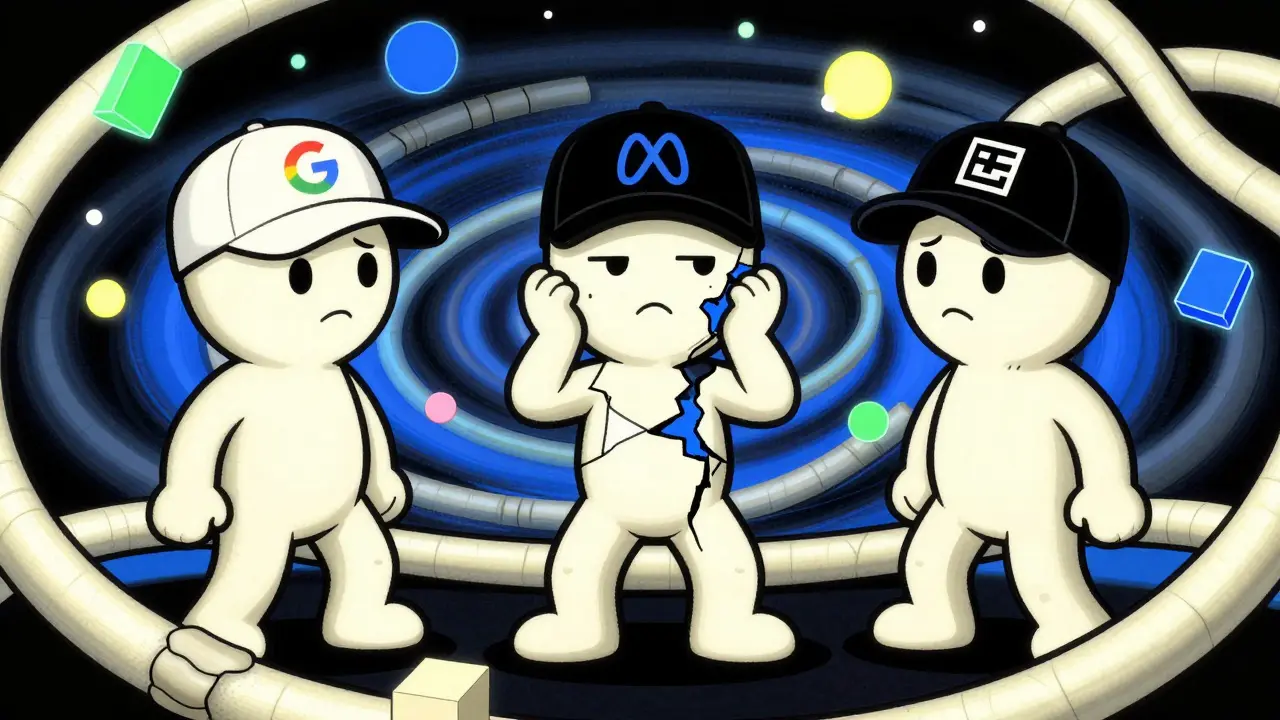

Imagine stepping into a virtual world where you don't have to create a new account, remember a twentieth password, or hand over your email address just to enter a digital room. In the current state of the internet, your identity is fragmented. You are a different "person" to Google, Meta, and Epic Games. But as we move toward a truly interconnected metaverse, this fragmented model breaks. We need a way to carry our identity with us, like a digital passport that we actually own, rather than a set of permissions granted to us by a corporation.
This is where Decentralized Identifiers is a new type of identifier that allows a person to prove who they are without relying on a central authority. Also known as DIDs, these tools change the power dynamic of the web. Instead of a company owning your identity record, you own it. By combining DIDs with Verifiable Credentials, we can create a security layer for virtual worlds that is both private and incredibly hard to fake.
The Core Mechanics of Decentralized Identity
To understand how this works in a virtual world, we have to look at the three-party ecosystem that makes it possible. Think of it as a digital version of how you prove your age at a venue using a driver's license.
- The Issuer: This is the entity that verifies your info and signs it. For example, a university could be an issuer of a degree, or a government could issue a digital passport.
- The Holder: That's you. You store these signed proofs in a digital wallet on your device. You decide when to show them and to whom.
- The Verifier: This is the virtual world or service provider. They don't need to call the university to check if your degree is real; they just check the cryptographic signature on the credential you presented.
The glue holding this together is the DID Document, which is a JSON file containing public keys and endpoints that allow others to verify a DID's authenticity. Because this document lives on a blockchain or a distributed ledger, it can't be secretly changed by a single company. It's a public, immutable source of truth.
How Verifiable Credentials Outperform Physical IDs
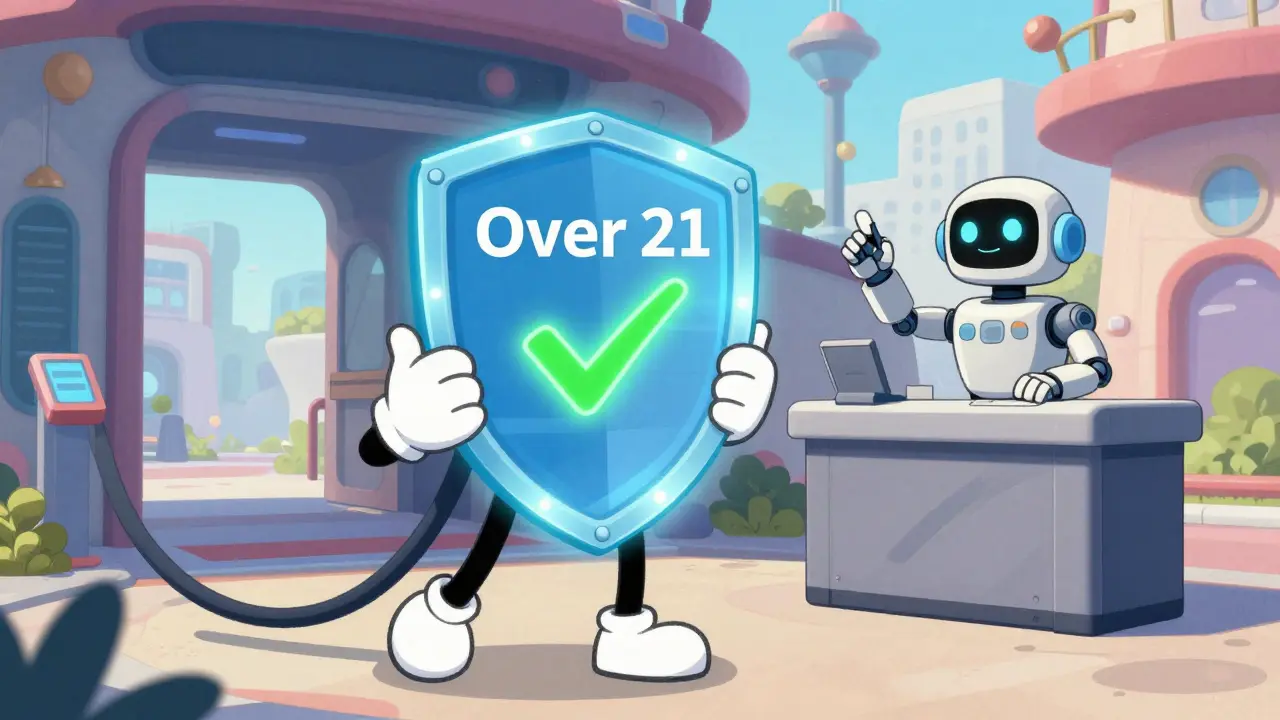
If you show a bouncer your physical driver's license to prove you're 21, they also see your home address, your full name, and your exact birth date. You're giving away more data than necessary. Verifiable Credentials (VCs) solve this through a concept called selective disclosure.
With a VC, you can generate a "proof" that only answers a specific question. Instead of sharing your entire birth date, your wallet can send a cryptographic "Yes" to the question "Is this person over 21?" The verifier gets the answer they need without ever seeing your private data. This level of privacy is a non-negotiable requirement for the metaverse, where users are already wary of corporate surveillance.
| Feature | Centralized Identity (IAM) | Verifiable Credentials (VCs) |
|---|---|---|
| Control | Owned by the provider | Owned by the user (Self-Sovereign) |
| Privacy | Full data exposure | Selective disclosure / Zero-knowledge |
| Verification | Requires API call to issuer | Instant cryptographic verification |
| Portability | Siloed to one platform | Interoperable across all VC-ready apps |
Solving the Identity Crisis in Virtual Worlds
Virtual worlds face a massive problem: spoofing. In a 3D environment, it's easy for a bad actor to create a fake avatar and pretend to be a CEO, a doctor, or a government official. Traditional login systems can't stop this because they only verify that you have a password, not that you are who you say you are in the real world.
By integrating Self-Sovereign Identity (SSI) and VCs, virtual platforms can establish "trust tiers." For instance, a high-stakes virtual business meeting could require a VC proving the attendee has passed a KYC (Know Your Customer) check. The avatar would display a "Verified" badge, not because the platform trusts the user, but because the platform trusts the Issuer who signed the credential.
But we can't rely on static credentials alone. In the metaverse, identity must be continuous. This is where behavioral biometrics come in. By analyzing how you move your avatar, your typing speed, or how you interact with virtual objects, the system can create a unique behavioral profile. If a hacker steals your private key and logs into your account, their navigation patterns will likely differ from yours, triggering a request for a fresh VC presentation or a biometric scan.
The Technical Workflow: From Issue to Verification
How does this actually happen behind the scenes? It's not magic; it's a series of standardized handshakes. The industry uses protocols like those developed by Hyperledger Aries, which is a toolkit for creating decentralized identity tools that follow W3C standards.
- Connection: The user and issuer establish a secure channel using the DIDComm protocol. This is essentially a private, encrypted tunnel for identity data.
- Issuance: The issuer sends the VC (e.g., a digital certification) through this tunnel. The user stores it in their digital wallet.
- Presentation: When entering a virtual world, the user creates a "presentation proof." They don't send the original VC; they send a cryptographically derived proof of it.
- Verification: The virtual world (verifier) looks at the blockchain to find the issuer's public key. If the math checks out, the user is granted access.
The Risks: Keys, Loss, and Trust
No system is perfect. The biggest risk with decentralized identity is the "lost key" scenario. In a centralized system, you click "Forgot Password" and an admin resets it. In a DID-based system, if you lose your private keys, you potentially lose your entire digital existence across the metaverse. There is no one to call for a reset.
To fix this, we're seeing the rise of social recovery. This allows a user to designate "guardians" (trusted friends or other services) who can help them recover their identity if they lose their keys, without those guardians ever having full control over the identity themselves.
There's also the challenge of identity proofing. A VC is only as good as the issuer. If a fake agency starts issuing "Verified Human" credentials, the system breaks. This is why we need a global trust registry-a way for virtual worlds to agree on which issuers are legitimate. Without a shared standard for trust, we just trade corporate silos for a chaotic web of unverified claims.
The Bigger Picture: Beyond the Metaverse
While virtual worlds are the perfect testing ground, this technology is moving into every part of our lives. Imagine a world where your healthcare records, your university degree, and your professional licenses are all VCs in your pocket. You could apply for a job by sending a single proof that you have the required degree and a clean background check, without the employer ever seeing your home address or social security number.
This shift toward user-centric identity isn't just about convenience; it's about human rights in the digital age. When you own your identity, you are no longer the product being sold by an ad network. You are a sovereign agent moving through a digital landscape with the same autonomy you have in the physical world.
What is the difference between a DID and a username?
A username is created and owned by a company (like @username on X or Instagram). If the company deletes your account, your identity is gone. A DID is a globally unique identifier that you generate yourself. No one can "delete" your DID because it exists on a distributed ledger, not a corporate database.
Can someone steal my identity if I use Verifiable Credentials?
If someone steals your private cryptographic keys, they can impersonate you. However, because VCs use selective disclosure, they can't necessarily steal all your data at once. Furthermore, the use of behavioral biometrics and multi-factor authentication in the metaverse makes it much harder for a thief to maintain access than it would be with a simple password.
Do I need a blockchain to use DIDs?
Not necessarily, but you need a "verifiable data registry." While blockchains are the most common way to store DID Documents because they are immutable and decentralized, some DIDs use other distributed ledger technologies or even peer-to-peer networks to achieve the same result.
How does this help with metaverse interoperability?
Interoperability means your identity works across different platforms. Because DIDs and VCs follow W3C global standards, a credential issued by a real-world entity can be read by any virtual world that supports those standards. You don't need a separate account for every "world" you visit.
Will this replace passwords entirely?
In a perfect world, yes. Instead of a password, you would provide a cryptographic proof of identity. However, during the transition period, we will likely see a hybrid model where DIDs handle high-level identity and traditional methods handle low-risk sessions.




LeVar Trotter
15 Apr 2026 at 03:07The implementation of W3C standards here is key for establishing a truly interoperable identity layer. We're basically talking about moving from an OIDC-centric world to a more robust SSI framework where the user manages the root of trust via their own wallet. It's a massive leap in reducing the attack surface for credential stuffing and other common IAM vulnerabilities. Really glad to see the focus on Hyperledger Aries as well, as that's where the real heavy lifting for the agent-to-agent communication is happening.