



Imagine running a high-performance computer that never overheats, makes no noise, and lasts twice as long as its air-cooled counterpart. This isn't science fiction; it's the reality of immersion cooling, a thermal management technique where ASIC miners are fully submerged in non-conductive dielectric liquid to absorb heat directly from the hardware. For Bitcoin miners struggling with soaring electricity costs, noisy fans, and premature hardware failures, switching from traditional air cooling to liquid immersion is becoming a strategic necessity rather than just a luxury.
As Bitcoin’s network difficulty climbs and block rewards halve, every watt counts. Traditional air-cooled setups often waste significant energy spinning fans at high RPMs while still failing to keep chips uniformly cool. Immersion cooling solves this by replacing air with a specialized fluid that conducts heat away from the hashboards far more efficiently. The result? Lower operating temperatures, reduced power consumption for cooling, and a dramatic extension of your miner’s lifespan.
How Immersion Cooling Works in Bitcoin Mining
At its core, immersion cooling removes the need for air to transfer heat. Instead of relying on convection through the atmosphere, the entire ASIC miner (Application-Specific Integrated Circuit) is placed into a tank filled with a non-conductive, dielectric fluid that absorbs heat without conducting electricity. Because the fluid doesn’t conduct electricity, you can submerge live electronic components safely. The liquid absorbs the intense heat generated by the hashing process and carries it away to a radiator or heat exchanger, where it is released into the environment.
There are two main architectures you’ll encounter:
- Single-Phase Immersion: The most common method for Bitcoin mining. The dielectric fluid remains in a liquid state throughout the cycle. A pump circulates the warm fluid from the tank to an external radiator (often called a dry cooler), where fans blow air across it to dissipate the heat. The cooled fluid then returns to the tank. It’s simple, reliable, and cost-effective.
- Two-Phase Immersion: More complex and expensive. Here, the fluid boils at a low temperature. As it touches the hot ASIC, it turns into gas, rises, condenses back into liquid on a cold surface, and drips back down. This phase change allows for incredible heat removal efficiency but requires precise engineering and specific fluids not always suited for standard crypto mining rigs.
For most Bitcoin operators, single-phase systems offer the best balance of performance, cost, and ease of maintenance.
Key Components of a Single-Phase Setup
Building or buying an immersion system involves several critical parts. Understanding these helps you avoid costly mistakes during installation.
| Component | Function | Key Considerations |
|---|---|---|
| Immersion Tank | Holds the dielectric fluid and miners | Must be leak-proof. Materials include steel, stainless steel, or specialized nylons. Size ranges from 2-miner home units to 40+ miner industrial tanks. |
| Dielectric Fluid | Transfers heat from ASICs | Non-conductive oils like BitCool BC-888. Must have high heat capacity and stability. Avoid cheap mineral oils if possible due to viscosity issues. |
| Pump | Circulates fluid | Centrifugal pumps with Viton seals are recommended. Sizing depends on flow rate and heat load. |
| Dry Cooler/Radiator | Rejects heat to outside air | Sized by total miner power draw (e.g., 2 kW to 1,500 kW). Outdoor placement is typical. |
| Piping | Connects tank to cooler | Use CPVC, copper, or steel. Avoid regular white PVC; plasticizers leach into coolant, causing hoses to crack within months. |
When setting up, ensure miners are elevated slightly off the tank bottom to allow fluid circulation underneath. You also need at least 2 cm of fluid above the highest point of the miner to prevent air pockets and ensure full coverage.
Efficiency Gains and Cost Savings
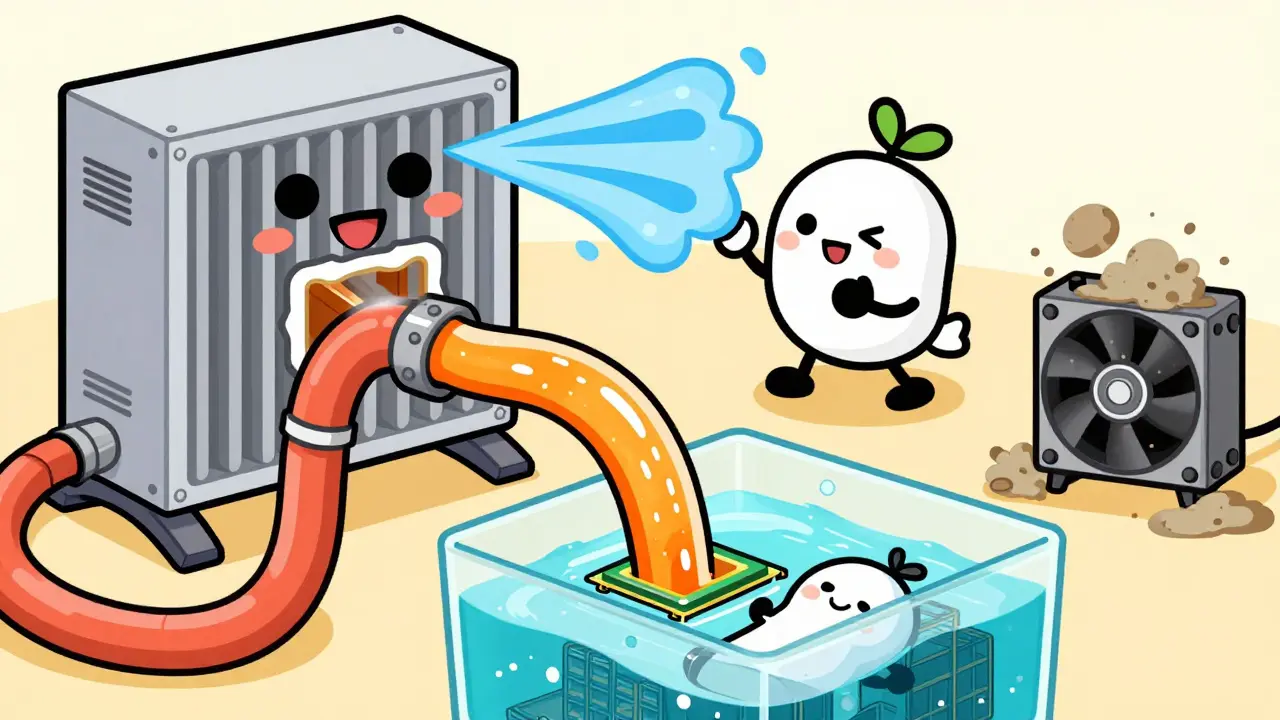
The primary reason miners switch to immersion is efficiency. Air cooling is inherently inefficient because air is a poor conductor of heat. Fans consume significant power-often 10-20% of a rig’s total draw-just to move air over hot chips. In an immersion system, those fans are removed entirely. The only power used for cooling comes from the small circulation pump and the external radiator fans, which operate much more efficiently.
This leads to three major benefits:
- Lower PUE (Power Usage Effectiveness): By eliminating internal fans and improving heat transfer, your facility uses less electricity per terahash. In large-scale operations, this can reduce cooling-related energy costs by up to 30%.
- Higher Hashrate Stability: ASICs throttle their performance when they get too hot. Immersion keeps chip temperatures stable and lower, allowing miners to run at peak hashrate continuously without thermal throttling.
- Noise Reduction: If you’re mining at home or in a shared space, the silence is immediate. Removing the screaming fans from Antminers or Whatsminers drops noise levels from 70-80 dB to near-silent operation.
Additionally, some operators integrate heat recovery systems. Since the waste heat is captured in the liquid loop, it can be redirected to warm buildings, greenhouses, or even water heaters. Companies like CryptoCooling promote this “full recovery” model, effectively turning your mining farm into a combined heat-and-power plant.
Extending ASIC Lifespan
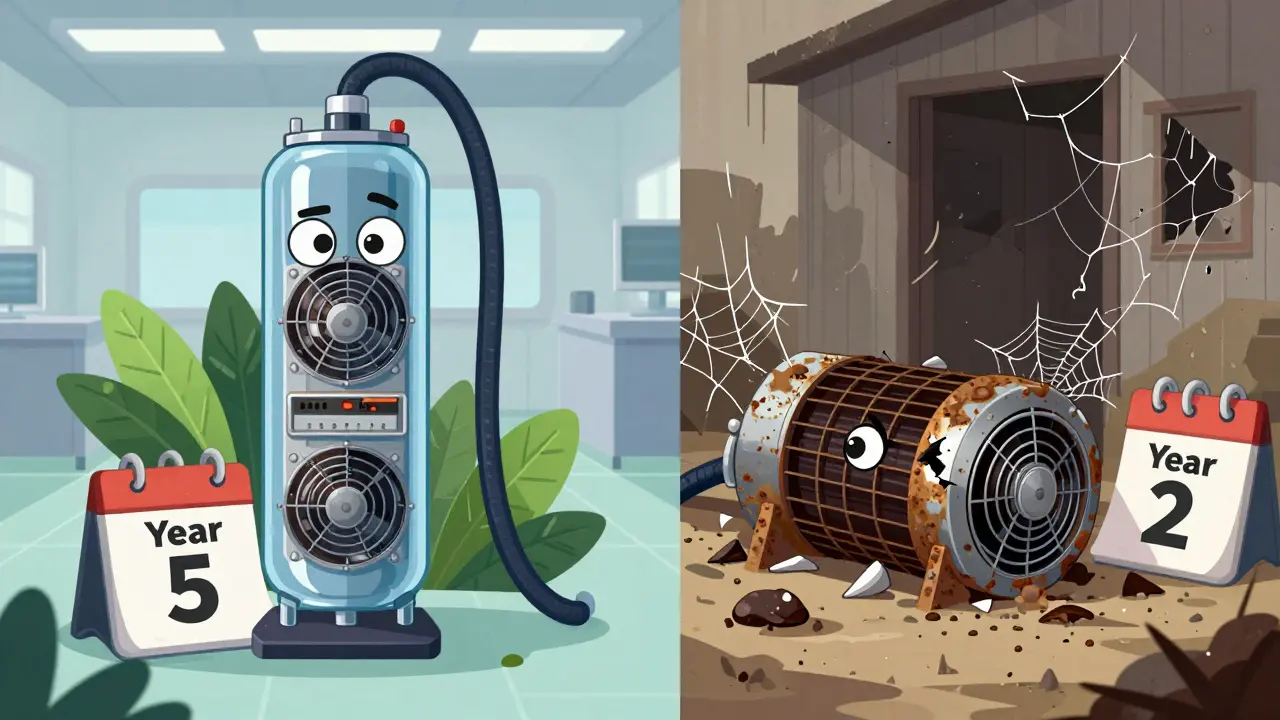
Hardware failure is the silent killer of mining profitability. In air-cooled environments, ASICs suffer from dust accumulation, humidity fluctuations, and thermal cycling (rapid heating and cooling). These factors degrade solder joints, corrode circuits, and clog heatsinks, often limiting a miner’s useful life to 2-3 years.
Immersion cooling protects against all of these:
- Dust-Free Environment: Submerged miners cannot collect dust. There’s no need for cleaning or compressed air blasts.
- Stable Temperatures: The fluid provides uniform cooling across the entire hashboard, preventing hot spots that stress individual chips.
- Vibration and Humidity Protection: The sealed tank isolates electronics from environmental shocks and moisture.
Vendors like DCX and Bitmars report that immersion-cooled ASICs can last 4-5 years or more, significantly outperforming air-cooled peers. While the upfront cost is higher, the extended operational life means you’re getting more value from each unit before it becomes obsolete or fails.
Implementation Steps and Pitfalls
If you’re considering building a DIY setup or evaluating a vendor solution, follow these steps carefully:
- Remove Fans: Take off all external fans from the ASIC. They are unnecessary underwater and will only waste power or cause mechanical issues.
- Clean and Prep: Ensure the miner is free of loose debris. Secure cables so they don’t float around and interfere with pumps or sensors.
- Fill the Tank: Slowly pour the dielectric fluid into the tank until the miner is fully submerged with adequate headroom (at least 2 cm above).
- Plumb the Loop: Connect the pump and radiator using compatible materials (CPVC, copper, or steel). Use hose clamps securely.
- Test for Leaks: Run the pump without powering the miner first. Check all connections for drips. Fix any leaks immediately.
- Power On and Monitor: Start the ASIC. Watch the temperature readings closely for the first 10 minutes. Ensure the fluid is circulating and the radiator is rejecting heat.
Common Pitfall: Using the wrong piping material. Many beginners use standard vinyl hoses or white PVC pipes found at hardware stores. These contain plasticizers that dissolve in dielectric fluids, making the tubing brittle and prone to cracking within months. Always use CPVC, copper, or steel.
Economic Analysis: Is It Worth It?
Immersion cooling is not free. A basic DIY setup for a single miner can cost between $500 and $1,000, including the tank, pump, radiator, and fluid. Larger deployments may require $1,000 or more per rig in infrastructure costs. This is a significant premium compared to simply placing miners on shelves.
However, the ROI depends on your context:
- High Electricity Costs: If you pay over $0.10/kWh, the energy savings from lower cooling loads and higher efficiency can justify the investment quickly.
- Noisy Environments: If you need to mine in a residential area or office, the noise reduction alone may make immersion necessary.
- Harsh Climates: In very hot or dusty regions, air cooling struggles. Immersion maintains performance where air systems fail.
- Heat Recovery Opportunities: If you can sell or use the waste heat, the economic case strengthens considerably.
For small hobbyists with cheap electricity and ample outdoor space, air cooling might still suffice. But for serious operators aiming for maximum uptime, efficiency, and hardware longevity, immersion is increasingly the smarter choice.
What is the best dielectric fluid for Bitcoin mining immersion?
Specialized synthetic oils like BitCool BC-888 are widely recommended for their high heat capacity, low viscosity, and electrical safety. While mineral oil is cheaper, it can become thick in cold temperatures and may degrade faster. Always choose fluids specifically rated for electronics immersion.
Can I use immersion cooling for GPU mining?
Yes, immersion cooling works well for GPUs as well. However, GPUs are typically smaller and generate less heat per unit than ASICs, so the efficiency gains might be less dramatic. The same principles apply: remove fans, submerge in dielectric fluid, and circulate heat via a radiator.
How often do I need to replace the immersion fluid?
High-quality dielectric fluids can last many years if kept clean. Regularly check for contaminants or discoloration. Some operators filter the fluid periodically. Unlike air filters, you don’t need frequent replacements, but monitoring fluid health is important for long-term system reliability.
Is immersion cooling safe for my home?
It is generally safe if installed correctly. Dielectric fluids are non-toxic and non-flammable. However, spills can be messy and slippery. Ensure your tank is robust and leak-proof. Also, consider local regulations regarding electrical installations and waste heat disposal.
Does immersion cooling void my ASIC warranty?
Many manufacturers do not explicitly cover immersion cooling under standard warranties, as it modifies the original design. Check with your specific vendor (e.g., Bitmain, MicroBT) before proceeding. Some third-party providers offer their own warranties for immersion-specific setups.








Patrick Dorion
21 Jun 2026 at 13:49I've been thinking about the thermodynamics of this for a while, and it really changes how you view hardware longevity. It's not just about keeping things cool; it's about removing the variable of environmental stress entirely. When you submerge these ASICs, you're essentially creating a controlled ecosystem where dust, humidity, and thermal shock simply don't exist as factors. That said, the initial capital outlay is a real barrier for smaller operations, and I wonder if the ROI holds up when electricity prices fluctuate so wildly. The noise reduction alone is worth it for anyone running rigs in residential areas, but the engineering precision required for the fluid loop is no joke.