



Imagine you just signed up for a new VoIP provider because their pricing is unbeatable. You’re ready to keep your existing business phone number. You submit the request, wait a few days, and then get an email: “Port rejected. Number outside of service area.”
You haven’t moved. Your office is in the same building. Your customers are still calling from the same cities. So why can’t you keep your number?
The answer isn’t about where you sit; it’s about where your number lives. In the world of telecommunications, phone numbers are tied to specific geographic zones called rate centers, which define local calling boundaries and billing rules. If your new provider doesn’t have infrastructure or agreements in that specific rate center, they cannot accept your number-no matter how close they are physically.
This guide breaks down exactly what rate centers are, why they restrict number porting, and how you can check if your move will succeed before you commit.
What Is a Rate Center?
To understand why your port failed, you first need to understand the map underneath the phone network. A rate center is a specific geographic area defined by a Local Exchange Carrier (LEC) to organize local calling boundaries, billing rules, and the assignment of NPA-NXX prefixes.
Think of a rate center as a digital neighborhood. When you make a call, the system checks two things: where the call starts and where it ends. If both numbers belong to the same rate center, the call is billed as “local.” If they cross into a different rate center, it’s treated as long-distance, even if the physical distance is only five miles.
Every telephone number in the North American Numbering Plan (NANP) has a structure: Area Code (NPA) + Prefix (NXX) + Line Number (XXXX). The combination of the area code and prefix is permanently tied to one specific rate center. For example, a number with the prefix 555-123 might be assigned to the “Seattle” rate center. That association is hardcoded into the national database.
- Geographic Anchor: Each rate center corresponds to a named city or community (e.g., “Detroit,” “Austin,” “Portland”).
- Billing Logic: Calls within the same rate center are local; calls across rate centers may incur long-distance charges.
- Number Assignment: New numbers are allocated based on available blocks within a specific rate center.
This system was designed decades ago when physical wires connected every home to a central office. Even though we now use Voice over IP (VoIP) and cloud communications, the underlying numbering architecture hasn’t changed. Your number still carries its original geographic baggage.
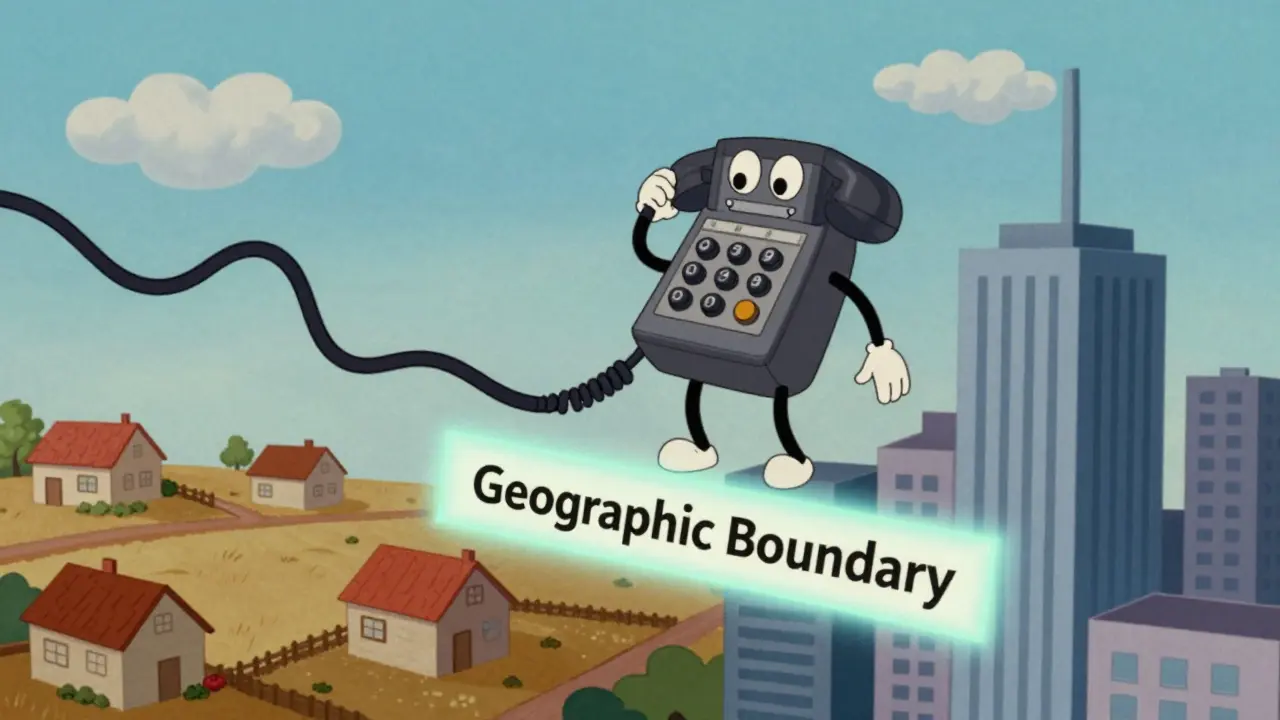
Why Geographic Restrictions Block Porting
Local Number Portability (LNP) was mandated by the Telecommunications Act of 1996. The goal was simple: let consumers switch carriers without changing their phone numbers. However, the Federal Communications Commission (FCC) implemented these rules with strict geographic boundaries.
According to regulations codified in 47 CFR Part 52, Subpart C, number portability is generally limited to the same geographic area. Specifically, a number must remain within its home rate center and Local Access and Transport Area (LATA). This means you can usually port a landline number from AT&T to Verizon *if* both providers serve the same rate center. But you typically cannot port a landline number from a rural rate center in Ohio to a VoIP provider that only has infrastructure in California.
Here’s why this restriction exists:
- Interconnection Agreements: To route calls to your number, your new provider must have a direct connection (interconnect) with the incumbent carrier in that rate center. Setting up these connections requires legal agreements and often physical TDM lines.
- Numbering Resources: Providers must hold thousands-blocks (groups of 1,000 numbers) within a rate center to assign or port numbers. If a provider doesn’t own any blocks in your rate center, they can’t technically host your number.
- Regulatory Compliance: Carriers are required to validate that a port stays within the correct geographic boundary to prevent fraud and ensure proper emergency services (E911) routing.
If your new provider lacks coverage in your number’s rate center, the port request will be rejected by the losing carrier or the Number Portability Administration Center (NPAC). This is not a glitch; it’s a hard stop built into the system.
Wireline vs. Wireless vs. VoIP: Different Rules
Not all phone numbers face the same geographic hurdles. The type of service you have changes how strictly rate centers apply.
| Service Type | Geographic Constraint | Porting Scope | Key Limitation |
|---|---|---|---|
| Wireline (Landline) | Strict | Same Rate Center/LATA | Tied to physical wire center; hard to port out of area. |
| Wireless (Mobile) | Flexible | Nationwide (usually) | Less tied to location; roaming handles geography. |
| VoIP / Cloud PBX | Moderate | Provider Coverage Area | Depends on provider’s rate center footprint. |
Wireline numbers are the most restrictive. Because they were originally tied to a specific physical switch in a town, regulators kept them locked to that rate center. If you try to port a landline from a small rural town to a major metro-based VoIP provider, it will likely fail unless that provider has specifically invested in that rural rate center.
Wireless numbers enjoy much more freedom. Mobile networks are designed for movement. While your mobile number still has a “home” rate center for numbering records, you can port it to almost any major carrier nationwide. The geographic link is looser because mobile phones roam across towers regardless of state lines.
VoIP numbers fall in the middle. VoIP is inherently location-independent-you can make calls from anywhere with internet. However, to connect to the Public Switched Telephone Network (PSTN), VoIP providers must anchor their numbers in real rate centers. If a VoIP company wants to offer you a local number in Chicago, they must have interconnection agreements and numbering resources in Chicago’s rate centers. If they don’t cover your current rate center, they can’t port your existing number.
How to Check Rate Center Coverage Before Porting
Don’t wait for a rejection email. You can verify whether your number can be ported before you sign a contract. Here’s a step-by-step process to avoid costly mistakes.
Step 1: Identify Your Current Rate Center
You need to know the exact rate center associated with your current phone number. You can find this using free lookup tools:
- North American Numbering Plan Administration (NANPA): Use their online lookup tool to enter your full 10-digit number. It will return the associated rate center name and NXX prefix details.
- Local Calling Guide: Enter your city and state to see which rate centers serve that area. This helps if you’re buying a new number rather than porting.
Write down the rate center name (e.g., “Springfield IL”) and the NXX prefix (the three digits after the area code).
Step 2: Verify Provider Coverage
Contact your prospective provider and ask directly: “Do you support ports for the [Rate Center Name] rate center?”
Reputable providers will have a published list of supported rate centers or NPAs (area codes). Be wary of vendors who say “we cover the whole US” without specifying rate centers. Many smaller VoIP providers partner with wholesale carriers that only cover major metros. If your rate center is small or rural, it might be excluded.
Step 3: Check Thousands-Block Availability
Even if a provider covers your rate center, they might not have available number blocks. Each NXX prefix contains 10,000 numbers, divided into ten blocks of 1,000. If the incumbent carrier holds all ten blocks in your prefix, other carriers may not be able to port numbers from that specific prefix.
Ask your provider if they have access to thousands-blocks in your specific NPA-NXX. If they don’t, they may be able to port your number but could force you to change the last four digits, or they may reject the port entirely.
Common Porting Pitfalls and How to Avoid Them
Even with good planning, ports can fail. Here are the most common issues related to geographic restrictions and how to handle them.
“Out of Service Area” Rejections
This is the most frequent error. It happens when the gaining provider (your new carrier) does not have a valid agreement with the losing provider (your old carrier) in that specific rate center.
Solution: If this happens, do not assume it’s a technical glitch. Confirm with your new provider’s support team whether they lack coverage in that rate center. If they do, you have two choices: switch to a provider that does cover it, or accept a new number.
Emergency Services (E911) Mismatches
When you port a number, your emergency address must update correctly. If you port a number from a rate center in City A to a provider that anchors it in City B, your E911 information might default to City B. This can delay emergency response if you are physically in City A.
Solution: Always update your E911 address immediately after porting. Ensure your provider allows you to set a physical address independent of the number’s rate center location.
Rural and Small Market Exclusions
Large metropolitan areas like New York, Los Angeles, and Chicago have dozens of carriers competing for rate center coverage. Rural areas often have only one or two incumbents. Smaller VoIP providers frequently skip these markets because the cost of interconnection outweighs the potential revenue.
Solution: If you operate in a rural area, prioritize providers that advertise “nationwide rate center coverage” or partner with large wholesale aggregators. Ask specifically about their rural footprint during the sales process.
Future Trends: Will Geographic Restrictions Disappear?
As communication moves further into the cloud, the concept of a “local” number is becoming less relevant to users. Younger demographics rarely look at area codes to determine proximity. However, the infrastructure behind the scenes remains rooted in rate centers.
Regulatory reforms could eventually loosen these ties. Changes in inter-carrier compensation rules might reduce the financial disincentives for carriers to support broader geographic portability. Additionally, as more consumers adopt mobile numbers as their primary identity, the pressure on wireline rate center constraints may decrease.
For now, though, rate centers remain the gatekeepers of number porting. Until the FCC mandates true “location portability” that ignores geographic boundaries, businesses must treat rate center coverage as a critical part of their telecom strategy.
By understanding these hidden geographic rules, you can choose providers that actually support your needs, avoid porting failures, and maintain continuity with your customers.
What is a rate center in telecommunications?
A rate center is a specific geographic area defined by a Local Exchange Carrier (LEC) to organize local calling boundaries, billing rules, and the assignment of phone number prefixes. It determines whether a call is considered local or long-distance and restricts where phone numbers can be ported.
Why was my number port rejected due to geographic restrictions?
Your port was likely rejected because your new provider does not have interconnection agreements or numbering resources in the specific rate center associated with your current number. Regulations require numbers to stay within their home rate center or LATA during porting, especially for wireline services.
Can I port a landline number to a different state?
Generally, no. Traditional wireline numbers are strictly tied to their home rate center and LATA. Porting a landline across state lines or even across different rate centers within the same state is usually prohibited unless both carriers have specific agreements to support such a move, which is rare.
How do I find the rate center for my phone number?
You can find your rate center by using the North American Numbering Plan Administration (NANPA) lookup tool or the Local Calling Guide. Enter your full 10-digit phone number to retrieve the associated rate center name and NXX prefix details.
Are mobile numbers subject to the same rate center restrictions?
Mobile numbers are much less restricted than landlines. While they have a home rate center for numbering records, wireless carriers allow nationwide porting because mobile networks are designed for roaming. You can typically port a mobile number to any major carrier regardless of geographic location.
What is thousands-block pooling and how does it affect porting?
Thousands-block pooling divides a 10,000-number prefix (NXX) into ten blocks of 1,000 numbers, allowing different carriers to share the prefix. However, each block remains tied to a specific rate center. If a provider doesn’t hold any blocks in your rate center’s prefix, they may be unable to port your number.
Will geographic restrictions on number porting disappear in the future?
It is unlikely to happen soon. While VoIP and cloud communications reduce the practical importance of location, the underlying regulatory framework and inter-carrier compensation models still rely on rate centers. Significant changes would require coordinated reforms in FCC regulations and industry standards.
Does porting a number change my E911 address?
Porting itself does not automatically update your E911 address, but it can cause mismatches if the new provider anchors the number in a different rate center. You must manually update your physical address with your new provider to ensure emergency services dispatch to the correct location.








kimberly de Bruin
9 Jun 2026 at 02:49it is fascinating how we cling to these digital ghosts of geography while the physical world dissolves into cloud data streams
we are essentially living in a paradox where our identities are anchored to arbitrary postal codes from the nineteen nineties even though our consciousness travels through fiber optics at the speed of light
the rate center is not just a billing mechanism it is a psychological tether that keeps us believing in local community when in reality we are all part of one global nervous system
i often wonder if this restriction is a feature or a bug in the design of human connection
perhaps the friction of porting numbers forces us to slow down and consider the weight of our digital footprints
or maybe it is just bureaucratic inertia masquerading as stability
either way it reveals something profound about our desire for permanence in an ephemeral age