



Imagine trying to have a conversation where one person speaks only French and the other understands only Japanese. Without a translator, nothing gets through. That is exactly what happens in digital communications when systems use different protocols that cannot talk to each other. Protocol interoperability is the "translator" that allows devices, apps, and networks built by different vendors to exchange data reliably. In the world of Voice over IP (VoIP) and enterprise messaging, this concept is not just a technical buzzword-it is the backbone of modern connectivity.
We live in an era of fragmented technology. Your smart home might use Zigbee for lights, Wi-Fi for cameras, and Bluetooth for locks. Your company might use Microsoft Teams for HR, Slack for engineering, and Zoom for sales calls. If these systems cannot communicate, you end up with silos-data trapped behind walls, users switching between five different apps, and missed connections. Cross-platform communication solves this by creating bridges that translate signals from one language to another, ensuring seamless interaction regardless of the underlying technology.
What Is Protocol Interoperability?
At its core, protocol interoperability refers to the ability of heterogeneous systems to exchange information and invoke functionality despite using different technologies or being built by different manufacturers. It is not merely about connecting two wires; it is about semantic understanding. For two systems to be truly interoperable, they need more than just a physical link. They require:
- A defined communication protocol: The rules governing how data is packaged and sent (e.g., TCP/IP, HTTP).
- Standardized data models: A shared way of describing information so both sides understand what "temperature" or "user ID" means.
- Compatible security mechanisms: Trust frameworks that allow one system to verify the identity of another without compromising safety.
- Translation layers: Gateways, bridges, or middleware that convert formats from one platform to another in real-time.
In the context of VoIP, this often means allowing a phone running on one proprietary network to call a user on a completely different cloud-based PBX system. Without interoperability, every vendor would create a walled garden, forcing businesses to buy all their hardware and software from a single source. Interoperability breaks those walls down.
The Role of Key Protocols in VoIP and Messaging
To understand how cross-platform communication works, we need to look at the specific languages these systems speak. In telecommunications and business communications, a few key protocols dominate the landscape.
SIP (Session Initiation Protocol) is the industry standard for initiating, maintaining, and terminating real-time sessions that include voice, video, and messaging applications. Think of SIP as the digital equivalent of picking up a phone receiver and dialing a number. It handles the signaling-the "ringing," "busy," and "connected" states-but not necessarily the media itself. Because SIP is an open standard, it has become the primary enabler of interoperability in VoIP. Almost every major VoIP provider supports SIP, which allows a softphone on your laptop to call a desk phone in a factory, provided they can negotiate the session parameters.
However, SIP alone does not solve everything. Many enterprise collaboration tools rely on XMPP (Extensible Messaging and Presence Protocol), originally known as Jabber. XMPP is highly flexible and was designed specifically for instant messaging and presence information (knowing if someone is online). While SIP excels at voice and video calls, XMPP shines in text-based communication and complex presence updates. Interoperability challenges arise when a SIP-based VoIP system needs to integrate with an XMPP-based chat platform. This requires a gateway that can translate SIP INVITE messages into XMPP IQ stanzas, preserving the intent of the communication while changing the syntax.
Another critical player is WebRTC (Web Real-Time Communication). WebRTC enables browser-to-browser audio and video calling without requiring plugins or downloads. It operates at a higher level, often encapsulating RTP (Real-time Transport Protocol) for media streaming. When a WebRTC client in a Chrome browser tries to call a traditional SIP trunk, an interoperability layer must transcode the media and translate the signaling. This is where the complexity of cross-platform communication becomes visible to the end-user experience.
| Protocol | Primary Use Case | Interoperability Strength | Key Limitation |
|---|---|---|---|
| SIP | Voice/Video Signaling | High (Industry Standard) | Complex NAT traversal issues |
| XMPP | Instant Messaging/Presence | Medium (Open but fragmented servers) | Less common for pure VoIP signaling |
| WebRTC | Browser-based Media | High (Cross-browser support) | Requires STUN/TURN servers for NAT |
| MQTT | IoT Device Telemetry | High (Lightweight, publish/subscribe) | Not designed for real-time voice media |
Bridging the Gap: Gateways and Middleware
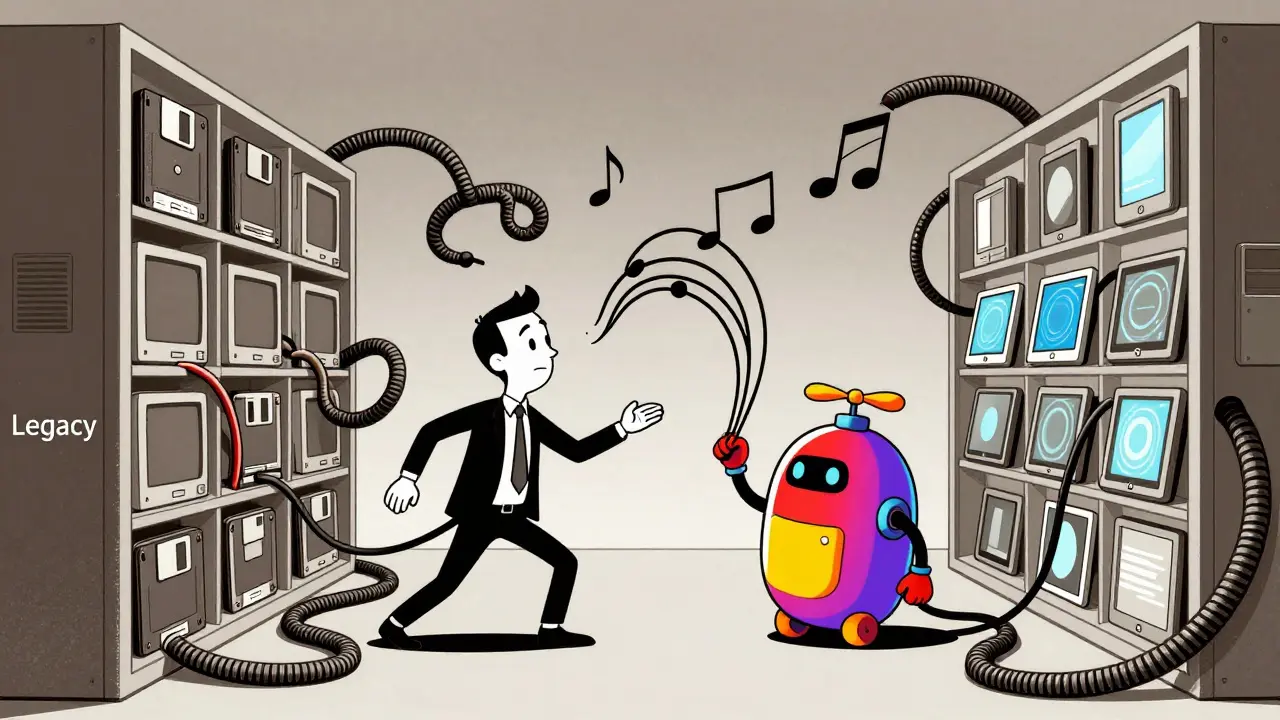
If protocols are languages, then gateways and middleware are the translators. In a homogeneous environment where every device uses the same protocol, no translation is needed. But in the real world, heterogeneity is the norm. A manufacturing plant might have legacy sensors using Modbus, new IoT devices using MQTT, and a central monitoring dashboard using REST APIs over HTTP.
Gateways act as intermediaries that receive data in one format and convert it to another. For example, a VoIP gateway might take analog POTS (Plain Old Telephone Service) signals from a traditional landline and convert them into digital SIP packets for transmission over the internet. Similarly, in enterprise messaging, platforms like SyncRivo provide unified messaging bridges that route and synchronize messages bidirectionally between distinct ecosystems like Slack, Microsoft Teams, and Google Chat. These bridges do not just forward text; they map concepts. A "channel" in Slack might be translated into a "team space" in Teams, ensuring that the semantic meaning of the conversation is preserved even if the underlying structure differs.
This translation process introduces latency and complexity. Every hop through a gateway adds processing time. Moreover, feature parity is rarely perfect. If Protocol A supports high-definition video encryption but Protocol B only supports standard definition, the gateway must downgrade the quality to ensure compatibility. This trade-off is a fundamental aspect of interoperability: you gain connectivity, but you may lose some fidelity or advanced features in the process.

Challenges in Achieving Seamless Interoperability
Despite the benefits, achieving true protocol interoperability is fraught with challenges. One major hurdle is semantic ambiguity. Two systems might both use the term "user status," but one defines it as "Online/Offline" while the other uses "Available/Away/Do Not Disturb." A simple bridge might pass the string "Away" to the second system, which interprets it correctly, but if the first system sends "Busy" and the second doesn't have a "Busy" state, the message could be dropped or misinterpreted. Solving this requires robust data modeling and mapping tables that define how every possible value in one schema corresponds to values in another.
Security is another significant barrier. Different protocols employ different authentication and encryption methods. SIP might use Digest Authentication, while XMPP relies on SASL (Simple Authentication and Security Layer). Bridging these requires the intermediary to handle credentials securely without exposing them. Furthermore, firewalls and NATs (Network Address Translation) often block incoming connections, making peer-to-peer interoperability difficult. Solutions like STUN (Session Traversal Utilities for NAT) and TURN (Traversal Using Relays around NAT) servers are essential for WebRTC and SIP clients behind corporate firewalls to establish direct media paths.
In the realm of blockchain, cross-chain interoperability faces even stricter security constraints. Bridges that connect isolated blockchain networks must trust the verification mechanisms of the intermediary. Failures in these bridge protocols have led to significant financial losses, highlighting that interoperability is not just a technical challenge but also a trust issue. Users must trust that the translator is honest and secure.
Future Trends: AI Agents and Multi-Protocol Architectures
As we move further into 2026, the demand for interoperability is expanding beyond human-to-human communication. Autonomous software agents are beginning to operate across the open internet, requiring their own set of interoperability standards. The emergence of protocols like the Agent Network Protocol (ANP) highlights a shift toward decentralized, peer-to-peer standards for cross-platform agent interoperability. These agents need to discover each other, exchange data, and coordinate tasks without relying on a centralized hub, mirroring the early days of email but with greater complexity.
In the Internet of Things (IoT), multi-protocol architectures are becoming the norm rather than the exception. Devices increasingly support multiple wireless standards simultaneously-Wi-Fi for high-bandwidth data, Bluetooth Low Energy for sensors, and Thread or Zigbee for mesh networking. Chips from companies like Synaptics are designed to handle this multi-protocol coexistence, managing radio interference and scheduling to ensure seamless user experiences. This trend suggests that future interoperability will be less about building bridges between separate islands and more about designing devices that natively speak multiple dialects.
For businesses, the implication is clear: procurement decisions must prioritize open standards and interoperability capabilities. Choosing a closed, proprietary system may offer short-term ease of use but creates long-term lock-in and integration costs. Investing in solutions that support SIP, XMPP, REST APIs, and emerging agent protocols ensures that your communication infrastructure remains flexible and adaptable to future technological shifts.
Why is protocol interoperability important for VoIP?
Protocol interoperability allows VoIP systems from different vendors to communicate, preventing vendor lock-in. It enables businesses to mix and match hardware and software, such as using a Cisco phone with a RingCentral server, by translating signaling and media streams via standards like SIP.
What is the difference between SIP and XMPP?
SIP (Session Initiation Protocol) is primarily used for establishing voice and video calls, handling the setup and teardown of sessions. XMPP (Extensible Messaging and Presence Protocol) is focused on instant messaging and presence information, indicating whether users are online or offline. While SIP can handle messaging, XMPP is more robust for complex chat applications.
How do gateways enable cross-platform communication?
Gateways act as translators between different protocols. They receive data in one format (e.g., analog voice or proprietary binary), convert it into a standardized format (e.g., SIP or XML), and send it to the destination system. This allows disparate systems to exchange information without needing native compatibility.
What are the security risks of protocol interoperability?
Interoperability layers can introduce vulnerabilities if not properly secured. Translating between protocols may expose sensitive data if encryption standards differ. Additionally, bridges and gateways become attractive targets for attackers because compromising them can grant access to multiple connected systems. Strong authentication and end-to-end encryption are critical.
Will AI agents change how we think about interoperability?
Yes, AI agents require new interoperability standards like ANP to communicate autonomously across platforms. Unlike human-centric protocols, agent protocols focus on machine-readable data exchange, task coordination, and discovery without centralized hubs, paving the way for a more interconnected internet of services.






Write a comment