



You spent four years studying, pulling all-nighters, and paying tuition. Now you have a degree. But does that piece of paper actually prove anything to a skeptical employer? For decades, verifying a degree meant calling the university registrar, waiting days for an email, or paying a third-party service like the National Student Clearinghouse. It was slow, expensive, and prone to human error. Enter blockchain technology, which promised to make academic credentials instant, portable, and impossible to fake. But is the term "fraud-proof" accurate, or just marketing hype?
The reality is more nuanced. Blockchain diplomas are digitally signed records anchored to a distributed ledger. They don't store your entire transcript on-chain; instead, they use cryptographic hashes to prove that a specific document was issued by a specific institution at a specific time. This makes tampering with the diploma after issuance nearly impossible without breaking the issuer's private key. However, it doesn't automatically verify who you are or if the university itself was accredited when it issued the degree. Let’s break down how this works, what it solves, and where it still falls short.
How Blockchain Verification Actually Works
Most people imagine their diploma sitting on a server in a data center. In a blockchain model, the process looks different. It relies on public-key cryptography. When a university issues a credential, it uses its private key to sign a digital file (usually JSON) containing your name, degree, date, and other details. This signature proves the university issued it. Then, a hash (a unique fingerprint) of that file is recorded on a blockchain, like Bitcoin or Ethereum. This timestamped record acts as a witness. If someone tries to change your grade from a B to an A in the digital file, the hash changes. The verifier can then check the new hash against the one stored on the blockchain. If they don’t match, the credential is invalid.
This system shifts control from the institution to the learner. You hold the credential in a digital wallet. You share it directly with employers or other universities. They verify it instantly using a free tool or API. No phone calls. No fees. No waiting for office hours. The early pioneer here was MIT, which partnered with Learning Machine (now Digital Credentials Consortium) to launch the Blockcerts standard in 2016. By 2017, MIT graduates could receive these digital diplomas. While only about 43 out of 111 eligible students initially opted in, the pilot proved the concept worked technically.
The Standards Behind the Tech
It’s not just about the blockchain. It’s about the language the data speaks. Two major standards dominate this space today: Blockcerts and W3C Verifiable Credentials.
Blockcerts is an open-source toolkit designed specifically for education. It allows institutions to issue credentials that are interoperable across different wallets and verification platforms. Because it’s open source under the MIT license, no single vendor locks you in. You own the code and the data format.
The bigger shift happened in May 2025, when the World Wide Web Consortium finalized Verifiable Credentials 2.0 as a official recommendation. This isn’t a product you buy; it’s a global standard. It defines three roles: the Issuer (university), the Holder (you), and the Verifier (employer). Crucially, VC 2.0 doesn’t require a blockchain. You can use it with traditional databases, but blockchain adds a layer of independent auditability. The European Union has leaned heavily into this, using the European Blockchain Services Infrastructure (EBSI) to create a cross-border network for learning records. If you study in France and work in Germany, EBSI lets German employers verify French degrees instantly without translating documents or mailing transcripts.
Why Employers Care About Tamper-Evidence
Fraud in hiring is real. Resume padding, fake degrees from unaccredited "diploma mills," and altered transcripts cost companies time and money. Traditional background checks catch some of this, but they’re reactive and slow. Blockchain credentials offer proactive security.
| Feature | Traditional Process | Blockchain/VC Process |
|---|---|---|
| Verification Time | Days to Weeks | Seconds |
| Cost per Check | $10-$50+ (Clearinghouses) | Near Zero (API calls) |
| Data Ownership | Institution-Controlled | Learner-Owned |
| Tamper Evidence | Visual Inspection/Forgery Risk | Cryptographic Proof |
| Portability | Low (Paper/PDF) | High (Digital Wallet) |
The table above highlights why large organizations are interested. For a recruiter screening hundreds of candidates, saving $20 per check adds up fast. More importantly, speed matters. In competitive job markets, losing a top candidate because their degree verification took two weeks is a business risk. Blockchain eliminates that bottleneck.
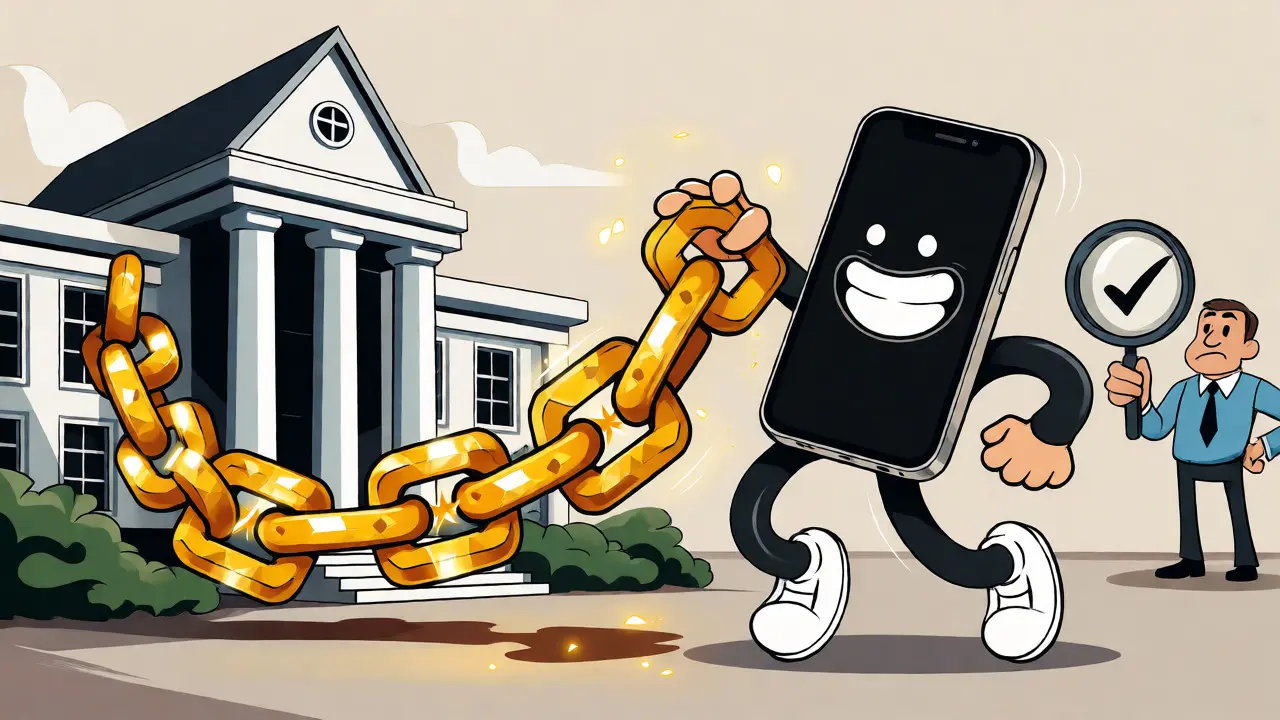
It’s Not Perfectly "Fraud-Proof" Yet
Here is the critical distinction many headlines miss: Cryptography proves integrity, not identity. A blockchain diploma proves that somebody with the university’s private key issued a credential saying "John Doe has a degree." It does not prove that John Doe is the person holding the smartphone presenting the credential. If I steal your digital wallet and your password, I can present your degree as my own. This is known as the "impostor problem." To solve this, systems need strong identity proofing-like biometric login or government-linked digital IDs-which is often separate from the credential itself.
There’s also the issue of revocation. What if a student cheated during their final exam and the university rescinds the degree? On a blockchain, you can’t easily delete a transaction. Instead, issuers maintain a status list. When you verify a credential, the software checks if that specific ID appears on a "revoked" list. If the issuer fails to update this list, or if the server hosting the list goes down, a revoked degree might still appear valid. This requires robust governance and reliable infrastructure, not just good code.
Privacy is another hurdle. Putting personal data on a public chain is risky. GDPR in Europe gives citizens the "right to be forgotten." But blockchains are immutable-you can’t erase data once written. The solution is to keep personal details off-chain. Only the hash and issuer signature go on the blockchain. Your name, grades, and birthdate stay in your private wallet or a secure off-chain database. If done correctly, this balances transparency with privacy. If done poorly, you could end up publishing sensitive student data forever.
Real-World Adoption: Who Is Doing This?
Beyond MIT, adoption is growing but fragmented. Central New Mexico Community College experimented early on. Internationally, Malta launched a national pilot involving digital certificates for training and equivalency statements. The University of Nicosia in Cyprus claims to be the first to issue all degrees on blockchain since 2017. In France, the University of Lille reported issuing over 56,000 blockchain-based credentials by 2023.
These aren’t just tech demos. They serve practical needs. For international students, verifying credentials across borders is a nightmare of apostilles and translations. A standardized digital credential cuts through that red tape. However, widespread adoption faces friction. Many older employers don’t know how to verify a Blockcert. They expect a PDF or a phone call. Until verification tools become as common as checking a LinkedIn profile, the utility remains limited to tech-savvy sectors.
Implementation Challenges for Universities
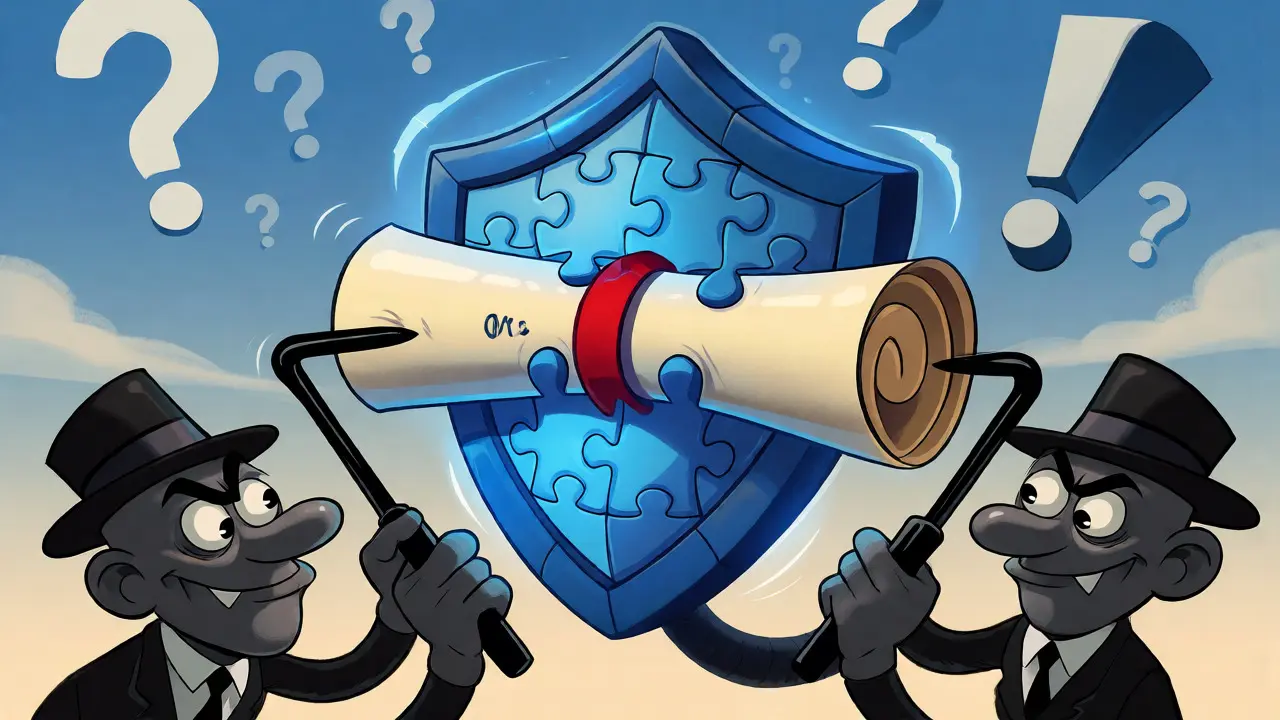
If you run a registrar’s office, moving to blockchain isn’t just a software update. It’s a workflow overhaul. First, you need secure key management. If your institution’s private signing key is stolen, hackers can issue fake degrees from your school. These keys must be stored in hardware security modules, not on a regular server. Second, you need long-term preservation. Will the verification endpoint exist in 50 years? If the university closes or merges, who maintains the registry? Third, integration. Your student information system (SIS) needs to talk to the blockchain gateway. Most legacy SIS platforms weren’t built for this, requiring custom API development.
Costs vary. Open-source solutions like Blockcerts reduce licensing fees but increase engineering costs. Commercial platforms like Accredible or Credly offer easier interfaces but charge subscription fees. For example, Accredible starts around $45/month for small batches, while enterprise contracts can hit tens of thousands. The choice depends on whether you value control (open source) or convenience (commercial).
The Future: Hybrid Models and Privacy
We likely won’t see every diploma on Bitcoin. That would be inefficient and expensive due to transaction fees. The future is hybrid. Sensitive data stays off-chain. Proofs anchor on permissioned chains (like Hyperledger) or public ones, depending on trust requirements. Research is focusing on zero-knowledge proofs, which allow you to prove you have a degree without revealing your name or grades until necessary. Imagine applying for a job that requires a PhD. You could cryptographically prove you have one without sharing your thesis title or GPA unless asked.
As of late 2026, the momentum is shifting toward interoperability. The goal isn’t just a cool digital badge; it’s a universal passport for skills. Whether you learn via university, online course, or apprenticeship, the credential should look the same to any verifier. Blockchain provides the trust layer for this ecosystem, but standards like W3C VC provide the grammar. Without both, we just have isolated silos of digital paperwork.
Are blockchain diplomas legally recognized?
Yes, in many jurisdictions, provided the digital signature meets local electronic signature laws (like eIDAS in Europe or ESIGN Act in the US). However, legal recognition varies by country and profession. Some regulated fields, like medicine or law, may still require physical notarized documents alongside digital ones.
What happens if I lose my private key?
If you lose access to your digital wallet and the associated private key, you cannot independently prove ownership of the credential. However, most university systems allow reissuance or recovery through identity verification. You contact the registrar, prove your identity, and they issue a new credential linked to a new key pair.
Can employers easily verify these diplomas?
Not yet universally. While tech-forward companies use automated APIs to check credentials instantly, many HR departments still rely on manual checks. As standards like W3C VC 2.0 gain traction, verification tools will become integrated into standard HR software, making it as easy as clicking a link.
Is putting my name on the blockchain a privacy risk?
It depends on the design. Best practices dictate keeping personally identifiable information (PII) off-chain. Only a cryptographic hash is stored on the ledger. If names are hashed unsalted, they can potentially be reverse-engineered. Proper implementation uses salted hashes or stores PII entirely off-chain, linking it only via a random identifier.
Do all universities accept blockchain credits for transfer?
No. Transfer policies depend on institutional agreements and accreditation bodies. While the technical verification is faster, academic equivalence is still a judgment call made by admissions officers. Blockchain speeds up the authenticity check, but it doesn't bypass the academic evaluation process.





Prayagraj Medicose
18 Oct 2026 at 20:00They just want to track us all with these digital wallets, you know that right? It's not about fraud, it's about control. The 'blockchain' is just a fancy database for the elites to watch every move we make.