

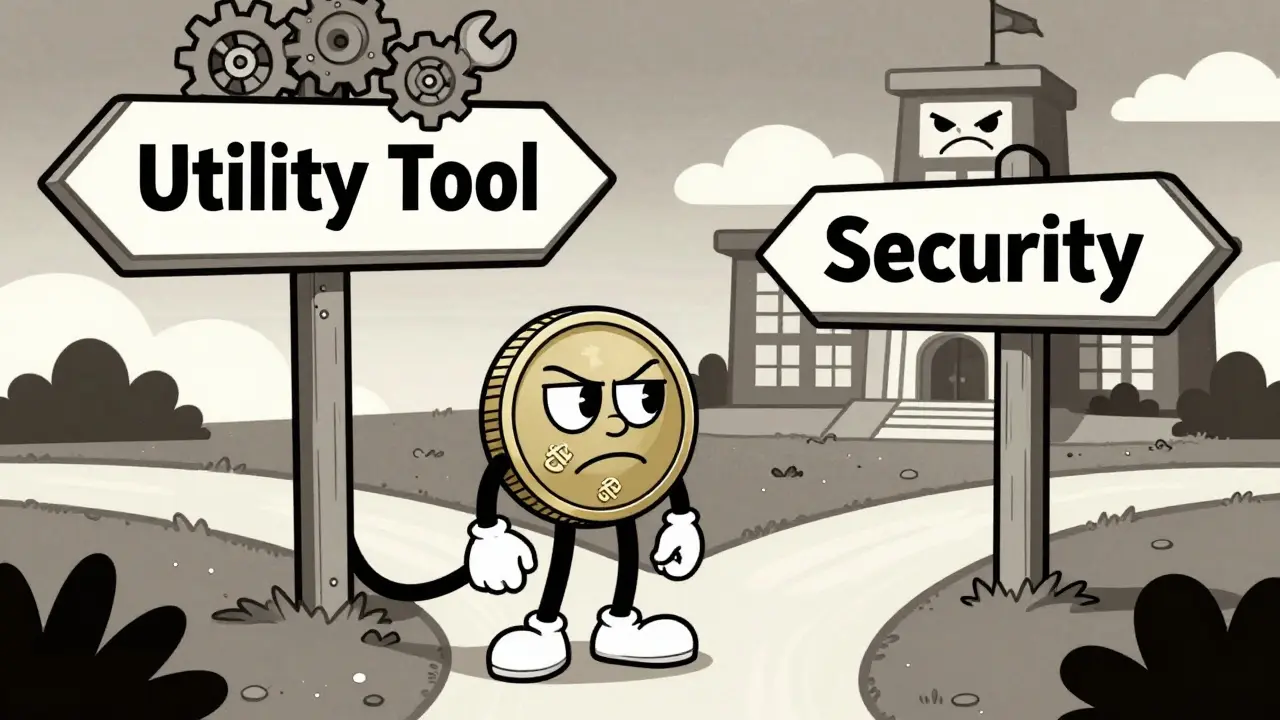

Imagine waking up to find your favorite altcoin project is suddenly facing a massive federal lawsuit, and the token you held for utility is now labeled an unregistered security. For many in the crypto space, this isn't a nightmare scenario-it's a daily reality. The line between a "digital tool" and a "security" is often thinner than a single line of code, and crossing it can mean the difference between a thriving project and a total shutdown.
The stakes shifted dramatically on March 17, 2026. The SEC is the U.S. Securities and Exchange Commission, the primary federal regulator responsible for protecting investors and maintaining fair markets and the CFTC (Commodity Futures Trading Commission) finally stopped fighting and teamed up. They released a joint interpretive framework that tries to put every token into a specific box. While they claim this provides "clarity," it actually highlights just how much regulatory risk exists for projects that don't fit perfectly into their new categories.
The Five Token Categories: Where Does Your Altcoin Fit?
The regulators have basically created a filing cabinet for crypto. If your token falls into the first four categories, you're generally in the clear regarding securities laws. If it hits the fifth, you're in the crosshairs of the Securities Act of 1933. Here is the breakdown of the current taxonomy:
| Category | General Status | Primary Regulator | Key Example/Characteristic |
|---|---|---|---|
| Digital Commodities | Non-Security | CFTC | Assets with no central issuer (e.g., Bitcoin) |
| Digital Collectibles | Non-Security | Varies | Unique digital art or limited editions |
| Digital Tools | Non-Security | Varies | Tokens providing specific network utility/access |
| Stablecoins | Non-Security (mostly) | Varies/CFTC | Assets pegged to a stable value (USD, Gold) |
| Digital Securities | Security | SEC | Tokens promising profit from managerial efforts |
The problem? Most altcoins aren't a single thing. You might have a token that acts as a tool for governance but was sold to early investors as a way to make money. This "hybrid" nature is where the danger lies. If the SEC decides the investment aspect outweighs the utility, your "tool" becomes a security instantly.
The Howey Test: The Gold Standard of Risk
Whether we are in 1946 or 2026, the Howey Test is still the hammer the SEC uses to crack down on projects. Derived from the case SEC v. W.J. Howey Co., this test asks if there is: (1) an investment of money, (2) in a common enterprise, (3) with a reasonable expectation of profits, (4) derived from the efforts of others.
For most altcoin founders, this is a minefield. If you told your community, "Buy our token now because our team of expert developers is going to build a revolutionary L2 scaling solution that will drive the price up," you just checked every single box of the Howey Test. You've created an investment contract. The regulators have made it clear: it doesn't matter if the token is on-chain or off-chain, or if you call it a "utility token"-if it looks like a security and acts like a security, it's a security.
The Escape Hatch: Can a Token Stop Being a Security?
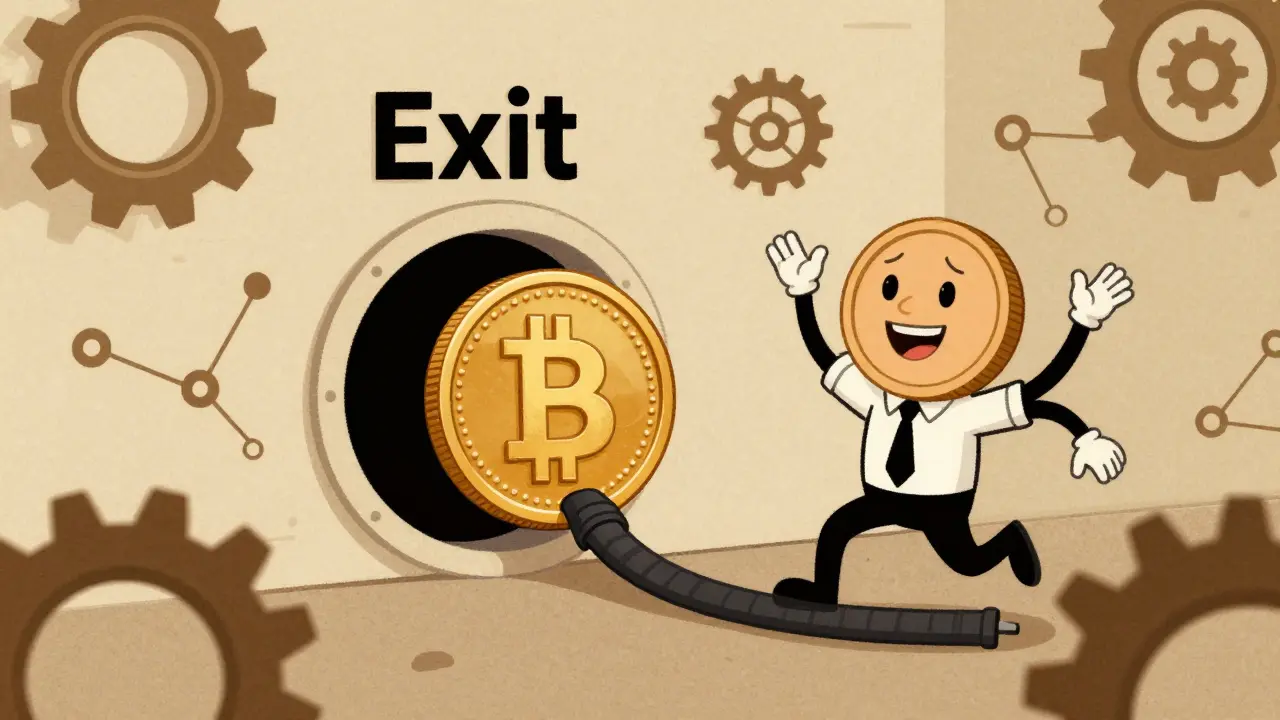
One of the most interesting parts of the March 2026 guidance is the concept of the "exit pathway." The SEC acknowledges that a token might start as a security (because it was sold to fund development) but can eventually stop being one. This happens when the project becomes so decentralized that the original developers are no longer the "essential managerial effort" driving the value.
In theory, if a project reaches a state of "sufficient decentralization," the link between the token and the original investment contract is broken. However, the SEC hasn't given us a checklist or a specific number of nodes to reach to achieve this. This leaves projects in a precarious position-guessing when they are "decentralized enough" to stop filing paperwork, only to find out later they were still under the SEC's thumb.

High-Risk Activities: Airdrops, Staking, and Wrapping
It's not just about the token sale; it's about how the token behaves. Several common altcoin activities are now under intense scrutiny:
- Airdrops: If an airdrop is used as an inducement to get people to provide capital or specific labor to a project, it could be viewed as an unregistered offering.
- Protocol Staking: When users stake tokens to secure a network and receive a yield, regulators look at whether that yield is a return on a "common enterprise."
- Wrapping Tokens: Using cross-chain bridges to create "wrapped" versions of assets can trigger new classifications. If the wrapping process involves a third party promising a specific value or return, that wrapper might be a security even if the underlying asset isn't.
These activities create a bifurcation. A token might be a non-security when you trade it on a decentralized exchange, but the specific way it was distributed via a staking pool might be an illegal security contract. This makes compliance a nightmare for exchanges that have to decide which assets to list based on how they were launched.
Enforcement Realities: Lessons from the Field
The SEC isn't just writing guidelines; they are suing. The landmark Ripple Labs case showed the world that even a token used for fast payments (XRP) could be viewed as a security depending on how it was sold. When the SEC wins these cases, the result is usually heavy fines and the token being delisted from major exchanges, which tanks the price.
If you're launching a project, the pressure is on to provide honest disclosures. Vague promises of "to the moon" are no longer just marketing fluff-they are evidence in a court of law that you induced an investment based on an expectation of profit. Projects must now be extremely careful about their governance structures and how they describe their roadmap to the public.
The Global Maze: Beyond the US Border
While the SEC and CFTC dominate the headlines, the IOSCO (International Organization of Securities Commissions) is working to sync these rules globally. However, the reality is messy. A token might be a "digital commodity" in the US, a "payment instrument" in the EU, and something entirely different in Asia.
According to the Atlantic Council's Cryptocurrency Regulation Tracker, there is no such thing as a global standard. This means altcoin projects face a fragmented landscape where they must comply with multiple, sometimes contradictory, sets of laws. What keeps you safe in one jurisdiction might actually be a red flag in another.
Can an altcoin ever truly stop being a security?
Yes, according to the March 2026 interpretation. If a project becomes sufficiently decentralized and the token holders no longer rely on a central group of developers for "essential managerial efforts," the asset can separate from the original investment contract and lose its securities classification. However, the exact metrics for "sufficient decentralization" are still undefined.
Does the Howey Test still apply to tokens in 2026?
Absolutely. The Howey Test remains the foundational legal standard used by the SEC to determine if a crypto asset is an "investment contract" and therefore a security. It focuses on the investment of money in a common enterprise with a reasonable expectation of profit based on the efforts of others.
What happens if a token is classified as a digital security?
The issuer must comply with full registration and disclosure requirements under the Securities Act of 1933 and the Securities Exchange Act of 1934. Failure to do so can lead to SEC enforcement actions, including heavy fines, trading suspensions, and legal mandates to offer buy-backs to investors.
Are stablecoins always exempt from securities laws?
Generally, stablecoins with appropriate structures are classified as non-securities. However, if a stablecoin is structured to pay dividends or promises a profit derived from the issuer's management of reserves, it could potentially be reclassified as a security.
How do airdrops create regulatory risk?
An airdrop can be seen as an investment contract if it's used as an inducement to get users to contribute capital or essential effort to the project. If the "free" tokens are essentially a reward for an investment of labor or money, the SEC may view the distribution as an unregistered securities offering.
What to do next?
If you are an investor or a project founder, you can't afford to ignore these classifications. For founders, the first step is a professional audit of your tokenomics. Look at your marketing materials: are you promising profits? Are you claiming your team is the sole driver of value? If so, you may need to pivot your communication strategy toward utility and decentralization.
For investors, diversification is your best bet. Don't put all your capital into tokens that have high "centralization risk"-projects where a single team holds all the keys and makes all the promises. The safer bets are generally those that already resemble digital commodities or have a clear, non-financial utility that doesn't rely on a central manager to function.






Gareth Hobbs
12 Apr 2026 at 19:34Absolute joke!!! The SEC and CFTC "teaming up" is just a front for the globalist agenda to track every single cent we spend... typical US gov overreach!!! They want us all in their "filing cabinets" so they can freeze accounts whenever we dare to think for ourselves!!!! Its all a scam to push CBDCs while the real coins get murdered by fake laws... wake up people!!!!!