

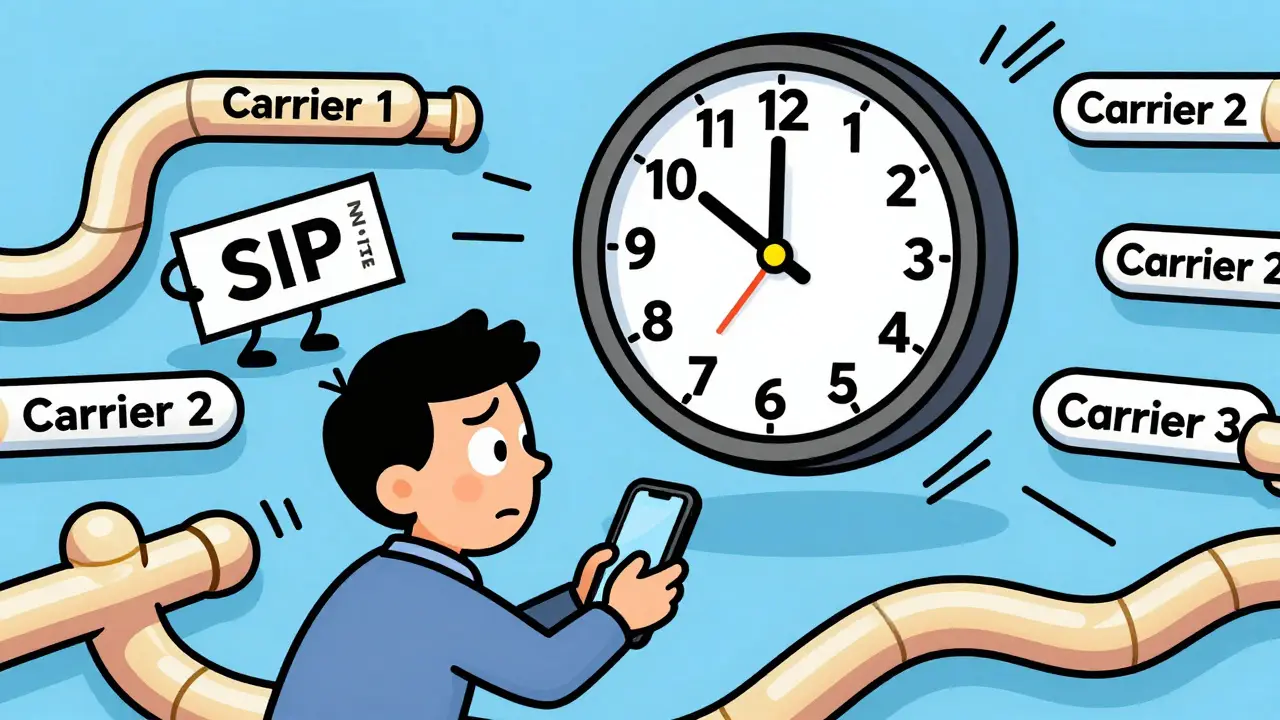

Ever dialed a number and sat there in silence for four seconds before hearing the ring? You’re not imagining it. That’s post-dial delay-and it’s killing call success rates in VoIP systems. It’s not just annoying; it’s costing businesses leads, customer trust, and revenue. When users hear nothing after hitting ‘call,’ they hang up. Studies show abandonment spikes by 30-40% when this delay hits five seconds. The question isn’t whether you have PDD-it’s whether you know if it’s caused by signaling or media problems. And the fix for each is completely different.
What Exactly Is Post-Dial Delay?
Post-dial delay (PDD) is the time between when you finish typing the last digit and when you hear the first sign the call is connecting-usually a ringback tone or a recorded message like “the number you’ve dialed is currently ringing.” It doesn’t include the time it takes to dial. It starts the moment the last digit is sent. In SIP-based VoIP systems, this means from the moment your PBX sends the SIP INVITE message to the moment it receives the first 180 Ringing or 183 Session Progress response. Industry standards say anything under seven seconds is acceptable. But that’s the bare minimum. Premium VoIP services aim for under two seconds. The average across the industry? Around 2.8 seconds. Companies like Twilio are pushing sub-1.2 seconds. If your system is hitting 3.5 seconds or more, you’re in trouble.Why PDD Matters More Than You Think
This isn’t just about comfort. It’s about business outcomes. Sales teams using VoIP report a 7% drop in lead conversion when PDD jumps from 1.8 seconds to 4.3 seconds. Customer service centers see customer satisfaction scores fall by up to 22 points when delays exceed three seconds. On Trustpilot, 18% of all VoIP complaints mention “waiting too long for ringback.” On Reddit’s r/VOIP, users describe it as “like calling into a black hole.” And it’s getting worse. The average VoIP call now passes through 3.7 carriers, up from 2.1 in 2020. Each hop adds 300-800ms of delay. International calls? New York to Tokyo adds 140ms just from physics-light travels fast, but not that fast over 10,800 kilometers of fiber. Combine that with slow SIP processing, and you’ve got a 5-second delay before the first ring even starts.Signaling vs Media: The Two Main Culprits
PDD comes from two places: signaling and media. They’re not the same. And you can’t fix one by tweaking the other. Signaling delays happen in the control layer-the SIP messages that set up the call. This includes SIP INVITE, responses like 180 Ringing, 183 Session Progress, and 200 OK. If your PBX or carrier doesn’t handle these messages correctly, the call stalls. Here’s the real problem: not all carriers follow RFC 3261. Some send a 183 Session Progress without including any media info (SDP). That forces your system to wait for a 180 Ringing before playing ringback. That wait? 1.2 to 2.5 seconds. Other carriers delay sending any response until they’ve fully routed the call-adding 1-3 seconds of silence. This is the #1 cause of PDD, accounting for 60-70% of cases. Media delays happen after signaling. This is when the audio path is being established-codec negotiation, RTP stream setup, TLS handshake, firewall traversal. These add 200-600ms. They’re slower than signaling issues, but they’re still real. TLS-secured SIP trunks, for example, can add 300-600ms while validating certificates. Poor network conditions, especially with weak Wi-Fi (below -100dBm), can push this over a full second. The key difference? Signaling delays mean complete silence. Media delays might let you hear crackles, partial tones, or stuttered ringback. If you hear nothing, it’s signaling. If you hear something broken, it’s media.
How to Diagnose the Root Cause
You need packet captures. No way around it. Tools like Wireshark or specialized platforms like Twilio Voice Insights are essential. Here’s how to do it:- Start a SIP trace from the moment the last digit is dialed until the first 18x response.
- Look at the timestamps between SIP INVITE and the first 180 or 183.
- If the delay is before the first response? Signaling issue.
- If the delay is between 183 and 200 OK? Media negotiation.
- Check for SDP in 183 responses. If it’s missing, your system is waiting unnecessarily.
- Look for multiple carrier hops in the Via headers. Each one adds delay.
Proven Fixes for Each Type of Delay
For signaling delays: - Configure your PBX to play local ringback immediately after sending SIP INVITE. This cuts perceived delay by 100%. Users hear ringback right away, even if the far end is still processing. It doesn’t fix the root problem-but it fixes the user experience. Many enterprises do this by default. - Eliminate unnecessary carrier hops. One network admin cut PDD from 3.8s to 0.9s by switching from Least Cost Routing (LCR) to direct connections with Tier-1 carriers. Two fewer hops = 600-1,600ms gone. - Work with your SIP trunk provider to standardize SIP response handling. Ask them: “Do you send 180 Ringing or 183 Session Progress? Does 183 include SDP?” If they don’t know, it’s time to switch. For media delays: - Disable TLS if you don’t need it. If you’re on a private network, plain SIP over UDP is faster. If you need encryption, use SRTP, not TLS for signaling. - Optimize codec selection. G.711 is slower to negotiate than G.729 or Opus. But Opus is more resilient on lossy networks. Test which gives you the fastest setup. - Improve Wi-Fi. Weak signal = 1-2 second delays. Move access points, reduce interference, or use wired phones for critical lines.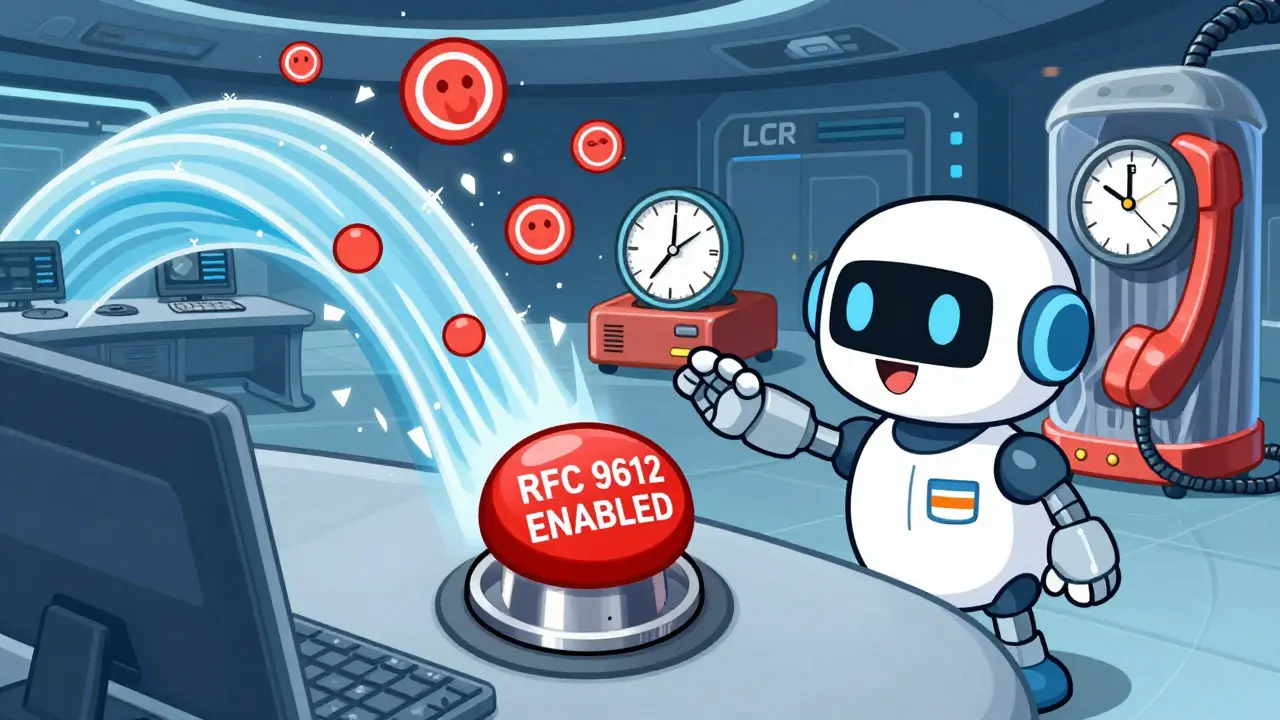








Salomi Cummingham
16 Dec 2025 at 02:14Okay, I’ve been dealing with this for years and I’m not even in telecom-I just run a small customer service team. But let me tell you, that 4-second silence? It feels like an eternity. I had a client hang up on us three times in one day because she thought the line was dead. We turned on local ringback and it was like night and day. No more ‘Is this thing on?’ calls. It’s not fixing the root cause, sure, but it’s fixing the human experience. And honestly, that’s what matters. People don’t care about SIP headers-they care if they hear a ring before they lose patience. I wish more companies understood that. We went from 37% abandonment to 9% in two months. Just. That. One. Change.
Also, if you’re still using LCR for voice? Please stop. It’s like ordering a five-star meal and getting it delivered by a guy on a bicycle with a broken handlebar. You’re saving pennies but losing customers by the dozen. Direct routes? Worth every penny. Even if your CFO cries.
And yes, Wi-Fi matters. My intern tried to take a call from the bathroom. We lost the connection mid-sentence. He was on -105dBm. That’s not a call-that’s a cry for help. Move the router. Or buy a corded phone. Your clients will thank you.
I’ve seen this same pattern in 12 different companies. It’s always the same: silence = distrust. Noise = confusion. Ringback = relief. It’s psychology wrapped in telecom. We’re not engineers here-we’re people trying to talk to other people. Don’t forget that.
Also, if your SIP provider doesn’t know what SDP is? Fire them. I’m not joking. They’re not your partner-they’re your liability.
And yes, I’m still mad about the 2.8-second delay we had last year. I lost a $22k deal because someone thought the line was dead. Don’t let that be you.