



Imagine trying to buy a cup of coffee with Bitcoin. You scan a QR code, send the payment, and then... you wait. You wait ten minutes for the first confirmation, and maybe another hour to be sure it's settled. Meanwhile, you've paid a $5 transaction fee for a $4 latte. It's a broken experience. This is exactly why the Lightning Network is a second-layer payment protocol built on top of the Bitcoin blockchain to enable near-instant, low-cost transactions. By moving the heavy lifting off the main chain, it turns Bitcoin from a digital gold vault into a spendable currency.
The Quick Rundown
- Speed: Transactions settle in milliseconds instead of 10-60 minutes.
- Cost: Fees drop from several dollars (or more) to fractions of a cent.
- Capacity: Theoretically handles millions of transactions per second, dwarfing Bitcoin's 7 TPS.
- Security: Still relies on the main Bitcoin blockchain for final settlement.
How the Lightning Network Actually Works
To understand the Lightning Network, you first have to understand the problem it solves. The base layer of Bitcoin is secure but slow. Every single transaction must be verified by miners and added to a block. When the network gets crowded, fees skyrocket and wait times climb. This is known as a scaling bottleneck.
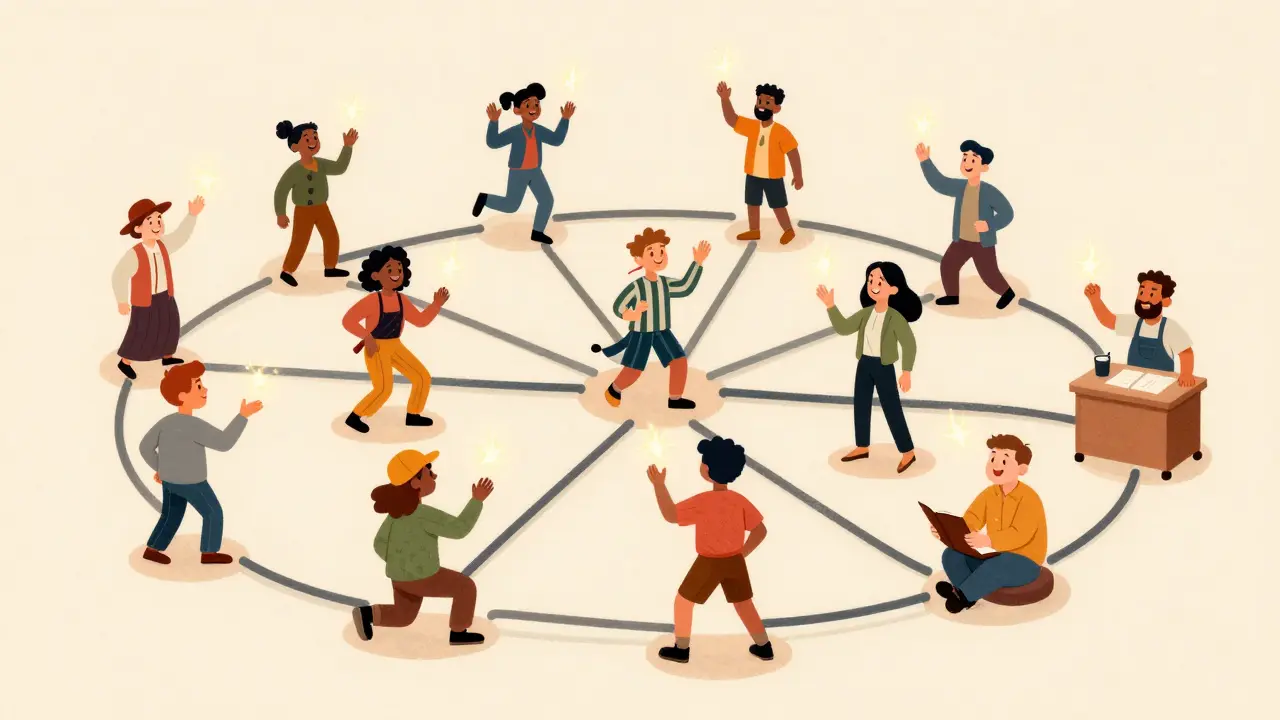
Lightning solves this by using Payment Channels. Think of a payment channel like a shared tab at a bar. Instead of paying for every single drink individually (which would be like an on-chain transaction), you open a tab at the start of the night and just keep a tally of what you owe. At the end of the night, you settle the final bill once.
In technical terms, two people open a channel by creating an on-chain transaction that locks a specific amount of BTC into a 2-of-2 multi-signature address. This means both parties must sign off before any funds can be moved. Once this channel is open, they can send money back and forth thousands of times. These updates happen instantly and privately off-chain. Only when they decide to close the channel is the final balance broadcast back to the main Bitcoin blockchain.
Speed and Cost: Layer 1 vs. Layer 2
The difference in performance isn't just a slight improvement; it's a total transformation. When you use the base layer, you're fighting for space in a block that only updates every ten minutes. With Lightning, you're essentially communicating directly with another peer.
| Feature | Bitcoin Layer 1 (On-Chain) | Lightning Network (Off-Chain) |
|---|---|---|
| Settlement Speed | 10 to 60 minutes | Under 1 second |
| Transaction Fees | $1 to $50+ (variable) | Fractions of a cent |
| Throughput | ~7 transactions per second | Millions per second (theoretical) |
| Primary Use Case | Long-term storage, large transfers | Micropayments, daily commerce |

The Magic of Micropayments
One of the most exciting parts of this technology is the birth of viable Micropayments. Before Lightning, sending $0.10 was impossible because the network fee would be 100x the payment amount. Now, we can actually build a world where you pay a fraction of a cent to read a single article or a few cents to watch a short video.
This opens up entirely new business models. Instead of monthly subscriptions, imagine a web where you pay as you go, in real-time, without ever signing up for an account or handing over a credit card. It removes the friction of the "paywall" and replaces it with a seamless stream of value.
Real-World Use Cases
While the tech sounds complex, the application is simple. Here are a few ways it's being used today:
- Daily Purchases: Buying coffee or snacks at a vendor who accepts Lightning. No waiting for confirmations; the merchant gets paid instantly.
- Cross-Border Transfers: Sending money to someone in another country without dealing with Swift codes, 3-5 day waiting periods, or predatory exchange rates.
- Content Monetization: Tipping a creator a few satoshis (the smallest unit of Bitcoin) for a helpful post without the overhead of a payment processor like PayPal or Stripe.
- Frequent B2B Payments: Two companies that trade daily can keep a channel open for weeks, settling their balance on-chain only once a month to save on fees.
The Catch: Liquidity and Online Requirements
It's not a perfect system, and there are a few hurdles to be aware of. The biggest is Channel Liquidity. For a payment to move through the network, there must be enough funds in the channels along the path. If you want to send 1 BTC to a friend, but the intermediary channels only have 0.1 BTC available, the payment will fail. This requires a process called "rebalancing" to keep the funds flowing in both directions.
Then there's the online issue. Because Lightning is a state-channel system, both parties generally need to be online to sign off on a transaction. If you're offline and someone tries to close a channel unfairly, you could potentially lose funds. To solve this, users can employ Watchtowers-third-party services that monitor the blockchain and automatically broadcast a "justice transaction" if a partner tries to cheat while you're away.

Is Lightning Right for You?
Whether you should use Lightning depends on what you're trying to do with your crypto. If you're a "HODLer" who puts money in a cold wallet and doesn't touch it for five years, you don't need Lightning. The main chain is exactly where your funds should be for maximum security.
However, if you actually want to use your Bitcoin for spending, Lightning is non-negotiable. As of early 2026, the network has grown to over 60,000 public channels with thousands of BTC in visible capacity, meaning the infrastructure is becoming robust enough for the average person to use without needing to be a technical expert.
Does using the Lightning Network make my Bitcoin less secure?
Not fundamentally. Lightning transactions are backed by the same security as the Bitcoin blockchain. The funds are locked in a multi-sig contract on-chain. The only added risk is the "online requirement"; if you don't use a watchtower and your peer tries to steal funds while you're offline, there's a risk. But for most users using modern wallets, this is a minimal concern.
Do I have to pay fees to use Lightning?
You pay standard Bitcoin on-chain fees only twice: once when you open a channel and once when you close it. The transactions that happen *inside* the channel are nearly free, often costing just a few satoshis to incentivize routing nodes to move your payment along.
What is a 'Satoshi' in the context of Lightning?
A Satoshi is the smallest unit of Bitcoin, equal to 0.00000001 BTC. Because Lightning allows for such tiny payments, most users talk in terms of Satoshis (Sats) rather than whole Bitcoins when buying coffee or tipping creators.
Can I send any amount of money via Lightning?
Technically yes, but you are limited by the liquidity of the channel. If a channel only has 0.1 BTC in it, you can't send 1 BTC through it. For massive transfers, it is actually safer and more practical to just use the main Bitcoin blockchain (Layer 1).
How do I get started with a Lightning wallet?
The easiest way is to use a "custodial" wallet where the company manages the channels for you. If you prefer full control, you can use a "non-custodial" wallet, though this requires you to manage your own liquidity and channel openings.
Next Steps and Troubleshooting
If you're new to the ecosystem, start with a reputable Lightning-enabled wallet. If you find that your payments are frequently failing, it's likely a liquidity issue. Try breaking your payment into smaller chunks or find a different routing path. For those looking to accept payments as a business, consider setting up a permanent node to maintain your own channels, which ensures you always have the capacity to receive funds from your customers without relying on third-party intermediaries.









Nathan Jimerson
10 Apr 2026 at 23:30This is a great breakdown of the tech! Really hopeful that we'll see more vendors adopting this soon.