

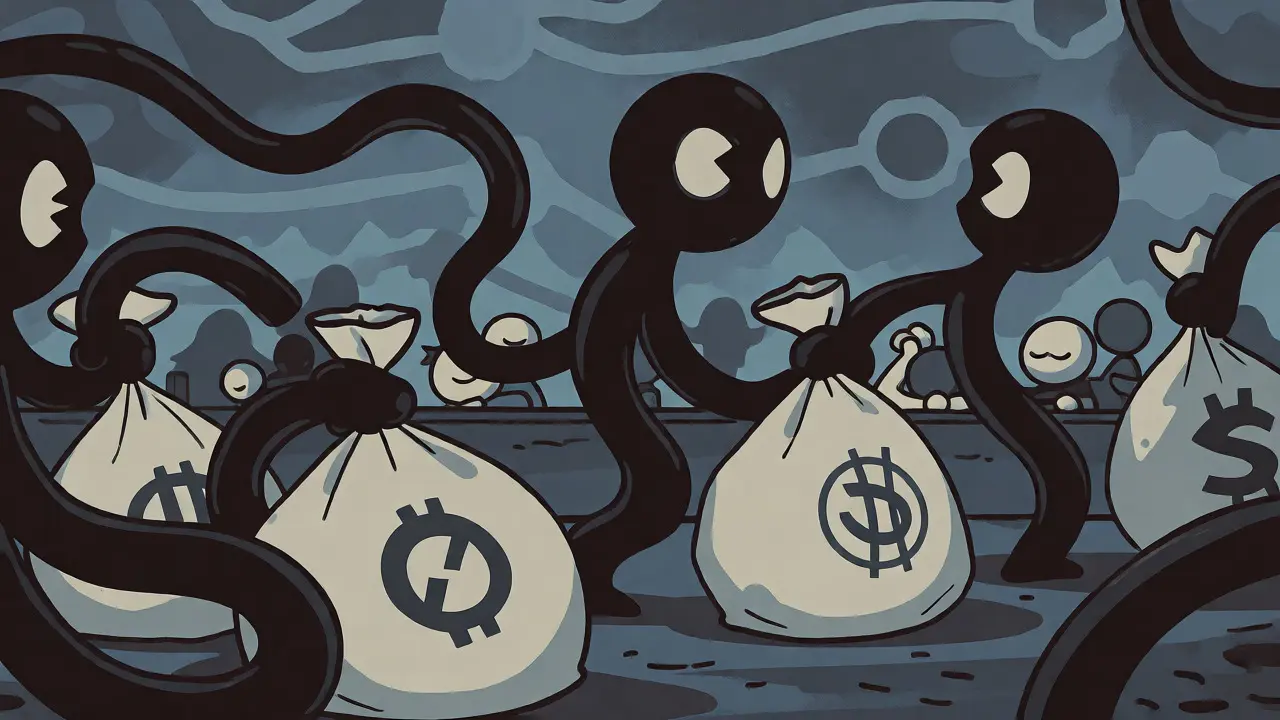

You’re scrolling through X or Telegram, see a ticker flashing green with a message screaming "To the moon!" and you buy. Ten minutes later, the price crashes. You just got caught in a pump-and-dump coordinated market manipulation scheme where insiders accumulate a low-liquidity token, hype it up via social channels, and sell into the resulting retail buying pressure. This isn't bad luck; it’s a predictable pattern of fraud that costs retail traders millions annually. The challenge for exchanges, regulators, and savvy investors is spotting these groups before the collapse happens.
| Phase | Market Behavior | Social Signal |
|---|---|---|
| Accumulation | Low volume, stable price, insider wallets buying quietly. | Private group chats forming, minimal public chatter. |
| Promotion | Price starts creeping up, volume spikes slightly. | Bursts of identical messages, influencers posting without disclosure. |
| Execution | Rapid price surge, high volatility, wide spreads. | FOMO language ("Buy now!", "Last chance!"), synchronized hashtags. |
| Distribution | Insiders sell, liquidity drains, price collapses. | Confusion, panic selling, deletion of promotional posts. |
The Anatomy of a Coordinated Manipulation
Think of a pump-and-dump like a flash mob that turns into a stampede. It usually follows a strict timeline. First, organizers pick a token with low liquidity-often a newly launched altcoin or a forgotten meme coin. They accumulate large positions while the market is quiet. Then comes the announcement phase. In traditional markets, this might be a press release. In crypto, it’s often a pinned message in a private Telegram group or a sudden tweet from a coordinated network of accounts.
The critical moment is the propagation. Organizers tell their members exactly when to buy. If everyone buys at the same second, the order book gets eaten alive by market orders. This creates artificial demand. Retail traders see the green candle on their charts and jump in, fearing they’ll miss out. By the time outsiders arrive, the insiders are already selling. A study published in the Journal of Financial and Quantitative Analysis noted that these events produce dramatic short-term reversals, transferring wealth from late buyers to early accumulators.
Why Market Data Alone Isn’t Enough
You might think watching volume and price spikes is enough to catch a pump. But raw data is noisy. Legitimate news, exchange listings, or protocol upgrades can also cause sudden surges. Early academic attempts to detect pumps using simple thresholds failed miserably. One 2018 study found that using a basic 3% price increase and 25% volume spike threshold flagged over 9,000 potential events-far too many to be useful. Most were false positives.
To distinguish manipulation from organic growth, you need context. Look at the order book depth. In a genuine breakout, buy walls support the price rise. In a pump-and-dump, you often see thin liquidity above the current price, allowing small orders to push the price up disproportionately fast. Also, watch the bid-ask spread. During a manipulated pump, spreads often widen as market makers pull back, unsure of the real value. If the price jumps 20% but the trading volume remains relatively low compared to the market cap, that’s a red flag.

Leveraging Social Signals for Early Detection
This is where social signal analysis becomes your best friend. Manipulation requires coordination, and coordination leaves digital footprints. The most reliable indicator isn’t just that people are talking about a coin, but how they are talking about it. Look for synchronization. If hundreds of accounts post the exact same phrase, like "Target $0.05," within seconds of each other, that’s not organic conversation. That’s a script.
High-risk language patterns include urgent imperatives like "Buy now," "No selling," and "VIP only." The Netherlands Authority for the Financial Markets (AFM) has identified terms like "FOMO" and "moon" as part of recognizable manipulation patterns. But keywords alone aren’t proof. You need to analyze the network structure. Are the accounts new? Do they have low follower counts but high engagement rates? Are they reposting content from a central hub?
Telegram remains the epicenter for many of these schemes. A recent study analyzed over 280,000 posts from pump-organizing groups and found that specific classifiers could identify announcements with high accuracy. The key is timing. Manipulative signals often precede price movements by seconds. If you can scrape Telegram data in real-time and correlate message bursts with wallet activity, you can spot the pump before the chart even registers it.
Blockchain Forensics: Following the Money
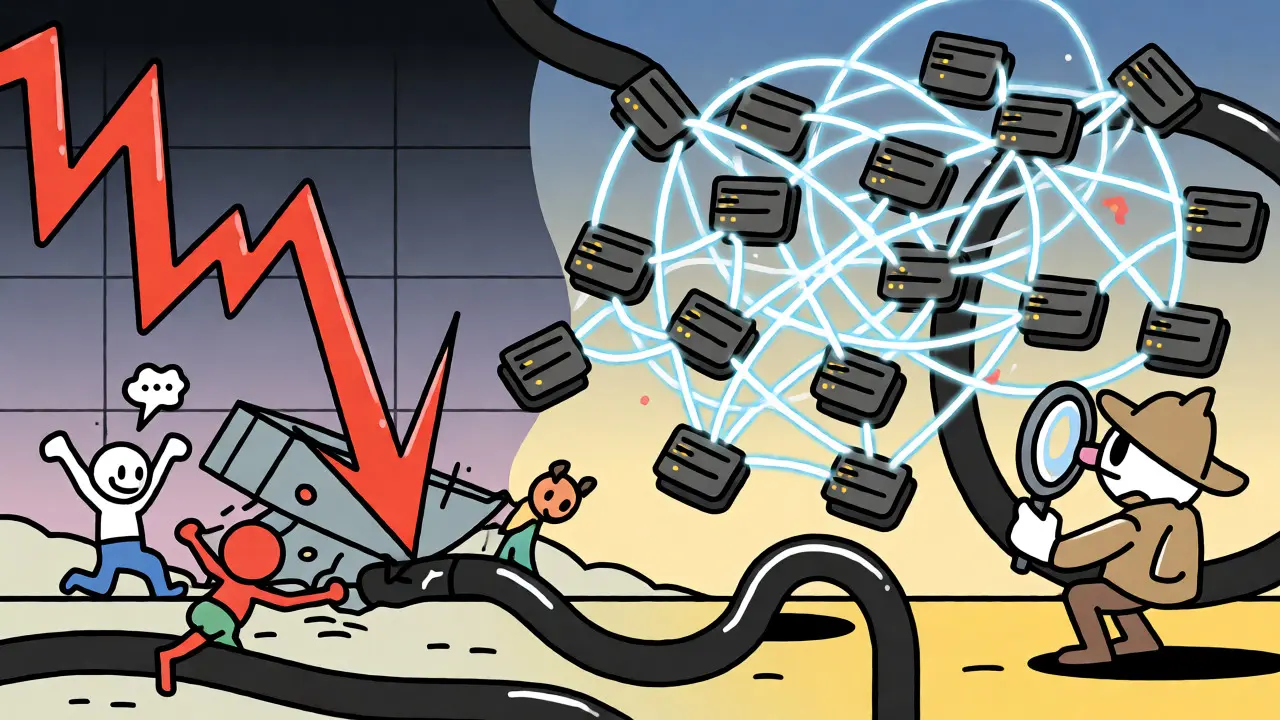
While social media shows intent, blockchain data proves execution. Advanced detection systems build graphs connecting wallets, tokens, and exchanges. In a coordinated dump, you’ll often see clusters of wallets funded by the same source address. These wallets buy right before the announcement and sell immediately after the peak.
Chainalysis uses screening rules to identify potential decentralized exchange (DEX) pumps. For example, if five distinct users trade a token, followed by one address removing over 70% of the liquidity pool, leaving less than $300 behind, it’s a strong candidate for a rug-pull style pump-and-dump. In 2023 alone, such patterns accounted for an estimated $241.6 million in aggregate profit across ERC-20 tokens. However, remember that correlation isn’t causation. Some legitimate projects burn liquidity or move funds for operational reasons. Cross-referencing wallet flows with social timing helps filter out these false positives.
Building a Practical Surveillance Workflow
If you’re building a tool or just trying to protect your own portfolio, don’t rely on a single metric. Use a layered approach. Start with a baseline. Record the normal volatility and volume for a token over 30 days. Then, monitor for anomalies.
- Step 1: Anomaly Detection. Flag tokens where volume z-scores exceed 3 standard deviations from the mean.
- Step 2: Social Correlation. Check if the volume spike aligns with a burst of messages on X or Telegram containing high-risk keywords.
- Step 3: Wallet Analysis. Identify if the top buyers are new addresses funded by a common source.
- Step 4: Liquidity Check. Verify if the liquidity pool is locked or if the deployer holds a significant percentage of supply.
A risk score is more useful than a binary "fraud/not fraud" label. Assign points for synchronized messaging, insider wallet clustering, and rapid liquidity withdrawal. High scores warrant manual review. Remember, the goal is to minimize false accusations against legitimate communities while catching the predators.
Common Pitfalls and False Positives
Not every price spike is a scam. Viral memes, celebrity endorsements, or major exchange listings can mimic pump behavior. The difference lies in sustainability. Organic pumps often retain some price gains because genuine demand replaces the initial hype. Manipulated dumps usually result in prices dropping below the pre-pump level within hours or days.
Another trap is survivorship bias. We hear about the coins that crashed hard, but we rarely discuss the thousands of low-cap tokens that simply drift sideways. Models trained on historical data may fail against new tactics, such as AI-generated spam or encrypted chat groups that hide their coordination. Always stay skeptical of "guaranteed" returns and remember that if a tip sounds too good to be true, someone else is likely already holding the bag.
What is the primary difference between a pump-and-dump and organic volatility?
Organic volatility is driven by external news, fundamental changes, or broad market sentiment affecting many assets simultaneously. Pump-and-dumps are isolated events affecting specific low-liquidity tokens, characterized by synchronized social promotion and insider accumulation prior to the price rise.
How do Telegram groups facilitate pump-and-dump schemes?
Telegram allows organizers to communicate precise buy/sell times to thousands of members instantly. Members receive explicit signals, such as "Buy at 12:00 PM," ensuring simultaneous entry. This coordination creates artificial demand spikes that insiders exploit by selling into the liquidity provided by the group and subsequent retail followers.
Can machine learning reliably detect all pump-and-dump events?
Machine learning models, particularly those combining NLP for social text and graph neural networks for wallet flows, show high efficacy (F1 scores >0.8 in controlled studies). However, they are not perfect. False positives occur due to legitimate viral trends, and false negatives happen with private groups or novel manipulation tactics. Human oversight remains essential for final adjudication.
What role does liquidity play in identifying a pump-and-dump?
Low liquidity is a prerequisite for most pump-and-dumps because it allows small capital to move prices significantly. A key warning sign is the removal of liquidity pools shortly after the price peak. If the deployer or main holders withdraw the majority of the liquidity, it prevents remaining holders from selling, effectively trapping them.
Are all social media mentions of a coin suspicious?
No. Context matters. Organic discussion varies in tone, timing, and author diversity. Suspicious activity involves high lexical similarity (copy-paste messages), burstiness (many posts in seconds), and accounts with low history or follower counts promoting obscure tickers with imperative language like "buy now" or "to the moon."







Write a comment