


Remember when buying a coffee with Bitcoin felt like a science experiment? Fast forward to late 2026, and that clunky experience is ancient history. The blockchain space has matured from speculative chaos into a structured infrastructure layer powering real-world assets, high-frequency gaming, and enterprise supply chains. If you are looking for the next big breakout, you don't need to guess anymore. The data tells us exactly where the smart money is flowing.
The Shift from Speculation to Utility
The narrative has changed. We aren't just chasing moonshots; we are tracking adoption metrics. Institutional interest has surged, with Deloitte's Blockchain Survey showing institutional adoption rates climbing from 38% in 2024 to over 57% by mid-2025. This isn't just hype-it's balance sheets changing hands. The market value of cryptocurrencies sits near $4.5 trillion, growing steadily as companies integrate these networks for efficiency rather than just speculation. So, which specific projects are driving this shift right now?
Solana: The Speed King with New Armor
If you've ever tried to trade during a network spike on Ethereum, you know the pain of gas fees and slow confirmations. Solana solves this with raw speed, but its reputation took hits from past outages. That changed with Firedancer, a new validator client developed by Jump Crypto. Released fully in May 2025, Firedancer boosted network reliability by 400%. It processes up to 65,000 transactions per second (TPS), making it one of the fastest non-EVM chains available.
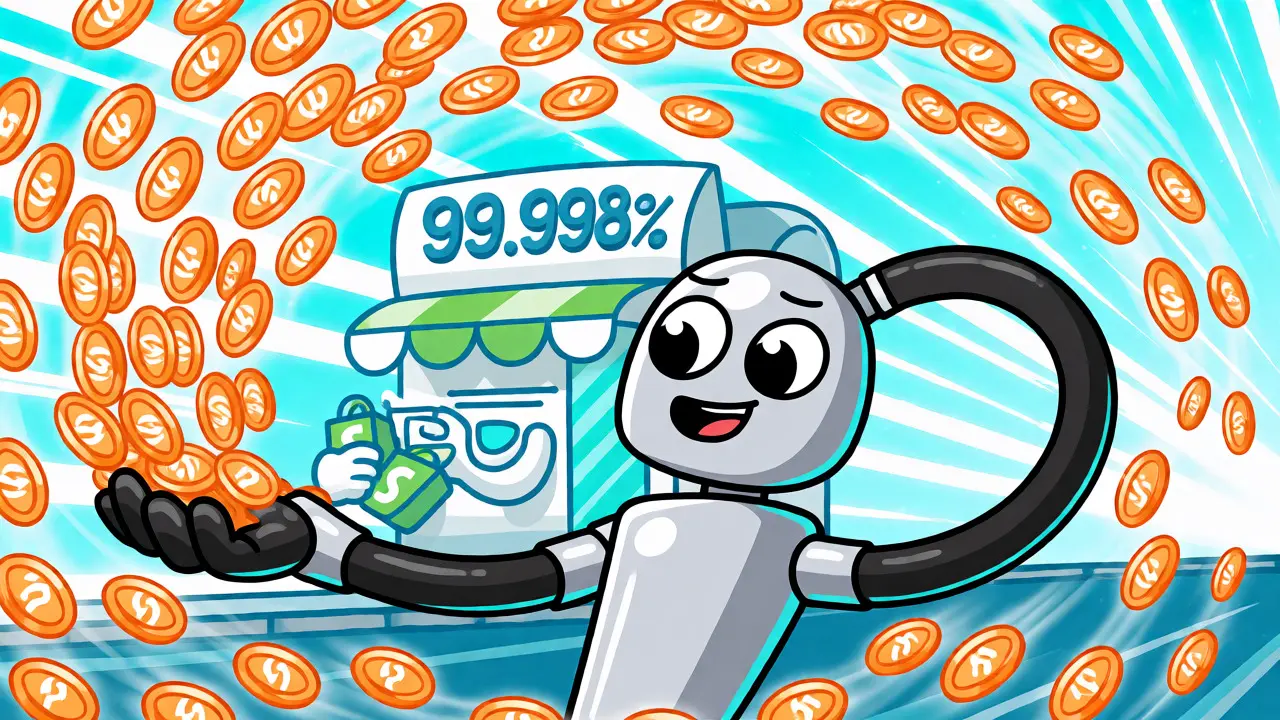
Why does this matter to you? Because stability equals trust. With Firedancer, Solana achieved 99.998% uptime during stress tests. Major retailers like Shopify integrated Solana payments directly, allowing over 12,000 merchants to accept crypto without friction. If you're building an app that needs instant finality-think payment gateways or online games-Solana is no longer a risky bet; it's a viable standard.
Sui: Built for Developers Who Hate Bugs
Ethereum's Solidity language is powerful but prone to critical errors if you miss a single line of code. Enter Sui, a Layer 1 blockchain built by former Meta engineers who worked on Diem. They created the Move programming language, which treats assets as first-class citizens. This means developers can write safer smart contracts much faster. A survey of 1,200 blockchain developers found that Move reduced development time by 63% compared to Solidity.
Sui uses parallel execution, meaning it doesn't process transactions one by one like a queue. Instead, it handles them simultaneously, hitting 120,000 TPS with sub-second finality. While it has fewer tools than Ethereum's massive ecosystem, its performance is unmatched for social apps and gaming. Naval Ravikant, a prominent investor, noted that Sui solves real problems for gaming where other chains fail. If you are a developer frustrated by security audits taking months, Sui's architecture might be your new best friend.
Hedera: The Enterprise Favorite
Not every company wants to deal with public blockchain volatility. Hedera offers a different model: it's not a traditional blockchain but a hashgraph consensus algorithm. This design allows for 10,000 TPS with finality in just 3-5 seconds. More importantly, it consumes 99.95% less energy than proof-of-work systems. For corporations worried about their carbon footprint, this is a major selling point.
Hedera's governance council includes giants like Google, IBM, and Boeing. These members invest $28 million annually into platform development, ensuring stability. The World Economic Forum labeled Hedera the 'enterprise blockchain of choice,' with 23 Fortune 500 companies using it for supply chain tracking and carbon credits. If you work in logistics or finance, you'll likely encounter Hedera before you encounter most meme coins. Its predictable transaction costs make budgeting easy, unlike the volatile fees seen on Ethereum.
Ethena: The Yield Generator
Stablecoins are usually boring-they hold their value, period. But Ethena changed the game with its synthetic dollar, USDe. Launched in early 2025, USDe generated $1.2 billion in total value locked within 45 days. How? By offering an annual yield of 8.2%, significantly higher than MakerDAO's DAI (3.5%) or Lido's stETH (4.1%).
However, high yield comes with risk. Ethena uses a delta-neutral strategy involving futures markets. Critics like economist Frances Coppola warn of hidden leverage risks during market crashes. Yet, for investors seeking yield beyond traditional savings accounts, Ethena represents a new asset class: the 'internet bond.' Just keep an eye on regulatory developments, especially regarding SEC scrutiny of synthetic assets.
| Feature | Solana | Sui | Hedera | Ethena |
|---|---|---|---|---|
| Primary Use Case | High-speed trading, DeFi, Gaming | Gaming, Social Apps, Asset Management | Enterprise Supply Chain, Carbon Credits | Yield-bearing Stablecoin Infrastructure |
| Throughput (TPS) | 65,000+ | 120,000+ | 10,000+ | N/A (Protocol Layer) |
| Consensus Model | Proof of History + PoS | Narwhal-Bullshark (Parallel Execution) | Hashgraph Gossip | CeFi/DeFi Hybrid Strategy |
| Key Advantage | Firedancer reliability & speed | Move language safety & speed | Enterprise governance & low energy | High yield (8.2% APY) |
| Main Risk | Hardware requirements for validators | Smaller developer ecosystem | Limited public dev talent pool | Regulatory uncertainty on synthetics |
Beyond Tokens: Real-World Assets and AI
Tokens are just the tip of the iceberg. The real growth is in tokenizing real-world assets (RWA). Christine Kim from Galaxy Digital predicts RWA tokenization will grow from $5.2 billion in 2024 to $35.7 billion by 2026. Imagine owning fractional shares of commercial real estate or gold stored in vaults, all tradable on-chain instantly. This bridges the gap between traditional finance and crypto.
Then there's the AI-blockchain fusion. Projects like Bittensor use cryptocurrency incentives to reward users for training machine learning models. This decentralized approach prevents tech monopolies from controlling AI progress. As AI agents start conducting transactions autonomously, they need a fast, programmable currency. Blockchains provide that rails. It’s not just about money moving; it’s about intelligence interacting with value.
How to Evaluate Your Next Investment
Don't just buy what's trending. Look at the fundamentals. Here is a quick checklist:
- Developer Activity: Check GitHub repositories. Are people actually building on the chain? Sui and Solana show strong activity, while some newer chains are ghost towns.
- Institutional Backing: Does the project have partners like Google or Visa? Hedera benefits heavily here.
- Technical Resilience: Did the network stay up during recent market volatility? Firedancer proved Solana's mettle.
- Real Utility: Is the token used for something other than speculation? Ethena's USDe generates actual yield through market mechanics.
The landscape in 2026 rewards patience and research. The wild west days of anonymous founders and vaporware are fading. Now, it's about robust infrastructure, clear utility, and sustainable economics. Whether you are a developer choosing a platform or an investor allocating capital, focus on projects that solve tangible problems. The winners won't be the loudest voices on Twitter; they'll be the ones quietly processing millions of transactions while keeping the lights on.
What makes Sui different from other Layer 1 blockchains?
Sui uses the Move programming language and a parallel execution model. Unlike traditional blockchains that process transactions sequentially, Sui identifies independent transactions and processes them simultaneously. This allows for higher throughput (up to 120,000 TPS) and lower latency, specifically benefiting applications with high user interaction like gaming and social media.
Is Solana still reliable after past network outages?
Yes, largely due to the implementation of Firedancer. This new validator client, deployed fully in 2025, improved network reliability by 400% and demonstrated 99.998% uptime during stress tests. It separates the consensus logic from the application logic, making the network more resilient to bugs and spikes.
Why do enterprises prefer Hedera over public blockchains?
Enterprises prefer Hedera for its predictable costs, high throughput (10,000 TPS), and energy efficiency (99.95% less energy than PoW). Additionally, its governance council includes major corporations like Google and IBM, providing a level of corporate accountability and support that purely community-driven chains lack.
What are the risks associated with Ethena's USDe stablecoin?
The primary risk is regulatory uncertainty and leverage exposure. USDe maintains its peg through a delta-neutral hedging strategy involving spot holdings and short futures positions. During extreme market volatility, liquidation cascades could threaten the peg, and regulators like the SEC are scrutinizing such synthetic structures closely.
How does AI integrate with blockchain technology?
AI integrates with blockchain through decentralized compute networks and autonomous agents. Projects like Bittensor incentivize users to contribute computing power and data for training AI models, rewarding them with tokens. This creates a marketplace for AI resources, preventing centralization and enabling smart contracts to interact with external AI predictions.






Write a comment