

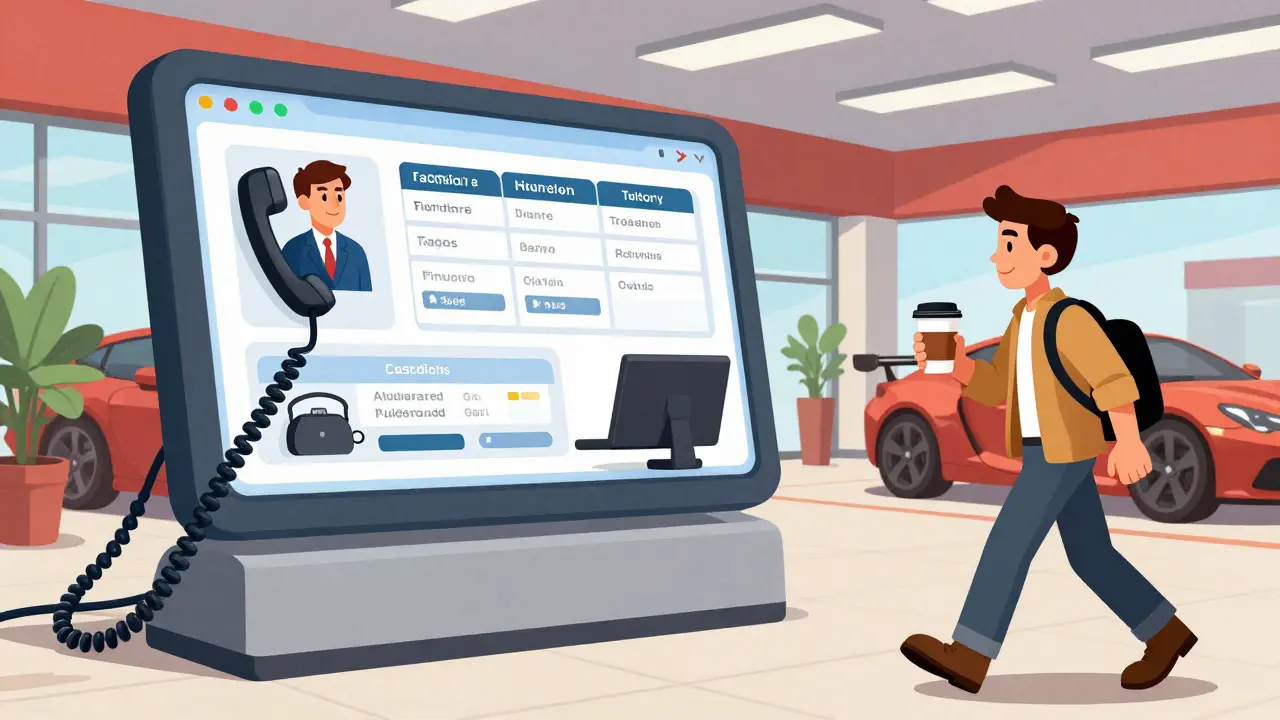

When a customer calls your dealership, every second counts. If they’re put on hold too long, get transferred three times, or hit voicemail without a clear message, they’re already halfway to another lot. That’s why modern automotive dealerships aren’t just upgrading their phones-they’re replacing them entirely with VoIP systems designed for car sales and service teams.
Why VoIP Isn’t Just Another Phone Upgrade
Traditional landlines are slow, expensive, and blind. They don’t tell you who’s calling until after you answer. They don’t log calls. They don’t connect to your CRM. And they definitely don’t help your service advisors recall that Mrs. Johnson’s 2021 Honda Civic had a recall last November. VoIP changes all that. Instead of copper wires and analog signals, VoIP turns your voice into digital data that flows over your internet connection. But it’s not just about cheaper calls. It’s about control. With VoIP, every call becomes a data point. Every interaction can be tracked, reviewed, and optimized. For automotive dealerships, this means sales teams can instantly see a caller’s history-whether they test drove a Ford F-150 last week, asked about financing, or left a voicemail about a trade-in. Service advisors can pull up repair logs before the customer even says hello. That kind of personalization doesn’t just impress customers-it closes deals.How VoIP Works on the Sales Floor
Picture this: A customer walks into your showroom. Five minutes later, they call from their phone to ask about a different color option. That call comes in. Instantly, the screen on the sales rep’s desk pops up with the customer’s name, contact info, previous interactions, and even the exact model they were looking at. No searching. No guessing. Just instant context. That’s CRM integration in action. Leading VoIP providers like Spyne, NUACOM, and TeleCloud connect directly to dealership management systems like DealerSocket, CDK Global, and E-Lead. When a call comes in, the system matches the number to a profile and pulls up:- Call history and timestamps
- Previous service records
- Trade-in offers made or declined
- Test drive status
- Financing applications submitted
Service Department: More Than Just Appointment Booking
The service bay is where VoIP really shines-not because it’s flashy, but because it’s practical. Service advisors used to juggle three phones: the main line, the shop line, and their personal cell. Now, with mobile VoIP apps from providers like Clarity Voice and Intermedia, they can use their smartphone as a dealership extension. Calls made from their phone show up as coming from the dealership’s main number. No more giving out personal numbers. No more missed calls because they were in the garage with no desk phone. When a customer calls to schedule an oil change, the advisor doesn’t have to flip through paper logs or search a separate scheduling app. The VoIP system syncs with the service management software. One click, and the appointment is booked. The system even sends automated reminders via text the day before. Call recording becomes a legal and training tool here. Imagine a customer disputes a $450 repair bill, claiming they were told it was $300. Without a recording, it’s their word against yours. With VoIP, you pull up the call log, replay the conversation, and see exactly what was said. That’s not just protection-it’s peace of mind. Managers use recordings to train new advisors. Listen to how top performers handle objections. Hear where others get stuck. Then role-play it. That kind of feedback loop turns average service teams into customer-obsessed ones.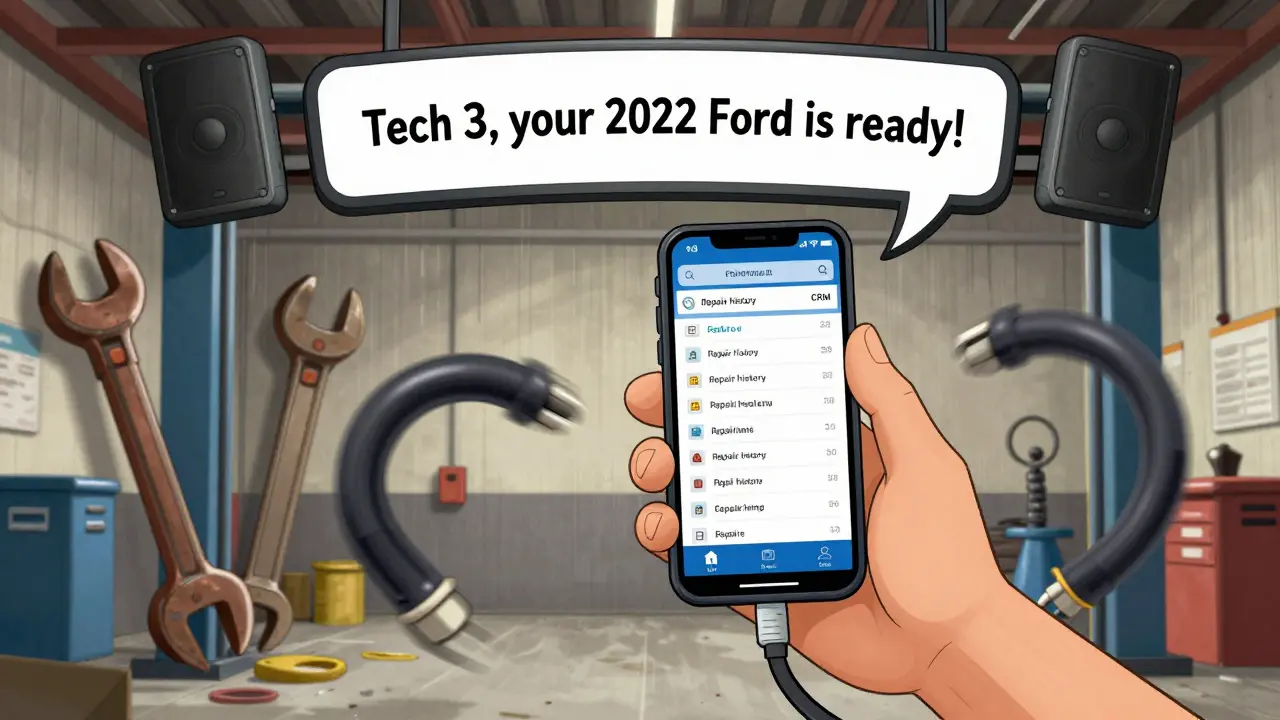
Mobile Freedom for Sales and Service Teams
Your sales team isn’t sitting at a desk all day. They’re walking the lot, meeting customers at their homes, or showing cars at local events. Your service techs are out on road calls or in the shop with grease on their hands. VoIP gives them freedom without losing control. Through mobile apps, staff can:- Make outbound calls using the dealership’s main number
- Receive incoming calls on any device-phone, tablet, laptop
- Access CRM data on the go
- Log calls automatically
Overhead Paging: The Hidden Challenge
Most VoIP providers can’t do it. But your dealership needs it. In a busy showroom or service bay, shouting across the floor doesn’t work. You need overhead paging to announce: “Sales, we have a walk-in!” or “Tech 3, your 2022 Ford is ready for pickup.” Here’s the problem: Most hosted VoIP systems don’t integrate with traditional overhead paging hardware. They’re built for offices, not car lots. That’s why some dealerships get stuck with dual systems-VoIP for calls, old-school speakers for announcements. The best providers-like GoTo and NUACOM-have cracked this. They offer multi-zone paging solutions that let you broadcast to specific areas: sales floor, service bays, finance office, or even the parts department. It’s not plug-and-play. It takes planning. But when it works, it cuts down confusion and speeds up response times. If your dealership uses overhead paging, ask potential VoIP vendors: “How do you integrate with my existing paging system?” If they hesitate or say “We’re working on it,” keep looking.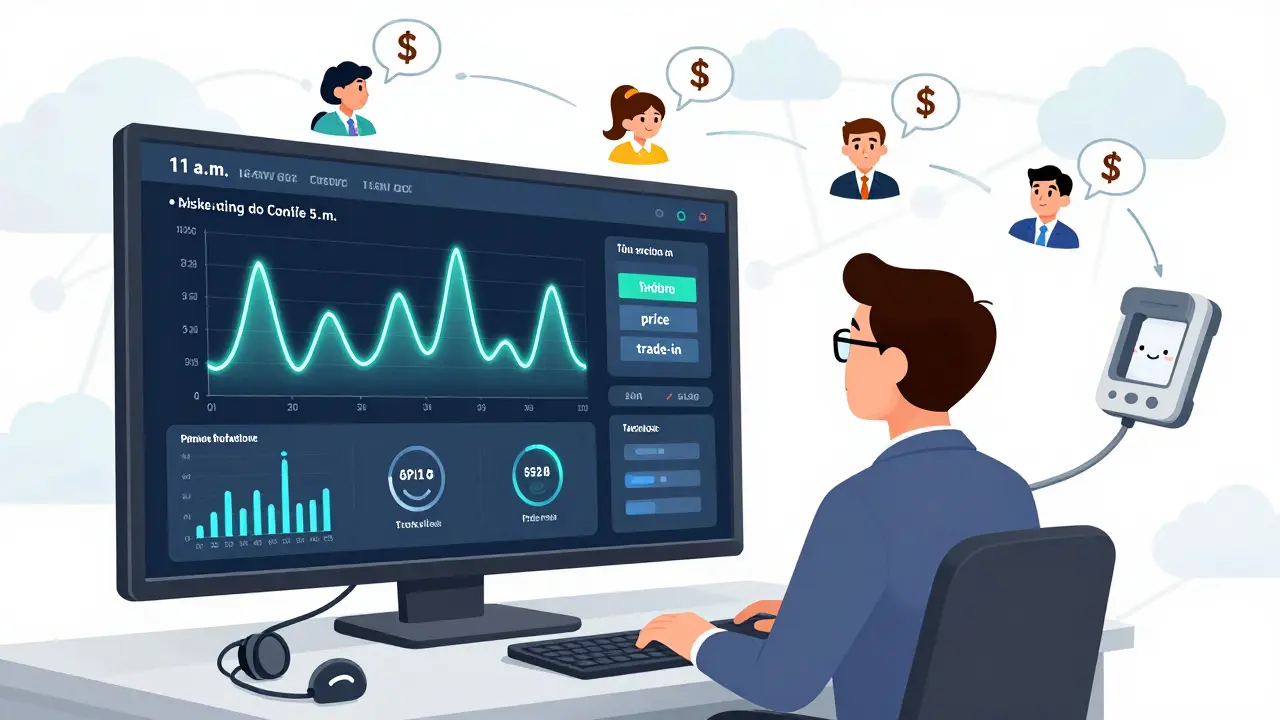
Call Analytics: What Your Calls Are Telling You
VoIP doesn’t just record calls-it analyzes them. Think about it: You know how many people walk in. You know how many cars you sold. But do you know how many people called about financing and never followed up? Or how many service calls came in after 5 p.m. and went unanswered? With VoIP analytics, you get real-time dashboards that show:- Call volume by hour and day
- Average wait time before a call is answered
- Call duration by department
- Conversion rate from call to test drive
- Missed call trends
Choosing the Right VoIP Provider for Your Dealership
Not all VoIP systems are built for cars. Here’s what to look for:- CRM Integration: Must connect to your existing system (DealerSocket, CDK, SpyneCRM, etc.). No manual entry.
- Mobile App: Staff should be able to make and receive calls from their phone using the dealership number.
- Call Recording: Automatic, compliant, and searchable. Must link to customer profiles.
- IVR Menus: “Press 1 for Sales, Press 2 for Service” should work flawlessly.
- Overhead Paging: If you use it, demand compatibility. Ask for proof.
- Free Trial: GoTo, VoIPstudio, and NUACOM offer 30-day trials. Test it. Don’t just read the brochure.
What Happens If You Don’t Upgrade?
You’re not falling behind. You’re falling out. Customers today expect speed, personalization, and professionalism. If your sales team is still using a landline that doesn’t know who called, or your service advisors are juggling personal phones, you’re making it harder for them to do their jobs-and harder for customers to trust you. Every missed call is a lost sale. Every long hold is a reason to go elsewhere. Every time you can’t prove what was said on a service call, you risk a dispute that costs you time, money, and reputation. VoIP isn’t about saving money on phone bills. It’s about saving customers. It’s about turning chaos into clarity.Can VoIP work if my internet connection is slow?
Yes-but only if you have a business-grade internet connection. VoIP needs stable bandwidth. Most dealerships need at least 10 Mbps upload speed. If you’re on a home internet plan, upgrade. Many providers offer dedicated business lines with SLAs (service level agreements) that guarantee uptime. Never use a consumer-grade router or shared connection for VoIP. It’s like trying to run a race on a flat tire.
Do I need new phones to use VoIP?
Not always. Many VoIP systems work with existing desk phones if they’re SIP-compatible. But for the best experience, use IP phones designed for VoIP-they’re louder, more durable, and have better call quality. For sales teams on the lot, mobile apps eliminate the need for physical phones altogether. The key is compatibility, not brand.
Is VoIP secure for handling customer data?
Yes, when configured properly. Reputable VoIP providers use end-to-end encryption, secure login protocols, and comply with industry standards like PCI-DSS for payment data. Always ask if your provider is HIPAA-compliant (even though it’s not medical, it shows they take security seriously). Never use free or unverified VoIP apps. Stick with providers who specialize in automotive dealerships-they’ve built security into the system from the start.
How long does VoIP installation take?
Most installations take 1-3 days for basic setups. But if you need overhead paging integration, CRM syncing, or multi-location support, expect 1-2 weeks. The key is planning. Schedule installation during slow periods. Test the system before going live. Have a backup number ready in case something fails-like an airbag for your phone system.
Can VoIP help with remote or satellite locations?
Absolutely. VoIP turns your entire dealership into one network. Whether you have a main lot, a used car center, or a service outpost 10 miles away, all phones and apps connect through the cloud. A call from a customer at your satellite location rings directly to the right person on the main lot. No extra lines. No extra cost. Just seamless communication across locations.
VoIP for automotive dealerships isn’t a trend. It’s the new standard. The dealerships that thrive in 2026 aren’t the ones with the biggest inventory. They’re the ones who answer every call like it’s their last chance to make a customer happy.









Aafreen Khan
22 Feb 2026 at 23:32lol u think this voip stuff is magic? 😂 my cousin works at a dealership and they got the 'premium' system... 3 weeks later the whole service dept lost calls because the router overheated. and guess what? no one knew how to fix it. now they're back on landlines + walkie talkies. tech is cool until it fails and you're stuck with a bunch of confused techs yelling 'WHO'S GOT THE 2018 CAMRY?!' across the bay. 🤦♀️