

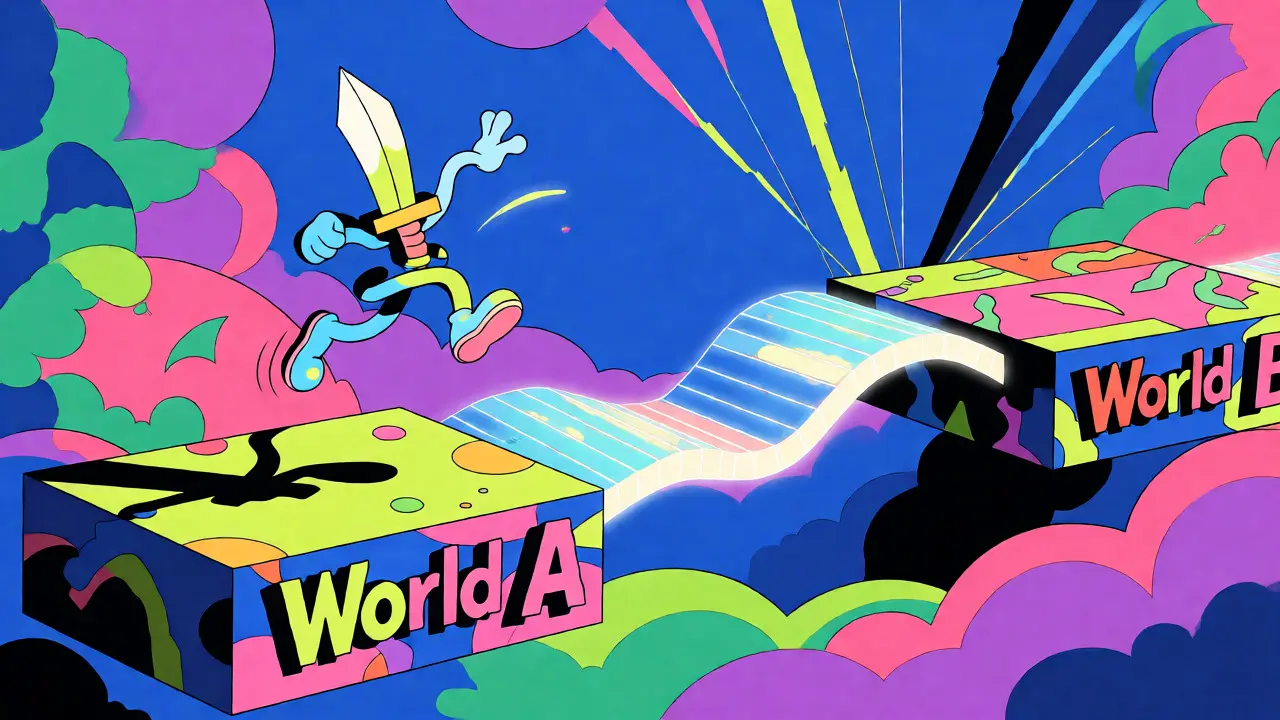

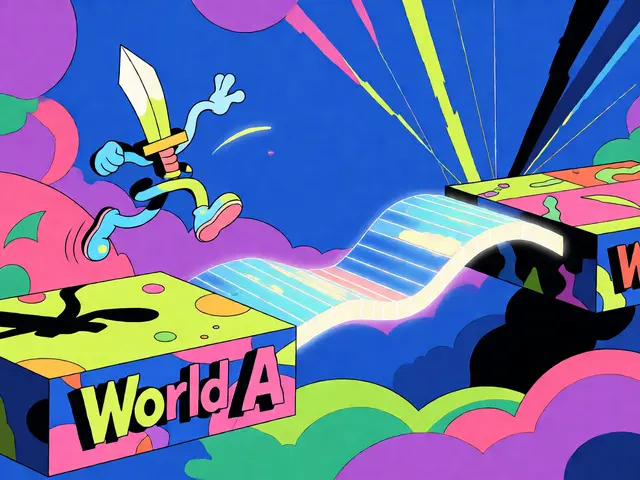
You bought a rare sword in one virtual world. You want to use it in another. Sounds simple, right? But here is the catch: that sword is likely just a database entry on a private server or a token on one specific blockchain. Moving it isn't like dragging a file from your desktop to a USB drive. It requires interoperability bridges-complex systems that translate ownership, identity, and visual data between disconnected digital universes.
As of late 2026, we don't have a single "universal plug" for the metaverse. Instead, we have a patchwork of protocols. If you are building an asset economy or trying to move your inventory across platforms, you need to understand what actually moves when you cross a bridge. It’s not just pixels; it’s proof of ownership, metadata, and sometimes, legal rights.
The Four Layers of Asset Portability
Most people think a bridge just moves money. Wrong. For a metaverse item to work in a new world, four distinct layers must align. If one fails, your asset becomes a ghost-it exists on the ledger but looks broken or does nothing in the game.
- Identity and Permissions: Who owns this? Is the user verified? This layer uses standards like W3C Decentralized Identifiers (DIDs).
- Blockchain Ownership: The financial settlement. Did the token leave Chain A and arrive on Chain B? This is where ERC-721 or ERC-1155 tokens live.
- Asset Metadata and Representation: What does it look like? Does it have animations? This relies on formats like glTF and storage systems like IPFS.
- Application Behavior: Does the destination game know how to handle the item? Can it swing? Can it be sold? This is the hardest part because every game engine has different rules.
A 2024 systematic review of academic literature found 74 relevant publications on this topic, confirming that while the theory is solid, the practice is fragmented. You can prove you own a sword, but if the new game doesn't support its damage stats or animation rig, you’re holding a useless receipt.
Token Standards: The Foundation of Ownership
Before you can bridge anything, you need a standard way to describe the asset. Ethereum’s token standards are the de facto language here, even on non-Ethereum chains.
| Standard | Type | Best Use Case | Limitation |
|---|---|---|---|
| ERC-721 | Non-Fungible | Unique items (one-of-a-kind swords, land plots) | Inefficient for bulk transfers; each item is a separate transaction. |
| ERC-1155 | Multi-Token | Gaming inventories (ammo, potions, common gear) | Complexity in smart contract logic; less recognized by some older wallets. |
| ERC-20 | Fungible | Currencies and points | Cannot represent unique attributes or rarity. |
ERC-1155 is particularly useful for metaverses. Imagine you have 50 healing potions and 1 legendary shield. With ERC-721, moving those 50 potions means 50 separate transactions. With ERC-1155, you batch them. This saves gas fees and reduces network congestion. However, remember that a token standard only proves ownership. It doesn't tell the game engine what the item looks like or how it behaves.
Bridge Architectures: Lock-Mint vs. Omnichain
Once you have a token, how do you get it to another chain? There are three main approaches, each with trade-offs.
Lock-and-Mint
This is the most common method. Your original token is locked in a vault on the source chain. A "wrapped" version is minted on the destination chain. When you want to go back, you burn the wrapped token and unlock the original. It preserves supply, but you now hold a derivative asset. If the bridge hack happens, your wrapped token might become worthless even if the original is safe.
Burn-and-Mint
The original token is destroyed, and a new canonical token is created on the destination. This avoids the concept of "wrapped" assets but requires tight coordination between chains to ensure no double-spending occurs during the transition window.
Omnichain Native Assets
Protocols like LayerZero enable omnichain fungible tokens that maintain a unified supply across more than 150 blockchains without traditional wrapping. This is cleaner for currencies. For NFTs, it’s trickier. You still need to map token IDs and sync metadata. LayerZero acts as a messaging layer, allowing contracts on different chains to talk directly. It reduces reliance on centralized custodians but introduces dependency on oracle networks for verification.
The Security Reality Check
Let’s be honest: bridges are the weakest link in Web3 security. In 2022 alone, approximately $2 billion was stolen from cross-chain bridges. The Ronin Bridge lost $625 million; Wormhole lost over $320 million due to a signature verification bug.
Why so many hacks? Bridges require trust. Take Wormhole which uses 19 Guardian nodes to validate messages, requiring a 13-of-19 supermajority to approve transfers. If an attacker compromises enough Guardians, they can forge a message saying "User X sent 100 ETH," and the destination chain will believe it. Users aren’t just trusting code; they’re trusting the operational security of node operators.
To mitigate this, look for bridges with:
- Public bug bounties and recent third-party audits.
- Open-source validator sets.
- Supply invariant monitors that alert if total supply mismatches.
Making It Look Right: glTF and IPFS
Ownership is useless if the asset renders as a gray box. Blockchain ledgers are terrible at storing large 3D files. That’s why content is stored off-chain, usually on IPFS (InterPlanetary File System), with a hash pointer on the token metadata.
For 3D models, the industry standard is glTF an API-neutral runtime 3D asset-delivery format maintained by Khronos Group, now ISO/IEC 12113:2022 certified. glTF handles geometry, materials, and animations efficiently. But here is the pitfall: glTF doesn't define physics or gameplay logic. A sword model might load perfectly in Unity but fail in Unreal Engine if the collision mesh isn't compatible. Developers must write adapters to translate these technical details.
Identity and Credentials: The Missing Piece
Assets often come with social context. Are you a VIP member? Did you win a tournament last year? These claims travel via Verifiable Credentials (VCs). W3C finalized VC 2.0 in May 2025, allowing users to carry cryptographically signed proofs of status without exposing personal data.
In a bridged scenario, your DID identifies you, your VC proves you’re eligible to wear the crown, and your ERC-721 token proves you own it. All three must verify successfully in the destination world. If the world doesn't accept VCs, your social status vanishes, even if you technically own the item.
Practical Implementation Checklist
If you are deploying a bridged asset system, don’t skip these steps:
- Define a Canonical Registry: Create a master list of assets with immutable issuer IDs, supported chains, and license terms.
- Choose the Right Bridge: Match the bridge’s security model to your asset value. High-value items need audited, decentralized validators.
- Handle Finality: Wait for sufficient confirmations on the source chain before minting on the destination to prevent reorgs.
- Validate Metadata: Ensure IPFS links are pinned and accessible. Broken links mean invisible assets.
- Map Attributes Explicitly: Don’t assume the destination game understands your custom metadata keys. Map them to standard fields or provide fallbacks.
The future isn't about one giant metaverse. It's about portable states. We are moving toward a model where your identity, assets, and reputation are independent of any single platform. Interoperability bridges are the plumbing that makes this possible. They aren't perfect, and they aren't cheap, but they are necessary infrastructure for a truly open digital economy.
Can I use my NFT avatar in any metaverse?
Not automatically. While the ownership token can be bridged, the destination platform must support the specific 3D format (like glTF) and have an adapter to import the avatar's rig and textures. Without this integration, your avatar may appear as a default placeholder or fail to load entirely.
What is the difference between a bridge and a cross-chain swap?
A bridge moves the actual representation of an asset between chains, often locking the original and minting a wrapped version. A cross-chain swap typically exchanges one asset for another equivalent asset (e.g., swapping USDC on Ethereum for USDC on Solana) using liquidity pools. Bridges preserve the specific identity and metadata of unique items, while swaps focus on fungible value exchange.
Are interoperability bridges safe?
They carry significant risk. Historical data shows billions stolen from bridges due to smart contract bugs and validator compromises. Safety depends on the specific bridge's architecture, audit history, and decentralization level. Always check for recent audits and active bug bounty programs before moving high-value assets.
Why is ERC-1155 better for gaming than ERC-721?
ERC-1155 allows batching multiple token types in a single transaction. This drastically reduces gas costs and transaction times for players managing large inventories of semi-fungible items like potions, ammo, or common gear, whereas ERC-721 requires individual transactions for each unique item.
Does glTF support all 3D features?
glTF is optimized for transmission and loading efficiency, supporting geometry, materials, textures, and animations. However, it does not natively support complex real-time lighting calculations, physics simulations, or proprietary engine-specific scripts. These aspects must be handled by the destination application's engine.
Write a comment