

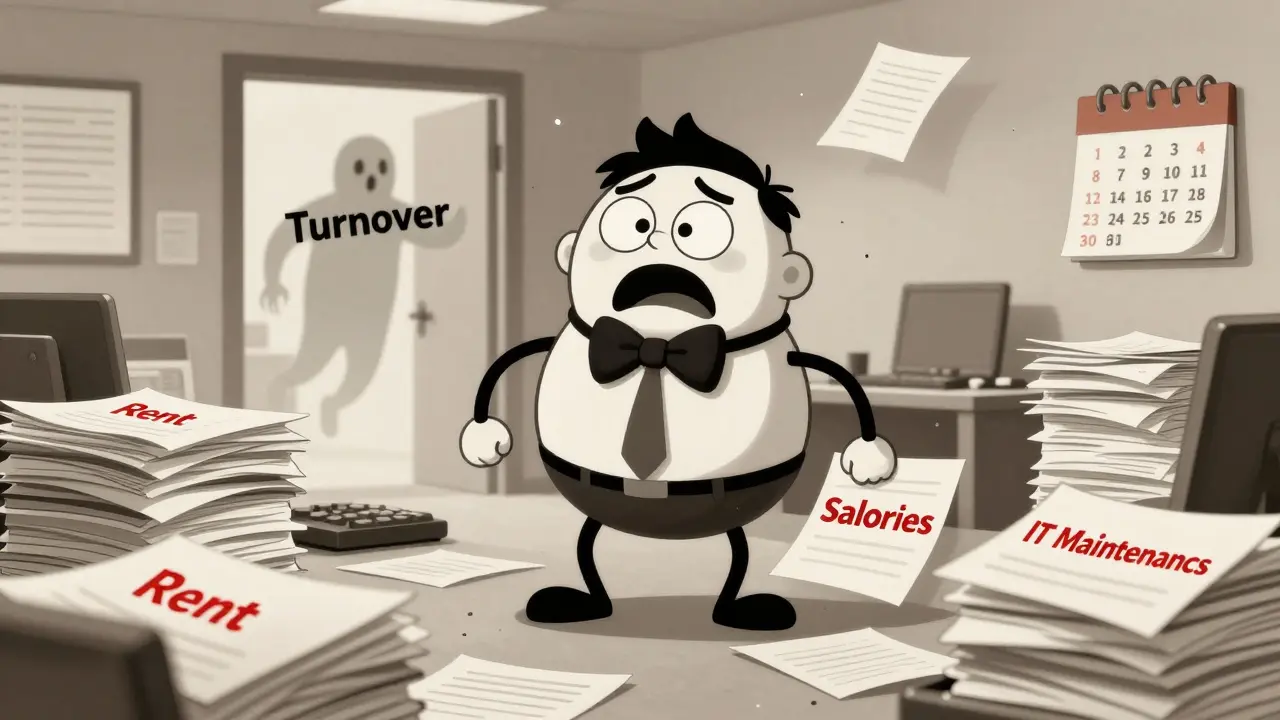

Running a customer support team is expensive. If you’re building an in-house VoIP contact center that handles customer calls using Voice over IP technology within your own office infrastructure, you’re paying for more than just salaries. You’re covering real estate, software licenses, IT maintenance, recruitment, and the inevitable turnover. But if you switch to an outsourced model, do you lose control over your brand’s voice? The short answer is: it depends on how you structure the deal. In 2026, the gap between these two models isn’t just about money-it’s about flexibility, risk, and strategic focus.
The Real Cost of Keeping Support In-House
Let’s look at the numbers. For a typical 20-agent team in the US, the annual cost runs around $1.77 million. That includes base salaries ($840,000), benefits and payroll taxes ($252,000), management overhead ($300,300), facility leases ($95,000), technology stacks ($108,000), and recruiting/training ($20,000). These aren’t optional line items-they’re fixed costs that don’t disappear when call volume drops.
Hidden costs pile up fast. Agent turnover averages 40% annually, meaning you replace eight agents each year at $2,500 per hire. Add compliance audits, legal fees, HR allocation, and system updates, and the total climbs well beyond initial estimates. As noted by industry analysts, many businesses underestimate true operational expenses because they only track direct labor, ignoring infrastructure, training, and management burden.
- Fixed costs persist: Rent, software subscriptions, and manager salaries remain constant regardless of demand.
- Turnover drains resources: Replacing agents costs time and money-$20,000+ annually for a 20-person team.
- Technology requires upkeep: CRM, ACD, WFM, and analytics tools need regular updates and integration work.
If your business doesn’t handle consistent high-volume calls every month, those fixed costs become a drag on profitability. And scaling up during peak seasons? Good luck hiring and training new staff in weeks.
How Outsourcing Changes the Financial Picture
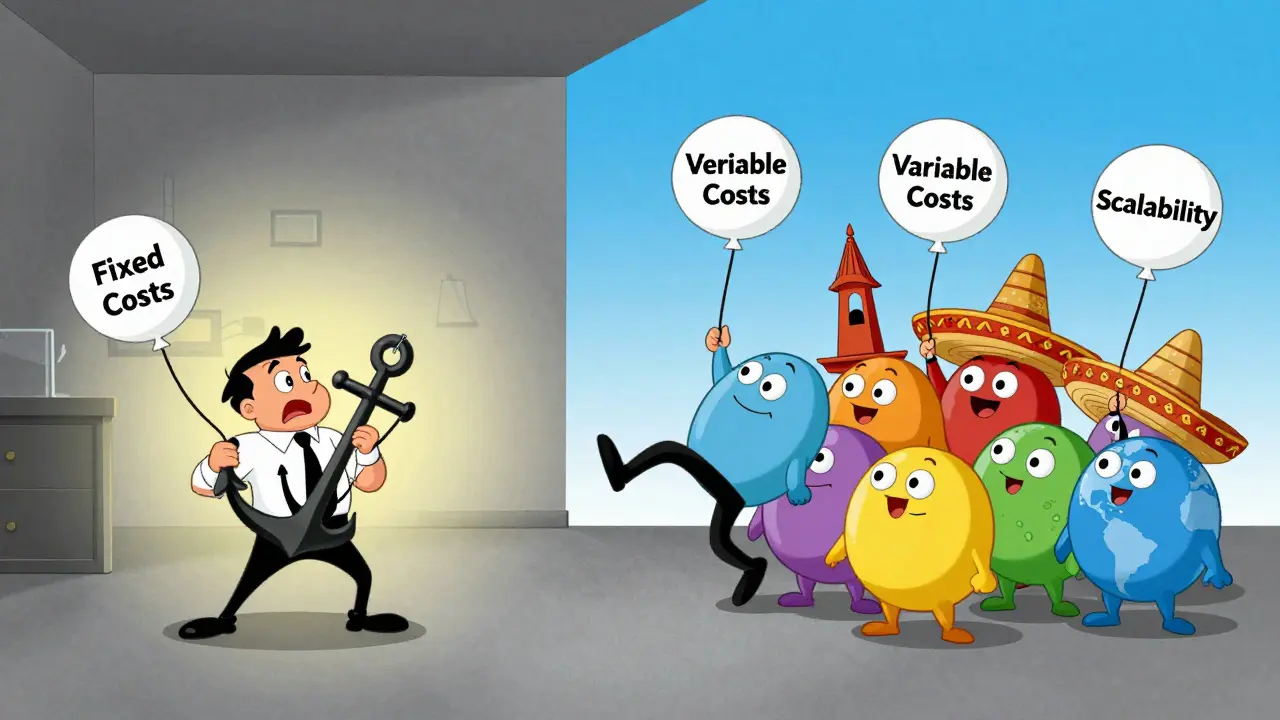
Outsourced VoIP contact centers shift costs from fixed to variable. Instead of paying for idle capacity, you pay for actual interactions. According to recent data, US-based outsourcing saves 38%, nearshore (e.g., Latin America) cuts costs by 62%, and offshore (Philippines, India) reduces expenses by up to 76%. For our 20-agent example, that means annual savings ranging from $665,700 to $1,339,700.
| Model | Annual Cost | Savings vs In-House |
|---|---|---|
| In-House (US) | $1,771,700 | Baseline |
| Outsourced (US) | $1,106,000 | $665,700 (38%) |
| Outsourced (Nearshore) | $672,000 | $1,099,700 (62%) |
| Outsourced (Offshore) | $432,000 | $1,339,700 (76%) |
Pricing models vary. Some providers charge per full-time equivalent (FTE) agent-around $1,200-$2,100 annually per seat. Others use per-call or per-minute billing, which aligns costs directly with usage. Labor rates also differ significantly: US agents cost $22-$31/hour, while Philippines and India teams operate at $8-$14/hour. This creates substantial hourly differentials that compound across thousands of interactions.
But here’s the catch: lower costs don’t automatically mean better quality. Cheap offshore providers may cut corners on training, supervision, or technology. The key is finding a partner who invests in their agents and maintains rigorous QA standards.
Control vs Flexibility: What Are You Really Trading?
In-house teams give you direct oversight. You set scripts, monitor calls in real time, adjust processes instantly, and ensure cultural alignment. If a customer complaint escalates, your team knows your product inside out. They’ve sat in on sales meetings, read internal memos, and understand your brand’s tone.
Outsourcing introduces distance. Even with detailed SLAs and weekly reports, you’re relying on another company’s processes. Quality control becomes reactive rather than proactive. Data security adds another layer of concern-especially if you handle sensitive information like health records or financial data. HIPAA, GDPR, and PCI-DSS compliance require strict vendor vetting and contractual safeguards.
Yet, modern outsourcing isn’t what it used to be. Top-tier providers offer dedicated account managers, custom knowledge bases, live dashboards, and co-branded interfaces. Many allow remote monitoring via screen-sharing or call recording platforms. You can still enforce quality standards without managing day-to-day operations.
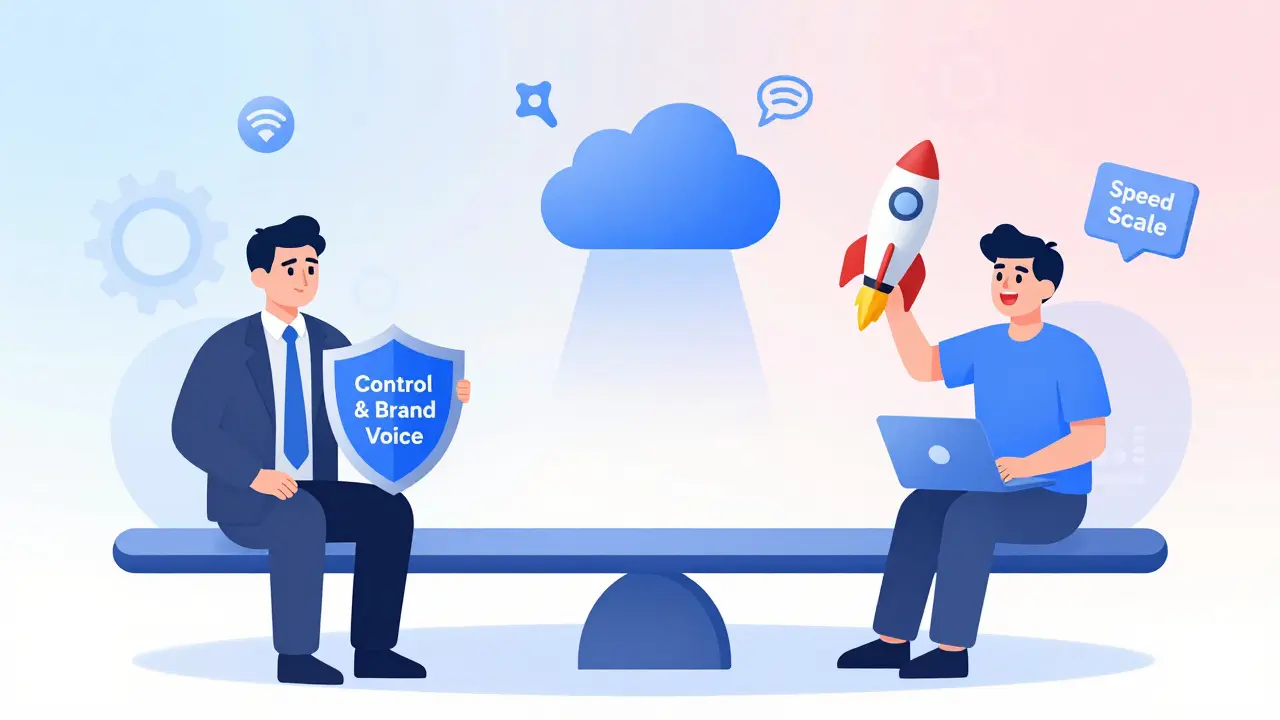
Consider this trade-off: Do you want total control, even if it means higher costs and slower scaling? Or do you prefer agility, accepting some indirect oversight in exchange for speed and efficiency?
Scalability: The Hidden Advantage of Outsourcing
Imagine launching a new product in Q4. Call volumes spike overnight. Your in-house team is maxed out. Hiring takes weeks. Training takes longer. Meanwhile, customers wait on hold, abandon carts, or leave negative reviews.
An outsourced provider can add 50 agents in days. They already have trained staff, shift coverage across time zones, and surge-capacity plans built into their contracts. When demand drops post-holiday, you scale back without laying people off or paying for unused seats.
This flexibility matters most for seasonal businesses, e-commerce brands, SaaS companies with rapid growth cycles, or organizations offering 24/7 support. In-house teams struggle to match this responsiveness. Recruitment bottlenecks, background checks, and onboarding delays create friction exactly when you need speed.
Even small fluctuations matter. Tax season, insurance open enrollment, or promotional campaigns all create temporary peaks. Outsourcing lets you flex capacity without permanent overhead.
When In-House Makes Sense
Not every business should outsource. Keep support in-house if:
- Your service is highly specialized: Technical support for enterprise software, medical device troubleshooting, or legal advisory services require deep domain expertise.
- Data sensitivity is critical: Handling PHI, PII, or payment data demands tight access controls and minimal third-party exposure.
- Brand voice is non-negotiable: Luxury brands, boutique agencies, or mission-driven organizations often prioritize cultural consistency above cost.
- You have stable, predictable volume: If call patterns are flat year-round, fixed costs become manageable.
Also consider regulatory environments. Industries like healthcare, finance, and government face stricter compliance requirements. While reputable vendors meet these standards, maintaining in-house control simplifies audits and liability tracking.
The Hybrid Model: Best of Both Worlds
Most successful organizations today use a blended approach. Here’s how it works:
- Tier-1 support: Routine inquiries, password resets, order status checks → handled by outsourced teams.
- Tier-2/escalations: Complex issues, VIP accounts, technical problems → managed in-house.
- After-hours & weekends: Covered by outsourced partners with global shifts.
- Peak seasons: Overflow routed to external providers.
This structure delivers 25-35% savings compared to fully in-house operations while preserving control over high-value interactions. Customers get faster responses for simple requests, and your internal team focuses on complex cases that drive loyalty and retention.
For example, a mid-sized SaaS company might keep its engineering-focused support team in-house but route general billing questions to a nearshore provider. Result: reduced costs, improved first-contact resolution, and happier internal staff.
Technology Stack: Who Pays for What?
In-house operations require purchasing and maintaining multiple systems: VoIP telephony, Automatic Call Distribution (ACD), CRM integration, Workforce Management (WFM), Quality Assurance (QA) tools, and analytics platforms. Annual tech costs range from $36,000 to $72,000 for a 20-agent team-and that’s before upgrades, patches, or integrations.
Outsourced models bundle technology into service fees. Providers maintain updated software, handle cybersecurity, manage backups, and ensure uptime. You gain access to enterprise-grade tools without capital expenditure. Plus, vendors absorb the risk of system failures.
However, integration remains crucial. Ensure your chosen provider connects seamlessly with your existing CRM, ticketing system, and helpdesk platform. Poor integration leads to disjointed customer experiences and duplicate data entry.
Staffing and Management Burden
Managing an in-house team means hiring supervisors, QA specialists, trainers, and HR personnel. For a 20-agent operation, management overhead alone reaches $375,700 annually-about 21% of total costs. These roles handle scheduling, performance reviews, conflict resolution, and process improvements.
Outsourcing eliminates this burden. Vendors provide dedicated account managers, conduct regular coaching sessions, generate performance reports, and handle attrition internally. You review metrics monthly instead of micromanaging daily operations.
Recruitment timelines also differ dramatically. Adding ten new agents in-house takes 4-8 weeks due to job postings, interviews, background checks, and training. An outsourced partner can deploy them in 3-5 days using pre-screened talent pools.
Quality Control: Can You Trust the Outsourcer?
Yes-if you choose wisely. Look for providers with:
- Certifications: ISO 9001, SOC 2, HIPAA, PCI-DSS depending on your industry.
- Transparent reporting: Real-time dashboards showing CSAT, FCR, average handle time, and adherence rates.
- Dedicated teams: Avoid shared pools where agents jump between clients.
- Custom training programs: Tailored curricula based on your products, policies, and brand guidelines.
Request sample call recordings, audit trails, and client references. Visit facilities if possible. Test their response times during contract negotiations-you’ll see how they operate under pressure.
Remember: cheap doesn’t mean bad, but extremely low prices often signal compromised quality. Aim for mid-market providers balancing cost and competence.
Decision Framework: Which Path Fits Your Business?
Ask yourself these questions:
- What’s your monthly interaction volume? Under 5,000? In-house may make sense. Over 10,000? Outsourcing likely wins.
- Do you experience seasonal spikes? Yes → outsourcing offers scalability.
- Is your service highly technical or regulated? Yes → lean toward in-house or hybrid.
- Can you afford $1M+ in annual overhead? No → explore outsourcing options.
- Do you value speed over absolute control? Yes → outsourcing accelerates growth.
There’s no universal right answer. The best choice aligns with your current stage, future goals, and risk tolerance.
How much does it cost to run an in-house VoIP contact center?
A 20-agent in-house VoIP contact center in the US costs approximately $1.77 million annually. This includes salaries ($840,000), benefits and payroll taxes ($252,000), management overhead ($300,300), facility leases ($95,000), technology platforms ($108,000), and recruiting/training ($20,000). Additional hidden costs include compliance audits, legal fees, and system maintenance.
What are the main advantages of outsourcing VoIP support?
Outsourcing VoIP support offers three major advantages: significant cost savings (30-76% depending on location), rapid scalability (adding agents in days instead of weeks), and reduced management burden. Providers handle staffing, training, technology updates, and quality monitoring, allowing your internal team to focus on core business activities.
Is outsourcing safe for handling sensitive customer data?
Yes, provided you select a compliant vendor. Reputable outsourcing providers hold certifications like HIPAA, GDPR, PCI-DSS, and SOC 2. They implement encryption, access controls, audit logs, and secure data centers. Always verify their security protocols through contracts and independent audits before sharing sensitive information.
Can I maintain brand consistency with an outsourced team?
Absolutely. Modern outsourcing partners offer customized training programs, branded scripts, co-branded interfaces, and dedicated account managers. Regular QA reviews, call monitoring, and feedback loops ensure alignment with your brand voice. Choose providers willing to adapt to your culture rather than forcing generic templates.
What’s the best way to transition from in-house to outsourced support?
Start with a pilot program. Route 20-30% of incoming calls to the outsourced provider for one quarter. Monitor KPIs like CSAT, FCR, and average handle time. Adjust workflows, refine knowledge bases, and train both teams collaboratively. Gradually increase volume as trust builds. Consider a hybrid model long-term to retain control over complex cases.
How do I evaluate potential outsourcing providers?
Evaluate providers based on five criteria: certifications (HIPAA, ISO, etc.), transparency (real-time dashboards, audit trails), customization (dedicated teams, tailored training), scalability (surge capacity, multi-language support), and client references (case studies, testimonials). Request sample call recordings and test response times during negotiations to assess operational readiness.
When should I keep my contact center entirely in-house?
Keep support in-house if your service requires deep technical expertise, handles highly sensitive data, operates in heavily regulated industries, or serves niche markets where brand voice is paramount. Also consider in-house if your call volume is stable and predictable, making fixed costs manageable without sacrificing flexibility.
What’s the difference between nearshore and offshore outsourcing?
Nearshore outsourcing uses locations geographically close to yours (e.g., Latin America for US businesses), offering similar time zones and cultural familiarity at moderate cost savings (62%). Offshore outsourcing leverages distant regions (e.g., Philippines, India) for maximum cost reduction (up to 76%) but involves greater time zone differences and potential language barriers. Choose based on your priority: balance vs. budget.
How quickly can an outsourced provider scale up?
Reputable outsourced providers can add 10-50 agents within 3-5 days using pre-trained talent pools and established shift schedules. This contrasts sharply with in-house hiring, which typically takes 4-8 weeks due to recruitment, background checks, and onboarding. Scalability makes outsourcing ideal for seasonal peaks, product launches, or unexpected demand surges.
What technologies do outsourced VoIP centers use?
Outsourced VoIP centers utilize integrated platforms including cloud-based PBX systems, Automatic Call Distribution (ACD), CRM integrations, Workforce Management (WFM) tools, Quality Assurance (QA) modules, and analytics dashboards. These systems are maintained and updated by the provider, eliminating capital expenditures and ongoing IT responsibilities for your organization.







Write a comment