



Picture this: You’ve just finished migrating your entire company’s phone system to the cloud. The call quality is crisp, the features are sleek, and everyone is happy. Then, two years later, you try to cancel or switch providers because they raised prices by 20%. Suddenly, you hit a wall. Your data is trapped in their proprietary format, your custom integrations only work with their API, and the early termination fee is enough to make your CFO wince.
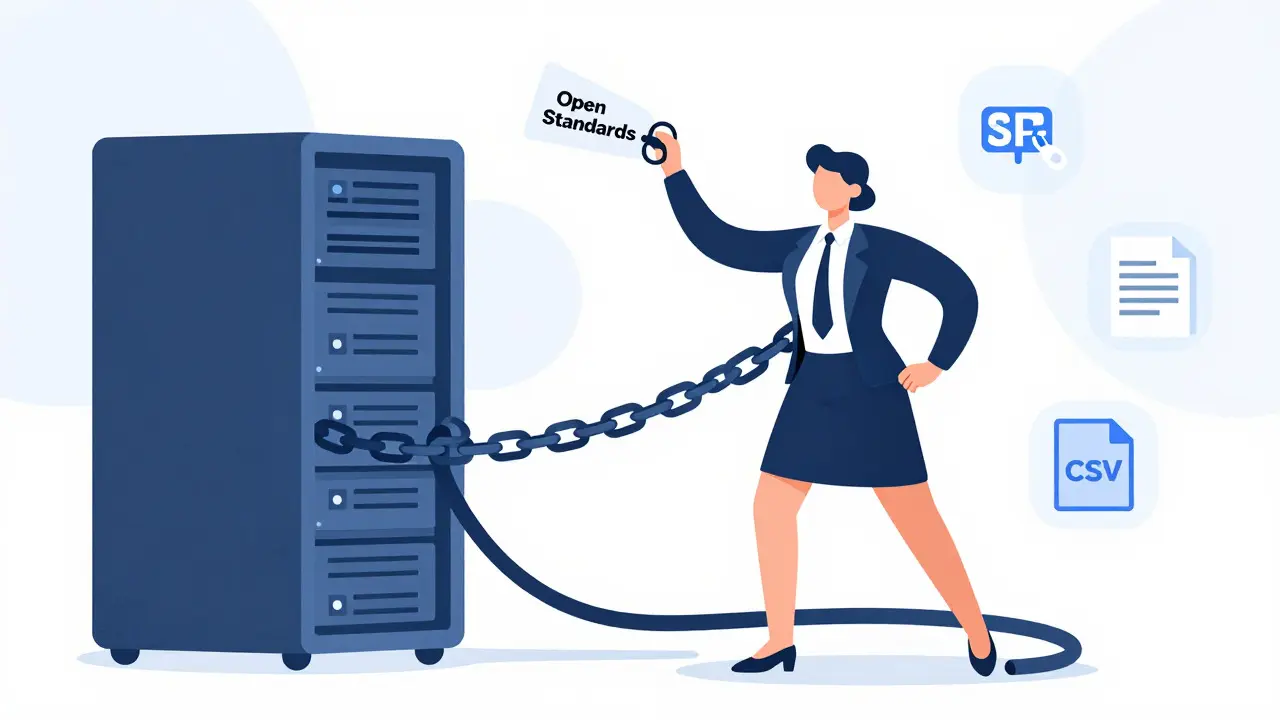
This is vendor lock-in, defined as a situation where customers become dependent on a single provider, making it difficult and costly to change due to technical or financial barriers. In the world of Cloud VoIP (Voice over Internet Protocol), this trap is common. Many businesses sign long-term contracts without realizing that "cloud-based" doesn't always mean "portable." If you want to keep your business communications flexible and cost-effective, you need to understand how these traps are set and, more importantly, how to avoid them before you sign on the dotted line.
The Hidden Mechanics of Cloud VoIP Lock-In
Vendor lock-in isn't usually malicious; it's often a byproduct of convenience. Providers want you to stay, so they build walls around their services. In Cloud VoIP, these walls are built from three main materials: proprietary technology, financial incentives, and integration complexity.
First, look at the technology. Some providers use proprietary APIs and custom call routing systems that don't speak the universal language of telecom standards. While the industry standard for voice transmission is SIP (Session Initiation Protocol), some vendors wrap their service in a proprietary layer. This means your CRM integrations, auto-attendants, and call recording rules are hard-coded into their specific platform. Moving away means rebuilding all of that from scratch.
Second, consider the hardware. Even though Cloud VoIP is software-centric, many setups still rely on physical IP phones. If your provider requires specific models that only work with their firmware, you’re stuck. When you leave, those phones become expensive paperweights unless you buy new ones or pay for re-flashing services that may not even be available.
Third, there’s the data problem. Call detail records (CDRs), voicemail archives, and contact lists are often stored in formats that are easy to view inside the provider’s dashboard but nearly impossible to export cleanly. Without a simple CSV or SQL dump option, retrieving your own communication history can require a professional services engagement-billable by the hour.
Why Long-Term Contracts: The Golden Handcuffs
The most obvious form of lock-in is the contract itself. Many Cloud VoIP providers offer significant discounts for multi-year commitments. It looks like a great deal on paper: save 15% if you sign for three years instead of one. But here’s the catch: business needs change fast. Maybe you merge with another company. Maybe you move offices. Maybe the provider’s service quality drops below acceptable levels.
If you’re locked into a three-year deal, you have little leverage. The provider knows you can’t leave easily. They might ignore support tickets, delay feature updates, or quietly degrade service quality because they know your exit costs are too high. This is the "golden handcuffs" effect-the discount feels good until you realize you’re paying for it with flexibility.
Additionally, watch out for "evergreen" clauses. These automatically renew your contract unless you give notice months in advance. Miss the window by a week, and you’re locked in for another year. Always check the renewal terms carefully. A month-to-month option after an initial term is far safer than a perpetual auto-renewal.
Financial Barriers: Egress Fees and Migration Costs
Even if your contract allows you to leave, the financial penalties can be steep. In broader cloud computing, we see data egress fees charged by giants like AWS or Azure when you move data out. In Cloud VoIP, while raw data transfer fees are less common, other costs mimic this effect.
Consider the cost of number porting. While number portability is legally required in many regions, allowing you to keep your phone numbers when switching providers, the process isn't free. Some providers charge administrative fees per line for porting. For a company with 500 lines, these small fees add up quickly.
Then there’s the hidden labor cost. Migrating a VoIP system isn't just flipping a switch. It involves configuring new devices, updating DNS settings, re-integrating with helpdesk software, and training staff on a new interface. If your current provider made migration difficult by withholding documentation or using non-standard protocols, you’ll need to hire consultants to bridge the gap. These indirect costs are rarely factored into the initial price comparison but can dwarf the savings from switching.

Strategies to Maintain Control and Flexibility
You don’t have to accept lock-in as inevitable. By taking proactive steps during the selection and implementation phases, you can keep your options open. Here’s how to architect your Cloud VoIP strategy for maximum freedom.
1. Demand Open Standards Compliance
When evaluating providers, ask direct questions about standards. Does the platform use standard SIP trunks? Can you bring your own SIP trunk provider? This is a critical distinction. Some UCaaS (Unified Communications as a Service) platforms bundle the trunking tightly with the application, while others allow decoupling. If you can swap the underlying transport layer without changing the user interface, you retain significant leverage.
Also, check for support of WebRTC (Web Real-Time Communication). This standard allows voice and video calls directly in web browsers without plugins. If your provider supports WebRTC, your users aren't tied to specific desktop apps or hardware, making transitions smoother.
2. Negotiate Shorter Initial Terms
Resist the pressure to sign long-term deals upfront. Propose a one-year initial term with automatic monthly renewal afterward. Yes, the per-seat cost might be slightly higher initially. But think of it as insurance against obsolescence and poor performance. After six months, if the service is rock-solid, you can negotiate a longer term from a position of strength-or simply continue month-to-month knowing you can leave anytime.
3. Verify Data Export Capabilities Early
Don’t wait until you want to leave to test data portability. During the trial phase, try to export your call logs, contacts, and voicemails. Is it a one-click download? Or does it require submitting a ticket and waiting three days? If the latter, that’s a red flag. Ensure the provider offers regular, automated backups in standard formats (CSV, JSON) that you control.
4. Use Provider-Agnostic Hardware Where Possible
Choose IP phones that support multiple provisioning methods. Brands like Cisco, Yealink, and Grandstream often allow configuration via generic SIP profiles rather than proprietary clouds. Alternatively, consider softphone solutions (apps on laptops and mobiles) as your primary interface. This reduces dependency on physical hardware entirely.
5. Document Everything Religiously
Create a master document detailing every custom setting: IVR menus, ring groups, time-of-day rules, and integration endpoints. Store this outside the provider’s ecosystem. If you ever need to migrate, having a clear blueprint of your current setup cuts migration time by half. Treat this documentation as a core asset, not an afterthought.
Comparison: Locked-In vs. Portable VoIP Architectures
| Feature | Vendor-Locked Setup | Portable/Open Setup |
|---|---|---|
| Contract Length | Multi-year mandatory | Month-to-month or short-term |
| Data Format | Proprietary, hard to export | Standard CSV/SQL, easy export |
| Hardware Dependency | Provider-specific firmware | Generic SIP-compatible devices |
| Integration Method | Closed API, limited access | Open REST/SIP APIs |
| Exit Cost | High (fees + rebuild effort) | Low (porting fees only) |
Real-World Scenario: The Migration Trap
Let’s look at a realistic example. A mid-sized marketing agency signed a three-year contract with a popular UCaaS provider. They loved the integrated video conferencing and chat features. However, after 18 months, the provider acquired a competitor and began merging platforms. The result? Downtime increased, and the old API endpoints used for their CRM integration stopped working.
When the agency tried to switch to a more stable provider, they discovered their call recordings were stored in a proprietary audio format. Converting them for legal compliance took weeks of manual work. Their IP phones were locked to the old provider’s cloud provisioning server, requiring full replacement. The total cost of switching exceeded the savings they had gained from the initial discount. This scenario highlights why technical openness matters as much as price.
Next Steps: Auditing Your Current Setup
If you’re already using a Cloud VoIP provider, don’t panic. Start auditing your current environment today. Check your contract for early termination clauses. Test your data export functions. Identify which integrations are deep versus shallow. Build a contingency plan that outlines exactly what would happen if you needed to move tomorrow. Having this plan ready gives you peace of mind and negotiating power.
Remember, the goal isn’t to avoid commitment-it’s to avoid captivity. Choose partners who respect your autonomy and build systems based on open standards. Your future self will thank you when market conditions change and you need to pivot quickly.
What is vendor lock-in in Cloud VoIP?
Vendor lock-in in Cloud VoIP occurs when a business becomes technically or financially dependent on a single provider, making it difficult, expensive, or time-consuming to switch to a different service. This often happens due to proprietary technologies, long-term contracts, or complex integrations that don't translate well to other platforms.
How can I tell if my VoIP provider uses proprietary standards?
Check if your provider requires specific hardware that only works with their firmware, or if their API documentation is limited or closed. Ask if they support standard SIP trunking and whether you can export your call data in common formats like CSV. If the answer is no to these, you likely face proprietary constraints.
Are long-term contracts always bad for avoiding lock-in?
Not always, but they carry higher risk. Long-term contracts offer lower prices but reduce your ability to react to market changes or poor service. To mitigate this, negotiate shorter initial terms (e.g., one year) with renewal options, or ensure the contract includes strong service-level agreements (SLAs) with penalty clauses for underperformance.
Can I keep my phone numbers when switching VoIP providers?
Yes, through a process called number porting. In most regions, regulations require providers to release your numbers upon request. However, there may be administrative fees, and the process can take several days. Ensure your new provider handles the porting process smoothly to minimize downtime.
What is the role of SIP in preventing vendor lock-in?
SIP (Session Initiation Protocol) is the universal standard for initiating, maintaining, and terminating real-time sessions in VoIP. By choosing a provider that relies heavily on standard SIP rather than proprietary signaling, you ensure that your voice traffic can be routed through any compatible carrier or platform, greatly enhancing portability.
How do data egress fees affect VoIP migration?
While less common in pure VoIP than in general cloud storage, some providers charge fees for exporting large volumes of call records or voicemail data. These costs add to the total cost of ownership and should be clarified before signing a contract. Look for transparent pricing models that include free data export.







Write a comment