

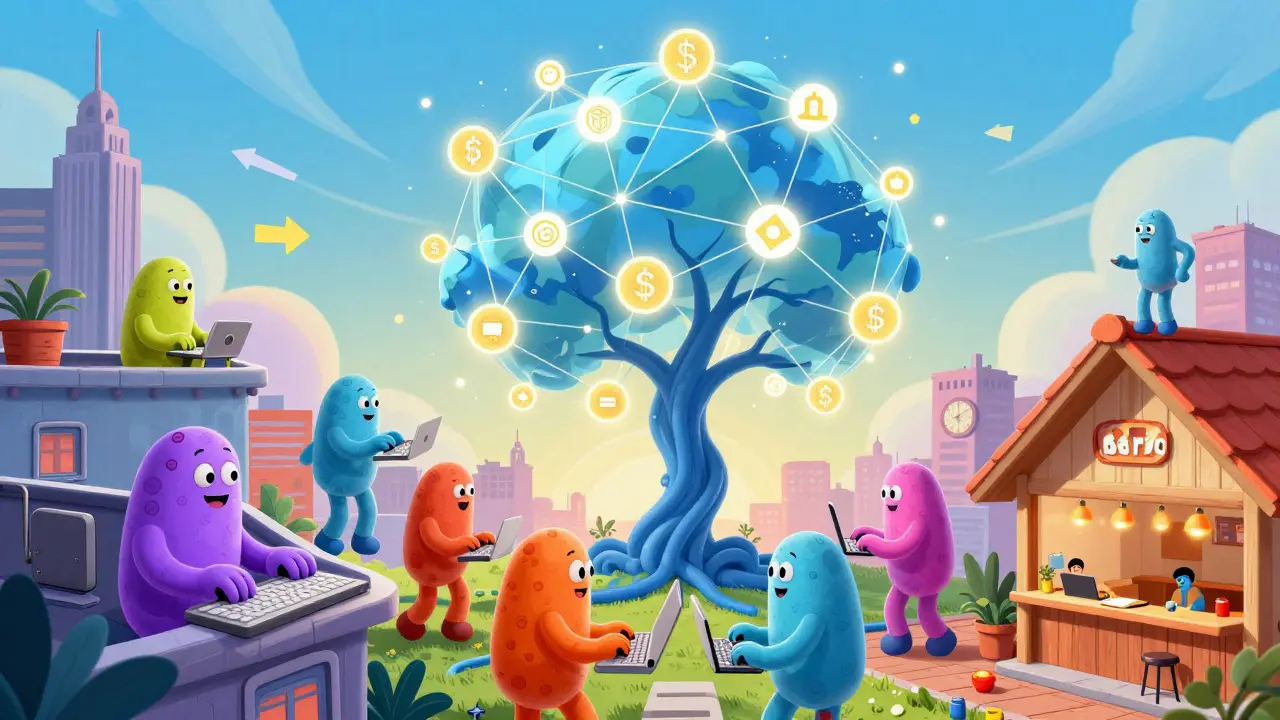

Think about how you work. Do you clock in at a set time? Do you report to a manager who approves your tasks? Do you even know where the money for your paycheck comes from? If you’re part of a DAO, the answer to all those questions might be no-and that’s the point.
DAOs, or Decentralized Autonomous Organizations, aren’t companies in the traditional sense. They don’t have CEOs, HR departments, or office buildings. Instead, they’re groups of people from all over the world who come together online to build something-whether it’s a cryptocurrency, an app, or a creative project-and they run it using code, not contracts. By 2026, nearly 70% of new blockchain jobs will exist inside DAOs, according to Blockchain Staffing Ninja. That’s not a prediction. That’s already happening.
How DAOs Actually Work
A DAO runs on smart contracts-self-executing code stored on a blockchain. These contracts define the rules. If you contribute code, write documentation, or even just engage in community discussions, you might earn tokens. Those tokens aren’t just digital money. They’re your voting power. Want to spend $50,000 on a new marketing campaign? You don’t ask a boss. You propose it. Then everyone with tokens votes. If it passes, the money is automatically released from the DAO’s treasury. No approval chain. No middlemen.
Take Uniswap, one of the biggest DeFi protocols. It has no employees. It has no headquarters. But it processes billions in trades every day. How? Thousands of contributors-developers, designers, translators, moderators-earn tokens by doing work. They vote on upgrades, budget changes, and even which new features to build. Every transaction, every vote, every proposal is public on the blockchain. You can see exactly how much was spent, who voted yes, and when the money moved.
This isn’t theory. It’s live. In Q2 2023, MakerDAO faced a 47-day voting deadlock over a simple treasury allocation. No one could agree. No one could force a decision. That’s the beauty-and the flaw-of true decentralization. Power is distributed, but so is responsibility. And sometimes, consensus just doesn’t happen.
Why This Model Is Taking Off
The pandemic didn’t just make remote work popular-it rewired what people expect from work. Gartner’s 2023 report found that 74% of companies now have permanent remote or hybrid policies. People aren’t just working from home. They’re demanding control over their time, their tasks, and their pay.
DAOs answer that demand. There’s no hierarchy. No one’s waiting for a manager’s approval. If you’re good at what you do, you can step up. You can propose a new role. You can earn tokens just for teaching others how the DAO works. Some DAOs even reward you for learning. The "X to earn" model means you get paid for playing games, attending Discord calls, or writing blog posts-not just coding.
And because DAOs are global, you’re not competing with the person in the next cubicle. You’re working with someone in Bangkok, Berlin, or Bogotá. Time zones don’t matter. The work happens asynchronously. You write a proposal. Someone in Japan reviews it. Someone in Brazil votes. The result is recorded on-chain. No meetings. No Zoom calls. Just transparency.
The Real Advantages
Let’s be clear: DAOs aren’t better than corporations at everything. But they win in three big areas.
- Transparency: Every dollar spent, every vote cast, every line of code merged is public. No hidden budgets. No backroom deals.
- Global access: You don’t need a visa. You don’t need a degree. If you can contribute, you’re in. DAOs have hired people from 120+ countries with no formal application process.
- Autonomy: You choose what to work on. You set your own pace. You’re not a cog-you’re a co-owner.
Spotify launched a DAO in March 2023 to let artists collaborate on album releases. No corporate approval needed. Artists proposed ideas, voted on them, and got paid directly from the DAO’s treasury. That’s the kind of flexibility traditional companies can’t match.
The Hard Parts
But don’t get fooled. DAOs aren’t magic.
First, regulation. In the U.S., Wyoming recognizes DAOs as legal entities. The EU’s MiCA rules try to bring them under financial oversight. But most countries don’t know what to do with them. What if a DAO gets sued? Who pays? Who’s liable? Right now, the answer is: nobody. That’s a problem.
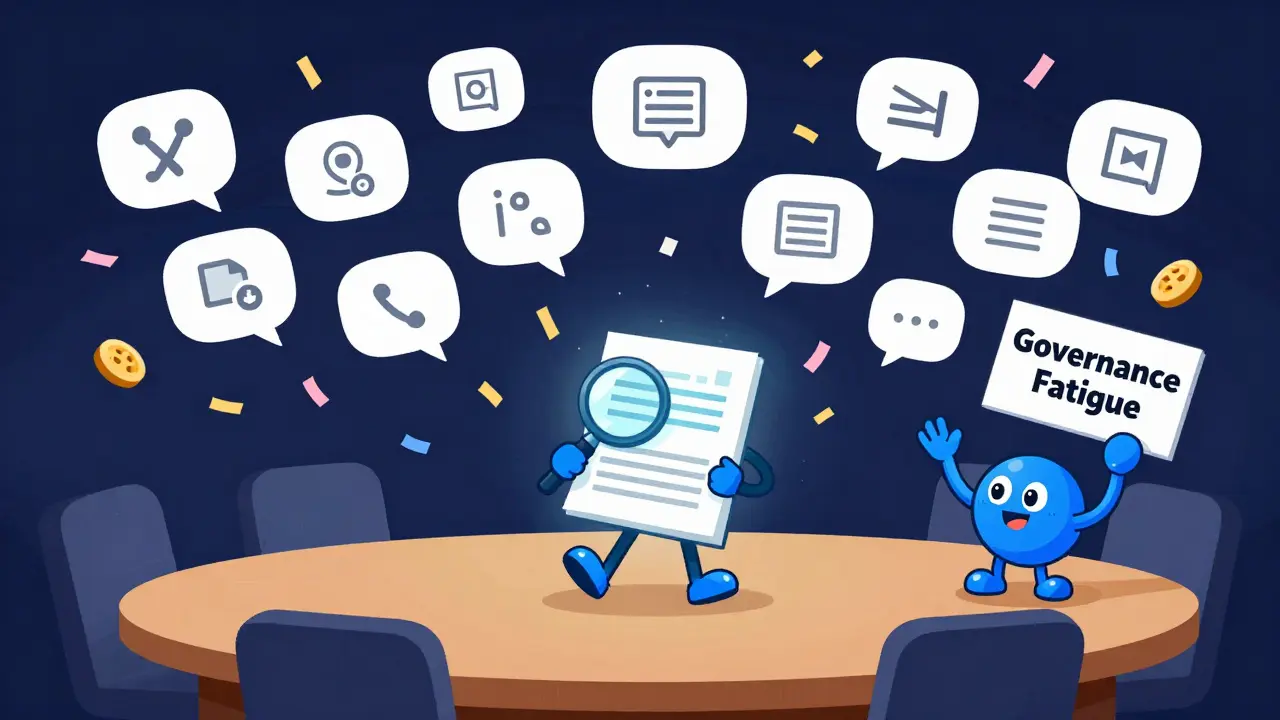
Second, governance fatigue. Voting on every tiny decision sounds democratic. In practice, it’s exhausting. People stop showing up. Token holders with the most tokens-often early investors-end up calling the shots. That’s not decentralization. That’s plutocracy in disguise.
Third, inconsistency. Some DAOs have flawless documentation, clear roles, and automated payouts. Others? You’ll spend weeks trying to figure out how to get paid. Reddit threads from r/DAOs are full of people complaining about delayed rewards because the smart contract didn’t trigger. It’s not broken. It’s just poorly designed.
And then there’s trust. Without managers, how do you know someone’s doing their job? That’s where reputation systems are stepping in. DAOs like Colony and DAOhaus now track contributions over time. Your history becomes your resume. No LinkedIn profile needed.
What Skills Do You Need?
If you want to join a DAO, you don’t need a degree. You need curiosity and self-direction.
- Basic blockchain literacy: Understand what a wallet is, how gas fees work, and why a transaction might fail.
- Asynchronous communication: You’ll write in Discord, not talk in meetings. Learn to be clear, concise, and patient.
- Proposal writing: If you want funding, you need to explain why it matters. Structure matters: problem → solution → cost → impact.
- Self-management: No one’s checking in on you. You set your deadlines. You track your progress.
Most people take 3 to 6 months to feel comfortable. Start small. Join DAOhaus. Find a bounty. Fix a typo in the docs. Vote on a proposal. Earn a few tokens. Build your track record. The best DAO contributors aren’t the ones with the fanciest titles. They’re the ones who show up, consistently, without being asked.
What’s Next? The DAOs of 2026
By 2027, Gartner predicts 25% of digital businesses will operate like DAOs. That’s not hype. That’s infrastructure.
AI is already helping. Tools now detect when voters are burned out. They flag proposals that are likely to fail. They suggest better voting windows based on global participation patterns. This isn’t sci-fi. It’s happening now.
And the big shift? Real-world identity checks. Token voting alone is too easy to game. So new DAOs are starting to require verified IDs, LinkedIn profiles, or even Zoom interviews before granting voting rights. It’s not perfect-but it’s a step toward balancing openness with accountability.
Traditional companies aren’t disappearing. But they’re starting to build DAOs inside them. Not to replace employees. To experiment. To test new ways of working. The future isn’t DAOs vs. corporations. It’s DAOs and corporations-learning from each other.
Final Thought
DAOs aren’t about technology. They’re about power. Who gets to decide? Who gets to benefit? Who gets to lead?
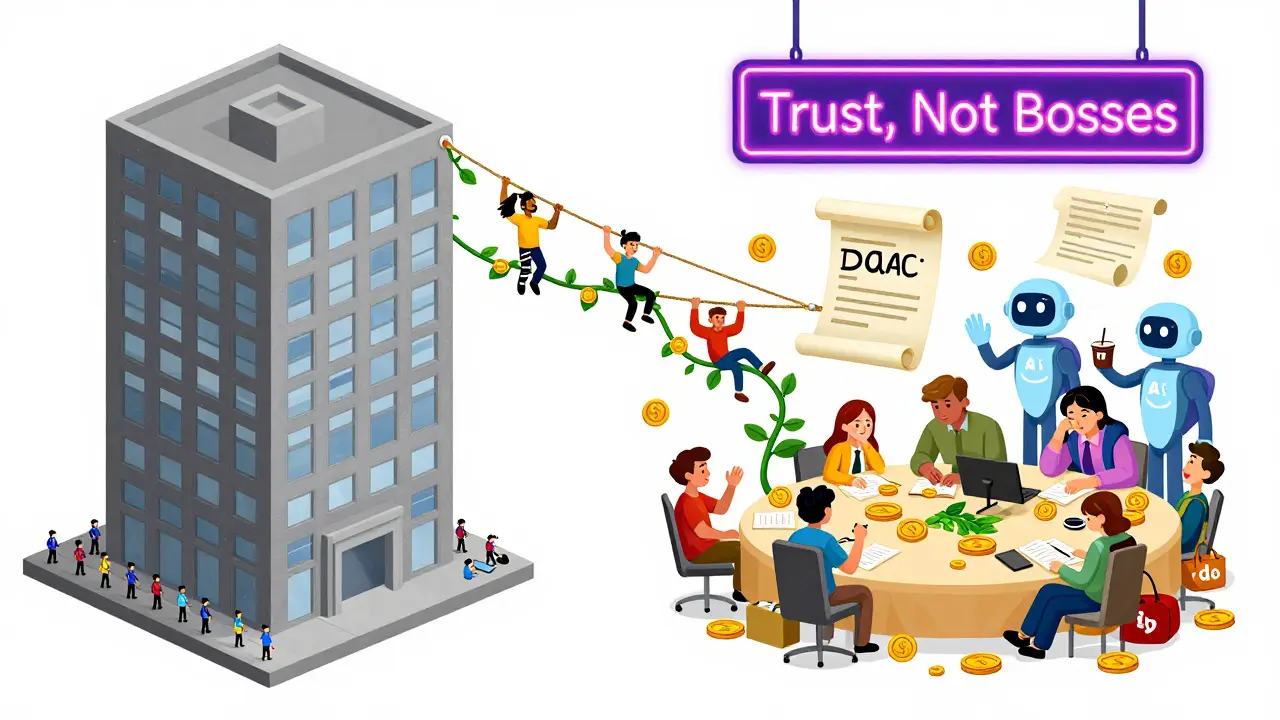
Traditional work was built on control. DAOs are built on trust. Not blind trust. Trust backed by code, transparency, and shared ownership. It’s messy. It’s slow. It’s not always fair. But it’s real.
If you’re tired of waiting for permission to do meaningful work-if you want to be paid for what you actually do, not just for showing up-then DAOs aren’t the future. They’re already here.
Are DAOs legal?
It depends on where you are. Wyoming (U.S.) legally recognizes DAOs as LLCs. The EU’s MiCA regulations are starting to bring them under financial oversight. But in most countries, DAOs exist in a legal gray zone. There’s no clear liability, no formal structure, and no guaranteed rights. That’s changing, but slowly.
Can you make money working in a DAO?
Yes-but not always reliably. Many DAOs pay in cryptocurrency, and payouts depend on token value and smart contract conditions. Some pay weekly. Others pay only after a proposal passes. You can earn thousands, but you can also wait months for payment. The upside? You’re not limited by geography or job titles. The risk? No safety net. No unemployment benefits. No HR to call.
Do you need crypto to join a DAO?
Not always. Many DAOs let you contribute without owning tokens-like writing content, designing graphics, or moderating forums. But if you want voting rights or to earn rewards tied to governance, you’ll need to acquire governance tokens. That usually means buying them or earning them through contributions.
How do DAOs handle taxes?
They don’t. Tax responsibility falls on the individual. If you earn crypto from a DAO, you owe taxes on its value at the time you received it. In the U.S., the IRS treats crypto as property. Many DAO contributors hire accountants who specialize in crypto taxation. There’s no automated system. You’re on your own.
What’s the difference between a DAO and a regular remote company?
A remote company still has a CEO, a payroll system, and managers who assign tasks. A DAO has none of that. Everything is governed by code and community votes. There’s no employment contract. No job description. No boss. You’re a contributor, not an employee. And you own a piece of the organization through tokens, not stock options.


Bhavishya Kumar
3 Mar 2026 at 16:44The structural integrity of DAO governance hinges on the immutability of smart contracts and the transparency of on-chain voting mechanisms. Any deviation from this principle-such as centralized token hoarding or governance fatigue-undermines the foundational ethos of decentralization. It is not merely a technical challenge; it is a sociopolitical one. The absence of formal hierarchy does not equate to an absence of power dynamics. Those who possess the greatest token weight, regardless of contribution, effectively dictate outcomes. This is not autonomy-it is plutocracy masquerading as democracy.
Moreover, the legal ambiguity surrounding DAOs presents a critical vulnerability. Without recognized liability structures, contributors operate in a regulatory vacuum. A single lawsuit could dissolve the entire entity, leaving participants with no recourse. Jurisdictions like Wyoming and the EU are attempting to codify frameworks, but global harmonization remains distant. Until legal personhood is universally acknowledged, DAOs remain fragile experiments.
Furthermore, the notion that ‘anyone can join’ ignores the practical barriers of digital literacy, access to stable internet, and cryptographic infrastructure. In many developing regions, these prerequisites are nontrivial. To claim DAOs are truly inclusive is to overlook the digital divide that persists even within decentralized systems.
Finally, taxation remains an unaddressed abyss. Contributors are expected to self-report crypto earnings as property, often without proper accounting tools or professional guidance. The burden falls disproportionately on those least equipped to navigate it. This is not innovation-it is regulatory arbitrage.
DAOs are not the future of work. They are a radical reimagining-one that demands legal, ethical, and infrastructural evolution before it can be scaled responsibly.