

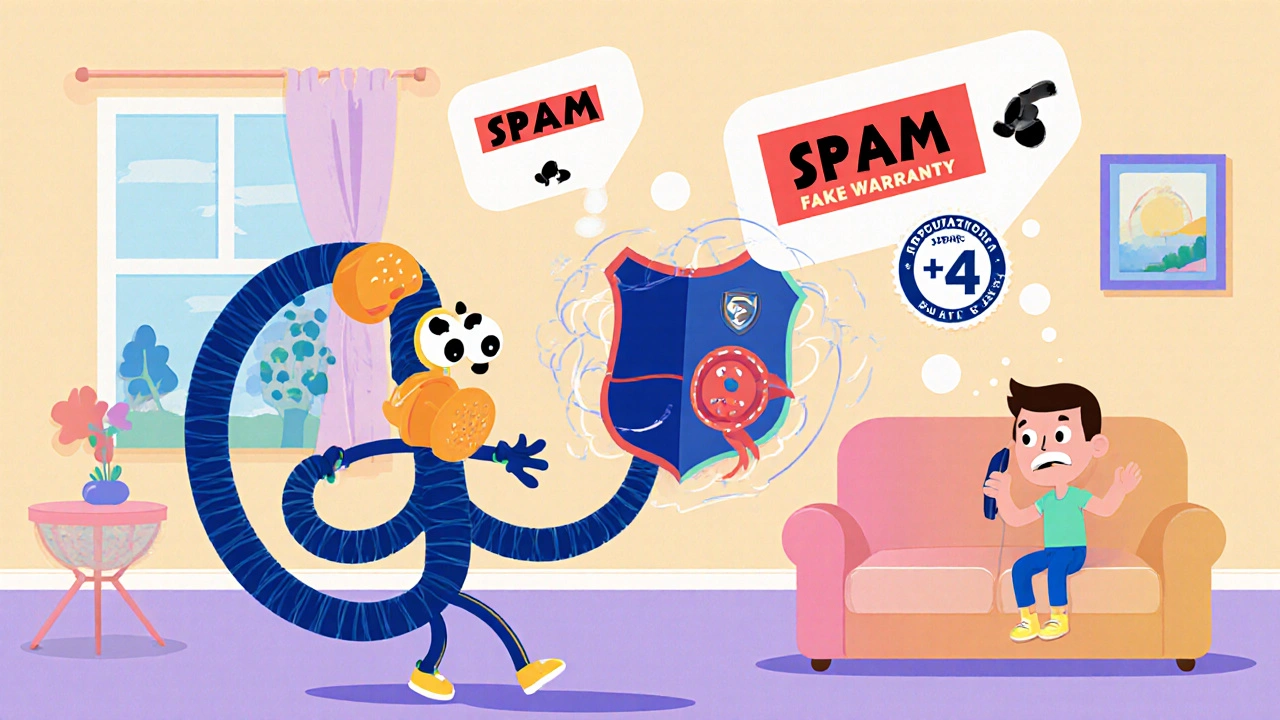

Every day, millions of Americans get a call from a stranger who doesn’t leave a message, hangs up instantly, or tries to sell you a fake warranty. These aren’t just annoying-they’re expensive. In 2022, Americans lost $39 billion to spam calls, according to the YouMail Robocall Index. And as more businesses and homes switch to VoIP, the problem isn’t going away-it’s getting smarter.
Traditional phone systems had simple call blocking: block a number, and that’s it. But VoIP calls come from anywhere, can be spoofed in seconds, and are often generated by bots or human operators working in call centers overseas. That’s why modern VoIP spam blocking doesn’t just look at numbers. It uses reputation scores and layered filters to decide who gets through and who gets blocked-before the call even rings.
How Reputation Scores Work in VoIP Systems
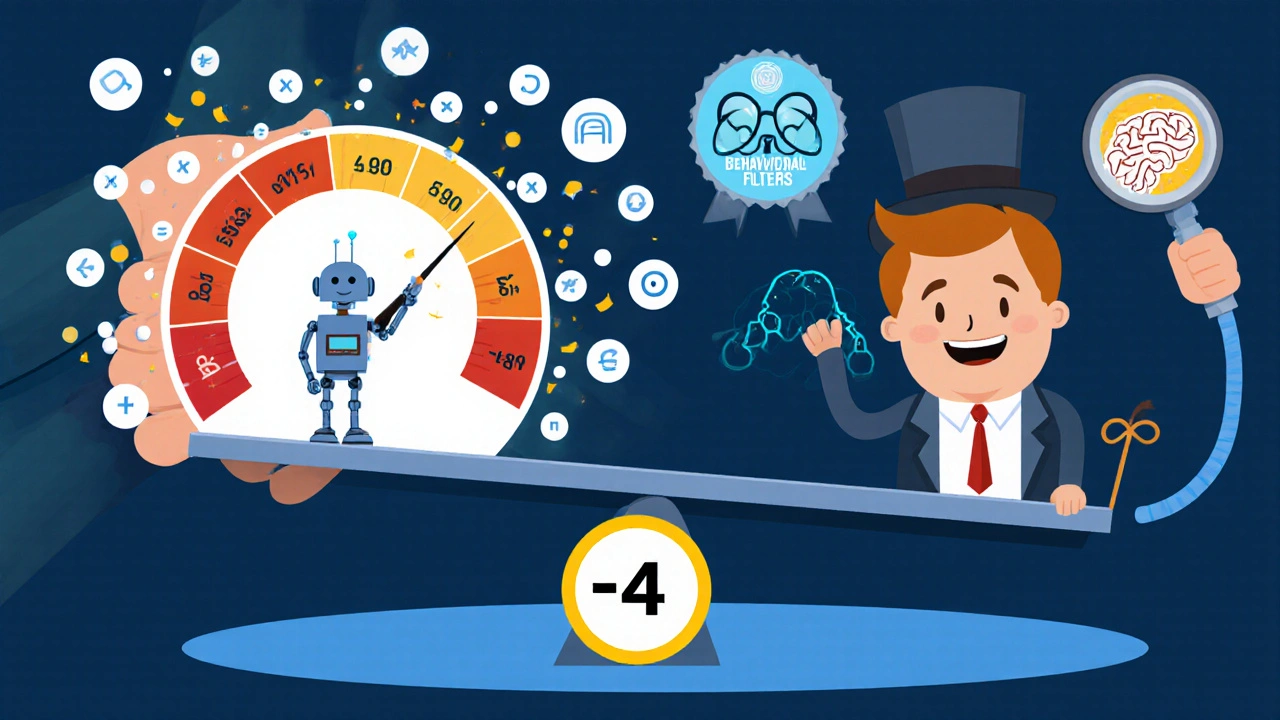
Reputation scoring is like a credit score for phone numbers. Instead of tracking payments, it tracks behavior. Every time a number makes a call, the system watches: How many people answer? How long do calls last? Do people hang up right away? Is this number calling 500 people an hour? Legitimate users don’t behave like spammers. And that’s the key.
Research from Purdue University in 2008 laid the foundation for this approach. They found that spam callers consistently show three patterns: low Interaction Ratio (few people answer), low Historical Ratio (they haven’t called before), and low Social Ratio (they’re not connected to trusted contacts). These metrics are turned into a score-usually from -5 to +5. A score of -4 or lower? That call gets blocked. A -2 or -3? Labeled as “Potential Spam.” A +3 or higher? It rings through.
Companies like Spectrum use this system in their Call Guard service. They don’t just rely on blacklists. They watch how numbers behave across millions of users. If 10,000 people hang up on a number within 3 seconds, it gets flagged. If that same number starts calling from different IPs or changing caller IDs, it gets downgraded even faster.
The Filters That Actually Work
Reputation scores alone aren’t enough. Spammers adapt. So modern VoIP systems stack multiple filters together.
- STIR/SHAKEN: This is the gold standard for caller ID authentication. It digitally signs calls to prove the number isn’t spoofed. Since the FCC mandated it in 2019, spoofed calls dropped by 42%. But it doesn’t stop human-operated spam-just fake numbers.
- Behavioral Pattern Recognition: This looks at call timing, duration, and frequency. A number calling 120 people between 8 a.m. and 9 a.m. every day? That’s not a real business. It’s a bot.
- Social Network Analysis: If your contact list has 200 people and 198 of them have never heard of the incoming number, it’s suspicious. But if your coworker just called you from a new line, and that line also called your boss last week? It passes.
- Turing Tests: Some systems ask callers to press a number or say a word. Bots can’t do that. Human spammers can-but they hate it. Many give up after one failed attempt.
These filters don’t work in isolation. They’re layered. A call might pass STIR/SHAKEN but get flagged by behavioral analysis. Or it might have a high reputation score but trigger a Turing test because it’s calling from a known spam IP. Only when all filters agree does the system let it through.
Consumer vs. Business Solutions
Not all VoIP spam blocking is created equal. What works for your home phone might not cut it for your business.
For consumers, services like Spectrum’s Call Guard are plug-and-play. It’s included in your plan. You don’t install anything. You don’t configure anything. It just works. In user surveys, 92% of Spectrum Mobile customers were satisfied with the default settings. But 38% wanted more control-like adjusting the reputation threshold or whitelisting unknown numbers.
Businesses need more. A small marketing firm in Wisconsin reduced spam calls by 98% by setting up an IVR menu that asks callers to press “1” to be connected. Automated systems can’t do that. Human spammers? They hang up. That’s it.
Platforms like Nextiva, GoTo Connect, and CloudTalk let admins set rules based on time of day, caller ID verification, and even geographic location. You can block all calls from certain countries. You can require STIR/SHAKEN authentication for incoming calls. You can set up “Do Not Call” registry compliance to avoid legal trouble.
But here’s the catch: businesses often get flagged by accident. A Capterra survey of 1,243 VoIP users found that 27% of legitimate business calls were incorrectly labeled as spam. That’s not just annoying-it’s costly. A sales rep calling a client and getting blocked because the system thinks they’re a bot? That’s a lost deal.
False Positives and Reputation Recovery
One of the biggest pain points in VoIP spam blocking isn’t spam-it’s blocking the wrong people.
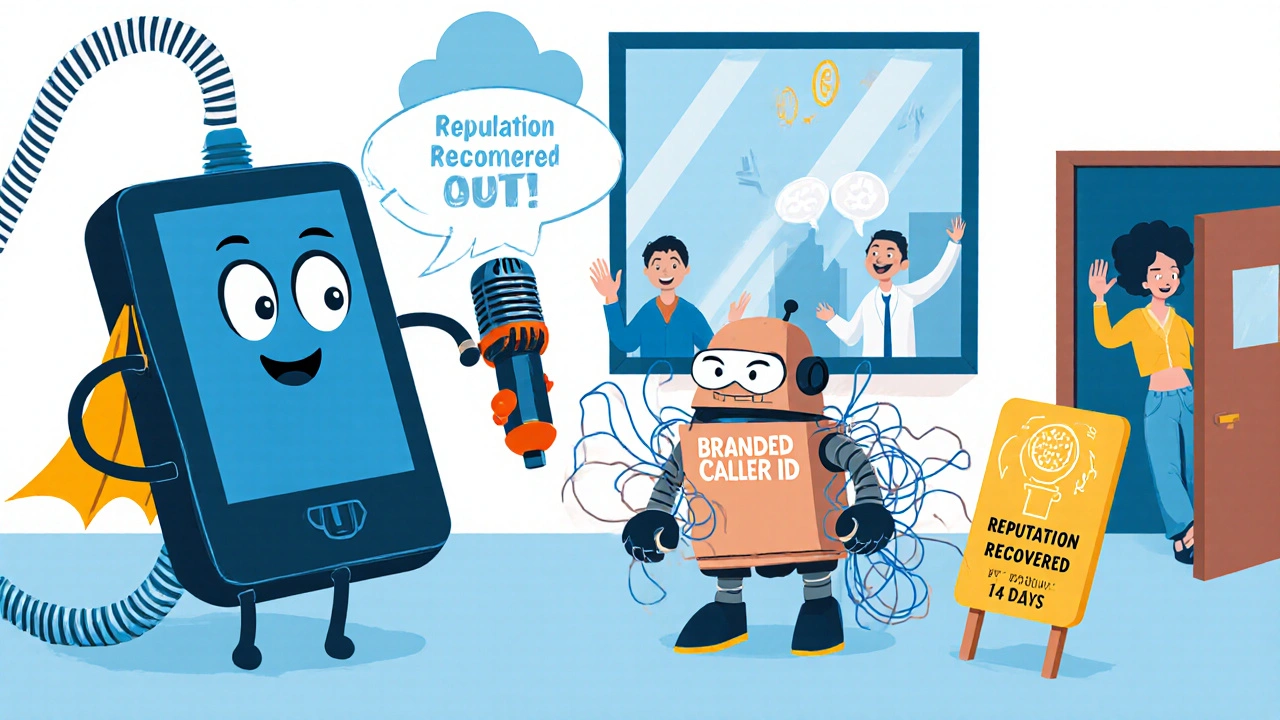
When a business changes its phone number, or switches VoIP providers, or starts calling a new region, its reputation score can tank. CloudTalk reports that 68% of businesses take 14 to 21 days to recover their number’s reputation after a spam flag. During that time, customers can’t reach them. Leads vanish. Support tickets pile up.
That’s why some platforms now offer reputation monitoring tools. They show you how your number is being scored across networks. You can see if you’re being flagged for high call volume, short call duration, or lack of recipient response. You can even submit your number for whitelisting if you’re a legitimate business.
And if you’re using a branded caller ID (CNAM)? That helps. When your business name shows up on the caller ID instead of just a number, recipients are more likely to answer-and that improves your reputation score over time.
What’s Next? AI, Federated Systems, and the Future
The arms race between spammers and filters is accelerating. In 2022, MIT Lincoln Laboratory found AI can now detect synthetic voices-like those generated by deepfakes-with 93.7% accuracy. That’s huge. Spammers used to rely on human voices. Now they’re using AI to mimic real people. And the filters are catching up.
By 2025, Gartner predicts 85% of enterprise VoIP systems will use AI-driven behavioral analysis. That’s up from 35% in 2022. The next wave of filtering won’t just look at call patterns. It’ll analyze voice tone, speech rhythm, and even background noise to spot automation.
Meanwhile, the Internet Engineering Task Force (IETF) is working on RFC 8887-a new standard that would let carriers share spam intelligence without sharing personal data. Imagine this: if a spam call gets blocked on Verizon, the system quietly tells AT&T and T-Mobile: “This number is bad.” But it doesn’t say who called or what they said. Just: “Block it.” That’s the future of reputation systems-federated, private, and real-time.
And the threat isn’t slowing down. Nokia Deepfield predicts that by 2026, 45% of all VoIP traffic will be spam. That’s nearly half of every call you get. Without better filters, it’s unsustainable.
What You Should Do Today
If you’re a homeowner using VoIP:
- Check if your provider offers spam filtering. Spectrum, AT&T, and T-Mobile all include it.
- Turn on STIR/SHAKEN if available.
- Don’t ignore “Spam Risk” labels. Even if you answer, don’t give out info.
If you run a business:
- Use a VoIP provider that supports STIR/SHAKEN and branded caller ID.
- Set up an IVR verification step for incoming calls.
- Monitor your number’s reputation. If calls start dropping, check your provider’s analytics dashboard.
- Train your team to recognize spam patterns-like calls from unknown numbers that hang up fast.
And if you’re still using a basic number-blocker? It’s not enough. Spammers don’t call the same number twice. They change. Your defense has to change too.
How do VoIP spam filters know if a call is spam?
VoIP spam filters use reputation scores based on behavioral patterns like call frequency, duration, recipient response rates, and social connections. If a number calls hundreds of people in an hour and no one answers, it gets flagged. Systems like Spectrum’s Call Guard combine this with STIR/SHAKEN authentication, Turing tests, and AI analysis to detect spam with over 90% accuracy.
Can I block spam calls on my home VoIP phone?
Yes. Most major VoIP providers like Spectrum, AT&T, and T-Mobile include free spam blocking in their plans. It activates automatically. You don’t need to install anything. Just check your app or online portal to see if calls are being labeled as “Spam Risk” or blocked. If your provider doesn’t offer it, switch to one that does.
Why do legitimate calls sometimes get blocked?
Legitimate calls get blocked when the system doesn’t have enough data to trust the number. This happens often when businesses change phone numbers, move regions, or start calling new customers. Reputation scores reset, and the system sees the new number as suspicious. It can take 14 to 21 days for the system to rebuild trust. To avoid this, use branded caller ID and avoid high-volume calling in short bursts.
What’s the difference between STIR/SHAKEN and reputation scoring?
STIR/SHAKEN verifies that a caller ID isn’t fake-it proves the number is who it says it is. Reputation scoring looks at behavior: Is this number acting like a spammer? You can have a perfectly authenticated call from a spammer. STIR/SHAKEN stops spoofing. Reputation scoring stops spam. Together, they’re the most effective combo.
Do I need to pay extra for spam call blocking?
No-not if you’re with a major provider. Spectrum, AT&T, T-Mobile, and many business VoIP services include spam filtering at no extra cost. Some smaller providers charge $3-$10/month for advanced features. But basic blocking should be free. If you’re being charged, ask if your plan includes it. You might be able to switch plans.
Can AI really tell if a caller is a robot?
Yes. AI tools now analyze voice patterns, speech rhythm, and background noise to detect synthetic voices with 93.7% accuracy, according to MIT Lincoln Laboratory. These systems can spot robotic speech that even humans can’t hear. Spammers using AI-generated voices are being caught faster than ever.
How can businesses protect their phone number’s reputation?
Use branded caller ID (CNAM) so your business name shows up. Avoid sudden spikes in call volume. Monitor your provider’s reputation dashboard. If you notice a drop in answer rates, adjust your calling schedule. Register your number with trusted directories. And never buy VoIP numbers from shady resellers-they’re often already flagged.
Final Thoughts
Spam calls aren’t going away. But they’re no longer unstoppable. The best defense isn’t a single tool-it’s a system. Reputation scores, behavioral filters, STIR/SHAKEN, and AI detection all work together to keep the noise out and the real calls in.
If you’re still relying on manual blocking or third-party apps, you’re behind. The technology is here. It’s built into your VoIP service. You just need to turn it on-and trust it.







Eka Prabha
29 Nov 2025 at 19:47Reputation scores? More like corporate surveillance dressed up as security. They're tracking every call you make, who you talk to, how long - it’s not blocking spam, it’s building a behavioral profile on millions of people. And don’t get me started on STIR/SHAKEN - it’s a government-backed protocol that gives telecoms legal cover to silence dissent. If your number gets flagged, you’re blacklisted forever, no appeal, no transparency. This isn’t protection. It’s control.
And let’s be real - if you’re a small business trying to reach customers, you’re collateral damage. They don’t care if you’re legitimate. Your score resets every time you change providers, and suddenly you’re a ‘spam risk’ for weeks. Meanwhile, the real criminals? They’re using burner VoIPs from offshore data centers that never get scored because they’re not on the grid. This system only punishes the honest.
And who’s auditing these algorithms? No one. The vendors won’t disclose their models. The FCC doesn’t care. It’s a black box with a green light. You think you’re safe? You’re just being quietly categorized. And if you ever question it? Your calls get routed to voicemail. That’s not spam filtering. That’s digital silencing.
I’ve seen it happen. A local dentist in Pune got blocked because his number was ‘too new’ and his call volume was ‘anomalous.’ He lost 37 patients in two weeks. No explanation. No recourse. Just a ‘low reputation score.’
This isn’t tech. It’s authoritarianism with a UI.
And yes, I know you’ll say ‘but it stops robocalls!’ - so does a gun to your head. Doesn’t mean it’s right.