

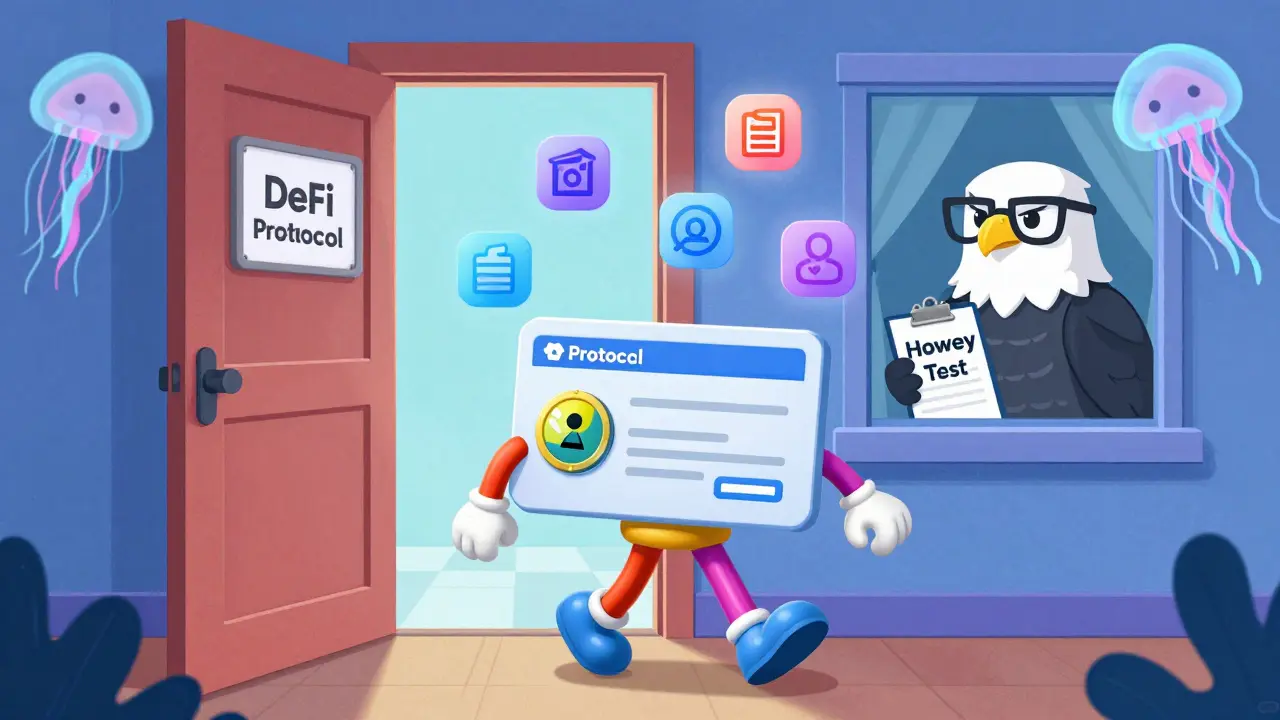

Most blockchain projects fail not because their tech is broken, but because no one understands what the token is actually for. You see a coin on a website, it says "utility token," but what does that mean? Can you use it to pay for services? Can you vote on upgrades? Can you cash it out? If you can’t answer those questions, you’re not alone. In 2025, token utility mapping isn’t just a buzzword-it’s the difference between a project that survives and one that gets shut down by regulators.
What Token Utility Mapping Actually Means
Token utility mapping is the process of clearly defining what a blockchain token does, who can use it, and under what rules. It’s not just labeling a token as "utility" or "security." That’s the easy part. Real utility mapping answers: How many tokens does it take to access a feature? What happens if the token supply changes? Can it be traded legally in the U.S.? Who verifies its usage? It’s like building a membership card for a club. You don’t just hand someone a plastic card and say, "You’re in." You tell them: This card gets you into the gym at 6 a.m., lets you book a personal trainer for $10, and expires if you don’t use it for 90 days. That’s utility mapping. In blockchain, the "club" is a DeFi protocol, an NFT marketplace, or a decentralized storage network-and the token is the key. The U.S. Securities and Exchange Commission (SEC) made this critical after the Telegram $1.7 billion ICO in 2020. They fined Telegram because their token, Gram, had no clear use case beyond speculation. Investors weren’t buying it to use a messaging app-they were betting it would rise in price. That’s a security, not a utility. The SEC doesn’t care if you call it a utility token. They care if it actually functions like one.How It Works: The Four-Step Framework
Every serious project uses a four-phase approach to map token utility. Skip any step, and you risk legal trouble or user confusion.- Asset Identification - What real-world value does the token represent? Is it access to cloud storage? Voting rights? A share of protocol fees? Be specific. Saying "the token powers the network" is meaningless. Saying "1 token equals 1 GB of decentralized storage for 30 days" is actionable.
- Functionality Specification - How is the token used? Can it be staked? Burned? Transferred? Locked? What smart contracts enforce its rules? Ethereum’s ERC-20 standard is used by 89% of utility tokens, but just using it doesn’t make your token useful. You need to define the logic inside the contract.
- Regulatory Alignment - Does your token meet the SEC’s Howey Test? Does it comply with MiCA in Europe? The 2025 U.S. Digital Asset Framework requires every token to be classified under one of three buckets: utility, security, or payment. Your mapping document must show why yours fits one-and only one.
- Ecosystem Integration - Can wallets like MetaMask read your token’s utility? Can Chainalysis trace its usage for compliance? Is it listed on Etherscan with clear metadata? If your token can’t be understood by tools developers and auditors use, it’s invisible to the ecosystem.
Real-World Use Cases
Token utility mapping isn’t theoretical. It’s happening right now across industries.- DeFi Lending Protocols - Aave’s AAVE token isn’t just a governance token. It’s a safety mechanism. Holders can vote on risk parameters, and if the protocol gets undercollateralized, AAVE tokens are automatically burned to cover losses. That’s utility mapping: voting rights + financial backstop.
- Decentralized Storage - Filecoin’s FIL token gives users access to storage space on a global network. But it also rewards miners for providing reliable storage. The token has dual utility: consumer and producer. Mapping it meant defining how much storage 1 FIL equals, how rewards are calculated, and how penalties work for downtime.
- Enterprise Blockchain - J.P. Morgan’s JPM Coin isn’t traded on public exchanges. It’s a digital dollar used internally to settle payments between institutional clients. Its utility is simple: 1 JPM Coin = $1 USD, redeemable only by approved banks. No speculation. No voting. Just settlement. That’s utility mapping done right for regulated environments.
- Gaming and NFTs - Axie Infinity’s AXS token lets players vote on game updates, earn rewards from marketplace fees, and stake to increase breeding limits. But early versions had no clear cap on how many tokens a player could earn per day. That led to inflation and user backlash. They fixed it by mapping exact utility thresholds: 1 AXS = 1 vote, 5 AXS = 1 breeding slot, 10 AXS = 1 fee discount. Suddenly, the token had structure.
Adoption Pathways: Who’s Doing It Right
Adoption isn’t random. It follows a clear hierarchy based on risk tolerance and regulatory pressure.- Enterprise and Institutional Projects (89% adoption) - Banks, insurers, and logistics firms use token utility mapping because they’re under constant audit. JPM Coin, Walmart’s supply chain tokens, and Deutsche Bank’s bond settlement system all have formal mapping documents reviewed by legal teams and regulators. They use the Ethereum Enterprise Alliance’s Token Taxonomy Framework, adopted by 71% of enterprise chains.
- DeFi Protocols (82% adoption) - These projects live or die by user trust. Uniswap, Compound, and Synthetix all map token utility precisely because their protocols rely on token incentives. If users don’t know why they’re staking, they leave. DeFi teams often build dynamic mapping systems that adjust based on usage data-something regulators now encourage.
- Public Blockchain Startups (67% adoption) - Many crypto startups still treat token mapping as an afterthought. They launch a token, list it on a DEX, and hope for the best. But with MiCA in Europe and the SEC’s 2024 Digital Asset Framework in the U.S., that’s becoming dangerous. Projects without mapping are getting flagged for enforcement.
- NFT Platforms (only 43% adoption) - Most NFT projects still treat tokens as collectibles, not utilities. A rare PFP doesn’t need mapping-but if your NFT grants access to a private Discord, a real-world event, or a revenue share, then you need to map it. The ones that do are seeing 3x higher retention.
Challenges and Pitfalls
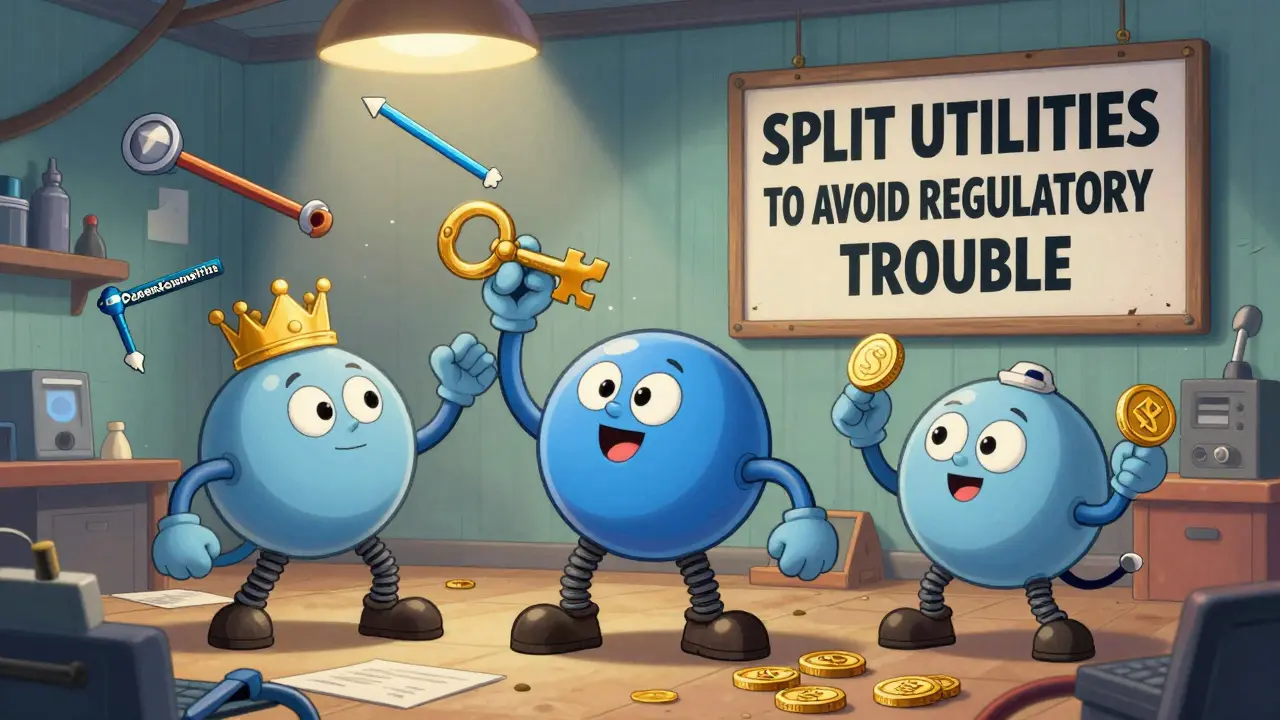
It’s not all smooth sailing. Even experienced teams run into roadblocks.- Multi-Function Tokens - Some tokens do too much. A token that gives you voting rights, fee discounts, and staking rewards becomes hard to regulate. The FATF warns this creates money laundering risks. The fix? Split functions into separate tokens. One for governance, one for access, one for rewards.
- Regulatory Uncertainty - The SEC hasn’t defined what counts as "sufficient utility." Is a token that lets you vote on a DAO enough? What if the DAO does nothing? Developers are stuck guessing. That’s why the SEC’s December 2025 "Utility Token Safe Harbor"-giving projects 18 months to refine their mapping-is a game-changer.
- Chain Fragmentation - If your token works on Ethereum and Solana, mapping inconsistencies can occur. A token might have one utility on Ethereum and a different one on Solana. 58% of multi-chain projects face this issue. The solution? Use standardized schemas like the W3C Token Utility Schema (TUS 1.0), already adopted by 37% of new projects in early 2026.
- Rigidity - Some teams map too tightly. Filecoin had to re-map its token twice because early utility rules didn’t account for how miners actually behaved. Dr. Garrick Hileman calls this "over-mapping." The answer? Build in flexibility. Use on-chain oracles like Chainlink’s utility verification system to let usage data drive updates.
Tools and Best Practices
You don’t need to build this from scratch. There are proven tools.- OpenZeppelin Contract Wizard - Used by 76% of Ethereum projects. Generates secure, auditable token contracts with built-in utility parameters.
- Chainstack’s Token Mapping Framework - Rated 4.7/5 by developers. Automates documentation and links token functions to on-chain behavior.
- CertiK’s Token Audit - Used by 63% of top projects. Checks your mapping against regulatory and technical standards.
- W3C Token Utility Schema (TUS 1.0) - The first machine-readable standard. Lets wallets, exchanges, and regulators automatically read what your token does.
The Future: Machine-Readable and Global
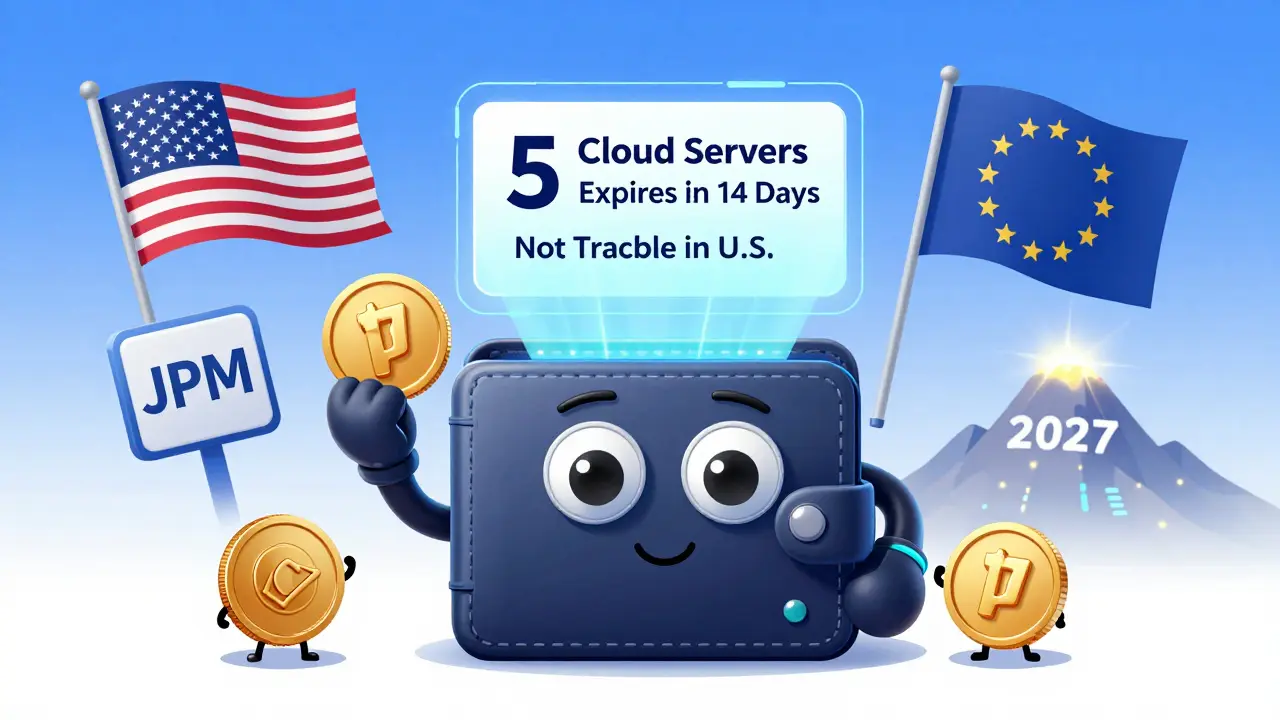
By 2027, experts predict every token will have a standardized, machine-readable utility profile. Imagine a wallet that doesn’t just show your token balance-but also tells you: "This token gives you access to 5 cloud servers, expires in 14 days, and can’t be traded in the U.S." That’s not sci-fi. It’s coming. Polygon’s "Mapping-as-a-Service" platform already processes 1,200 token mappings per month. Ethereum’s EIP-7702 proposal will let utility definitions live directly on-chain. The goal? No more confusion. No more lawsuits. Just clear, transparent systems where everyone knows what the token does-and why it matters.Token utility mapping isn’t about making crypto more boring. It’s about making it sustainable. The projects that survive the next five years won’t be the ones with the flashiest marketing. They’ll be the ones that answered the simplest question: What is this token actually for?
What’s the difference between a utility token and a security token?
A utility token gives access to a product or service within a blockchain ecosystem-like paying for storage, voting on upgrades, or earning rewards. A security token represents ownership or investment rights, like shares in a company or a claim to future profits. The SEC uses the Howey Test to decide: If people are buying the token expecting profits from others’ efforts, it’s a security-even if you call it a utility.
Do I need a lawyer to map my token?
You don’t absolutely need one, but you’ll save millions by getting legal advice early. The SEC fined Telegram $100 million for not properly classifying its token. Many startups spend more on legal fees after being sued than they would have spent upfront to get it right. A lawyer familiar with the Howey Test and MiCA regulations can help you avoid costly missteps.
Can a token have more than one utility?
Technically yes, but it’s risky. Tokens with multiple functions-like voting, staking, and payments-create regulatory gray areas. Regulators prefer single-purpose tokens because they’re easier to classify and monitor. The smart approach is to split utilities into separate tokens: one for governance, one for access, one for rewards. This reduces legal exposure and makes the ecosystem clearer for users.
How long does token utility mapping take to implement?
For a standard project, expect 6 to 8 weeks of focused work. That includes drafting the utility definition, coding the smart contract, integrating with blockchain explorers, and getting legal sign-off. Projects using tools like OpenZeppelin and Chainstack can cut that time by 30%. But rushing it leads to mistakes-and those mistakes can cost you your project.
Is token utility mapping required by law?
In the U.S., it’s not explicitly required by statute-but the SEC treats it as a compliance necessity. If your token lacks clear utility documentation, regulators can classify it as a security, triggering registration requirements. In the EU, MiCA regulations (effective January 2025) legally require all financial tokens to have documented utility. So while not always a law, it’s now a de facto requirement for any project that wants to operate legally.
What happens if I don’t map my token?
You risk four major outcomes: 1) Your token gets classified as a security, forcing you to register with the SEC or shut down; 2) Exchanges delist you because they can’t verify compliance; 3) Users lose trust and stop using your platform; 4) You face fines or lawsuits. Ripple spent $150 million in legal fees partly because their token’s utility wasn’t clearly mapped. Don’t wait until it’s too late.








Peter Reynolds
20 Jan 2026 at 05:59Been watching this space for years and honestly this is the first time I’ve seen someone break it down without jargon. The membership card analogy? Perfect. I’ve seen so many projects throw around "utility" like it’s magic dust. This is what actual clarity looks like.
Also the part about splitting functions into separate tokens? That’s the move. Trying to make one token do everything just creates chaos. Seen it firsthand with that one DeFi project that collapsed because their token could vote, stake, and pay fees-no one knew what it was even for anymore.