

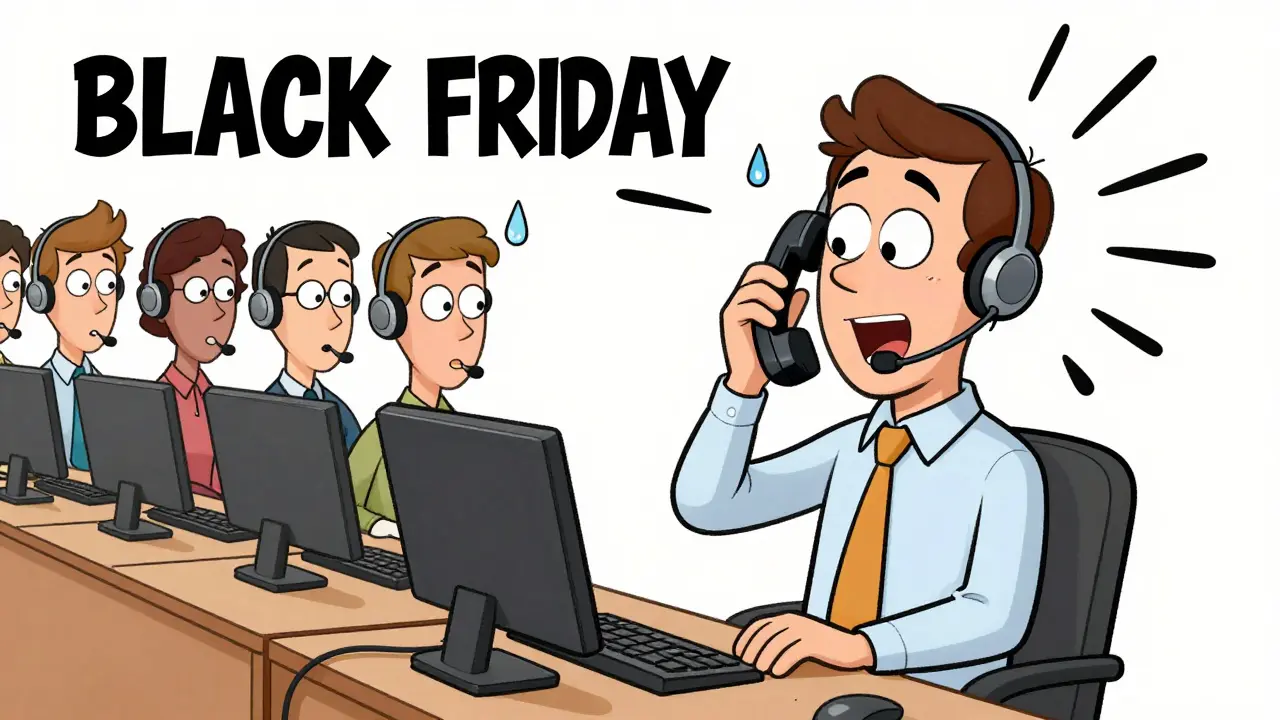

During Black Friday 2022, some retailers saw call volumes spike 300%-but because their forecasting missed the surge, customers waited over an hour on hold. Accurate Voice over IP (VoIP) forecasting is the key to optimizing staffing and improving customer service in today's dynamic call centers. It’s not just about predicting call numbers-it’s about ensuring your team can handle traffic spikes without overstaffing.
Why Accurate Forecasting Matters
When call volume forecasts are off, businesses face serious consequences. Overstaffing wastes money, while understaffing leads to long wait times and frustrated customers. According to Dialpad's 2023 analysis, companies with precise forecasting reduce operational costs by 15-25% and boost customer satisfaction scores by up to 30 points. These numbers aren't theoretical-they come from real contact centers that adjusted staffing based on data. For example, a mid-sized e-commerce company in Madison used seasonal forecasting to avoid 200+ hours of unnecessary overtime during the holiday season, saving $15,000 in labor costs alone.
Service Level Agreements (SLAs) often require answering 80% of calls within 20 seconds. Without accurate forecasting, meeting these targets becomes impossible. This isn't just about customer happiness-it's about business survival. In competitive markets, a single bad experience can drive customers to competitors forever.
How Seasonal Trends Shape Call Patterns
Seasonal trends in call volume aren't random-they follow predictable patterns tied to holidays, weather, and business cycles. Retailers typically see 200-300% more calls during Black Friday and Christmas. Meanwhile, summer months often bring a 15-20% drop in B2B support calls as businesses slow down. These patterns repeat yearly, making historical data analysis essential.
CloudTalk's 2022 whitepaper found that reliable seasonal forecasting requires at least 13 weeks of historical data. This gives enough cycles to spot trends like quarterly spikes or summer lulls. For example, a healthcare provider in Wisconsin noticed consistent 40% call volume increases during flu season each winter. By factoring this into their forecast, they reduced average wait times by 12 minutes during peak periods.
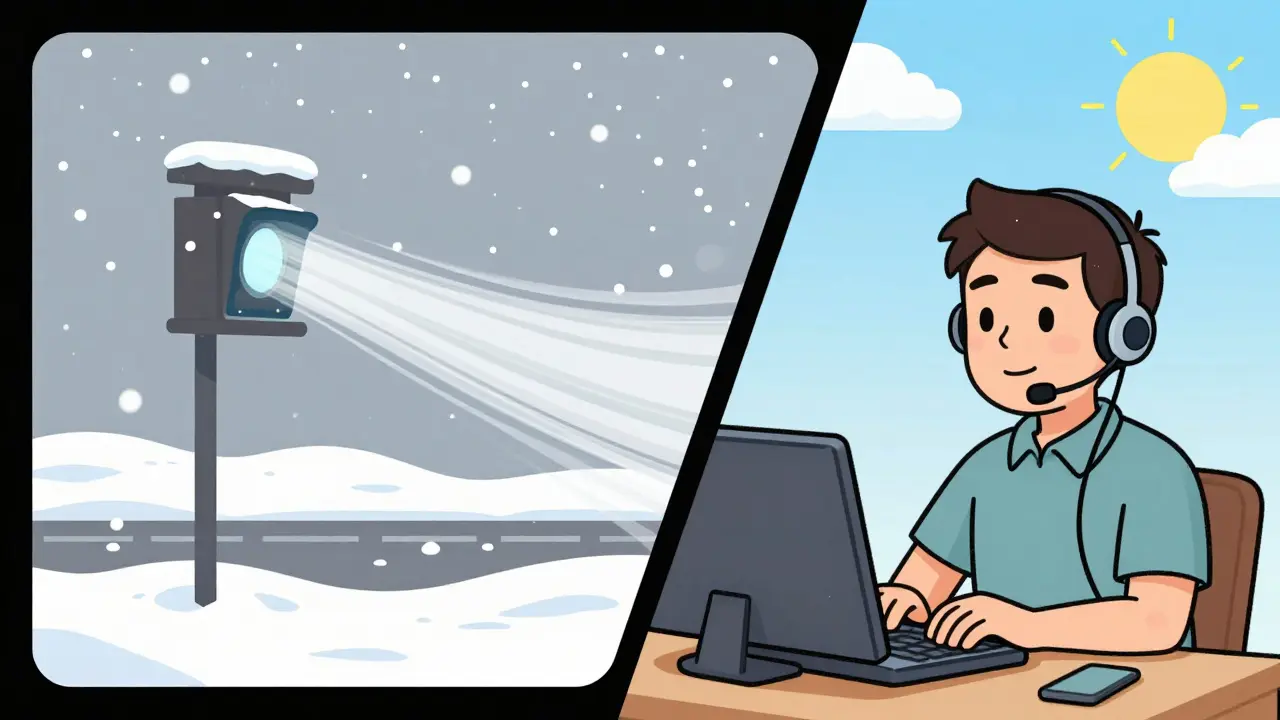
But it's not just about holidays. Weather events like snowstorms can spike calls for utility companies. A 2023 study by Calabrio showed that during major winter storms, call centers for power companies saw 35% more inquiries. Those who tracked weather data alongside historical patterns handled these spikes with minimal staffing issues.
Event-Driven Spikes: When Predictions Must Adapt
Unlike seasonal trends, event-driven spikes happen suddenly and can be massive. A product launch, marketing campaign, or news event can send call volumes soaring in hours. For instance, a tech startup's viral ad campaign caused a 400% call surge within 3 hours. Without event-based forecasting, their team was completely overwhelmed.
Calilio's 2023 case studies revealed that companies using event-specific adjustments reduced forecast errors by 35% during promotions. This means having a process to quickly integrate new data-like ad campaign schedules or social media trends-into forecasting models. Modern VoIP systems can now pull in real-time data from CRM platforms to adjust predictions on the fly.
However, even advanced systems struggled during the March 2020 pandemic onset. The International Journal of Forecasting documented 60-70% error rates because no historical data existed for such an unprecedented event. This shows why human oversight is critical-always combine automated forecasts with expert judgment during major crises.
Choosing the Right Forecasting Method
Not all forecasting methods work the same. The right choice depends on your team size, data availability, and business needs. Here's a quick comparison:
| Method | Best For | Accuracy | Data Needed | Limitations |
|---|---|---|---|---|
| Erlang C Formula | Small teams (under 500 agents) | 70-80% | 13+ weeks of historical data | Excel limitations, no shrinkage calculations |
| Time Series (ARIMA/SARIMA) | Steady seasonal patterns | ~80-85% | 13+ weeks, 15-min intervals | Struggles with sudden events like pandemics |
| Machine Learning | Large-scale operations | 92.4% | 6+ months, 50k+ call records | High computational resource needs |
| Event-Based Forecasting | Marketing campaigns, product launches | 35% more accurate during events | Event-specific data integration | Requires combination with other methods |
For small businesses, the Erlang C formula is a solid starting point. CloudTalk's 2023 technical documentation shows it's simple to implement but works best when integrated with workforce management software. Larger enterprises benefit from machine learning models-GetVoIP's benchmarking found neural networks achieve 92.4% accuracy when trained on six months of data. However, they need serious infrastructure to run.
Most modern systems use hybrid approaches. For example, a European telecom reduced forecast errors from 28% to 9% by combining historical trends with weather data and event triggers. This layered strategy handles both predictable patterns and unexpected spikes.
Common Pitfalls to Avoid
Even with good data, forecasting mistakes happen. The biggest issue? Ignoring shrinkage factors. Industry standards show 25-35% of agent time is spent on breaks, meetings, and training. Many teams forget to factor this in, leading to understaffing. A GetVoIP survey found 27% of users experienced severe shortages during the 2022 holiday season because their model didn't account for post-pandemic behavior changes.
Data integration is another headache. Capterra reviews show 38% of negative feedback mentions "difficulty connecting historical data from legacy PBX systems to modern forecasting tools." If your VoIP platform doesn't sync with your CRM or ACD system, your forecast will be incomplete. Always check compatibility before choosing software.
Over-reliance on AI is dangerous. Dr. Thomas Erlang (no relation to A.K. Erlang) warned in his 2023 whitepaper that "over-reliance on AI forecasting without human oversight has led to 23% of organizations experiencing severe understaffing during unexpected events." Always have a human review forecasts before major events.

Steps to Implement Effective Forecasting
Getting started isn't as hard as it seems. CloudTalk's 2023 technical guide outlines four critical data preparation steps:
- Data cleaning-remove 5-15% of records with errors like duplicate calls or incorrect timestamps.
- Normalization-convert all data to consistent time zones and formats. A multinational company in Chicago saved 20 hours weekly by standardizing time zones across global offices.
- Feature selection-identify 8-12 key variables that impact 90% of call volume variance. For example, weather data for utilities or holiday calendars for retailers.
- Aggregation-summarize data to 15-30 minute intervals for operational use. This balances detail with processing speed.
Training time varies. Basic historical analysis takes 2-3 weeks for staff, while machine learning implementations need 8-12 weeks. Tools like Calabrio and NICE CXone offer excellent documentation-87 reviews rate their guides at 4.6/5 for clarity. Start small: focus on one seasonal trend first, then expand.
Frequently Asked Questions
How much historical data do I need for accurate forecasting?
For basic seasonal trends, you need at least 13 weeks of data (per Calilio's 2022 whitepaper). Machine learning models require 6+ months of data-ideally 50,000+ call records-to achieve over 85% accuracy. However, even a few weeks of data can help identify major patterns if you're just starting out.
What's the biggest mistake in call volume forecasting?
Ignoring shrinkage factors is the most common error. Agents spend 25-35% of their time on breaks, training, and meetings. If your forecast doesn't account for this, you'll be short-staffed during peak times. A 2022 Call Center Helper benchmark found 42% of understaffing incidents stemmed from unaccounted shrinkage.
Can forecasting handle unexpected events like pandemics?
Traditional models struggle with unprecedented events-the International Journal of Forecasting reported 60-70% error rates during the 2020 pandemic. However, hybrid approaches that include human judgment and real-time data adjustments perform better. For example, contact centers that monitored social media trends during the pandemic reduced errors by 15-20% compared to purely historical models.
Which tools are best for VoIP forecasting?
For small teams, cloud-based solutions like Dialpad or RingCentral offer built-in forecasting with minimal setup. Enterprise-level needs often require specialized workforce management software like NICE Enlighten AI (4.7/5 accuracy score) or Genesys Predictive Routing (4.3/5 for real-time adjustments). Open-source options like R's forecast package work well for technical teams with existing data science resources.
How do I integrate forecasting with my existing VoIP system?
Most modern VoIP platforms support APIs for integration with forecasting tools. Check if your system works with ACD (Automatic Call Distributor) and CRM platforms. Nextiva's 2023 integration guide confirms compatibility with Cisco Webex, Zoom Phone, and RingCentral. Start by syncing call logs and agent availability data first-then gradually add external data sources like weather or social media trends.









Angelina Jefary
6 Feb 2026 at 04:54First off, the article says 'spike 300%-but'-that's a typo. Should be 'spike 300%-but' with an em dash. Also, why do companies think they can just 'forecast' without considering government surveillance? This is all part of the data collection scheme to track us. Plus, 'customers waited over an hour on hold'-should be 'waited on hold for over an hour.' Grammar matters, people! And the whole 'VoIP' thing is a front for the NSA. Don't believe the hype.