

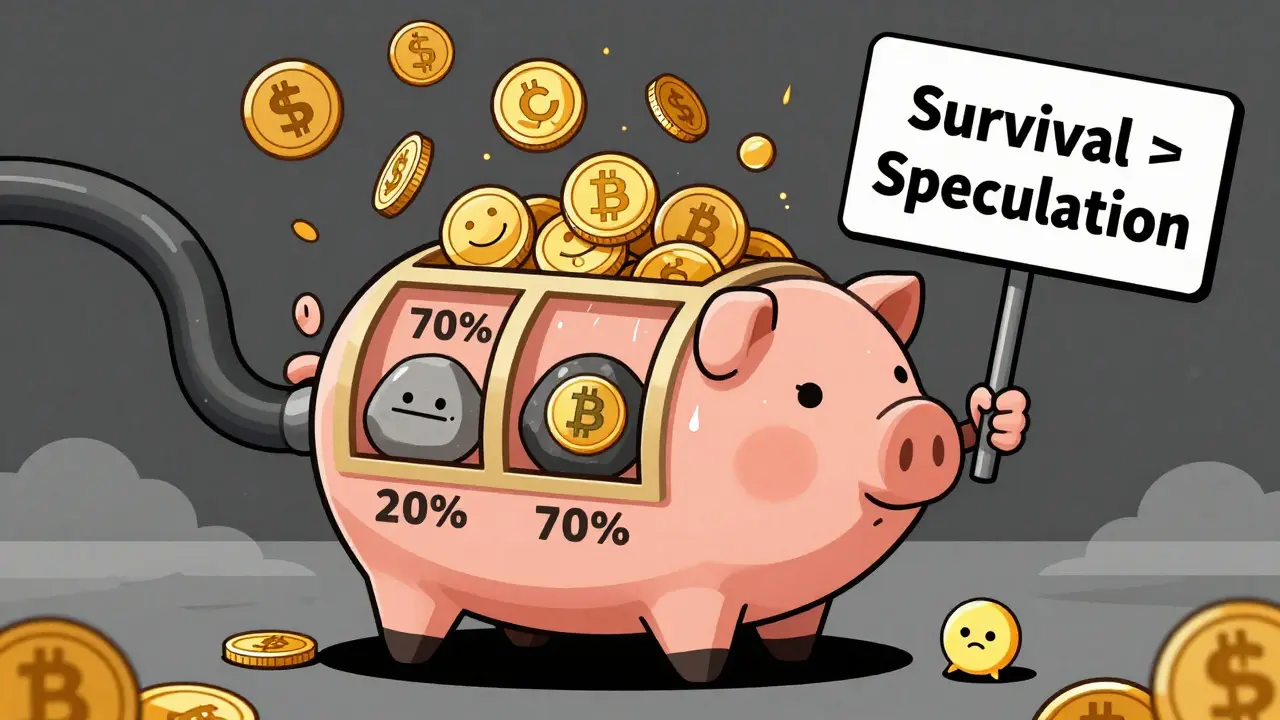

Most DAOs start with a simple idea: hold the native token, fund projects, and let governance decide. But when the market crashes, and the token drops 70% in a week, suddenly payroll is at risk, grants can’t be paid, and contributors walk away. That’s not a bug - it’s a design flaw. The solution? Treasury diversification. It’s not about speculation. It’s about survival.
Why DAO Treasuries Are So Vulnerable
A DAO treasury isn’t just a wallet. It’s the lifeblood of the organization. It pays developers, funds marketing, covers legal fees, and backs future product development. But if 90% of that treasury is locked in the DAO’s own token - say, SUSHI or AAVE - you’re putting your entire future on the line of one asset’s price. And crypto doesn’t play nice with that. In 2022, dozens of DAOs saw their treasuries wiped out overnight. SUSHI dropped 85%. AAVE fell 70%. When those tokens were the main source of liquidity, there was no way to pay bills without selling at a loss. That’s not just bad luck - it’s financial negligence. The same thing happened to early DeFi protocols that didn’t diversify. They didn’t fail because the tech didn’t work. They failed because they didn’t manage money like a real organization.The Three-Tier Treasury Model That Works
The most effective strategy isn’t complicated. It’s borrowed from traditional finance and adapted for crypto. Think of it as a three-layer safety net:- 70% Stablecoins - USDC, USDT, DAI. These are your emergency fund. They don’t go up 10x, but they also don’t crash 80%. They let you pay salaries, cover operational costs, and stay solvent during bear markets. No guesswork. No panic selling.
- 20% Blue-Chip Crypto - Bitcoin and Ethereum. These aren’t speculative altcoins. They’re the closest thing crypto has to gold and the S&P 500. They hold value over time, have deep liquidity, and are less prone to sudden death spirals. Holding them means your treasury still has growth potential without gambling on unknown tokens.
- 10% Altcoins & Native Tokens - This is your alignment layer. Keep some of your own token to reward contributors, fund governance votes, or signal confidence. But don’t let it dominate. Keep it small. Think of it as a stake in your own vision, not your primary asset.
How to Generate Yield Without Risking Everything
Holding cash in a vault doesn’t grow. Neither does holding USDC in a wallet. The smartest DAOs don’t just store assets - they put them to work. Stablecoins can earn yield through DeFi protocols. Lido lets you stake ETH and earn rewards. Yearn automatically moves your USDC into the highest-yielding vaults - Aave, Compound, Curve - while managing risk. Balancer pools let you provide liquidity and earn trading fees. Some DAOs now earn 3-6% annually on their stablecoin holdings. That’s not a bonus. That’s rent money. That’s developer salaries. But here’s the catch: yield isn’t free. Smart contracts can be hacked. Protocols can fail. That’s why you never put more than 20% of your total treasury into yield strategies. And you never use a protocol without auditing it. Look for audits from Quantstamp, CertiK, or OpenZeppelin. Check their on-chain history. Has the contract been live for over a year? Has it survived multiple market crashes? If not, walk away.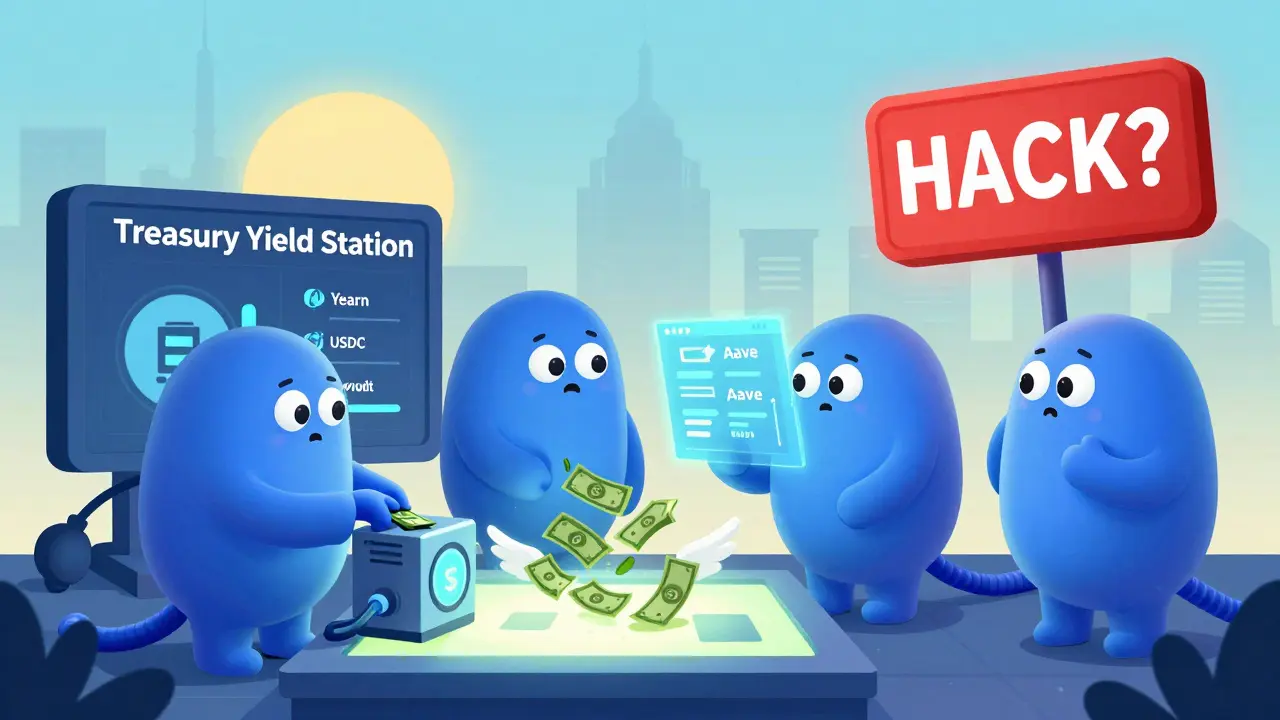
Tools That Make Diversification Easy
Managing a multi-asset treasury manually is a nightmare. That’s why the best DAOs use automation.- Gnosis Safe - The go-to multi-sig wallet for DAOs. Lets you set up spending limits, require multiple approvals, and track every transaction.
- Aragon - Built for governance. Lets you create voting proposals to change treasury allocations, approve payments, or launch new yield strategies.
- Set Protocol - Lets you create automated portfolios. Want 70% USDC, 20% ETH, 10% WBTC? Set it once. It rebalances automatically.
- Yearn - Automates yield farming. Plug in your USDC, and it shifts between vaults to maximize returns without you lifting a finger.
When to Start Diversifying
Some say, “Wait until we’re bigger.” That’s a trap. The bigger you get without diversification, the harder the fall. DAOs with treasuries over $500 million are 24.7% more diversified than those under $50 million. Why? Because they’ve been burned. They’ve seen what happens when you wait. Smaller DAOs can start today. Even if you only have $1 million in the treasury, move 50% into USDC. Put 30% into ETH. Keep 20% for your token. That’s your baseline. The key is not perfection. It’s progress. Rebalance every quarter. If ETH jumps 40%, sell 5% to bring your allocation back in line. If stablecoin yields drop, move capital to a new vault. Don’t wait for a crisis. Build the habit now.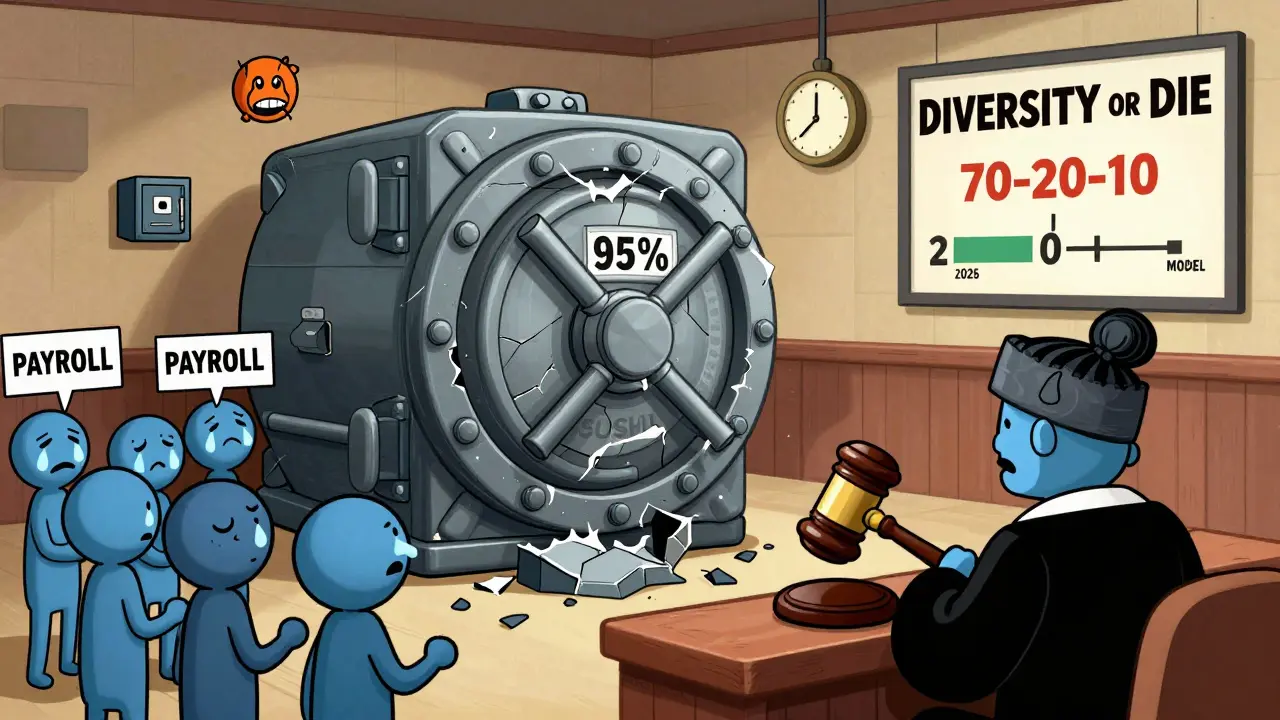
What Happens If You Don’t Diversify
There are real consequences. In 2024, a DAO with $120 million in treasury - 95% in its own token - couldn’t pay its team after a 72% price drop. They had to shut down. Contributors lost income. Projects died. Investors lost trust. Another DAO, with $300 million in assets, refused to diversify. They believed their token would “always rise.” In early 2025, a regulatory crackdown hit their jurisdiction. They couldn’t sell their tokens fast enough. They lost $80 million in two weeks. They’re still trying to recover. These aren’t edge cases. They’re textbook failures. The market doesn’t reward loyalty to a token. It rewards resilience.Looking Ahead: What 2026 Will Change
By 2026, legal frameworks like Wyoming’s DUNA law will make DAOs more accountable. Regulators will demand financial transparency. Insurance providers will start offering coverage - but only to DAOs with diversified treasuries. Institutional investors won’t touch a DAO with 100% native token exposure. Why? Because it’s not a fund. It’s a gamble. But a DAO with 70% stablecoins, 20% BTC/ETH, and 10% yield-generating assets? That looks like a real asset class. The shift is already happening. In early 2025, 60% of DAOs with treasuries over $100 million had diversified. That number will hit 80% by the end of 2026. The ones that don’t adapt won’t survive.Where to Start Today
If you’re part of a DAO, here’s your action list:- Check your treasury. What percentage is in stablecoins? In ETH? In your own token?
- Set a target: 70% stablecoins, 20% BTC/ETH, 10% native.
- Use Gnosis Safe or Aragon to lock in spending rules.
- Move 20% of your stablecoins into Yearn or Lido to earn yield.
- Propose a quarterly rebalancing vote in governance.
What’s the minimum size a DAO treasury should be before diversifying?
There’s no minimum. Even DAOs with $100,000 in treasury should start diversifying. The goal isn’t scale - it’s safety. A small treasury with 50% in USDC is far more resilient than a large one with 90% in a volatile token. Start early. Start small. Rebalance as you grow.
Can DAOs hold fiat currency in their treasury?
Technically, yes - but it’s rare. Most DAOs avoid fiat because it requires KYC, banking relationships, and legal entities, which go against decentralization. Stablecoins like USDC and USDT are the crypto equivalent: pegged 1:1 to the dollar, but fully on-chain. They’re easier to manage and align better with DAO values.
Is holding Bitcoin risky for a DAO treasury?
Bitcoin is volatile, but less so than altcoins. Over the last five years, Bitcoin has recovered from every major crash. It’s the most liquid crypto asset, with deep markets and institutional backing. For DAOs, holding 15-20% in BTC is less risky than holding 15% in a token with no trading volume. It’s not risk-free - but it’s the lowest-risk growth asset in crypto.
How often should a DAO rebalance its treasury?
Quarterly is ideal. Markets shift, yields change, and allocations drift. Rebalancing every three months keeps your treasury on target without overtrading. Some DAOs do it monthly, but that increases gas fees and governance overhead. Quarterly strikes the right balance between discipline and efficiency.
What’s the biggest mistake DAOs make with their treasury?
The biggest mistake is assuming their token will always go up. Treasuries aren’t for speculation - they’re for sustainability. If you’re holding your own token because you believe in the project, that’s fine. But if you’re holding it because you think it’ll double next month, you’re not managing a treasury. You’re gambling with the DAO’s future.





Zoe Hill
14 Feb 2026 at 01:55hey i just read this and honestly? i’m so glad someone finally said it out loud. i’ve been in a dao with 95% native token and let me tell you, it’s a rollercoaster where everyone’s holding on for dear life. we had to pause payroll twice last year. now we’re at 65% usdc, 25% eth, 10% our token - and guess what? people actually show up to meetings now. no more ‘oh i’m waiting for the pump’ energy. just steady work. also, typo: ‘lido’ not ‘lido’ lol. i keep typing it wrong too 😅