



Picture this: A customer calls your store to track an order. Instead of asking for their name, zip code, and last purchase, your staff member sees the order details pop up on their screen the moment the phone rings. They answer with, "Hi Sarah, I see your package is out for delivery today." That instant connection isn't magic-it's VoIP for retail working in tandem with your Point of Sale (POS) system.
For years, retailers relied on traditional landlines that cost a fortune and offered zero intelligence. Today, Voice over Internet Protocol (VoIP) has transformed how stores handle communication. It’s not just about making cheaper calls; it’s about creating a seamless experience where every interaction drives sales and solves problems faster. With the global VoIP market projected to hit over $326 billion by 2032, retailers are quickly realizing that upgrading their phone system is one of the highest-ROI moves they can make.
Why Retailers Are Switching from Landlines to Cloud Phone Systems
The shift away from legacy PBX systems and copper-wire landlines is driven by simple economics and flexibility. Traditional business lines often cost around $50 per line per month, plus expensive hardware maintenance. In contrast, modern cloud phone systems, also known as Unified Communications as a Service (UCaaS), typically range from $10 to $40 per user per month.
But the savings go beyond the monthly bill. Consider these key advantages:
- Scalability: Need to add ten phones for the holiday season? You do it with a few clicks in a web portal, not by waiting weeks for a technician to run new wires.
- Remote Work Support: Staff can take calls from home, the warehouse, or while traveling using softphone apps on their laptops or mobile devices. This ensures you never miss a sale, even if the front desk is empty.
- Unified Communications: Modern platforms combine voice, video, chat, and SMS into one interface. Your team can switch from a voice call to a text message seamlessly without losing context.
Data supports this trend. Studies show that businesses switching to VoIP can cut their monthly phone bills by up to 50%. For a multi-location retailer, those savings compound quickly, freeing up budget for inventory or marketing.
Integrating VoIP with Point of Sale (POS) Systems
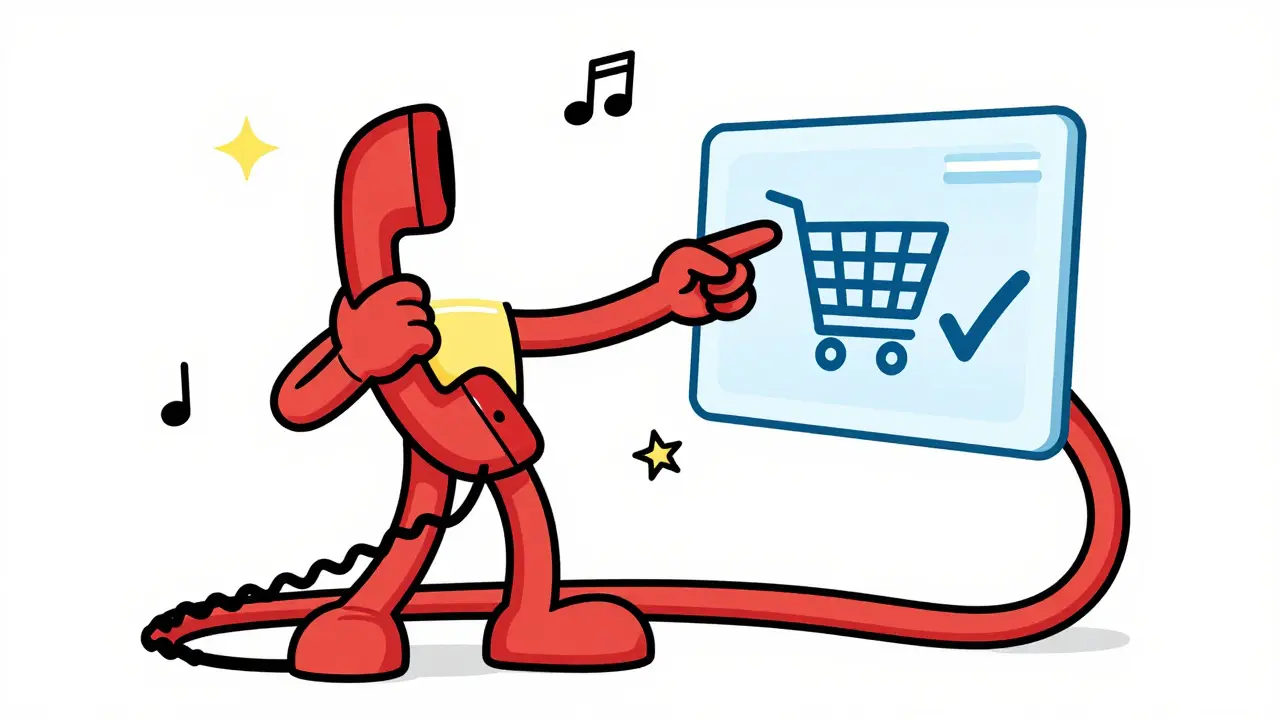
The real power of VoIP in retail emerges when it talks to your POS system. This integration creates what experts call a "screen pop" or "Caller ID pop." Here is how it works in practice:
- Call Arrives: A customer dials your store number.
- Identification: The VoIP system identifies the caller based on their phone number.
- Data Retrieval: Via API connections, the system queries your CRM or POS database.
- Screen Pop: Before the agent answers, a window opens on their computer showing the customer’s profile, recent orders, return history, and loyalty points.
This workflow eliminates the awkward "Can you spell your last name again?" moments. It turns every call into a personalized service opportunity. For e-commerce retailers using platforms like Shopify, integrations with providers like Aircall or RingCentral allow agents to see tracking numbers and order statuses instantly within their softphone interface.
However, compatibility varies. Some older POS systems expect analog Caller ID signals. If you move to an IP-based system, you might need an Analog Telephone Adapter (ATA), such as the Grandstream HT801, to bridge the gap between digital VoIP signals and your legacy POS hardware. Always check with your POS vendor before migrating to ensure smooth data flow.
Enhancing Customer Service with Smart Routing
A robust VoIP system does more than connect calls; it directs them intelligently. Poor routing leads to long hold times and frustrated customers who hang up. Smart features include:
- Skills-Based Routing: Calls about technical issues go to tech support; billing questions go to finance. This reduces transfer rates and resolution time.
- Auto-Attendants (IVR): Digital receptionists greet callers with menus like "Press 1 for Returns, Press 2 for Sales." This filters routine inquiries so live agents can focus on complex issues.
- Presence Indicators: Agents can set their status to "Available," "In Meeting," or "Away." Callers are only routed to available staff, reducing wasted transfers.
Research indicates that implementing unified communications in contact centers can increase an agent's ability to meet customer needs by 78%. By ensuring the right person answers the right call, you boost first-call resolution rates and customer satisfaction scores.
Navigating Security and PCI DSS Compliance
If your retail business accepts credit card payments over the phone, security is non-negotiable. The Payment Card Industry Data Security Standard (PCI DSS) imposes strict rules on how cardholder data is handled. When you integrate VoIP with payment processes, your phone system becomes part of the secure environment.
Key compliance considerations include:
- Encryption: Ensure all voice traffic is encrypted end-to-end to prevent eavesdropping.
- Recording Management: If you record calls for training, you must suppress or pause recording when a customer enters their credit card number. Storing full card numbers or CVV codes in call recordings is a major violation.
- Network Segmentation: Keep your VoIP network separate from public Wi-Fi and other unsecured networks to reduce risk exposure.
Providers like Vonage and RingCentral offer built-in compliance tools, but it is your responsibility to configure them correctly. Consult with a security expert to define the scope of your PCI assessment and ensure your VoIP infrastructure meets current standards.
Choosing the Right VoIP Provider for Retail
Not all VoIP providers are created equal. Your choice depends on your size, budget, and integration needs. Here is a comparison of popular options:
| Provider | Starting Price (Per User/Month) | Best For | Key Feature |
|---|---|---|---|
| RingCentral | $20 - $30 | Mid-sized retailers | Strong CRM and POS integrations |
| Aircall | $30 | E-commerce brands | Deep Shopify and HubSpot sync |
| Vonage | $18 - $25 | Enterprise chains | Advanced analytics and AI routing |
| VoIP.ms | $2 - $5 | Budget-conscious small shops | Pay-as-you-go flexibility |
| Nextiva | $20 | Growing businesses | All-in-one UC platform |
For small brick-and-mortar stores, low-cost providers like Zadarma or VoIP.ms offer essential features without breaking the bank. Larger retailers with complex omnichannel needs may prefer RingCentral or Aircall for their extensive app ecosystems and native integrations.
Implementation Tips for a Smooth Transition
Migrating to VoIP doesn't have to be disruptive. Follow these steps to ensure success:
- Assess Your Internet Connection: VoIP requires stable bandwidth. Aim for at least 100 Kbps per concurrent call. Use Quality of Service (QoS) settings on your router to prioritize voice traffic over general browsing.
- Test Integrations Early: Before going live, test the connection between your VoIP provider and POS/CRM. Verify that screen pops appear correctly and that call logs sync automatically.
- Train Your Staff: Show employees how to use presence indicators, transfer calls properly, and access customer data during a call. Confidence leads to better service.
- Plan for Redundancy: Internet outages happen. Ensure your VoIP provider offers failover options, such as redirecting calls to mobile phones or backup SIP trunks.
Many retailers report that setup takes less than a week for small teams. Larger deployments may require professional services to configure advanced routing and security protocols.
How much does VoIP cost for a small retail store?
Costs vary widely. Basic plans start around $10-$20 per user per month, while feature-rich enterprise solutions can exceed $40. Small shops using pay-as-you-go providers like VoIP.ms might spend as little as $2-$5 per line. Factor in potential costs for IP phones or adapters if you don't already have compatible hardware.
Can VoIP work if the internet goes down?
Standard VoIP relies on internet connectivity. However, most providers offer failover features. You can set up automatic call forwarding to mobile phones or use cellular-backed routers. For critical operations, consider hybrid setups that include backup PSTN lines.
Is VoIP secure enough for handling credit card payments?
Yes, provided you follow PCI DSS guidelines. Use encrypted channels, disable call recording during payment entry, and segment your network. Many modern VoIP platforms offer built-in compliance tools to help manage these risks effectively.
Which VoIP provider integrates best with Shopify?
Aircall and RingCentral are top choices for Shopify users. They offer native apps that provide instant insight cards with order history, tracking info, and customer profiles directly in the agent's view when a call comes in.
Do I need new phones to switch to VoIP?
Not necessarily. You can use softphones (apps on computers or smartphones) for free. If you prefer physical handsets, you can buy IP phones or use Analog Telephone Adapters (ATAs) to connect existing analog phones to your VoIP service.







Write a comment