



Imagine losing your house keys. You’d panic, sure, but you wouldn’t hand the spare key to a stranger knocking on your door just because they promised to find the lost one. Yet, in the world of cryptocurrency, thousands of users do exactly this every month. They lose access to their wallets, get desperate, and then fall for Seed Phrase Vault Scams. These aren't just minor annoyances; they are sophisticated traps designed by criminals who know that once you give up your recovery phrase, your money is gone forever.
If you’ve ever seen an ad for a "crypto recovery service" or received a DM from someone claiming they can "hack back" your stolen funds, stop reading and check your wallet. The reality is harsh: no legitimate support team needs your seed phrase to fix a glitch. If someone asks for it, they’re likely trying to steal everything. This guide breaks down how these scams work, why they target you specifically, and how to spot the difference between a real lifeline and a sinking ship.
The Golden Rule: Why Your Seed Phrase Is Sacred
To understand the scam, you have to understand the tech. A Seed Phrase (also called a recovery phrase) is typically a sequence of 12 or 24 random words. It’s not just a password; it’s the master key to your entire financial identity on the blockchain. Unlike a bank account, where a teller can reset your password after verifying your ID, a non-custodial crypto wallet has no middleman. Whoever holds those words owns the coins. Period.
Scammers exploit this absolute power. They know that if they get your phrase, they don’t need your login, your two-factor authentication code, or even your device. They can import your phrase into their own software and move your Bitcoin, Ethereum, or USDT instantly. That’s why any request for your full phrase-whether it’s partial or complete-is inherently fraudulent when coming from a third party. Legitimate developers like Ledger or Trezor never ask for it via email, chat, or phone. If a "support agent" does, hang up.
Anatomy of a Fake Recovery Service
These scams often start with bad luck. Maybe you sent Bitcoin to the wrong address, or maybe you forgot your hardware wallet password. You post about it on Twitter or Reddit, looking for help. Within hours, a bot or a human scammer finds your post. They slide into your DMs with a story that sounds too good to be true: "I can recover your funds," or "My team specializes in reversing blockchain transactions."
This is the classic Advance-Fee Fraud model mixed with social engineering. Here’s how the workflow usually plays out:
- The Hook: They claim to have special tools or connections to exchanges that can reverse a transaction.
- The Ask: They demand an upfront fee to "start the process" or "secure the asset." Sometimes, they ask for remote access to your computer.
- The Twist: Once you pay the first fee, they invent new problems. "The network is congested," or "We need a verification deposit."
- The Endgame: If they asked for your seed phrase instead of a fee, they simply drain your wallet and disappear. If they took fees, they string you along until you realize you’re paying more than the original loss was worth.
A recent alert from the Washington State Department of Financial Institutions highlighted that these operations often re-target victims of previous scams. They prey on desperation, knowing you’re already hurting financially and emotionally.
Vaults, Apps, and Rotten Bait
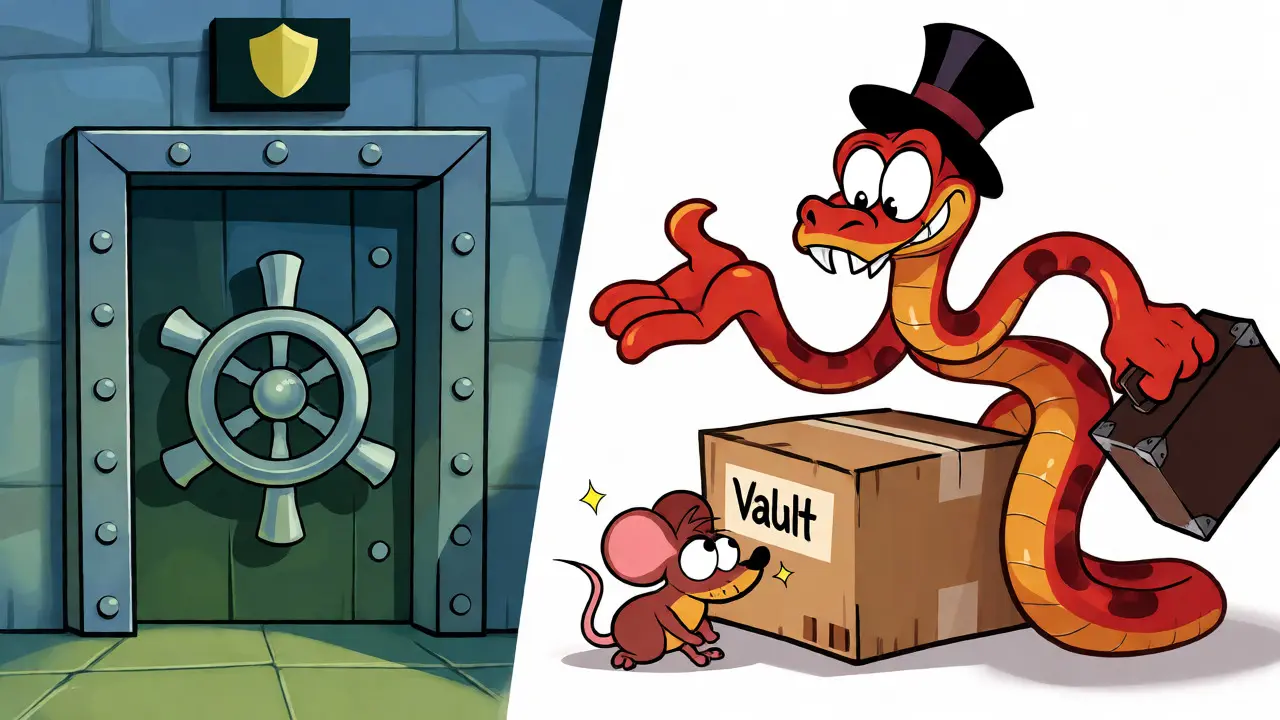
It’s not just people in DMs. Criminals build entire fake infrastructures. One common variant is the Fake Vault Website. These sites look professional, with sleek designs and testimonials. They promise to "securely store" your seed phrase in a cloud vault. But here’s the catch: storing a seed phrase in plaintext on a remote server defeats the purpose of self-custody. If that site gets hacked-or if the owners are the scammers themselves-they have full control over your assets.
Another tricky method involves "Rotten Seed Phrases." You might see a YouTube video or a forum post sharing a 12-word phrase, claiming it belongs to a dormant wallet with valuable tokens. Greedy users rush to import the phrase into their own wallets. But scammers have pre-programmed smart contracts attached to those addresses. As soon as you try to interact with the wallet or send funds in, a script drains them immediately. It’s a trap for the curious and the greedy alike.
Then there are the counterfeit apps. Rapid7, a cybersecurity firm, investigated campaigns where victims received phishing emails leading to fake wallet applications. These apps looked identical to MetaMask or Trust Wallet but contained malicious code. When users entered their recovery phrases during a "security check," the data was sent straight to attacker-controlled servers, draining balances in seconds.
Legitimate Recovery vs. The Con Artists
You might wonder, "Are all recovery services scams?" No, but the bar for legitimacy is incredibly high. Real firms, like KeychainX, operate under strict legal frameworks. They focus on cases where you have lawful ownership but technical issues-like a corrupted file or a forgotten password-not cases where you simply want to reverse a mistake.
Here is how you can distinguish the pros from the predators:
| Feature | Legitimate Service | Phony Recovery Scam |
|---|---|---|
| Contact Method | You contact them via official website. | Unsolicited DMs on X, Telegram, or Facebook. |
| Seed Phrase Request | Never asks for full phrase; works with encrypted files. | Demands full or partial seed phrase for "verification." |
| Payment Structure | Fees agreed upon contractually; often success-based. | Large upfront fees required before any work starts. |
| Guarantees | Realistic outcomes; explains technical limits. | Promises 100% guaranteed recovery of lost funds. |
| Transparency | Verifiable company registration (e.g., Swiss UID). | No physical address; anonymous team members. |
Notice the pattern? Legitimate companies protect your privacy and explain their methods. Scammers use urgency and secrecy. If a service guarantees you’ll get your money back from a irreversible blockchain transaction, they are lying. Blockchain transactions cannot be reversed unless the recipient sends them back voluntarily.
How to Spot the Red Flags Early
Most victims say they knew something was off but ignored it because they were desperate. Don’t let hope override logic. Watch out for these specific behaviors:
- Manufactured Urgency: "Your wallet will be locked in 24 hours if you don't verify now!" Crypto doesn’t expire. Take your time.
- Authority Impersonation: They claim to be from Coinbase, Binance, or Ledger. Go to the official app or website and open a ticket there. Do not trust the link they sent you.
- Remote Access Requests: Asking for TeamViewer or AnyDesk access is a major red flag. They can install keyloggers or malware while you watch.
- Vague Technical Jargon: If they can’t explain *how* they recover funds without using your private keys, walk away.
A quick rule of thumb: If you have to send money to get money, it’s probably a scam. And if you have to type your secret words into a browser window, you’re playing Russian roulette with your savings.
What To Do If You’ve Already Shared Your Phrase
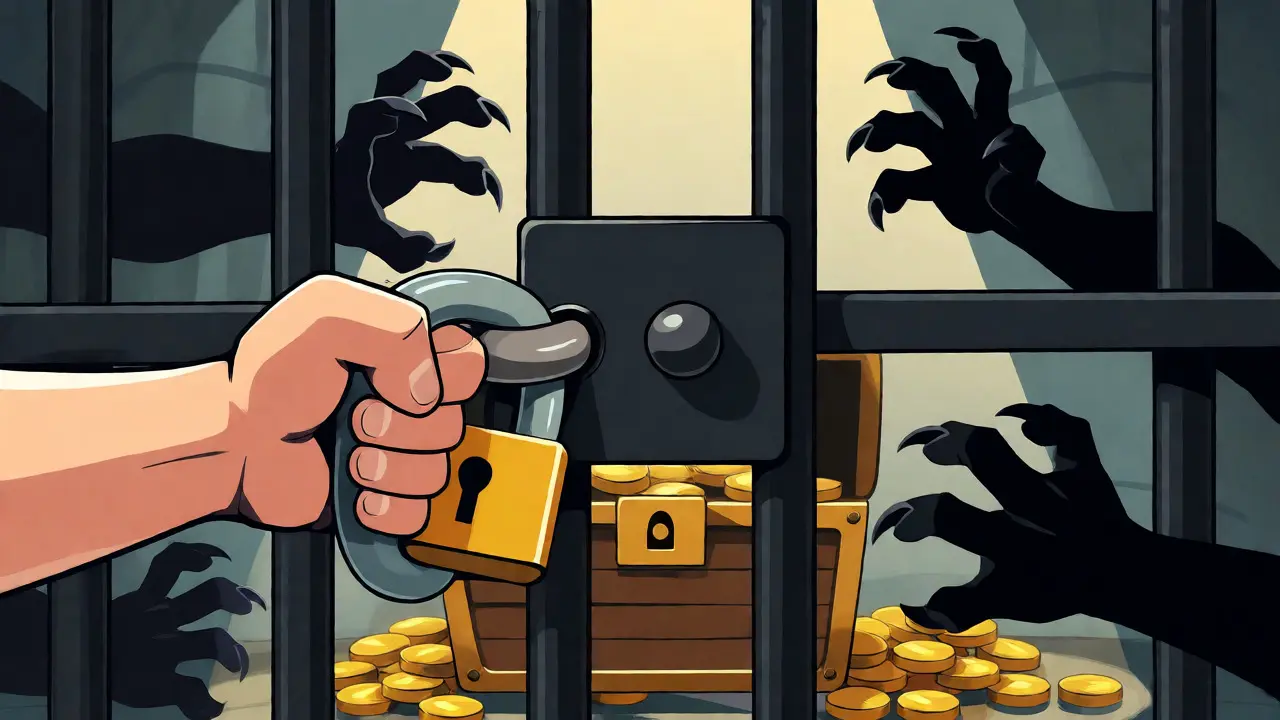
If you suspect your seed phrase has been compromised, act fast. Do not wait to see if the funds disappear. Assume the wallet is dead.
- Create a New Wallet: Generate a fresh seed phrase on a trusted device (preferably offline/hardware).
- Move Funds Immediately: Transfer all remaining assets to the new wallet. Even if it looks empty, move whatever dust remains.
- Revoke Permissions: Use a tool like Revoke.cash to disconnect any dApps that might have been authorized by the old wallet.
- Report It: File a complaint with the FTC or your local consumer protection agency. While you likely won’t get the crypto back, reporting helps track these criminal networks.
Remember, once a seed phrase is exposed, it’s permanently unsafe. You can’t "change" the password on a Bitcoin address; you have to abandon the address entirely.
Protecting Yourself Moving Forward
Security isn’t about complex software; it’s about simple habits. Store your seed phrase offline. Paper and steel plates are better than cloud storage. Never photograph it and save it to your phone gallery, where cloud backups might leak it.
When searching for help, go directly to the source. Type the URL yourself. Check the domain carefully-watch out for typos like `metamask-vault.com` instead of `metamask.io`. Educate yourself on the fact that support agents will never ask for your private keys. If they do, it’s a test, and you should fail them by refusing.
The landscape of crypto scams evolves, but the core vulnerability remains human error. By treating your seed phrase with the same paranoia you’d treat your nuclear launch codes, you stay ahead of the con artists.
Can a recovery service really reverse a crypto transaction?
Generally, no. Cryptocurrency transactions are immutable, meaning they cannot be reversed once confirmed on the blockchain. Legitimate recovery services help you regain access to a wallet you still own (e.g., forgotten password), not reverse a transfer you made to the wrong person. Anyone promising to reverse a completed transaction is likely running a scam.
Why do scammers ask for my seed phrase if they are "experts"?
They don’t need it to be experts; they need it to steal. In non-custodial wallets, the seed phrase grants total control. By asking for it, they bypass all other security measures. No legitimate support agent, developer, or exchange employee ever requires your full seed phrase to troubleshoot issues or provide assistance.
What is a "rotten seed phrase" scam?
This occurs when scammers publish a valid seed phrase online, implying the associated wallet contains valuable assets. When a user imports the phrase into their wallet to claim the funds, hidden smart contracts or scripts automatically drain the incoming balance or expose the user to malware. It targets curiosity and greed.
Is it safe to use a cloud-based seed phrase vault?
It carries significant risk. Storing your seed phrase on a remote server means trusting that provider’s security and honesty. Many "vault" scams simply collect phrases and drain wallets later. If you must use digital storage, ensure it is end-to-end encrypted locally before upload, but physical offline storage (paper/steel) remains the gold standard.
How do I verify if a recovery company is legit?
Check for verifiable business registration numbers (like a Swiss UID or US LLC number). Look for independent reviews on platforms like Trustpilot, but be wary of paid reviews. Legitimate firms will have a clear contract, transparent pricing, and will never initiate contact via unsolicited direct messages on social media.




Write a comment