



Imagine waking up to find your portfolio has grown by 15% overnight, not because you spent ten hours staring at candle charts, but because a pro trader in Singapore did the hard work for you. That's the promise of copy trading. It sounds like a cheat code for the crypto markets: just pick a winner, hit "copy," and watch the money roll in. But here's the reality-for every success story, there's a trader who wiped out their account because they followed a "guru" who went on a gambling spree with other people's money.
Whether you're using a social trading platform or a set of algorithmic bots, you're essentially outsourcing your financial decision-making. That can be a brilliant move or a disaster depending on how much you understand the plumbing behind the scenes. Let's break down how this actually works and where the hidden landmines are buried.
The Basics: What Exactly is Copy Trading?
At its core, Copy Trading is an automated investment method where you replicate the trades of experienced cryptocurrency traders in real-time . You don't have to manually enter every order; the system does it for you. If the pro trader buys 1 BTC of Ethereum, your account automatically buys a proportional amount based on your settings.
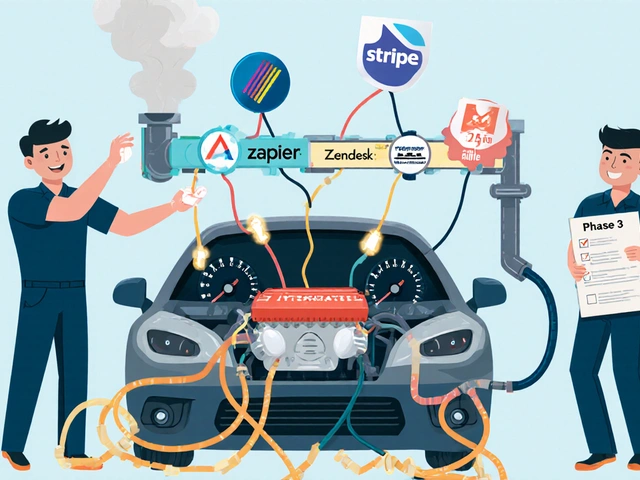
This usually happens in two ways. Some platforms use a centralized system where you deposit funds directly with them. Others use API Integration is a technical bridge that allows a third-party software to execute trades on your personal exchange account without giving away your master password . The latter is generally safer because you keep your assets on your own exchange, but it requires a bit more setup.
Why People Love It (The Real Benefits)
The biggest draw is obviously accessibility. You don't need a degree in quantitative analysis to start. By mirroring a professional, you're essentially "renting" their brain. This is a huge shortcut for beginners who are overwhelmed by the volatility of the crypto market.
Beyond just making money, there's a massive learning curve benefit. If you pay attention to why a trader is entering a position or when they decide to exit, you start to internalize their logic. It's like having a masterclass in trading while your capital is actually in play. Plus, it's a great way to diversify. Instead of betting everything on one coin, you can copy three different traders-one who focuses on steady growth, one who hunts for small-cap gems, and one who hedges against market crashes.
| Feature | Spot Copy Trading | Futures/Leverage Copying |
|---|---|---|
| Risk Level | Lower (Hold actual assets) | High (Price derivatives) |
| Main Goal | Long-term accumulation | Quick profits from volatility |
| Bankruptcy Risk | Low (Asset value can drop, but not zero) | High (Liquidation is possible) |
| Ideal Market | Bull Markets / Side-ways | High Volatility / Bear Markets |
The Dark Side: Pitfalls and Technical Glitches
It's not all passive income and beach trips. There are technical realities that can eat your profits before you even realize it. The biggest culprit is slippage. This happens when there's a delay between the pro trader's order and your copy. If a pro buys a coin at $100, but the platform takes three seconds to replicate that for 1,000 followers, the price might jump to $101 by the time your order hits. That 1% difference might not seem like much, but over a hundred trades, it destroys your edge.
Then there's the liquidity problem. When a popular trader makes a move, thousands of accounts try to buy the same asset at the exact same microsecond. This creates a "spike" that pushes the price up, meaning you get a worse entry price than the person you're copying. Essentially, you're fighting for the same limited supply of coins as every other copy trader on the platform.
You also have to watch out for the "Guru Trap." Many traders on these platforms focus on "fluffing" their stats. They might take one massive, high-risk gamble that pays off, making their profile look like a rocket ship. Once you follow them, they might enter a series of losing trades. Because you're copying them, you're inheriting their emotional mistakes and their bad days, but you're not there to manage the risk in real-time.

The Danger of Trading Bots
While copy trading is about following a human, Crypto Trading Bots are software programs that use pre-set rules (algorithms) to execute trades without human intervention . Bots are great because they don't get tired, they don't get greedy, and they can trade 24/7. But they are blind to context.
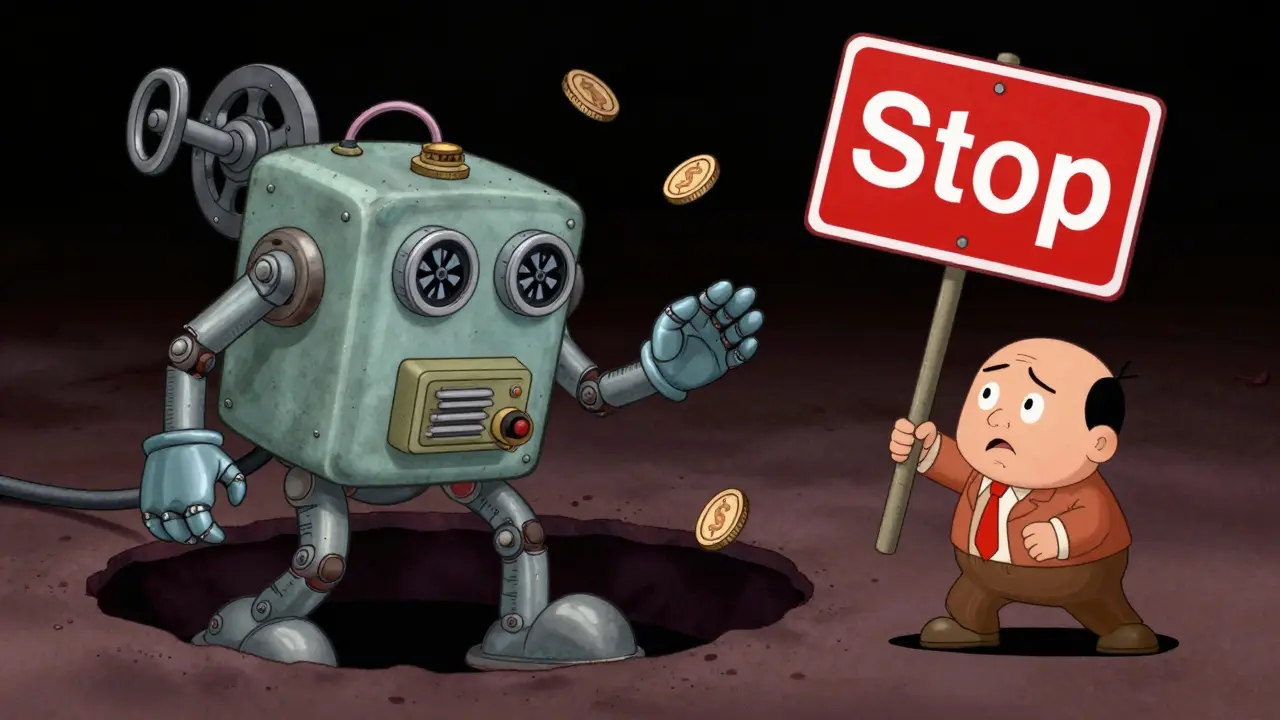
A bot might be programmed to buy every time a price drops 5%. That works great in a healthy market. But in a systemic crash-like a major exchange bankruptcy or a global financial shock-the bot will keep buying all the way down to zero, thinking it's just a "discount." A human trader would see the news and stop; a bot just follows the code.
The biggest mistake people make with bots is "set it and forget it." Crypto moves too fast for that. A strategy that worked in 2024 might be completely obsolete by 2026. If you aren't tweaking your parameters and monitoring the bot's performance, you're essentially gambling with a calculator.
How to Actually Manage Your Risk
If you're going to dive in, you need a survival plan. First, never put all your eggs in one basket. Don't just copy one "superstar" trader. Distribute your funds across 3-5 traders with different styles. If one of them has a mental breakdown and loses 50% of their account, it won't wipe out your entire portfolio.
Second, set strict limits. Most platforms let you define the maximum amount you're willing to risk per trade. Use it. Also, implement a "hard stop" for the entire copy relationship. For example, tell yourself: "If this trader loses 20% of my allocated capital, I'm cutting the cord immediately," regardless of what the trader says in their community chat about a "recovery plan."
Third, be wary of leverage. In the world of Margin Trading, using 10x or 50x leverage can turn a small mistake into a total loss of funds. Many pro traders use high leverage to make their returns look more impressive to attract followers, but that risk is transferred directly to you. If you're a beginner, stick to spot trading where you actually own the asset.
The Psychological Game
There is a hidden danger here: the atrophy of your own skills. When you rely entirely on a signal, you stop asking why a trade is happening. You become a passenger in your own financial life. This creates a psychological dependency where you feel incapable of making a move without a "signal."
The goal should be to use copy trading as a bridge, not a destination. Use it to build your capital and observe patterns, but keep studying the market. The moment you stop analyzing and start blindly trusting, you've become the prime target for the pitfalls mentioned above.
Does copy trading guarantee profits?
Absolutely not. No matter how successful a trader's history looks, the crypto market is volatile. Past performance is never a guarantee of future results. Even the best traders have losing streaks, and in copy trading, you share those losses.
What is the safest way to copy trade?
The safest approach is using non-custodial API integration, which keeps your funds on your own exchange. Additionally, focusing on spot copy trading (rather than futures) removes the risk of total liquidation from leverage.
How do copy trading platforms make money?
Platforms usually earn through a combination of subscription fees, a percentage of the profit generated by the trader (performance fees), and sometimes through trading commissions on the exchange.
Can I trade on my account while copying someone?
It's generally a bad idea. If you manually buy a coin and your copied trader sells it, or vice versa, you create conflicting positions that can confuse your risk management and potentially lead to unexpected losses.
What should I look for when choosing a trader to copy?
Look for a long track record (at least 6-12 months), a consistent drawdown percentage (how much they lose during a bad streak), and a clear strategy. Avoid traders with 1,000% returns in a week; those are usually high-risk gamblers, not strategic investors.
Next Steps for Your Strategy
If you're just starting, don't jump in with your life savings. Start with a small "test' bucket-an amount of money you are 100% comfortable losing. Use this phase to test the platform's replication speed and the trader's consistency.
If you're moving into bots, start with a paper trading account (simulated money) for two weeks. See how the bot handles a sudden price drop. If it panics or buys into a death spiral, you've saved yourself a lot of money by not using real capital. Once you've found a balance between a reliable human trader and a disciplined bot, you'll have a much more robust setup than someone relying on a single "magic" signal.







pk Pk
29 Apr 2026 at 03:27Slippage is the silent killer here. Most beginners just see the percentage gain on the guru's profile and ignore the fact that their own entry price is garbage because they are the 500th person in the queue to execute the trade.
You absolutely have to prioritize API integration over custodial accounts if you want any real control. Don't let a platform hold your keys while you're trying to "automate" your wealth. Get a few different strategies running and don't ever trust a single person with your whole bag. It's the only way to survive the volatility without losing your mind.