



Imagine spending two years and millions of dollars building a groundbreaking decentralized finance platform, only to have a regulator shut you down on day one because your project doesn't fit into a law written in 1970. For many crypto founders, this isn't a hypothetical fear-it's the primary barrier to entry. The tension between the "move fast and break things" ethos of web3 and the "protect the consumer at all costs" mandate of government agencies often creates a deadlock that kills innovation.
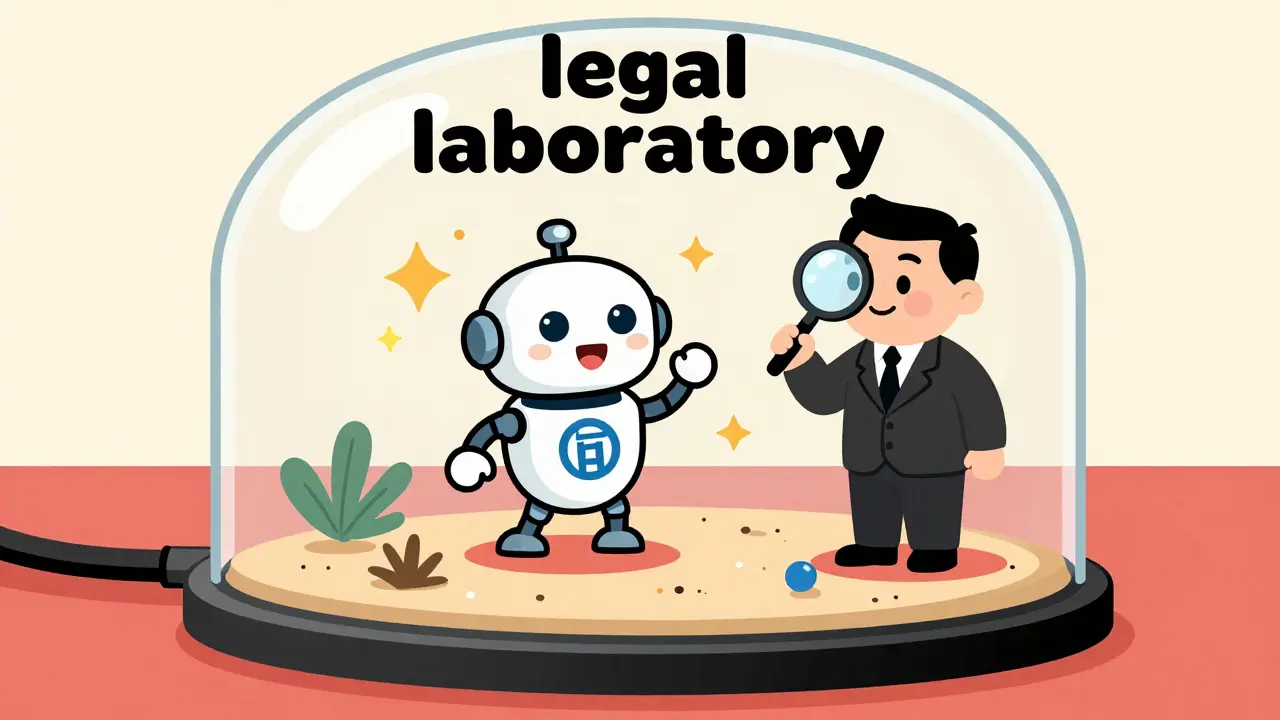
This is where Regulatory Sandboxes is a framework set up by a regulator to allow small-scale, live testing of innovations by private companies in a controlled environment under the supervision of the regulatory authority . Instead of guessing how a law applies to a smart contract, companies can test their tech in a "safe space" with a direct line to the people writing the rules. It's essentially a legal laboratory where the cost of a mistake is managed, and the path to compliance is mapped out in real-time.
Key Takeaways for Crypto Innovators
- Reduced Risk: Test live products without fearing immediate regulatory sanctions.
- Lower Costs: Temporary waivers on certain licenses reduce the massive upfront cost of compliance.
- Direct Feedback: Gain a clear understanding of regulatory expectations before a full market launch.
- Investor Appeal: Participation signals to VCs that your project is vetted and has a viable path to legality.
How a Crypto Sandbox Actually Works
A sandbox isn't just a permit to do whatever you want. It's a structured agreement. Usually, a firm applies to join, proving that their innovation provides a real benefit to consumers and that they have a plan to manage risks. Once accepted, the regulator grants specific exemptions-like a temporary waiver for a full banking license-allowing the company to operate with real customers, but only within strict limits (e.g., a cap on the total number of users or the amount of capital handled).
The process typically follows a specific lifecycle. First, there's the application and vetting phase. Then comes the testing period, where the company operates the tech while the regulator monitors the data. Finally, there's an exit strategy. Depending on the results, the company either transitions to a full license, pivots their business model based on regulatory feedback, or shuts down if the risk is too high.
For those in the DeFi (Decentralized Finance) space, this is critical. Since DeFi replaces traditional intermediaries with automated smart contracts, it often clashes with "Know Your Customer" (KYC) and Anti-Money Laundering (AML) laws. A sandbox allows a team to test a new identity verification method that satisfies the law without compromising the decentralization of the protocol.
Global Examples: From the UK to the EU
Different regions have different philosophies on how to handle these "labs." The United Kingdom has been a pioneer here. The Financial Conduct Authority (or FCA) is well-known for its fintech sandbox, but they've recently leaned harder into crypto. One of their most interesting moves is the Digital Securities Sandbox (DSS), which uses a "glide path" approach. Instead of one big hurdle, companies hit incremental compliance "gates." This means they don't have to be perfect on day one; they just have to prove they are improving at each stage.
Across the channel, the European Union has taken a broader approach with the European Blockchain Regulatory Sandbox. While the UK focuses heavily on financial markets, the EU sandbox is designed for a wider variety of blockchain use cases, including public sector projects. It's funded by the Digital Europe Programme and specifically targets SMEs, ensuring that small startups aren't squeezed out by big banks with massive legal budgets.
| Feature | UK FCA (DSS Model) | EU Blockchain Sandbox |
|---|---|---|
| Primary Focus | Financial securities & stablecoins | Pan-European blockchain use cases |
| Structure | Phased "Glide Path" with gates | Call for expression of interest/Projects |
| Target Audience | Fintechs and Financial Institutions | SMEs and Public Sector entities |
| Core Goal | Market efficiency & regulatory clarity | Legal certainty across multiple borders |
The Strategic Value for Startups
If you're a founder, you might wonder: "Why not just launch in a crypto-friendly jurisdiction and ignore the big regulators?" The problem is scalability. If you want to attract institutional capital or integrate with traditional banks, you eventually need a stamp of approval from a top-tier regulator. Sandbox participation acts as a powerful signal to the market.
When an investor sees that a project is part of an FCA cohort, they don't just see a cool product; they see a project with a managed risk profile. It proves the founders aren't just "coding in a vacuum" but are actively engaging with the legal realities of their industry. This significantly lowers the perceived risk for Venture Capitalists, often leading to better valuation and easier funding rounds.
Furthermore, sandboxes help avoid the "compliance pivot." Many startups launch, realize they are accidentally breaking three different laws, and then spend six months and half their seed funding rewriting their entire architecture. In a sandbox, the regulator tells you the problem while you're still in the prototype phase, saving you from a catastrophic rebuild later.

How Regulators Benefit (It's Not Just About Control)
It's easy to view regulators as the "enemy" of innovation, but sandboxes provide them with something they desperately need: real-world data. Traditionally, regulators write laws based on how they *think* technology works. By the time the law is published, the tech has already changed. Sandboxes flip this dynamic.
By observing Distributed Ledger Technology (or DLT) in action, regulators can see exactly where the friction points are. For example, they might realize that a strict interpretation of "custody" doesn't make sense for a non-custodial wallet. This evidence-based learning allows them to create "tailored regulations"-rules that actually fit the technology rather than trying to force a square peg into a round hole.
This iterative process also enhances systemic stability. If a new stablecoin mechanism has a flaw that could cause a market crash, it's much better for that flaw to be discovered in a sandbox with 1,000 users than in the open market with 1 million users. The regulator can step in, suggest a fix, and ensure the product is robust before it becomes "systemically important."

Common Pitfalls and Governance
Not all sandboxes are created equal. Some are "innovation theaters"-they look great in a press release but offer very little actual legal protection. A truly effective sandbox needs two things: clear eligibility and a strong governance structure.
Eligibility must be transparent. If the rules for joining are vague, it creates a "cronyism" risk where only the well-connected firms get in. The best sandboxes have a clear set of criteria: Does the project provide a unique innovation? Is the team capable of managing the risk? Does it fall within the regulator's mandate?
Governance usually takes one of two forms. Some regulators use a Dedicated Unit, where one team of experts handles everything from application to monitoring. Others use a Hub-and-Spoke Model. In this version, a central sandbox office coordinates with different departments (like the IT team for security audits and the Legal team for contract reviews). For crypto, the hub-and-spoke model is often better because blockchain touches so many different areas of law-tax, consumer protection, and cybersecurity-that you need a multi-disciplinary approach.
Do I need a full license to apply for a regulatory sandbox?
No, that is one of the main points of a sandbox. While you need to show you are a legitimate business with a viable plan, the sandbox provides temporary exemptions or "waivers" from certain licensing requirements so you can test your product without the massive cost of a full license.
What happens if my product fails during the testing phase?
Failure is a natural part of the process. As long as you operate within the agreed-upon limits and protect your users, a technical failure is simply a data point for both you and the regulator. The goal is to identify these issues in a controlled setting before a full-scale launch.
Can a sandbox protect me from all legal liabilities?
Not entirely. A sandbox provides a "safe space" regarding specific regulatory requirements, but it doesn't give you a blanket immunity from all laws (like fraud or theft). You are still expected to maintain a high standard of consumer protection and follow the specific rules set by the sandbox operator.
How long does the testing period typically last?
It varies by jurisdiction, but most sandboxes operate on a fixed timeframe, often ranging from 6 to 24 months. This ensures that companies don't stay in the "exempt" phase forever and are pushed toward full compliance or market exit.
Is participation in a sandbox open to anyone?
It depends on the regulator. Some are open to any startup, while others only accept firms that already hold a basic license. Most require a formal application process and a clear demonstration that the project is truly "innovative" rather than just a slight tweak to an existing product.
Moving Forward: Next Steps
If you are developing a crypto project, don't wait until you're finished to think about regulation. Start by mapping your project's functions against existing laws. If you find a gap-where the law doesn't clearly apply or seems to prohibit your core innovation-look for a sandbox in your target market.
For those in the EU, keep an eye on the European Blockchain Regulatory Sandbox calls for expression of interest. For those targeting the UK, look into the FCA's stablecoin cohorts and the DSS. The goal is to stop treating regulation as a final exam you take at the end of development, and instead treat it as a continuous feedback loop that makes your product stronger, safer, and more investable.








Flannery Smail
10 Apr 2026 at 10:28Honestly this just sounds like a fancy way for regulators to keep their thumb on the scale while pretending to help. Why do we even need a "safe space" when the whole point of crypto was to bypass these outdated gatekeepers in the first place?